
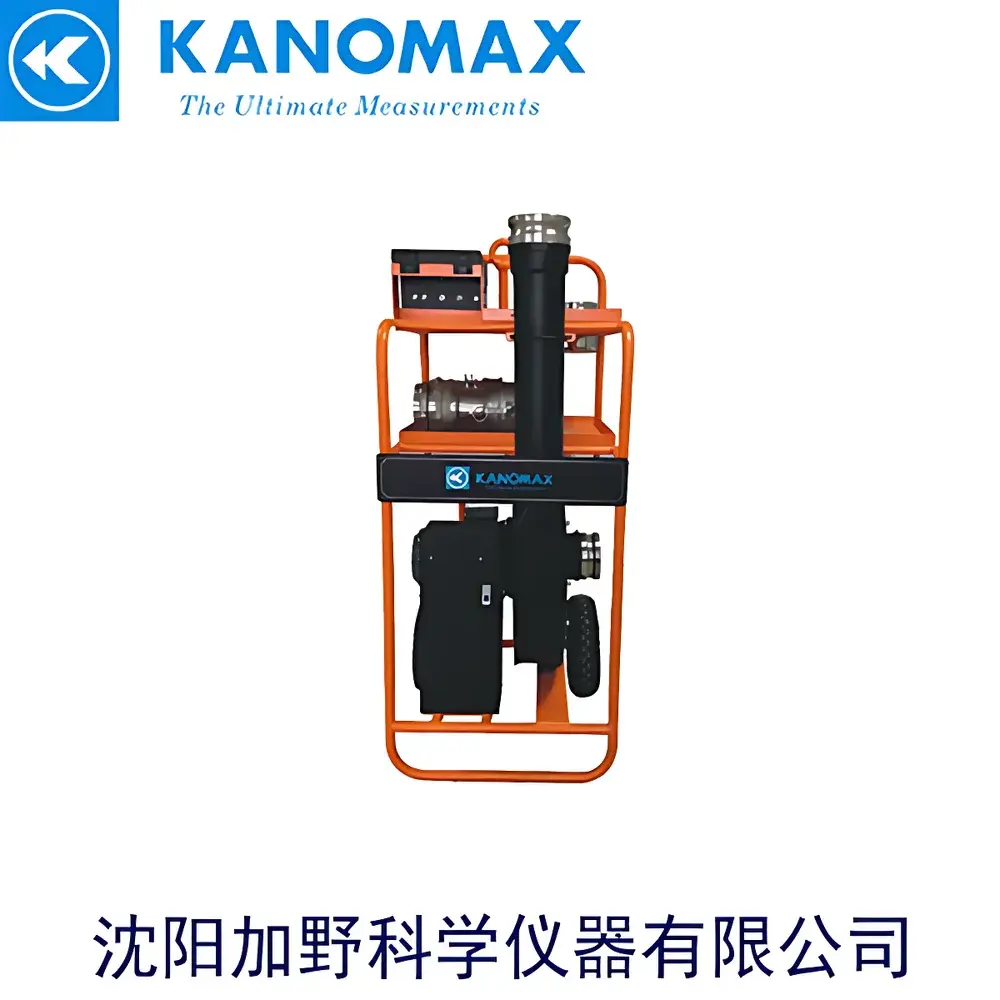
Kanomax DALT6900 Air Leakage Tester for Ductwork – NIM-Certified
| Brand | Kanomax |
|---|---|
| Origin | Liaoning, China |
| Manufacturer Type | Authorized Distributor |
| Country of Origin | China |
| Model | DALT6900 |
| Flow Range | 36–640 m³/h (nozzle mode: 4–36 m³/h) |
| Accuracy | ±2.5% of reading ±0.1 m³/h (flow), ±1% of reading ±1 Pa (static pressure), ±0.5 °C (temperature), ±2% of reading (atmospheric pressure) |
| Resolution | 0.01 m³/h (flow), 0.1 Pa (pressure), 0.1 °C (temperature), 0.1 kPa (atmospheric pressure) |
| Static Pressure Range | ±2500 Pa |
| Temperature Range | 0–60 °C |
| Atmospheric Pressure Range | 70–130 kPa |
| Power Supply | DALT6900-0E: 110–120 V, 1Φ, 50/60 Hz, 16 A |
| DALT6900-1E | 220–240 V, 1Φ, 50/60 Hz, 10 A |
| Weight | ~72 kg |
| Dimensions | 540 × 500 × 1200 mm |
| Data Storage | 1000 test records |
| Display | 4.7-inch color LCD touchscreen |
| Compliance Standards | EN 1507:2006, EN 12237:2002, Eurovent 2/2, DW/143, SMACNA HVAC Air Duct Leakage Testing Standard, GB 50243–2002 |
Overview
The Kanomax DALT6900 Air Leakage Tester is a precision-engineered instrument designed for quantitative assessment of air leakage in HVAC ductwork systems under controlled positive and negative static pressure conditions. It operates on the principle of calibrated orifice (nozzle) flow measurement combined with real-time differential pressure sensing, enabling direct determination of volumetric leakage rate in accordance with internationally recognized duct airtightness standards. The device is certified by the National Institute of Metrology (NIM) of China, confirming traceability to national primary standards and compliance with metrological requirements for field-deployable testing equipment used in building commissioning, energy auditing, and regulatory inspection workflows.
Key Features
- Simultaneous dual-mode operation: high-flow range (36–640 m³/h) via integrated fan assembly and low-flow precision mode (4–36 m³/h) using interchangeable calibrated nozzles
- Real-time display of critical parameters including leakage volume (m³/h), applied static pressure (Pa), ambient temperature (°C), and local atmospheric pressure (kPa)
- 4.7-inch full-color LCD touchscreen interface with intuitive menu navigation and context-sensitive soft keys
- Onboard data logging capacity for up to 1000 complete test records, each storing timestamp, pressure setpoint, measured flow, environmental conditions, and pass/fail status
- Rugged, portable chassis (72 kg, 540 × 500 × 1200 mm) engineered for repeated transport between construction sites, mechanical rooms, and laboratory environments
- Configurable power input options supporting both 110–120 V and 220–240 V single-phase AC supplies, rated for continuous duty at 50/60 Hz
Sample Compatibility & Compliance
The DALT6900 is validated for use across all common HVAC duct construction types—including galvanized steel, aluminum, fiberglass-reinforced plastic (FRP), and flexible ducting—regardless of cross-sectional geometry (rectangular, round, or oval). Its test methodology aligns with mandatory compliance protocols specified in GB 50243–2002 (Code for Acceptance of Ventilation and Air Conditioning Engineering), as well as harmonized European standards EN 1507:2006 (metallic ducts) and EN 12237:2002 (flexible ducts). Additional alignment exists with industry benchmarks such as SMACNA’s HVAC Air Duct Leakage Testing Standard and DW/143 (UK Building Regulations guidance). All calibration certificates issued for DALT6900 units are NIM-traceable, satisfying audit requirements under ISO/IEC 17025-accredited laboratories and GLP-compliant building commissioning programs.
Software & Data Management
Test data stored internally can be exported via USB interface in CSV format for integration into third-party reporting tools or facility management platforms. While the DALT6900 does not include proprietary PC software, its structured output schema supports automated parsing in Excel, MATLAB, or custom QA/QC dashboards. Each record includes metadata essential for regulatory documentation: operator ID (manually entered), test location identifier, duct system classification (e.g., Class A/B/C per SMACNA), pressure hold duration, and final pass/fail verdict based on user-defined acceptance thresholds. Audit trail integrity is maintained through immutable timestamping and non-erasable storage architecture compliant with basic data governance expectations in construction quality assurance frameworks.
Applications
- Pre-commissioning verification of ductwork airtightness prior to system startup
- Post-installation leak detection and quantification during HVAC rough-in inspections
- Periodic performance validation in LEED-certified buildings and energy-efficient retrofits
- Third-party certification testing for government-funded public infrastructure projects
- Root-cause analysis of excessive fan energy consumption linked to undocumented duct leakage
- Training and demonstration use in technical colleges and vocational HVAC programs
FAQ
Is the DALT6900 suitable for both residential and commercial duct systems?
Yes — it accommodates duct sizes ranging from small branch runs (≥100 mm diameter) to large main trunks (≥2000 mm perimeter), provided test sections are isolated and sealed per standard practice.
Does the instrument require annual recalibration?
Per NIM and ISO/IEC 17025 recommendations, field instruments used for compliance testing should undergo verification at least once per year; full recalibration is advised after impact events or extended exposure to extreme environmental conditions.
Can test results be directly submitted to municipal building departments?
Yes — NIM certification and adherence to GB 50243–2002 enable acceptance of DALT6900-generated reports by provincial construction quality supervision stations and municipal housing authorities across mainland China.
What maintenance is required between tests?
Routine checks include nozzle cleanliness verification, fan inlet filter inspection, and touchscreen calibration confirmation; no consumables or scheduled servicing intervals are mandated under normal operating conditions.
How does the DALT6900 handle variable ambient pressure during high-altitude testing?
The integrated barometric sensor continuously compensates for local atmospheric pressure (70–130 kPa range), ensuring accurate volumetric flow calculation regardless of elevation up to 3000 meters above sea level.







