
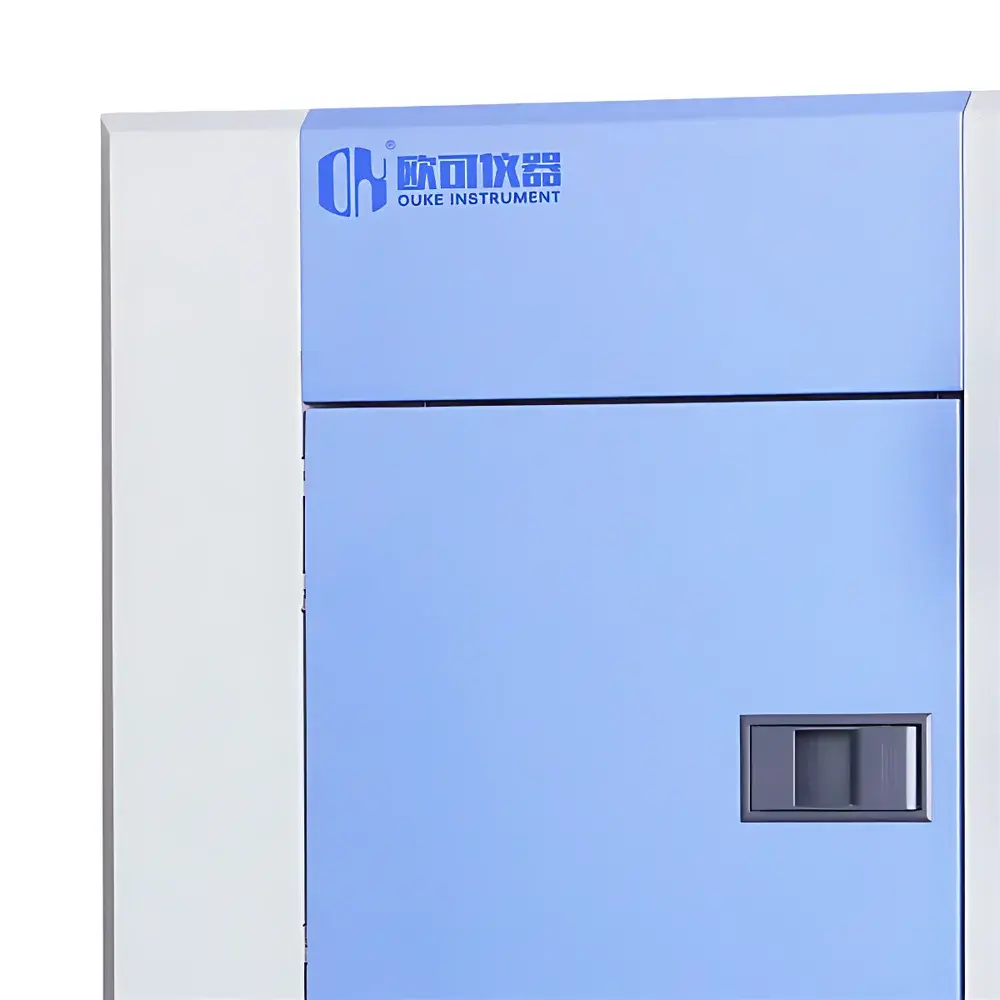
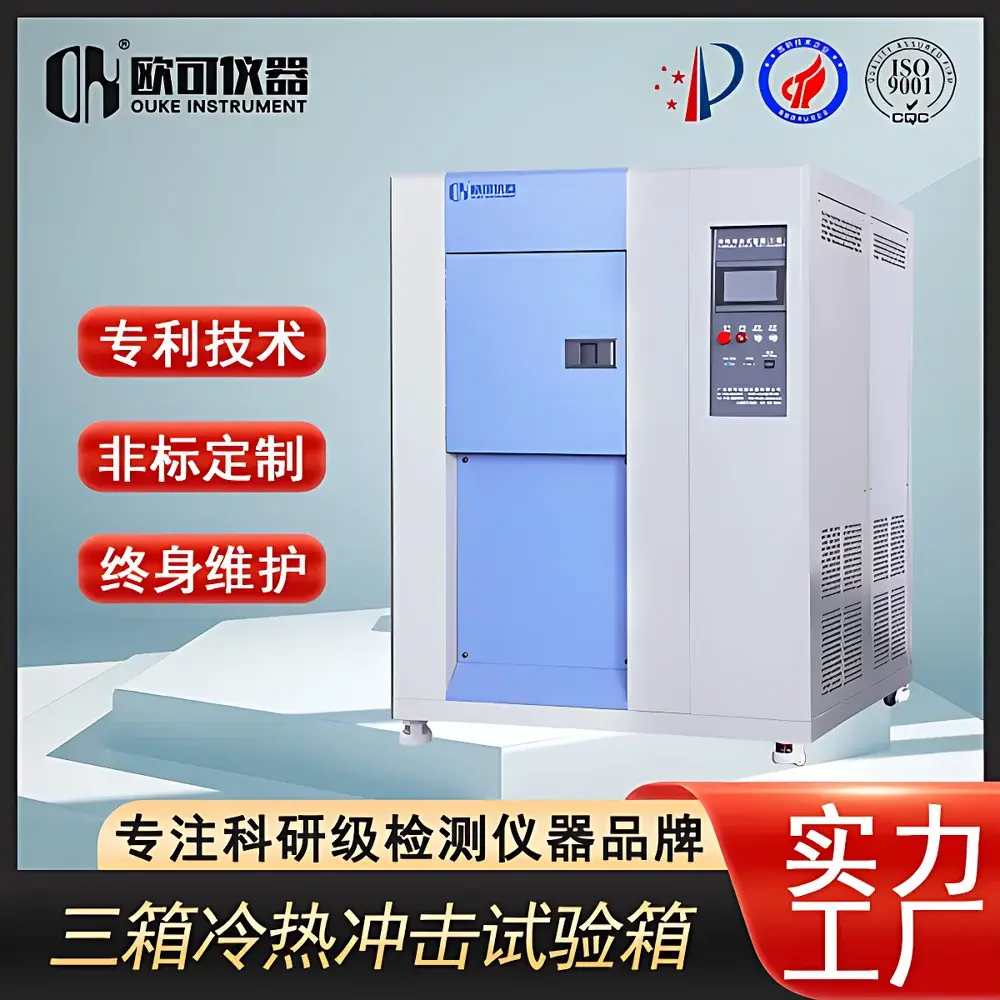
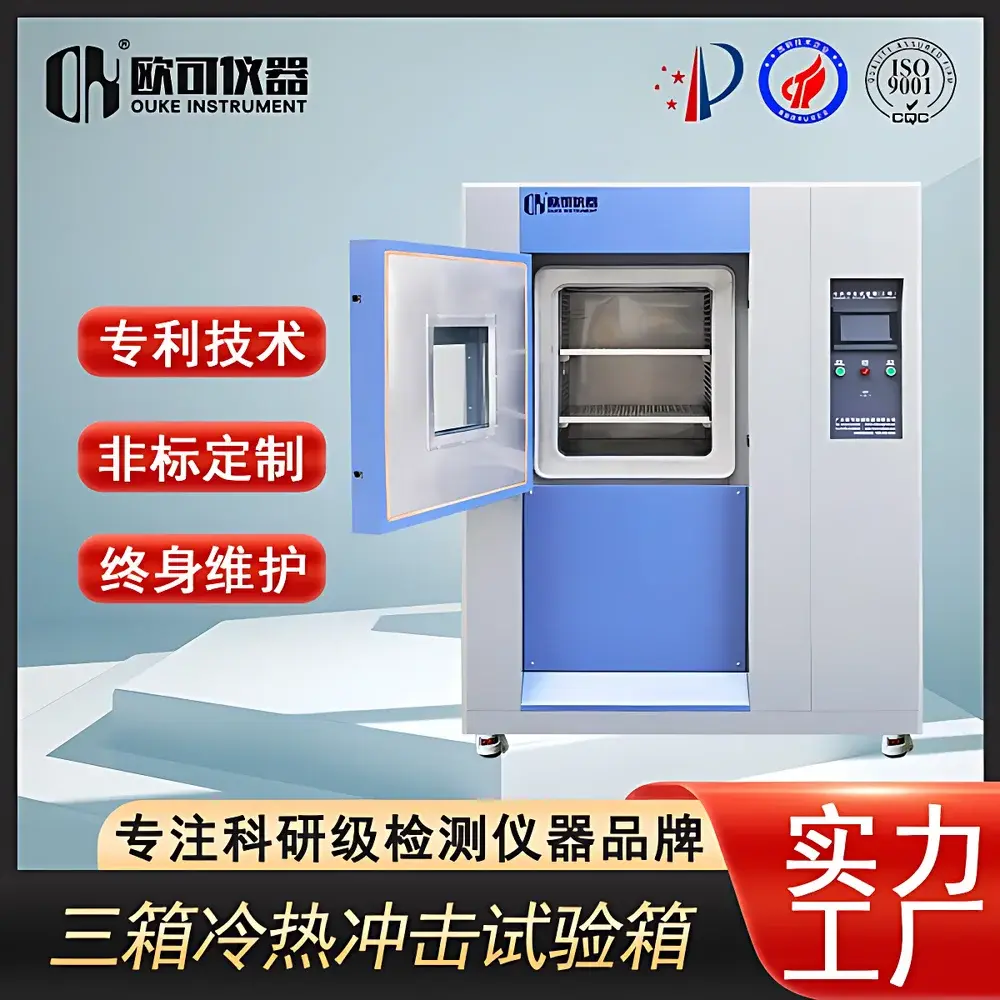
OK-TS-80.000 Thermal Shock Test Chamber
| Brand | OK Instruments |
|---|---|
| Origin | Guangdong, China |
| Manufacturer Type | Direct Manufacturer |
| Product Origin | Domestic |
| Model | OK-TS-80.000 |
| High Temperature Range | 150 °C |
| Low Temperature Range | −50 °C |
| Thermal Shock Range | −50 °C to 150 °C |
| Temperature Stability | ±2 °C |
| Heating Rate | 10 °C/min |
| Cooling Rate | 10 °C/min |
Overview
The OK-TS-80.000 Thermal Shock Test Chamber is an engineered environmental stress screening (ESS) system designed to evaluate product reliability under rapid, repetitive transitions between extreme high and low temperature extremes. Unlike conventional temperature cycling chambers that rely on gradual ramping, this chamber implements a true thermal shock profile—defined by abrupt, high-rate temperature shifts—to accelerate failure mechanisms rooted in coefficient of thermal expansion (CTE) mismatch, intermetallic growth, solder joint fatigue, die attach delamination, and packaging-induced stress in electronic assemblies and structural materials. The system conforms to the physical test principle specified in IEC 60068-2-14 (Test N: Change of Temperature), enabling standardized evaluation of thermal resilience in mission-critical components.
Key Features
- Two-chamber (basket-type) architecture with independent high-temperature (+150 °C) and low-temperature (−50 °C) zones, enabling mechanical transfer of test specimens between environments in <10 seconds
- Controlled thermal transition rates of up to 10 °C/min for both heating and cooling phases, supporting repeatable shock profiles per MIL-STD-883 Method 1010 and JESD22-A104
- Temperature stability maintained within ±2 °C across the full operating range, verified via calibrated PT100 sensors and PID-controlled refrigeration/heating loops
- Stainless steel inner chamber construction with multi-layer insulation and leak-tight sealing to ensure long-term thermal integrity and minimize energy drift
- Programmable test sequences including dwell time, number of cycles, ramp rate, and direction (high→low or low→high), compliant with GLP documentation requirements
- Integrated safety interlocks: over-temperature cut-off, compressor high-pressure protection, door open detection, and emergency stop circuitry
Sample Compatibility & Compliance
The OK-TS-80.000 accommodates samples up to standard basket dimensions (W×D×H: 400 × 400 × 400 mm), with a maximum load capacity optimized for PCBs, IC packages, automotive ECUs, LED modules, and aerospace-grade connectors. Its design supports both powered and unpowered testing configurations—though electrical feedthroughs are not integrated (external cabling required). The chamber meets essential regulatory alignment for environmental qualification workflows, including IEC 60068-2-14, GB/T 2423.22–2012, GJB 150.5A–2009, and JESD22-A104D. While not pre-certified for FDA 21 CFR Part 11, its data logging architecture supports audit-ready traceability when paired with validated third-party software platforms compliant with ALCOA+ principles.
Software & Data Management
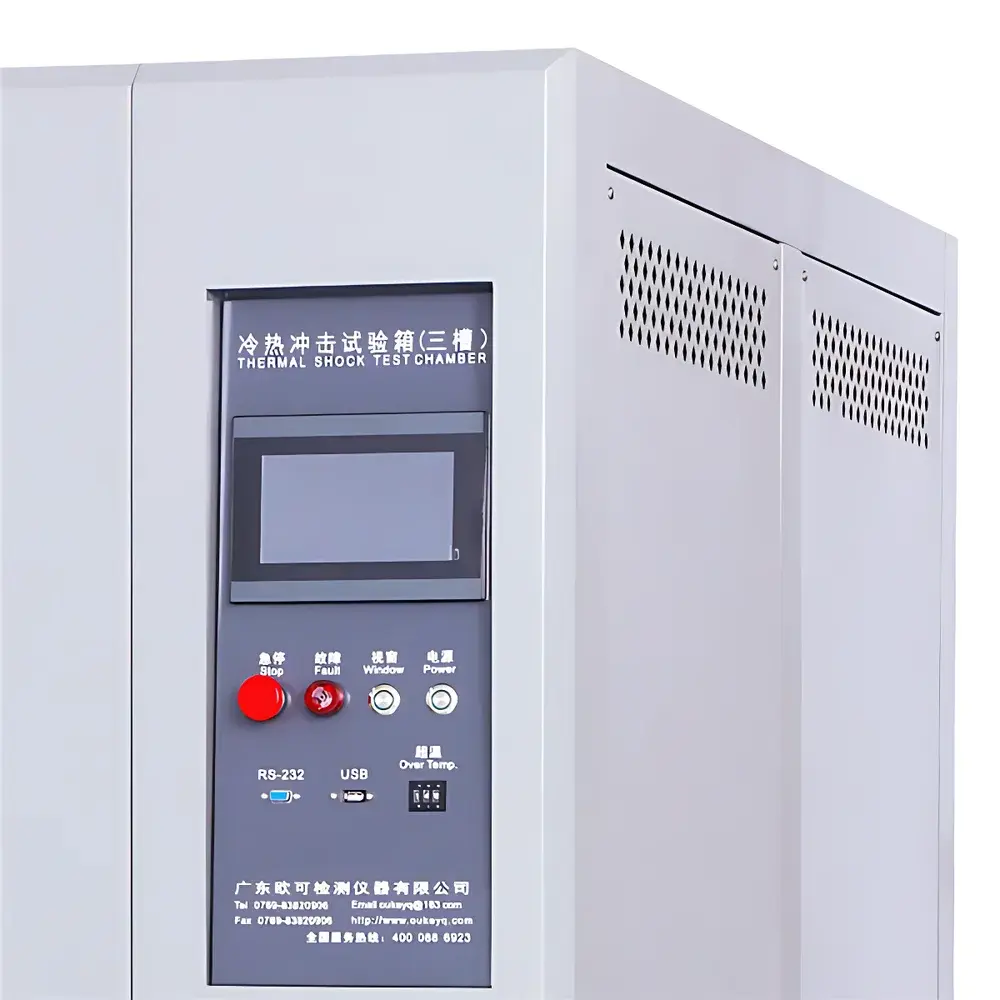
Equipped with a 7-inch color touchscreen HMI running embedded Linux firmware, the chamber provides real-time monitoring of chamber temperatures, cycle progress, and alarm status. All test parameters—including setpoints, dwell durations, and actual measured values—are logged at user-configurable intervals (1–60 s) and stored internally for ≥30 days. Data export is supported via USB 2.0 (CSV format) and optional RS485/Modbus RTU integration for SCADA-level connectivity. Optional PC-based software enables advanced sequence scripting, statistical process control (SPC) charting, and automated report generation aligned with ISO/IEC 17025 documentation templates.
Applications
- Electronics reliability engineering: Qualification of BGA, QFN, and wafer-level chip-scale packages; identification of popcorn cracking, wire bond lift, and underfill voiding
- Automotive electronics: Validation of ADAS sensors, battery management systems (BMS), and infotainment controllers per AEC-Q200 stress test requirements
- Aerospace & defense: Screening of avionics housings, radar modules, and composite structural joints per MIL-STD-810G/810H thermal shock protocols
- Materials science: Assessment of thermal cycling endurance in polymer matrix composites, ceramic substrates, and metal-ceramic hybrids used in high-power applications
- Quality assurance labs: In-process verification during new product introduction (NPI), incoming component inspection, and lot acceptance testing (LAT)
FAQ
What is the difference between thermal shock and temperature cycling?
Thermal shock involves rapid, discontinuous transitions between extreme temperature extremes (typically <15 s transfer time), inducing high transient stress gradients. Temperature cycling uses slower, continuous ramps (e.g., 1–3 °C/min) and longer dwell periods, simulating operational aging rather than catastrophic failure modes.
Does the OK-TS-80.000 support three-zone (static air transfer) configuration?
No—the OK-TS-80.000 implements a two-zone basket-transfer architecture. For static-sample applications requiring zero mechanical movement, a dedicated three-chamber variant (e.g., OK-TS-80.000-S) is available upon request.
Can the chamber be integrated into an automated test line?
Yes—via Modbus RTU or optional Ethernet/IP interface, enabling synchronization with robotic handlers, barcode scanners, and MES systems for high-throughput production validation.
Is calibration certification included with delivery?
A factory calibration report (traceable to NIM, China) is provided. On-site IQ/OQ validation support and annual recalibration services are available under separate service agreement.



