
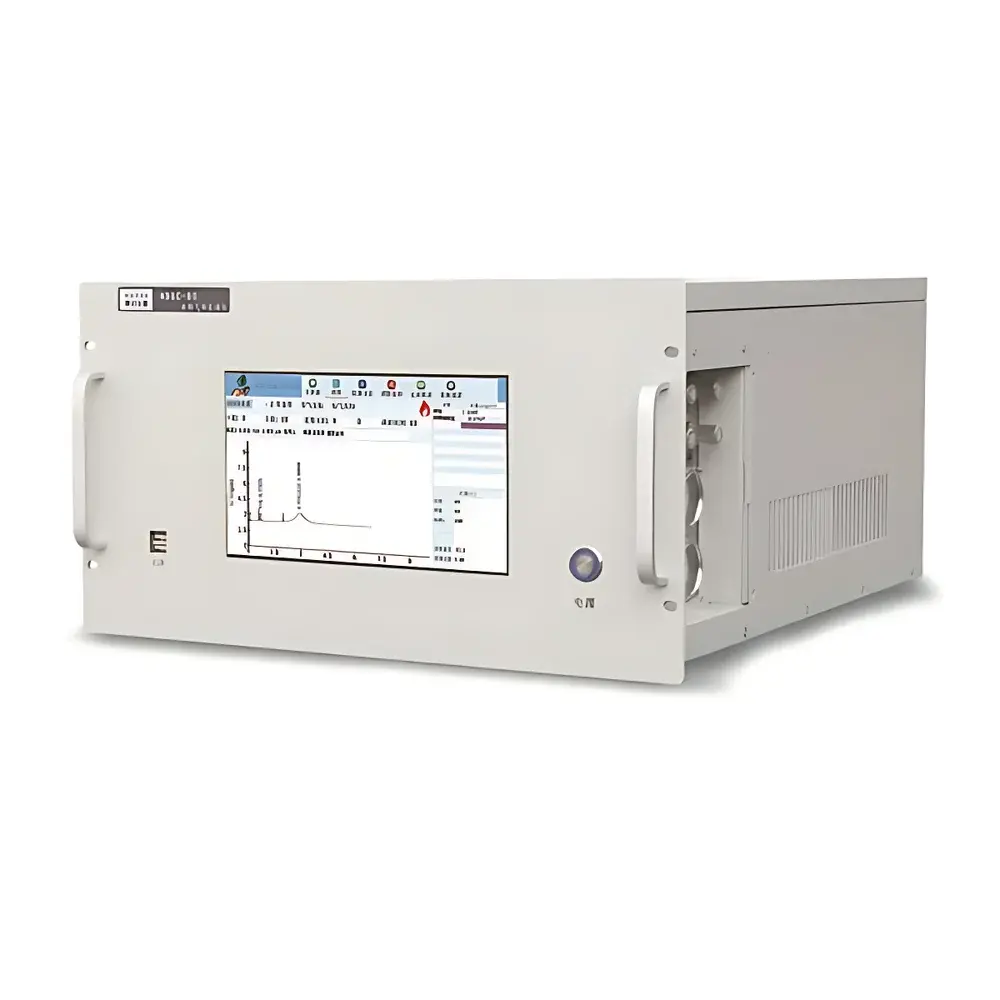
NBGC-60 HUIFEN Online Gas Chromatograph for Methane, Non-Methane Hydrocarbons (NMHC), and BTEX
| Brand | HUIFEN Instrument |
|---|---|
| Origin | Shandong, China |
| Manufacturer Type | Authorized Distributor |
| Product Category | Domestic |
| Model | NBGC-60 |
| Instrument Type | Online Gas Chromatograph |
| Application Field | Environmental Monitoring |
Overview
The NBGC-60 HUIFEN Online Gas Chromatograph is a dedicated, fully automated analytical system engineered for continuous, real-time quantification of methane (CH₄), non-methane hydrocarbons (NMHC), and aromatic volatile organic compounds—specifically benzene, toluene, ethylbenzene, and xylene isomers (BTEX)—in gaseous environmental matrices. Based on proven capillary gas chromatography with flame ionization detection (GC-FID), the system implements dual-column parallel separation architecture optimized for hydrocarbon speciation and group-type resolution. It operates under standardized temperature-programmed elution protocols compliant with EPA Method 25A, ISO 11890-2, and HJ 1012–2018 (Chinese standard for VOC monitoring from stationary sources). Designed for unattended operation in harsh field environments, the NBGC-60 integrates sample conditioning, pre-concentration (if configured), column oven thermal management, detector stabilization, and data acquisition into a single industrial-grade chassis rated for IP54 enclosure protection.
Key Features
- Modular hardware architecture enabling rapid field maintenance and configuration flexibility for source-specific deployment—e.g., stack exhaust, fence-line perimeter, or ambient air monitoring stations.
- Integrated sample introduction system featuring heated stainless-steel sampling line (up to 180 °C), particulate filtration, moisture removal via Nafion® membrane dryer or chilled trap, and pressure-regulated flow control (0.5–2.0 L/min).
- Dual independent GC channels: one optimized for C₁–C₂ hydrocarbons (including CH₄/NMHC split calculation), the other configured with a polar PLOT column for baseline-resolved BTEX separation within ≤12 min cycle time.
- FID detector with linear dynamic range of 10⁷, calibrated sensitivity ≤0.1 ppm C₁ (as propane equivalent), and drift <±2% over 72 h under stable operating conditions.
- Onboard embedded controller running Linux-based firmware with dual Ethernet ports (one for instrument LAN, one for upstream data transmission), supporting Modbus TCP, OPC UA, and custom ASCII protocol for integration with third-party data acquisition units (DAUs) and environmental information platforms.
- Dynamic parameter lockout and audit-trail logging: All method parameters, calibration events, and system status changes are timestamped and stored locally with write-protection; remote modification requires multi-level authentication per China’s HJ 212–2017 data transmission specification.
Sample Compatibility & Compliance
The NBGC-60 accepts gaseous samples directly from fixed emission sources (e.g., smokestacks, process vents), ambient air (via active suction or passive diffusion inlet), or boundary-line monitoring points. Sample matrix compatibility includes humid air (RH ≤90%, non-condensing), low-particulate industrial off-gases, and municipal wastewater treatment headspace. The system conforms to technical requirements outlined in HJ 1012–2018 (Online Monitoring Technical Specification for Volatile Organic Compounds in Fixed Pollution Sources), HJ 212–2017 (Data Transmission Standard for Environmental Monitoring Instruments), and GB/T 32205–2015 (General Technical Conditions for Online Analyzers). Optional configurations support GLP-aligned operation with electronic signature capability and 21 CFR Part 11–compliant audit trail generation when paired with validated software modules.
Software & Data Management
The NBGC-60 is operated via HUIFEN’s proprietary ChromoView™ v3.x software suite, deployed on an embedded ARM-based controller with 8 GB eMMC storage and 256 MB RAM. Software functions include method scheduling, automatic zero/span calibration (with certified gas standards), peak integration using valley-to-valley and tangent skim algorithms, NMHC calculation per EPA-defined subtraction logic (Total Hydrocarbons – Methane), and BTEX quantification against multi-point external calibration curves. Raw chromatograms, processed results, diagnostic logs, and instrument health metrics are exported in CSV/NetCDF format. Data upload to provincial or national environmental monitoring platforms (e.g., China’s National Platform for Emission Monitoring) occurs via secure TLS 1.2–encrypted HTTP POST or MQTT, with configurable retry logic and local buffer retention during network outages (>72 h at 1-min intervals).
Applications
- Continuous compliance monitoring of VOC emissions from petrochemical refineries, paint manufacturing facilities, pharmaceutical synthesis plants, and coating application lines.
- Fence-line monitoring for early detection of fugitive emissions and verification of LDAR (Leak Detection and Repair) program effectiveness.
- Ambient air quality assessment in industrial zones, particularly for benzene—a known human carcinogen regulated under WHO Air Quality Guidelines and EU Directive 2004/107/EC.
- Source apportionment studies where speciated hydrocarbon profiles serve as chemical fingerprints for receptor modeling (e.g., PMF, CMB).
- Process optimization support in waste gas treatment systems (e.g., RTO, carbon adsorption beds) by tracking inlet/outlet VOC loadings and destruction/removal efficiency (DRE).
FAQ
What regulatory standards does the NBGC-60 meet for environmental reporting?
It complies with HJ 1012–2018, HJ 212–2017, and GB/T 32205–2015; optional firmware upgrades enable alignment with ISO 21258 (stationary source monitoring) and ASTM D6348 (gaseous VOC analysis by GC-FID).
Can the system operate without continuous internet connectivity?
Yes—the onboard controller stores all raw data and event logs locally; synchronized transmission resumes automatically upon network recovery, preserving data integrity and chronological continuity.
Is calibration traceable to national standards?
Calibration gases used must be certified to GB/T 5274 (equivalent to ISO 6141) with uncertainty ≤2%; HUIFEN provides calibration certificate templates compatible with CNAS-accredited laboratories.
How is data tampering prevented during remote access?
All configuration changes require dual-factor authentication (local PIN + remote token); every action is immutably logged with operator ID, timestamp, and pre-/post-value snapshots, satisfying HJ 212–2017 anti-tampering requirements.
What maintenance intervals are recommended for field deployment?
FID nozzle cleaning and detector gas filter replacement every 90 days; column bake-out weekly; full system performance verification (including retention time stability and sensitivity check) every 180 days per HJ 1012–2018 Annex C guidelines.




