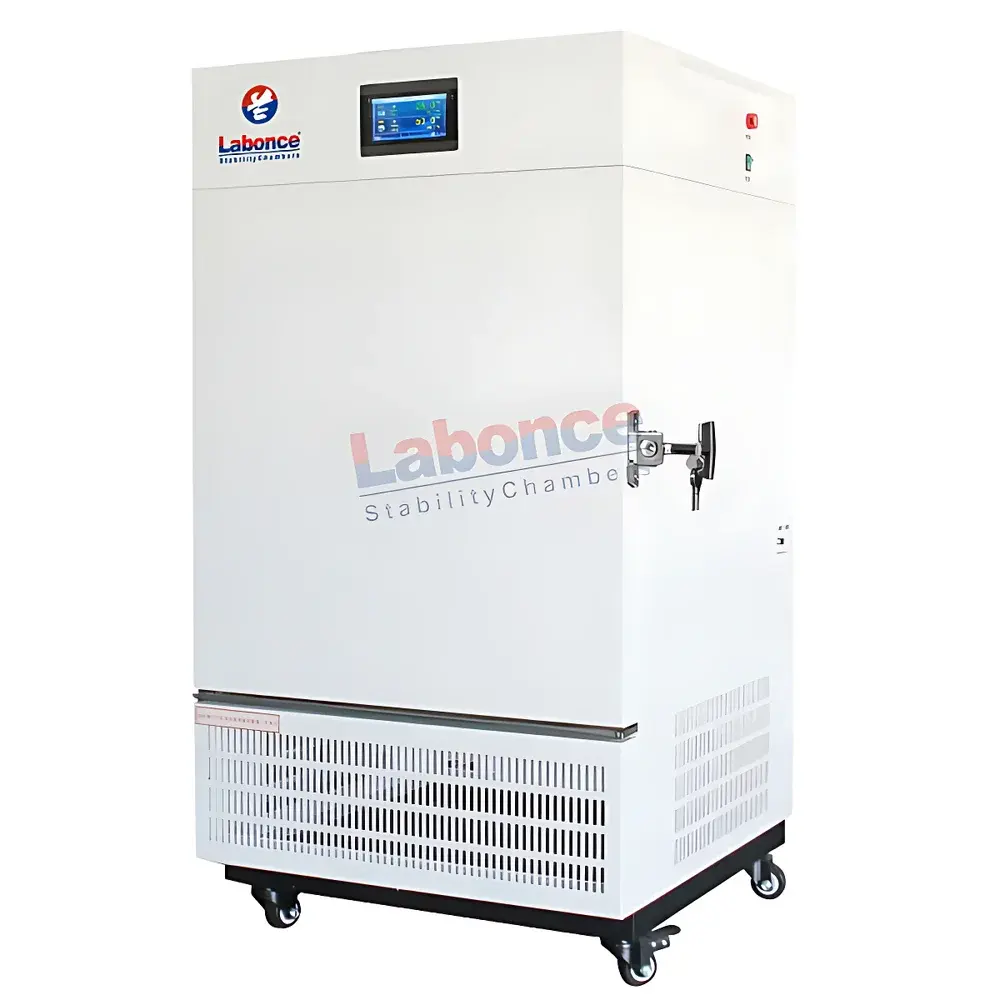
Labonce Labonce-500MI Mold Incubator
| Brand | Labonce |
|---|---|
| Model | Labonce-500MI |
| Temperature Range | 0–60°C |
| Chamber Volume | 500 L |
| Internal Dimensions (W×D×H) | 680×680×1080 mm |
| External Dimensions (W×D×H) | 860×1050×1850 mm |
| Power Consumption | 1.2 kW |
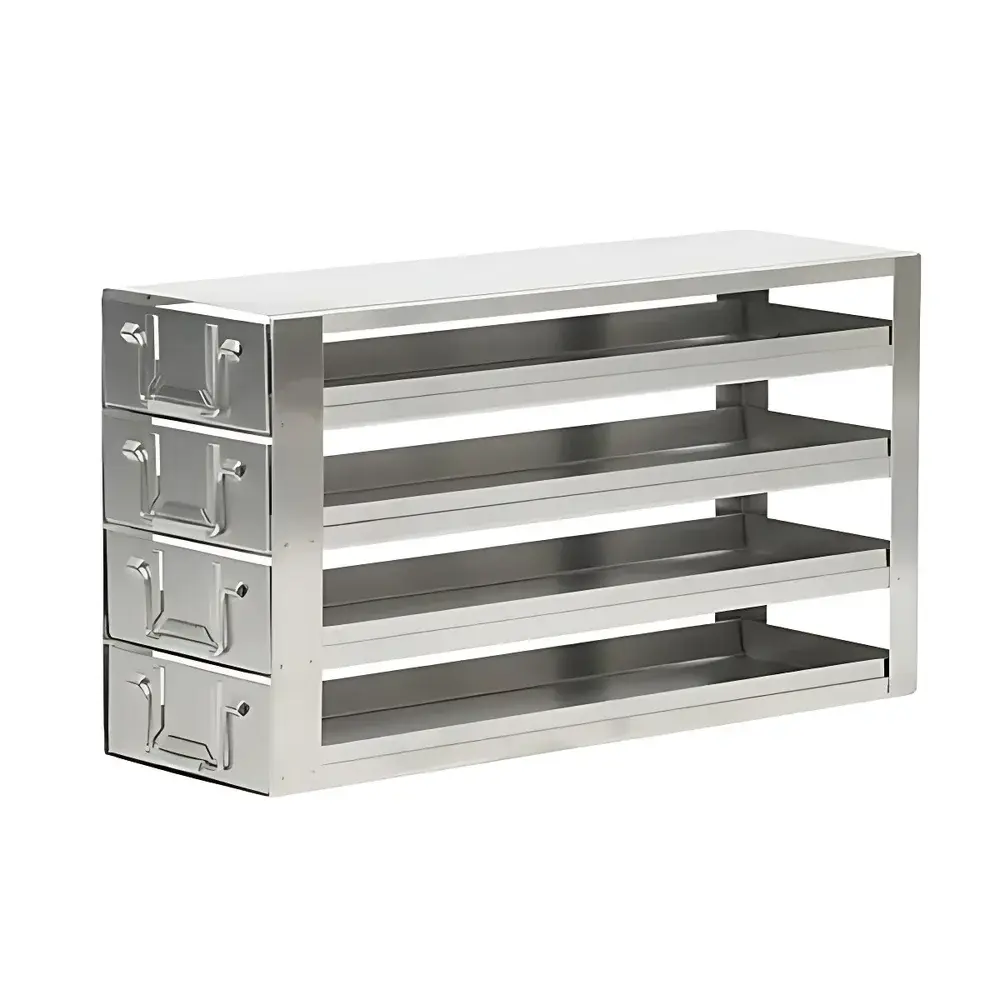
| Standard Shelving | 4 stainless steel shelves (adjustable) |
| Temperature Uniformity | ≤2.0°C at 37°C |
| Temperature Fluctuation | ±0.5°C (high-temp range), ±1.0°C (low-temp range) |
| Construction | Exterior – powder-coated steel |
Overview
The Labonce Labonce-500MI Mold Incubator is a purpose-engineered environmental chamber designed for precise, stable, and contamination-controlled cultivation of filamentous fungi, yeasts, and other moisture-tolerant microorganisms under regulated thermal conditions. Unlike general-purpose incubators, the Labonce-500MI implements a dedicated airflow architecture optimized for low-velocity, high-uniformity circulation—critical for minimizing thermal gradients across large-volume fungal cultures and preventing desiccation of agar-based media during extended BOD5, mycological isolation, or antibiotic susceptibility testing. Its operational range of 0–60°C supports both mesophilic (e.g., Aspergillus niger, Penicillium chrysogenum) and thermotolerant mold strains, while its robust stainless-steel 304 chamber ensures compliance with ISO 14644-1 Class 7 cleanroom-compatible handling protocols and eliminates organic residue retention between cycles.
Key Features
- Optimized laminar air distribution system delivering ≤2.0°C temperature uniformity at 37°C across full 500 L working volume—validated per ASTM E2874-22 for incubator performance verification.
- Double-walled construction with high-density polyurethane insulation and externally mounted hermetic refrigeration unit (imported industrial-grade compressor) enabling rapid thermal recovery after door opening and sustained operation at ambient temperatures up to 35°C.
- Full mirror-finish AISI 304 stainless-steel interior—electropolished and weld-seam minimized—to resist corrosion from repeated ethanol, hydrogen peroxide, or sodium hypochlorite decontamination; compliant with USP surface material requirements.
- LCD-based microprocessor controller with real-time display of setpoint, actual chamber temperature, fan speed (3-level adjustment), and elapsed runtime; supports ramp-soak programming for multi-stage incubation protocols.
- Integrated safety architecture including dual independent temperature limit sensors, compressor thermal overload protection, pressure switch monitoring, and localized audible alarm—meeting IEC 61010-1 Clause 11.3 for laboratory equipment safety.
- Standard equipment includes UV-C germicidal lamp (254 nm), interior LED illumination, Ø50 mm external access port with silicone plug, four adjustable 304 stainless steel shelves (load capacity: 15 kg/shelf), and leveling casters with brakes.
Sample Compatibility & Compliance
The Labonce-500MI accommodates standard microbiological formats including Petri dishes (90–150 mm), slant tubes, broth culture flasks (up to 2 L), and multi-well plates stacked on reinforced shelving. Its chamber geometry and airflow profile have been validated for uniform heat transfer across heterogeneous sample loads—essential for regulatory submissions requiring reproducible colony morphology (e.g., EP 2.6.12, JP 4.05). The unit conforms to EN 61000-6-3 (EMC emission limits) and EN 61000-6-2 (immunity), and when equipped with the optional MIT touchscreen controller, provides full audit trail logging, electronic signatures, and role-based access control aligned with FDA 21 CFR Part 11 and EU Annex 11 requirements.
Software & Data Management
Onboard non-volatile memory logs temperature readings at user-selectable intervals (1–60 min), storing ≥12 months of continuous data (timestamped, with sensor ID). Raw logs export via USB 2.0 to CSV format for traceability in LIMS or ELN systems. The integrated thermal printer produces time-stamped hardcopy records of current conditions, alarms, and calibration events—supporting GLP documentation standards. With the MIT controller upgrade, users gain password-protected tiered access (Administrator/Operator/Viewer), automated report generation (PDF/XLSX), and encrypted local database backup—enabling full compliance with ISO/IEC 17025 clause 7.7 on result reporting integrity.
Applications
- Biochemical Oxygen Demand (BOD5) analysis per ISO 5815-1 and APHA Standard Methods 5210B, maintaining strict 20 ± 1°C conditions for seeded dilution water incubation.
- Mycological identification workflows per CLSI M38-A3, including sporulation induction for dermatophytes and dimorphic fungi at defined temperature shifts (e.g., 25°C → 37°C conversion).
- Pharmaceutical stability testing of non-sterile products per ICH Q1A(R2), supporting long-term and accelerated storage condition simulation (e.g., 25°C/60% RH equivalent via dry-heat correlation).
- Environmental monitoring of air/water samples per ISO 11133:2014—particularly for enumeration of Cladosporium, Alternaria, and Stachybotrys on malt extract agar or dichloran-glycerol agar.
- QC release testing of fermentation-derived biologics where residual mold contamination must be excluded per USP and Ph. Eur. 2.6.12.
FAQ
What is the maximum ambient temperature at which the Labonce-500MI maintains specified temperature uniformity?
The unit is rated for continuous operation in environments up to +35°C ambient, provided adequate ventilation clearance (≥100 mm rear/side) is maintained per installation guidelines.
Does the standard model include humidity control?
No—the Labonce-500MI is a temperature-only incubator. Humidity regulation is available exclusively in the Labonce-500MIS variant (15–50°C / 50–85% RH), which employs separate ultrasonic humidification and desiccant-based dehumidification modules.
Can the internal UV lamp be operated while samples are present?
No—UV-C irradiation is interlocked with the door switch and automatically deactivates upon opening; it is intended solely for post-cycle chamber decontamination and must not be used during active incubation.
Is the printer output compliant with 21 CFR Part 11 record retention requirements?
Thermal printouts meet ALCOA+ principles for attributable, legible, contemporaneous, original, and accurate records; however, electronic audit trails and signature controls require the MIT touchscreen controller upgrade.
What calibration documentation is supplied with shipment?
Each unit ships with a factory-verified calibration certificate (NIST-traceable RTD sensors), including as-found/as-left data at three points (15°C, 37°C, 55°C) per ISO/IEC 17025-accredited procedures.