
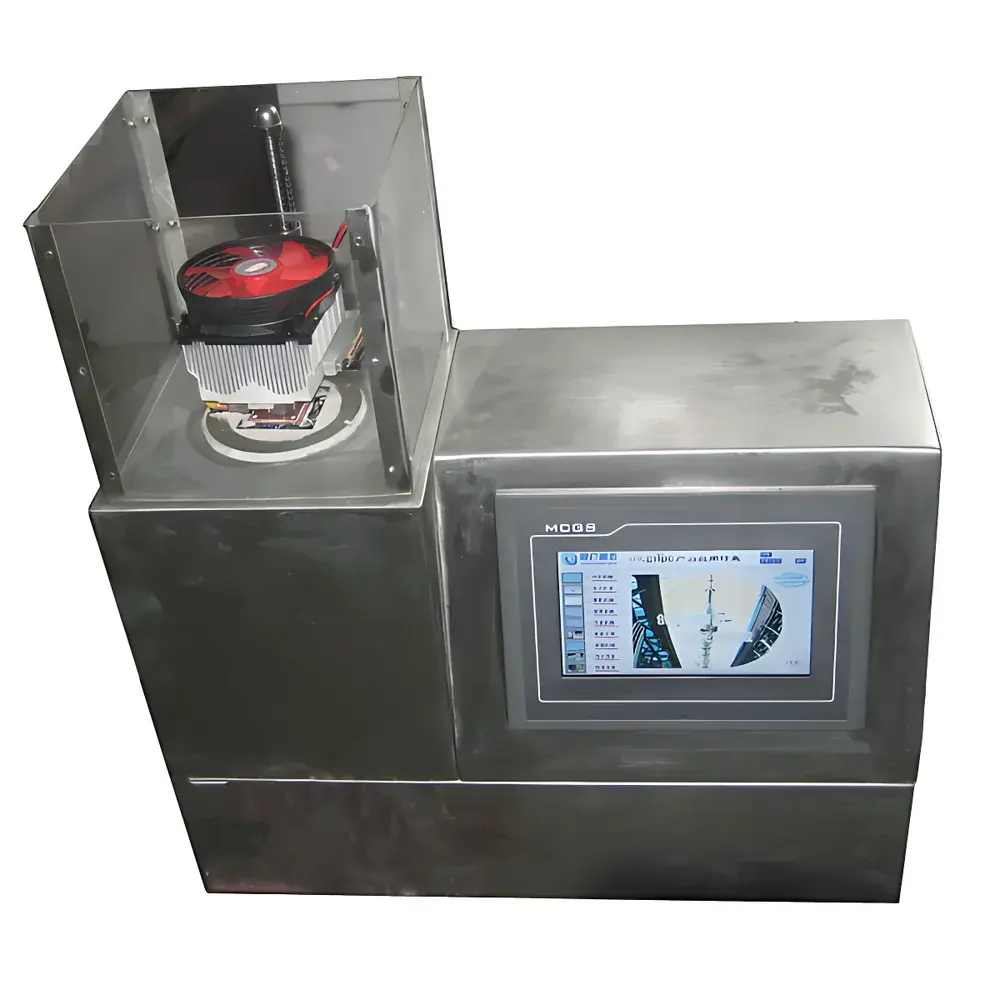
DRX-II-RW Thermal Conductivity Analyzer (Heat Flow Method)
| Origin | Hunan, China |
|---|---|
| Manufacturer Type | Distributor |
| Product Origin | Domestic |
| Model | DRX-II-RW |
| Price Range | USD 7,000–14,000 |
| Instrument Type | Heat Flow Method |
| Dimensions (L×W×H) | 550 × 450 × 780 mm |
| Accuracy | ±3% |
| Thermal Conductivity Range | 0.5–100 W/(m·K) |
| Repeatability | ≤±1% |
| Specific Heat Measurement Accuracy | ±7% |
| Thermal Diffusivity Measurement Accuracy | ±5% |
| Operating Temperature Range | 20–300 °C |
| Sample Diameter | 15–50 mm |
| Sample Thickness | 1–50 mm |
| Compliance Standards | GB 5598–1985, GB 11205–1989, MIL-I-49456A, ASTM D5470–06 |
Overview
The DRX-II-RW Thermal Conductivity Analyzer is a precision heat flow method instrument engineered for reliable, standardized measurement of thermal conductivity (λ), thermal diffusivity (α), and specific heat capacity (Cp) of solid and semi-solid materials across industrial R&D and quality control laboratories. Based on the steady-state longitudinal heat flow principle—where a known temperature gradient is established across a sample under controlled boundary conditions—the system quantifies conductive heat transfer per unit area and temperature gradient. This method complies with internationally recognized test protocols including ASTM D5470–06 (Standard Test Method for Thermal Transmission Properties of Thermally Conductive Electrical Insulation Materials), GB 5598–1985 (for ceramic insulators), and MIL-I-49456A (for military-grade thermal interface materials). Designed for reproducible thermal property characterization in ambient to elevated temperature environments (20–300 °C), the DRX-II-RW delivers traceable data essential for material qualification in electronics thermal management, aerospace composites, battery module design, and advanced packaging development.
Key Features
- Steady-state heat flow architecture with dual-sensor thermal flux detection for minimized edge-loss error and enhanced signal stability
- Integrated temperature-controlled hot/cold plates with PID-regulated heating and active cooling, ensuring uniform thermal gradient across sample thickness
- Automated calibration routine using NIST-traceable reference standards (e.g., certified PMMA, stainless steel, and graphite) prior to each test sequence
- Modular sample holder design accommodating discs (15–50 mm diameter), slabs (1–50 mm thickness), coatings, thin films, anisotropic laminates, and powdered compacts (with optional compression fixture)
- Real-time thermal equilibrium monitoring via embedded thermocouples at both plate interfaces and sample mid-plane
- Robust mechanical frame with low-thermal-conductivity insulation housing to suppress environmental thermal drift during extended measurements
Sample Compatibility & Compliance
The DRX-II-RW supports diverse physical forms: rigid and flexible solids (e.g., thermal interface pads, ceramic substrates, metal matrix composites), particulate media (compacted powders, granules), thin-film layers (≤100 µm), surface coatings, and anisotropic structures such as fiber-reinforced polymers or layered graphite foils. Liquid-phase testing requires an optional sealed cell configuration with quartz windows and inert gas purging to prevent convection interference—validated per ASTM D7896–19 methodology. All test procedures align with ISO 22007–2 (plastics), ASTM C177 (flat-slab apparatus), and USP for thermal characterization of pharmaceutical excipients. System documentation supports GLP/GMP audit readiness, including full electronic record retention, user access controls, and 21 CFR Part 11–compliant audit trails when paired with validated software modules.
Software & Data Management
The DRX-II-RW operates exclusively via its proprietary ThermalLab v3.2 software platform—a Windows-based application developed for scientific thermal analysis workflows. The interface enables fully automated test sequencing, real-time visualization of temperature gradients and heat flux convergence, iterative curve-fitting for λ/α/Cp derivation, and export of raw sensor logs in CSV and HDF5 formats. Calibration certificates, uncertainty budgets (per GUM guidelines), and comparative reports against reference materials are auto-generated in PDF with embedded digital signatures. Data integrity safeguards include role-based permissions (admin/operator/viewer), timestamped revision history, and encrypted local database storage compliant with IEC 62443-3-3 cybersecurity requirements for laboratory instrumentation.
Applications
- Thermal interface material (TIM) qualification for CPU/GPU cooling solutions and power electronics packaging
- Characterization of electrically insulating yet thermally conductive ceramics (AlN, BeO, SiC) used in high-power modules
- Process validation of thermally conductive adhesives, gap fillers, and phase-change materials in EV battery thermal management systems
- Quality assurance of carbon fiber prepregs, thermal barrier coatings, and aerospace-grade polymer composites
- Regulatory submission support for medical device thermal safety assessments (IEC 60601-1 Clause 11)
- R&D screening of novel nanocomposites, aerogels, and bio-based insulation materials
FAQ
What measurement principle does the DRX-II-RW employ?
It utilizes the steady-state heat flow method (also known as the guarded hot plate or modified hot plate technique), where thermal conductivity is derived from Fourier’s law using measured temperature gradient and heat flux across a homogeneous sample under equilibrium conditions.
Can it measure anisotropic materials?
Yes—by orienting samples to align principal thermal axes with the heat flow direction and applying directional calibration corrections per ISO 10456 Annex B.
Is liquid testing supported out-of-the-box?
No; liquid-phase analysis requires the optional Liquid Cell Accessory Kit, which includes hermetic sealing, optical-grade windows, and convective suppression protocols per ASTM D7896.
Does the system meet FDA or ISO 17025 requirements?
While the hardware itself is not certified, its documented metrology chain, traceable calibrations, and software audit features enable laboratories to demonstrate compliance during ISO/IEC 17025:2017 accreditation audits and FDA pre-submission reviews.
What is the minimum required sample thickness for accurate measurement?
1 mm is the lower limit for solid discs; thinner films require the optional micro-thickness adapter with enhanced surface contact pressure control and interfacial resistance compensation algorithms.



