
UV Accelerated Weathering Test Chamber with Metal Halide Lamp – Super UV Series
| Key Specifications | Temperature Range: RT to 85 °C (Operating Range: 50 ±10 °C) |
|---|---|
| Heating Rate | ≤25 min (RT → 85 °C) |
| Temp. Control Accuracy | ±0.5 °C |
| Humidity Control Accuracy | ±2.0 % RH |
| Temp. Uniformity | ±2.0 °C |
| Humidity Uniformity | ±3.0 % RH |
| Humidity Range | 40–70 % RH (Illuminated) / 50–90 % RH (Dark Cycle) |
| Light Source | 2.5 kW Air-Cooled Metal Halide Lamp (1 unit) |
| Spectral Output | 295–450 nm |
| Irradiance | 200 ±8 W/m² (at sample plane) |
| Irradiance Uniformity | ≥90 % |
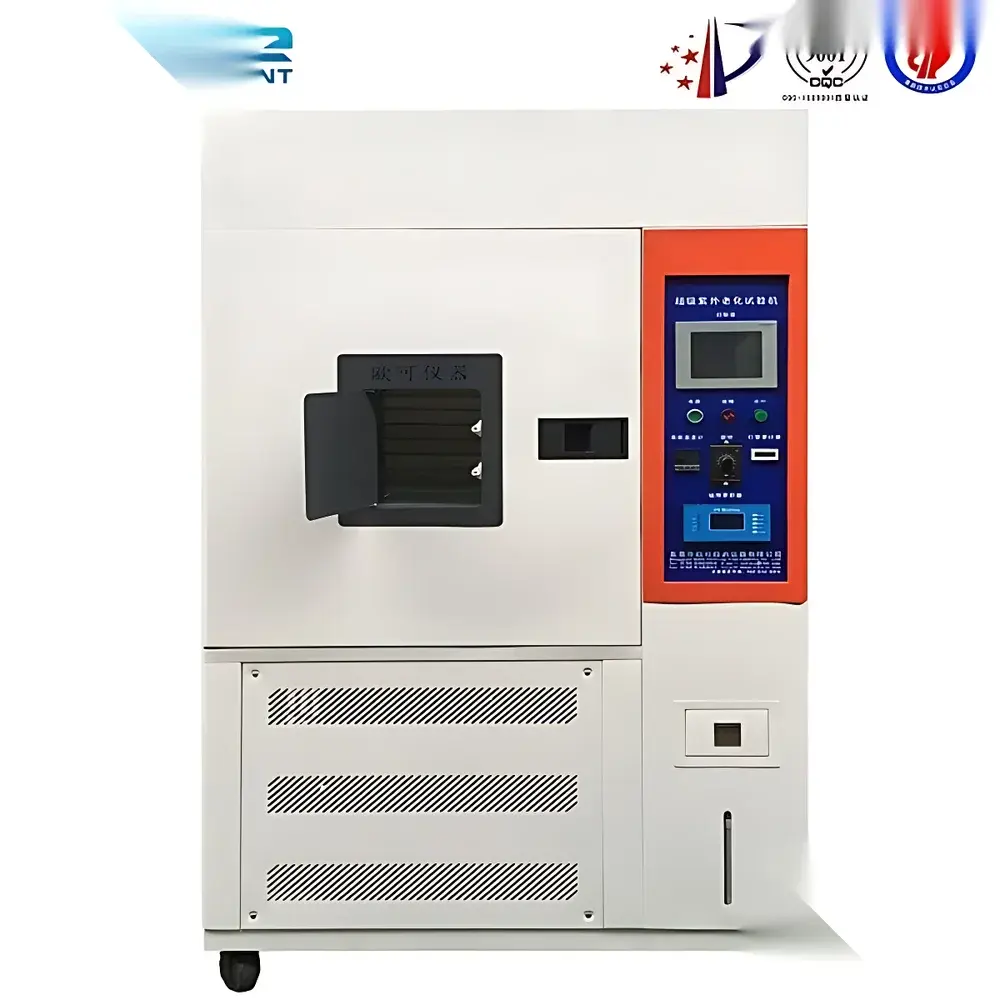
| Sample Tray Dimensions | 500 × 400 mm |
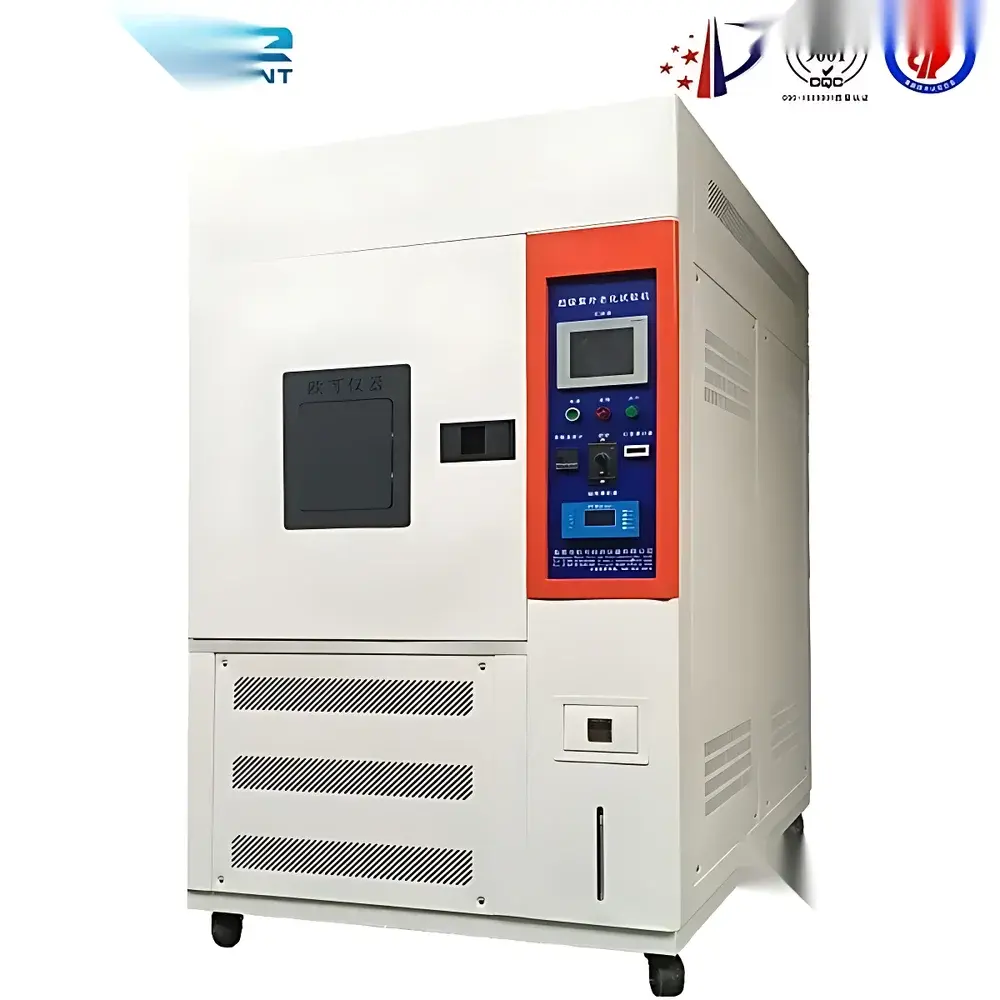
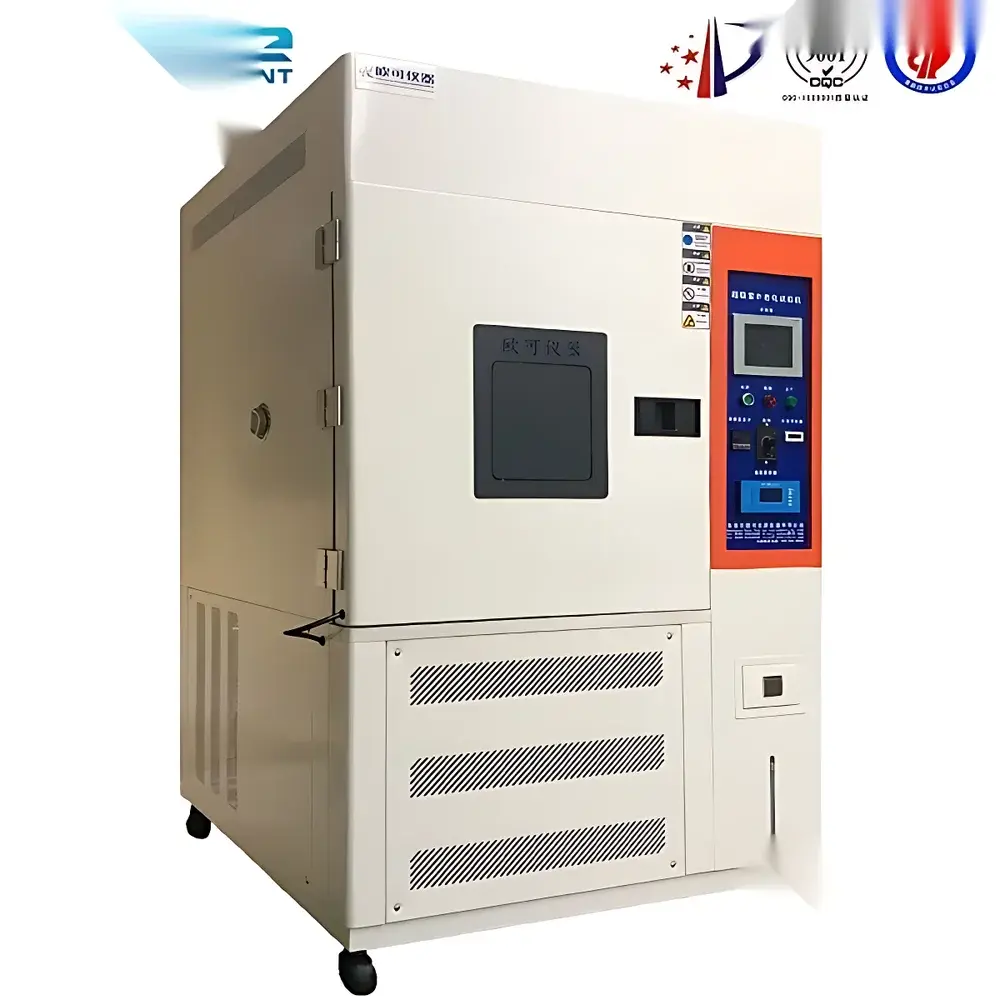
| Illumination Geometry | Top-mounted lamp with reflective direct irradiation |
Overview
The Super UV Series UV Accelerated Weathering Test Chamber is an engineered environmental test system designed for rigorous simulation of solar radiation-induced degradation under controlled thermal and hygrothermal stress conditions. Unlike fluorescent UV systems, this chamber employs a high-intensity air-cooled metal halide lamp as its primary radiation source — delivering a continuous, broad-spectrum output from 295 nm to 450 nm that closely replicates the terrestrial solar spectral distribution, particularly in the critical UV-A and visible regions. This spectral fidelity enables accelerated assessment of photochemical degradation mechanisms such as polymer chain scission, chromophore bleaching, and oxidative crosslinking. The chamber integrates precise temperature and humidity control with programmable irradiance regulation to replicate realistic outdoor exposure cycles — including light/dark, wet/dry, and condensation phases — allowing laboratories to compress years of natural weathering into days or weeks while maintaining metrological traceability and experimental repeatability.
Key Features
- High-fidelity solar spectrum simulation using a 2.5 kW air-cooled metal halide lamp, filtered to match extraterrestrial and atmospheric transmission characteristics (equivalent to 3 mm borosilicate glass-filtered solar irradiance)
- Precise irradiance control at 200 ±8 W/m² across the sample plane, with uniformity ≥90 % — validated per ASTM G155 Annex A3 and ISO 4892-2 calibration protocols
- Independent dual-control climate system enabling simultaneous and stable regulation of temperature (RT to 85 °C, ±0.5 °C accuracy) and relative humidity (40–90 % RH, ±2.0 % RH accuracy)
- Programmable exposure cycles supporting multi-phase testing: irradiation + condensation, irradiation + water spray, dark condensation, and humidity hold — compliant with ASTM D4329, ISO 4892-2, and SAE J2020
- Top-mounted lamp configuration with optimized reflector geometry ensures direct, collimated illumination and minimizes shadowing effects on vertically oriented specimens
- Stainless-steel interior chamber with corrosion-resistant construction, integrated drain ports, and IP54-rated electrical components for long-term operational reliability
- Real-time monitoring of irradiance, chamber temperature, specimen surface temperature (optional), and humidity via calibrated digital sensors with NIST-traceable calibration certificates available
Sample Compatibility & Compliance
The chamber accommodates flat-panel specimens up to 500 × 400 mm on a removable stainless-steel sample tray, compatible with standard ISO 11341, ASTM D6695, and GB/T 1865 test coupons. It supports rigid and semi-flexible substrates including automotive coatings, architectural paints, plastic composites, geotextiles, and photovoltaic encapsulants. All operational parameters comply with international standards governing accelerated weathering test methodology, including ISO 4892-2 (Plastics — Methods of exposure to laboratory light sources — Part 2: Xenon-arc lamps), ASTM G155 (Standard Practice for Operating Xenon Arc Light Apparatus for Exposure of Non-Metallic Materials), and IEC 61215-2 (for PV module qualification). While not a xenon arc system, its metal halide spectral profile has been validated for correlation studies against outdoor Florida and Arizona exposures per ASTM G154 Annex B and ISO TR 11341 Annex C.
Software & Data Management
The system operates via an embedded industrial-grade controller with a 7-inch capacitive touchscreen HMI, supporting up to 99 programmable test profiles with stepwise sequencing (irradiance, temperature, humidity, spray duration, condensation time). Data logging records all critical parameters at user-defined intervals (1 s to 60 min resolution), stored internally for ≥30 days and exportable via USB or Ethernet to CSV or XML formats. Optional software packages provide remote monitoring, audit trail generation (aligned with FDA 21 CFR Part 11 requirements), electronic signature capability, and automated report generation compliant with GLP and ISO/IEC 17025 documentation standards. Calibration history, sensor drift compensation logs, and lamp usage tracking are maintained to support laboratory accreditation audits.
Applications
- Automotive OEMs and Tier-1 suppliers evaluating UV resistance of interior trims, exterior clearcoats, and headlamp lenses
- Architectural coating manufacturers validating color retention, gloss stability, and chalking resistance per AAMA 2605 and EN 10294
- Photovoltaic material developers assessing encapsulant yellowing, backsheet delamination, and EVA discoloration under combined UV/thermal/humidity stress
- Medical device packaging labs verifying sterility barrier integrity and print adhesion after accelerated aging (ISO 11607-1)
- Research institutions conducting mechanistic studies on photo-oxidation kinetics in polymeric matrices using in situ FTIR or Raman coupling (via optional viewport port)
- Quality control laboratories performing routine lot-release testing against internal weathering specifications aligned with ASTM D4329 Class I or II exposure protocols
FAQ
What distinguishes this metal halide-based UV chamber from standard fluorescent UV testers?
This system delivers a broader, more solar-relevant spectrum (295–450 nm) with higher irradiance intensity and superior spectral match to natural sunlight — especially in the 340–400 nm region where most polymer degradation initiates. Fluorescent UV lamps (e.g., UVA-340) emit narrow-band peaks and lack visible-light contribution, limiting their ability to replicate synergistic photo-thermal effects.
Is lamp spectral output calibrated and traceable?
Yes. Each lamp is supplied with a spectral power distribution (SPD) certificate measured using a NIST-traceable spectroradiometer. In-field verification is supported via optional handheld spectroradiometers compliant with CIE S 023/E:2013.
Can the chamber perform cyclic tests involving water spray and condensation?
Yes. It includes programmable water spray nozzles (ASTM D4329-compliant flow rate and droplet size) and a bottom-mounted humidification system enabling controlled condensation cycles — essential for simulating dew formation and hydrolytic degradation pathways.
What maintenance is required for long-term operational stability?
Lamp replacement every 1,200–1,500 hours (per manufacturer specification), quarterly calibration of temperature/humidity sensors, biannual verification of irradiance uniformity, and annual full-system performance validation per ISO/IEC 17025 clause 6.4.1.
Does the system meet regulatory requirements for GMP or GLP environments?
With optional software modules enabled, it supports 21 CFR Part 11-compliant audit trails, electronic signatures, and data integrity controls — fully suitable for regulated pharmaceutical packaging stability studies and medical device accelerated aging per ISO 11607 and ISO 10993-12.



