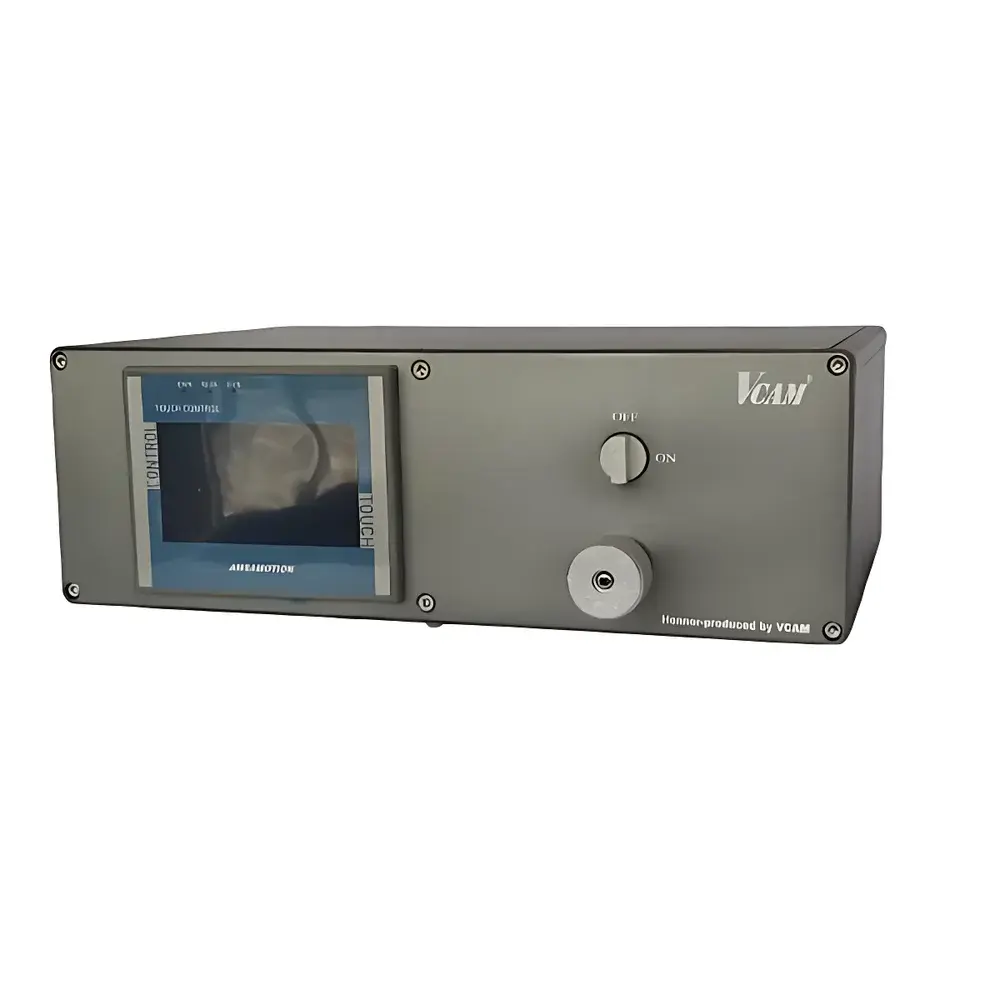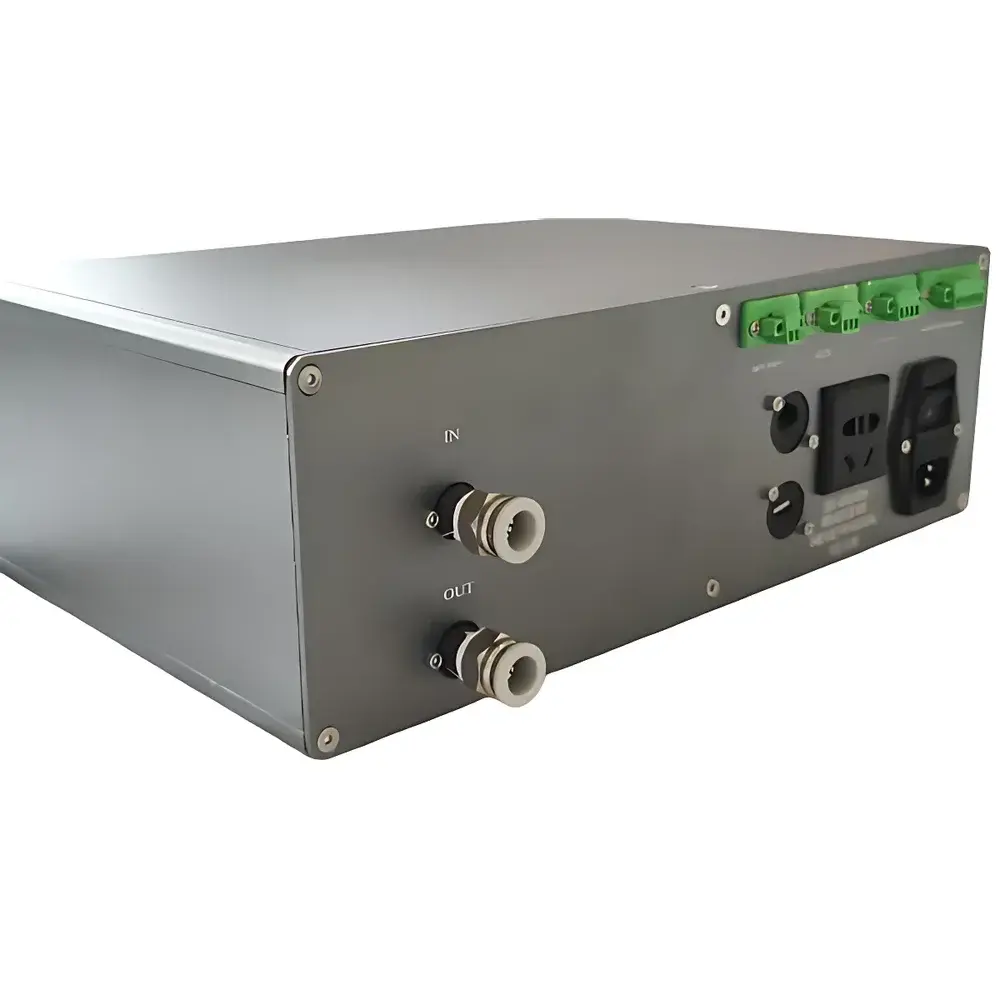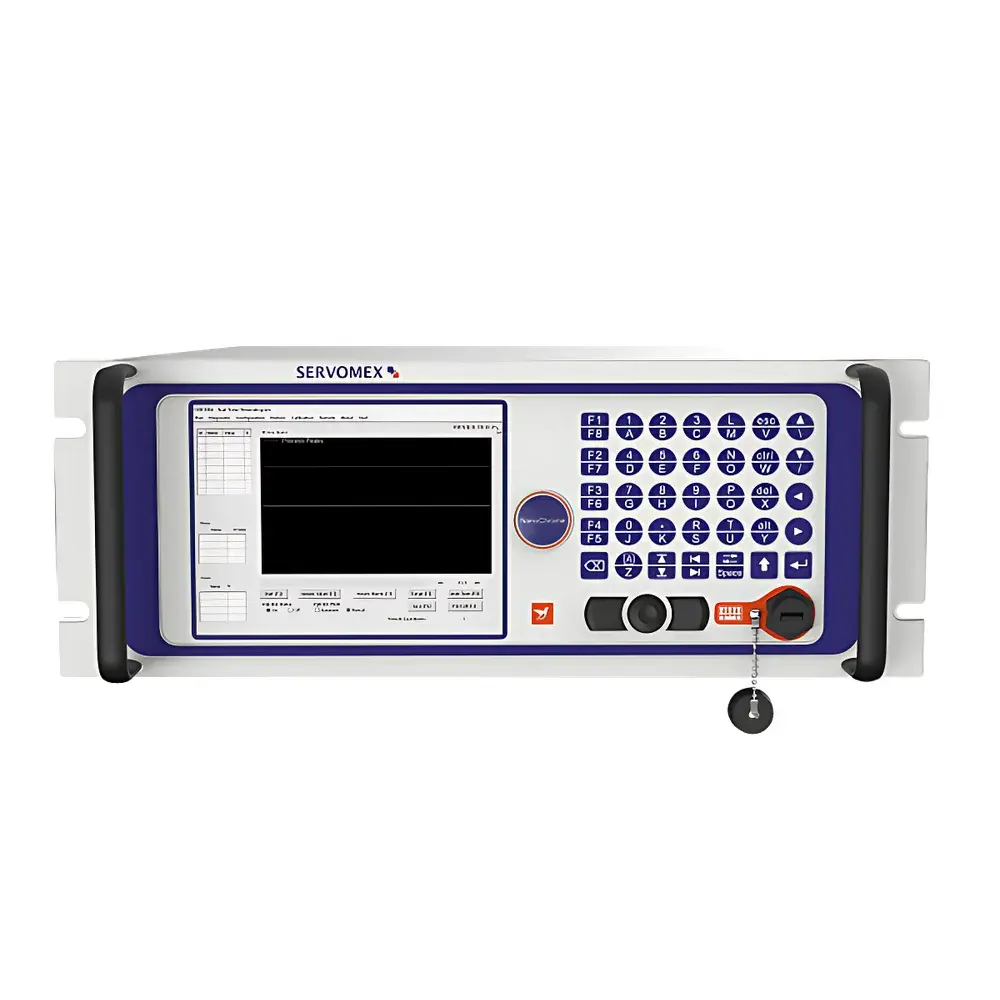
Servomex Servopro NanoChrome Trace Hydrocarbon Analyzer
| Brand | Servomex |
|---|---|
| Origin | United Kingdom |
| Model | Servopro NanoChrome |
| Detector Type | Enhanced Plasma Emission Detector (PED) |
| Carrier Gas | Purified Helium or Argon |
| Limit of Detection (LOD) | As low as 300 ppt |
| Repeatability | ±2% of reading or LOD, whichever is greater |
| Sample Flow Rate | 50–350 mL/min |
| Sample Pressure | 30 psig |
| Carrier Gas Flow Rate | 90–500 mL/min |
| Carrier Gas Pressure | 100 psig recommended |
| Power Consumption | 400–1200 W |
| Flow Control | Full PID-based electronic flow regulation |
| Measurement Range | 0–250 ppb (user-configurable) |
| Weight | 11–27 kg (25–60 lbs) |
| Dimensions (W×D×H) | 482 × 600 × 177 mm (19″ rack-mount, 4U) |
| Calibration Standard | 250 ppb certified gas or 5 ppm with optional internal dilution module |
Overview
The Servomex Servopro NanoChrome Trace Hydrocarbon Analyzer is a purpose-built online gas chromatograph engineered for ultra-high-purity (UHP) gas monitoring in semiconductor, electronics, and advanced materials manufacturing environments. It employs plasma emission detection (PED) — a non-destructive, flameless, carrier-gas-dependent detection principle — to quantify trace-level hydrocarbon impurities (e.g., CH₄, NMHCs) and other key contaminants (CO, CO₂, H₂, Ar, N₂) in inert and reactive process gases. Unlike conventional FID or TCD detectors, the NanoChrome’s enhanced PED technology eliminates the need for hydrogen fuel gas or air compression, significantly reducing operational hazards and maintenance overhead while delivering sub-ppt sensitivity. Its design adheres to the metrological rigor required for ISO 8573-1 Class 1 compressed air certification, ASTM D7622 for UHP gas purity verification, and supports compliance with SEMI F57 and F63 standards for bulk gas qualification.
Key Features
- Enhanced Plasma Emission Detector (PED): Provides stable, drift-free response with no consumables, catalysts, or ignition sources — ideal for Class 1 cleanroom and hazardous area deployment.
- No Fuel or Oxidant Required: Operates solely on purified helium or argon carrier gas; eliminates explosion risk and simplifies facility utility requirements.
- ProPeak Digital Signal Processing: Real-time baseline correction, peak deconvolution, and noise suppression algorithms ensure high specificity and robust quantification even in complex multi-component matrices.
- Fully Integrated Flow Control Architecture: All sample and carrier gas streams regulated via PID-controlled mass flow controllers — enabling precise retention time stability and method reproducibility across shifts and operators.
- Self-Calibrating Platform: Onboard calibration sequence supports automated validation using certified reference standards; optional internal dynamic dilution system extends calibration range from 5 ppm down to sub-ppb levels without external hardware.
- Standalone Intelligent Operation: Embedded Linux-based controller with intuitive touchscreen interface; supports unattended 24/7 operation with local data logging and alarm management.
Sample Compatibility & Compliance
The NanoChrome is validated for continuous analysis of high-purity argon, nitrogen, hydrogen, helium, and synthetic air streams exiting getter purifiers, cryogenic traps, and membrane filters. It meets critical industry specifications including SEMI C108 (for electronic-grade nitrogen), ASTM D7622 Annex A1 (hydrocarbon detection in UHP gases), and ISO 8573-5:2010 for hydrocarbon content classification. The system architecture supports GLP/GMP audit readiness: all analytical events, calibration logs, user actions, and configuration changes are timestamped and stored with immutable digital signatures. Optional 21 CFR Part 11 compliance packages include electronic signature workflows, role-based access control, and secure audit trail export.
Software & Data Management
The analyzer runs Servomex’s NanoView™ firmware — a deterministic, real-time OS optimized for chromatographic timing integrity. Data acquisition, peak integration, and report generation occur locally without dependency on external PCs. Raw chromatograms, processed results, and diagnostic parameters (e.g., detector voltage, column temperature, flow deviations) are stored in standardized CSV and XML formats. Remote monitoring and configuration are enabled via HTTPS-secured web interface or Modbus TCP/IP integration into DCS/SCADA systems. Historical data can be exported for trending in third-party platforms (e.g., PI System, Ignition) or imported into statistical process control (SPC) software for capability analysis (Cpk/Ppk) of gas purity performance.
Applications
- Monitoring post-purifier hydrocarbon breakthrough in bulk gas delivery systems for semiconductor front-end fabs.
- Verifying compliance of on-site nitrogen generators prior to point-of-use distribution to photolithography tools.
- Qualifying hydrogen used in epitaxial reactor purge cycles where methane contamination induces carbon incorporation defects.
- Supporting failure analysis in LED and power device manufacturing by correlating trace NMHC spikes with wafer yield excursions.
- Providing real-time feedback to gas recirculation loop controls in hydrogen fuel cell test stands.
FAQ
What carrier gases are compatible with the NanoChrome PED detector?
Purified helium or argon — both must meet ISO 8573-1 Class 1 (oil-free, particle-free) specifications. Nitrogen is not recommended due to quenching effects on plasma stability.
Can the NanoChrome detect non-hydrocarbon species such as CO or CO₂?
Yes — the PED responds to all electron-capturing and ionizable compounds; quantitative accuracy for CO/CO₂ is achieved using compound-specific calibration curves and retention time alignment.
Is external gas conditioning required before sample introduction?
A particulate filter (0.1 µm) and moisture trap (dew point ≤ –70 °C) are mandatory upstream of the analyzer inlet to prevent column fouling and detector contamination.
How often does the system require preventative maintenance?
No routine detector servicing is needed; recommended annual inspection includes column reconditioning, leak verification, and flow controller recalibration using NIST-traceable standards.
Does the NanoChrome support automated alarm escalation via email or SNMP?
Yes — configurable threshold-based alerts can trigger SMTP notifications, SNMP traps, or dry-contact closures integrated into plant-wide alarm management systems.
Related Products