
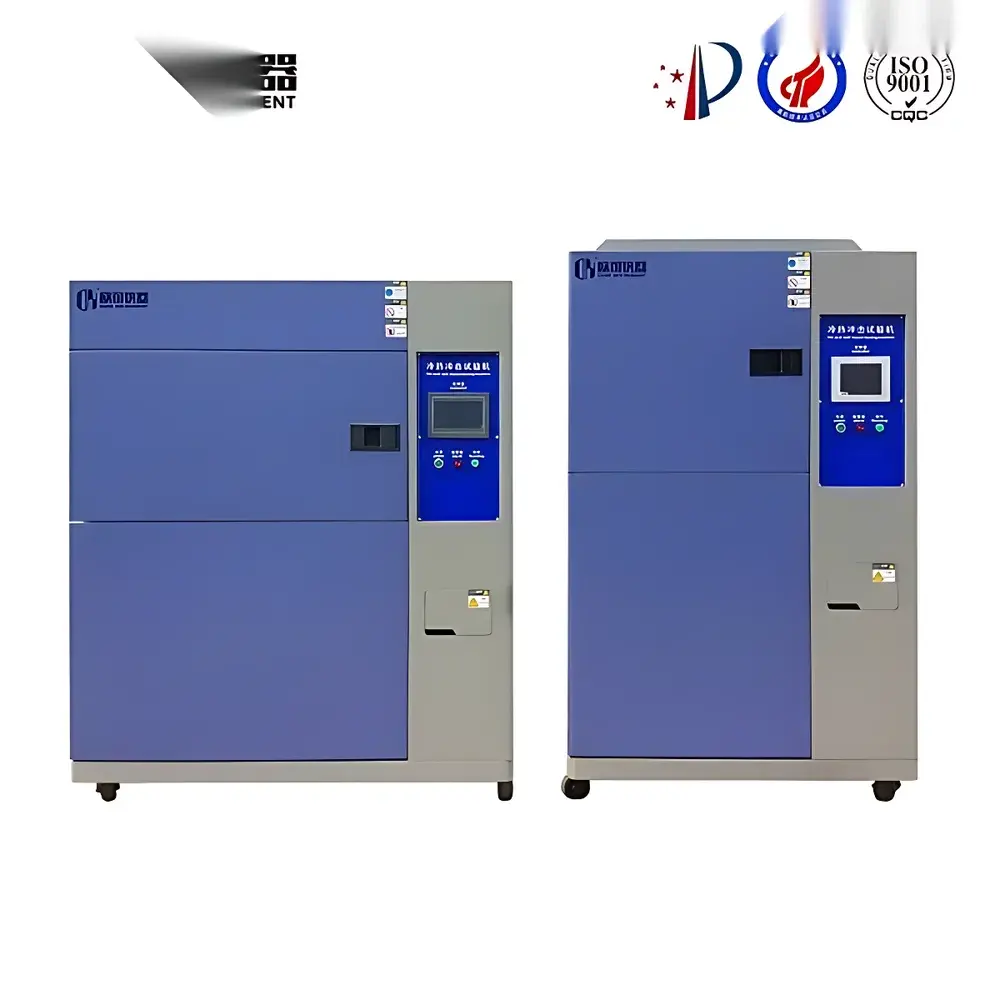
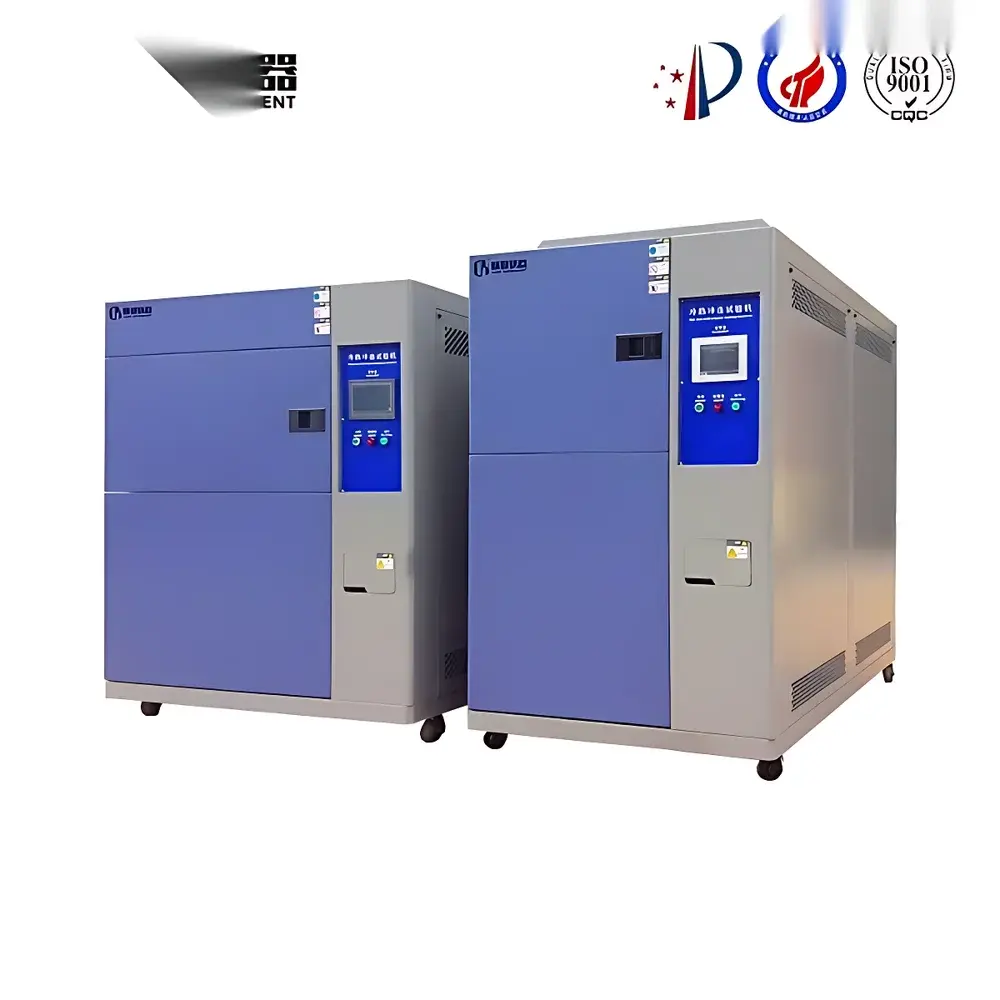
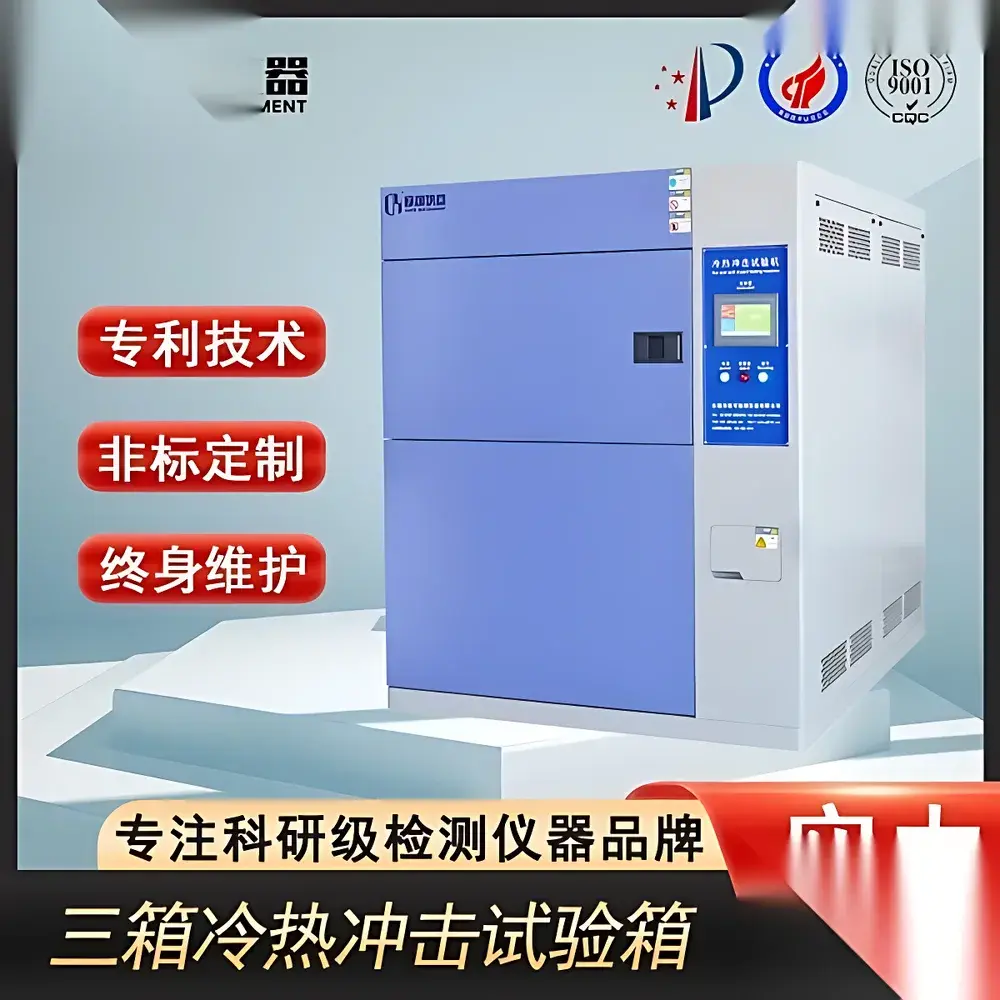
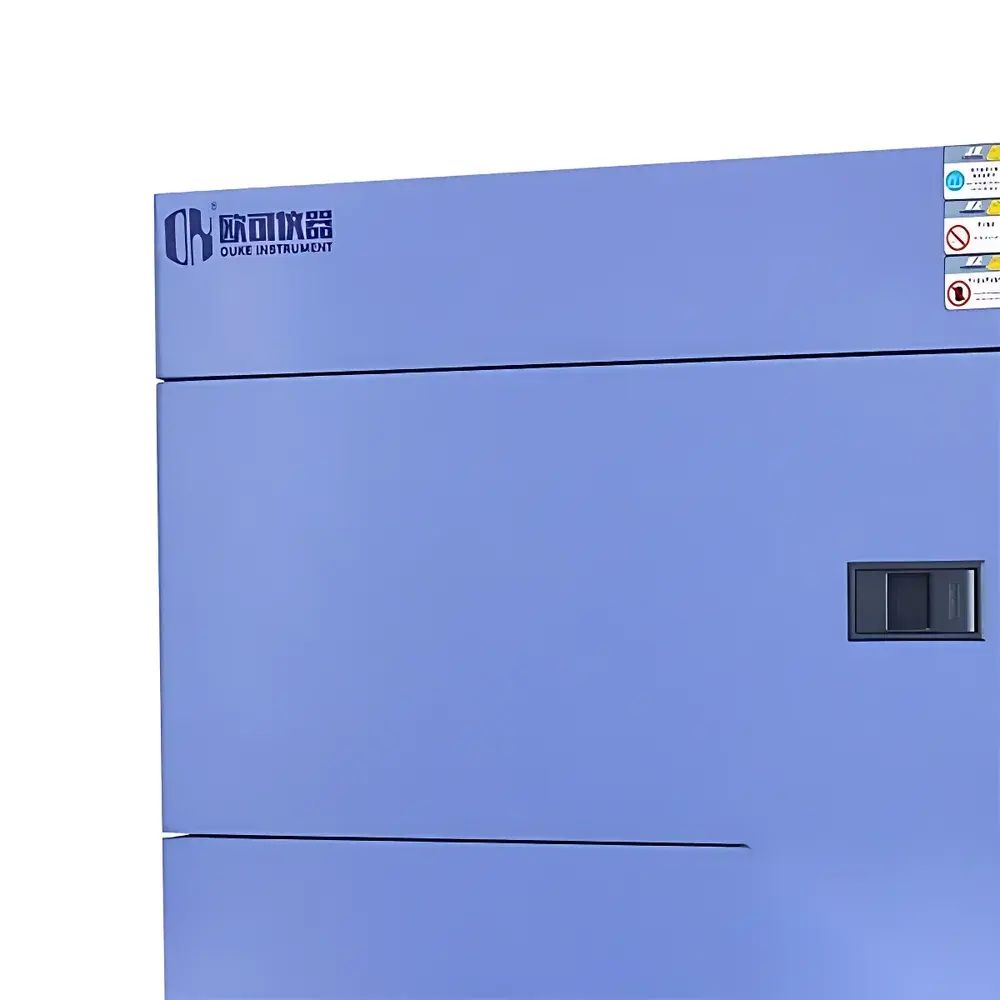
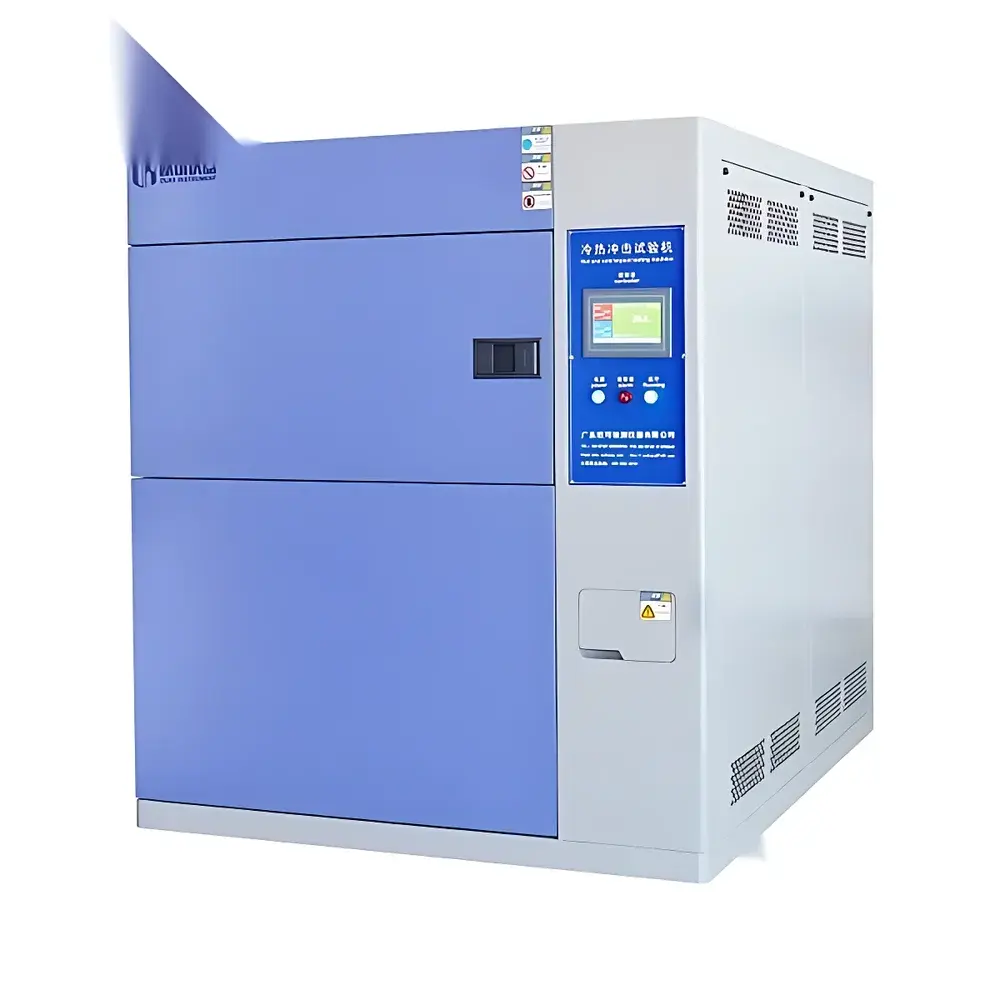
Thermal Shock Test Chamber – Dual-Chamber Rapid Temperature Transition System
| Brand | OEM |
|---|---|
| Origin | Imported |
| Manufacturer Type | Authorized Distributor |
| Pricing | USD 11,200 (FOB) |
| Compliance | GB/T 2423.1, GB/T 2423.2, GB/T 2423.22, GJB 150.3–150.5, GJB 360.7, GJB 367.2, SJ/T 10186–10187, IEC 60068-2-14 (Test N) |
Overview
The Thermal Shock Test Chamber – Dual-Chamber Rapid Temperature Transition System is an engineered environmental stress screening (ESS) platform designed for accelerated reliability validation of electronic components, aerospace structural assemblies, automotive ECUs, and polymer-based packaging systems. It operates on the principle of rapid thermal transition between two independently controlled temperature zones — a high-temperature chamber (typically +150 °C to +200 °C) and a low-temperature chamber (typically −70 °C to −40 °C) — enabling precise execution of temperature shock profiles per MIL-STD-810H Method 503.5, IEC 60068-2-14 (Test N), and GJB 150.5. Unlike single-chamber ramp-based systems, this dual-zone architecture eliminates thermal inertia limitations, achieving transfer times ≤ 10 seconds and temperature transition rates exceeding 30 °C/min — critical for replicating field-induced thermo-mechanical fatigue in solder joints, die attach interfaces, and multilayer ceramic capacitors.
Key Features
- Dual independent chamber design with pneumatically actuated basket transfer mechanism ensuring repeatable positioning and minimal dwell time deviation (±0.3 s)
- Hermetically sealed hot/cold chambers with vacuum-insulated stainless-steel walls and multi-layer reflective foil barriers to minimize cross-contamination and thermal leakage
- High-efficiency cascade refrigeration system utilizing R404A/R23 mixed-refrigerant cycles, compliant with ISO 5149-2:2014 safety standards
- Programmable controller with 32-segment profile storage, real-time deviation monitoring, and automatic cycle termination upon out-of-spec condition detection
- Integrated thermocouple input channels (Type K or T, Class 1 accuracy per IEC 60584-2) with sensor calibration traceability to NIST-certified reference standards
- Robust mechanical architecture rated for continuous operation at 95% duty cycle, validated under GLP-compliant operational qualification (OQ) protocols
Sample Compatibility & Compliance
This chamber accommodates test specimens up to 500 mm × 500 mm × 500 mm (W×D×H) with maximum payload of 25 kg. Compatible with PCB assemblies, molded interconnect devices (MIDs), battery modules, optical sensors, and composite laminates. All thermal profiles are fully traceable and auditable per FDA 21 CFR Part 11 requirements when paired with optional electronic signature-enabled software. The system meets mandatory environmental testing clauses in IPC-J-STD-020D (Moisture Sensitivity Level classification), AEC-Q200 (passive component qualification), and DO-160G Section 4 (temperature shock for avionics). Calibration certificates include uncertainty budgets aligned with ISO/IEC 17025:2017 Annex A.3.
Software & Data Management
Bundled with WinTST v4.2 — a Windows-based test sequencing and data acquisition suite supporting automated report generation in PDF/A-1b and CSV formats. Software implements full audit trail functionality including user login history, parameter change logs, alarm event timestamps, and raw thermocouple sampling at 1 Hz resolution. Exported datasets comply with ASTM E2917-22 (Standard Practice for Statistical Analysis of Thermal Stability Data) and support post-test Weibull analysis for failure mode prediction. Optional integration with LabArchives ELN or Siemens Opcenter Quality enables direct LIMS synchronization and structured metadata tagging per ISA-88 batch record conventions.
Applications
- Qualification testing of lead-free solder interconnects subjected to JEDEC JESD22-A104E temperature cycling
- Validation of conformal coating integrity on high-density flex-rigid PCBs under repeated thermal gradient stress
- Assessment of delamination resistance in SiC power module substrates using GJB 360.7-defined dwell/transfer sequences
- Accelerated aging of lithium-ion pouch cells to correlate thermal shock exposure with impedance rise and SEI layer growth kinetics
- Verification of hermetic seal performance in MEMS oscillators per MIL-PRF-38534 Class K requirements
FAQ
What is the typical transfer time between chambers?
Standard configuration achieves ≤ 8 seconds for 20 kg load; optional high-speed transfer kit reduces this to ≤ 5 seconds.
Does the system support custom temperature profiles beyond standard military specs?
Yes — WinTST v4.2 allows user-defined step/dwell/ramp sequences with up to 999 cycles per program and conditional branching logic.
Is third-party calibration certification included with delivery?
Factory calibration certificate (traceable to NIST) is provided; ISO/IEC 17025-accredited field calibration is available as an add-on service.
Can the chamber be integrated into an automated test line via industrial Ethernet?
Equipped with Modbus TCP and OPC UA server interfaces for seamless SCADA and MES-level integration.
What maintenance intervals are recommended for the refrigeration system?
Compressor oil analysis and filter dryer replacement every 3,000 operating hours; full refrigerant charge verification annually per ISO 8573-1 Class 4 air purity requirements.



