
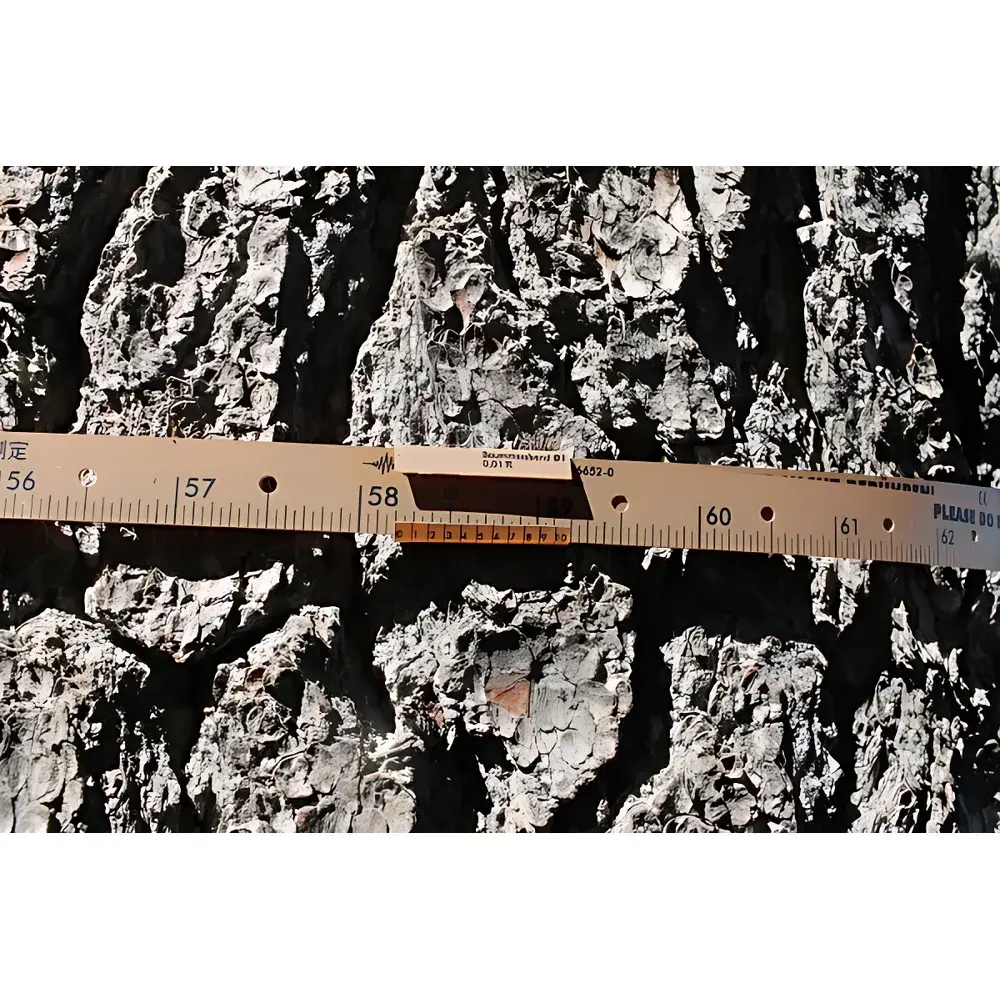
Dendrometer D1 Stem Growth Monitor by METER Group
| Brand | METER |
|---|---|
| Origin | Germany (Manufactured by METER Group, formerly UMS) |
| Model | Dendrometer D1 |
| Type | Portable Mechanical Dendrometer |
| Measuring Principle | Linear Circumferential Displacement via Precision Spring-Loaded Band |
| Measurement Range | 10–66 cm stem diameter (extendable via tandem band configuration) |
| Band Material | Astralon® polymer |
| Thermal Expansion Coefficient | 75 × 10⁻⁶ / K |
| Operating Temperature | −30 °C to +60 °C |
| Band Dimensions | 2100 mm × 15 mm × 0.5 mm |
| Tensile Strength | 64 N/mm² |
| Static Friction Coefficient (on dry bark) | 0.5 |
| Band Mass | 16 g |
| Spring Mass | 7 g (short), 14 g (long) |
| Resolution | 0.02 mm (via vernier scale) |
| Compliance | Designed for long-term field deployment in GLP-aligned ecological monitoring |
Overview
The Dendrometer D1 is a precision mechanical instrument engineered for continuous, non-invasive measurement of stem circumference variation in woody plants. Unlike electronic or optical dendrometers relying on capacitive, strain-gauge, or laser displacement principles, the D1 operates on direct mechanical transduction: a calibrated, thermally stable band encircles the stem and translates minute circumferential changes—driven by diurnal water dynamics, seasonal growth, or stress responses—into linear displacement along a fixed vernier scale. Its design adheres to classical dendrometric methodology validated across decades of forest ecophysiology research, prioritizing long-term stability, minimal maintenance, and immunity to electromagnetic interference or power constraints. The device is purpose-built for deployment in remote, unattended field sites—including flux towers, permanent forest plots, and climate manipulation experiments—where multi-year data continuity and sensor drift resilience are critical.
Key Features
- Thermally compensated band constructed from Astralon®—a high-modulus, low-hysteresis polymer with a precisely characterized thermal expansion coefficient (75 × 10⁻⁶ / K), enabling correction of temperature-induced artifacts in raw circumference readings.
- Vernier scale with 0.02 mm resolution ensures repeatable manual reading without reliance on batteries, firmware, or digital interfaces—ideal for standardized protocols requiring traceable, observer-independent measurements.
- Modular spring system: short spring (7 g) optimized for stems 40 cm diameter—maintaining consistent preload force across size classes to prevent slippage or bark compression.
- Robust mechanical architecture: 2100 mm band length, 15 mm width, and 0.5 mm thickness balance flexibility for tight wrapping with resistance to abrasion from rough bark textures.
- Field-deployable weight profile: total assembly mass ≤30 g (band + spring) minimizes gravitational loading effects on thin or flexible stems during multi-year installations.
Sample Compatibility & Compliance
The D1 is validated for use on angiosperm and gymnosperm species with smooth to moderately fissured bark and stem diameters ≥10 cm at installation height. It accommodates ontogenetic growth through tandem band coupling—two units may be linked end-to-end to monitor stems up to ~130 cm in diameter while preserving linear scale integrity. The device complies with standard practices outlined in ISO 17025-accredited ecological monitoring frameworks and supports audit-ready documentation when integrated into GLP-aligned long-term studies. While not certified to IEC 61326 or FDA 21 CFR Part 11 (as it generates no electronic records), its mechanical output is fully compatible with digitization workflows using calibrated image capture or manual entry into LIMS-compliant databases.
Software & Data Management
As a purely analog, human-read instrument, the D1 does not incorporate embedded electronics, wireless transmission, or proprietary software. All data acquisition follows standardized field protocols: observers record vernier readings at defined intervals (e.g., daily at solar noon), noting ambient temperature and precipitation. Raw values are converted to circumference change (ΔC in µm) using band calibration constants and temperature compensation equations provided in the METER Dendrometer Technical Handbook. These corrected time-series datasets integrate seamlessly with open-source ecological analysis tools (R packages ‘dendro’ and ‘phenofit’), MATLAB-based growth modeling suites, or commercial platforms such as EcoSIS or TRY Plant Trait Database ingestion pipelines.
Applications
- Diurnal stem shrinkage/swelling analysis for plant water status assessment under drought or irrigation treatments.
- Seasonal cambial activity tracking in phenological networks (e.g., PEP725, NEON).
- Cross-site validation of eddy covariance-derived transpiration estimates.
- Long-term growth trend detection in climate gradient studies (e.g., elevation or latitudinal transects).
- Calibration anchor for high-frequency electronic dendrometers in mixed-sensor arrays.
FAQ
How often should the D1 be read in long-term studies?
Recommended frequency is once per 24-hour cycle at consistent local solar time (e.g., 12:00 ± 15 min) to resolve diurnal patterns; weekly readings suffice for detecting seasonal growth increments.
Can the D1 be used on juvenile trees or shrubs?
No—minimum stem diameter is 10 cm to ensure mechanical stability and minimize bark deformation artifacts; smaller stems require alternative methods (e.g., micro-dendrometers or band dendrometers with lower preload).
Does the band require recalibration over time?
No—Astralon® exhibits negligible creep under constant tension, and the vernier scale is etched into corrosion-resistant stainless steel; annual verification against a certified gauge block is sufficient for GLP compliance.
Is the D1 suitable for tropical or high-humidity environments?
Yes—the polymer is hydrolytically stable, and the stainless steel components resist salt-laden or acidic canopy drip; however, frequent cleaning of the vernier groove is advised in dusty or resinous conditions.
Related Products




