
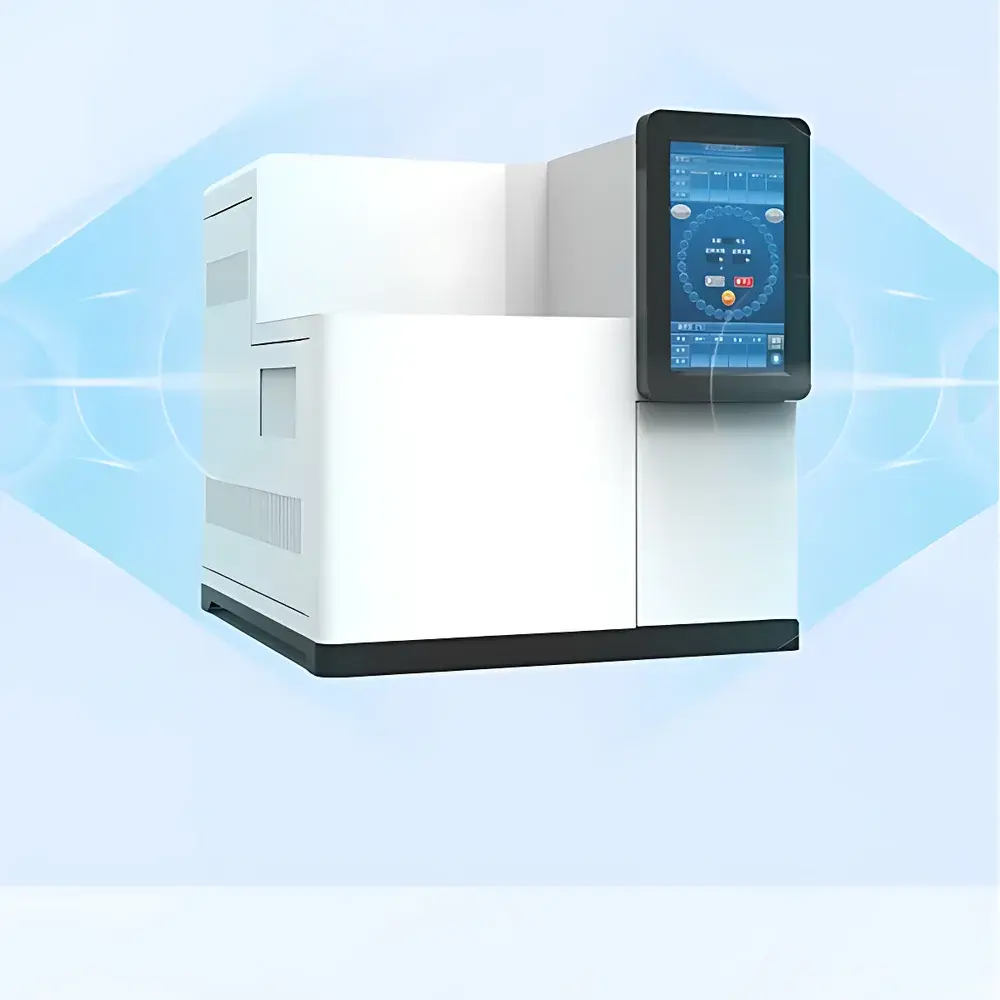
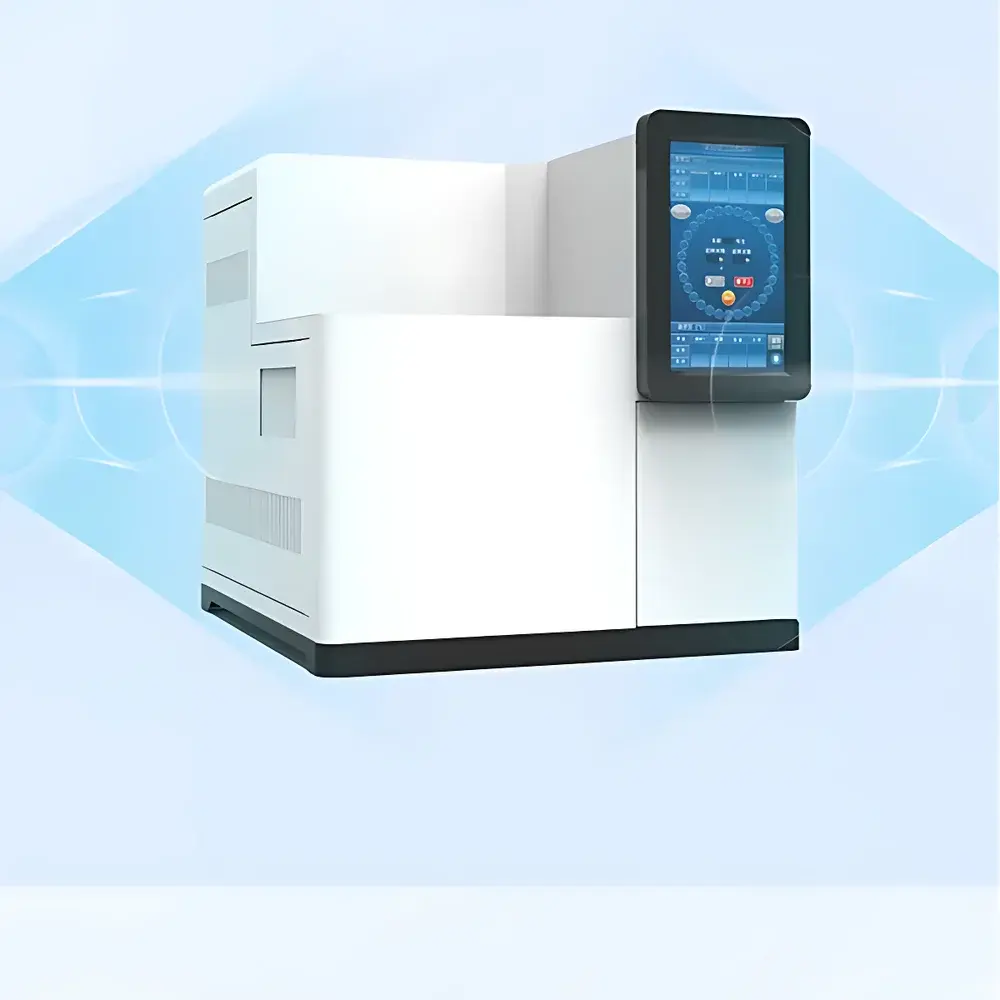
Shandong Luchuang ATDS-8200A 36-Position Fully Automated Single-Stage Thermal Desorber
| Brand | Shandong Luchuang |
|---|---|
| Origin | Shandong, China |
| Manufacturer Type | Direct Manufacturer |
| Instrument Type | Single-Stage Thermal Desorber |
| Automation Level | Fully Automated |
| Primary Desorption Temperature Range | 50–380 °C |
| Valve Injection Zone Temperature Range | Ambient to 260 °C |
| Transfer Line Temperature Range | Ambient to 220 °C |
| Temperature Control Accuracy | ±0.1 °C |
| Desorption Recovery Rate | ≥90% |
| Sample Position Capacity | 36 positions |
Overview
The Shandong Luchuang ATDS-8200A is a fully automated single-stage thermal desorber engineered for high-throughput, reproducible analysis of volatile and semi-volatile organic compounds (VOCs and SVOCs) adsorbed onto solid sorbent tubes. It operates on the principle of controlled thermal desorption—where analytes are thermally released from inert-packed sorbent tubes under precise temperature gradients and carrier gas flow, then transferred quantitatively into a gas chromatograph (GC) or GC-mass spectrometer (GC-MS) without cold spots or condensation. Designed for seamless integration with any commercial GC/GC-MS platform—regardless of manufacturer—the ATDS-8200A eliminates reliance on the GC’s injection port, enabling independent method optimization and preserving instrument uptime. Its modular architecture supports dual-channel operation (optional), allowing simultaneous interfacing with two GC systems to double analytical throughput while maintaining full traceability and method integrity.
Key Features
- 36-position autosampler tray with user-selectable configuration (20/30/36 positions available); all positions accommodate standard 6 mm OD × 90 mm sorbent tubes.
- Independent, three-zone temperature control: primary desorption furnace (50–380 °C), six-port valve zone (ambient–260 °C), and transfer line (ambient–220 °C), each stabilized to ±0.1 °C with gradient stability <±0.1 °C.
- Full inert-flow path construction using SilcoNert®-treated stainless steel and zero-dead-volume fittings to minimize analyte adsorption, carryover, and background contamination—critical for sub-ppbv detection limits.
- Integrated leak-check protocol prior to each desorption cycle; samples with compromised tube seal integrity are automatically flagged and excluded from injection, preventing data corruption and sample waste.
- Programmable multi-step flow control: desorption flow (0–100 mL/min), simulated sampling flow (100 mL/min fixed), and post-desorption purge/backflush flow—all independently adjustable via mass flow controllers unaffected by ambient pressure or temperature fluctuations.
- Dual digital I/O synchronization outputs (1–2 s trigger latency) compliant with ASTM D6196, ISO 16017-1, and USP timing requirements for GC start signal coordination.
- 10.2-inch capacitive touchscreen interface with intuitive method editor, real-time status monitoring, and audit-trail-capable event logging aligned with GLP/GMP documentation practices.
Sample Compatibility & Compliance
The ATDS-8200A accommodates industry-standard sorbent tubes (e.g., Tenax TA, Carbopack™ series, Carboxen®, and mixed-bed configurations) and supports both direct desorption and cryo-focused transfer modes when paired with optional cryo-trapping modules. It complies with method requirements outlined in EPA TO-17, ASTM D6196-22, ISO 16017-1:2022, and EU EN 16701 for indoor air, workplace atmosphere, and environmental emissions testing. All temperature and flow parameters are digitally recorded and exportable in CSV format for regulatory submissions. The system meets mechanical safety standards per IEC 61010-1 and electromagnetic compatibility per IEC 61326-1.
Software & Data Management
Control firmware supports method-based scheduling, password-protected user roles (operator, supervisor, administrator), and time-stamped audit trails—including parameter changes, run logs, alarm events, and calibration history. Data files include embedded metadata (tube ID, desorption temp/time, flow rates, valve states) compatible with LIMS integration via OPC UA or ASCII export. While no proprietary chromatography software is bundled, the ATDS-8200A provides native command-line interface (CLI) and Modbus TCP protocols for third-party software control (e.g., Chromeleon™, OpenLab CDS, Empower). All firmware updates are delivered via secure HTTPS and require digital signature verification.
Applications
- Regulatory VOC monitoring in indoor air, automotive cabin testing, and building material emission chambers (per ISO 16000 series).
- Occupational hygiene assessment per OSHA Method 05 and NIOSH Method 1501/1502.
- Pharmaceutical residual solvent analysis (ICH Q3C) and extractables/leachables profiling in packaging and medical devices.
- Environmental forensics and landfill gas screening using passive sampler tubes.
- Method development for complex matrices requiring high recovery (>90%) and low RSD (<2.5%, dependent on GC performance and operator technique).
FAQ
Does the ATDS-8200A require external carrier gas regulation or pressure control?
No—integrated electronic mass flow controllers maintain setpoint accuracy across ambient pressure and temperature variations; no external regulators or pressure-compensated flow meters are needed.
Can it be validated for GxP environments?
Yes—full IQ/OQ documentation templates, 21 CFR Part 11-compliant audit trail generation (with electronic signatures), and configurable access controls support validation under FDA, EMA, and PMDA guidelines.
Is dual-GC operation supported out-of-the-box?
Dual-channel capability is an optional hardware upgrade (dual-valve manifold + second transfer line); firmware enables synchronized or staggered dual-injection sequences.
What maintenance intervals are recommended?
Valve actuation life exceeds 500,000 cycles; sorbent tube o-rings should be replaced every 6 months or after 2,000 runs; annual calibration of temperature sensors and flow controllers is advised per ISO/IEC 17025.
How is tube conditioning performed?
Built-in bake-out mode allows programmable heating of empty tubes at up to 380 °C under inert purge—fully automated and logged within the same method framework used for sample analysis.




