
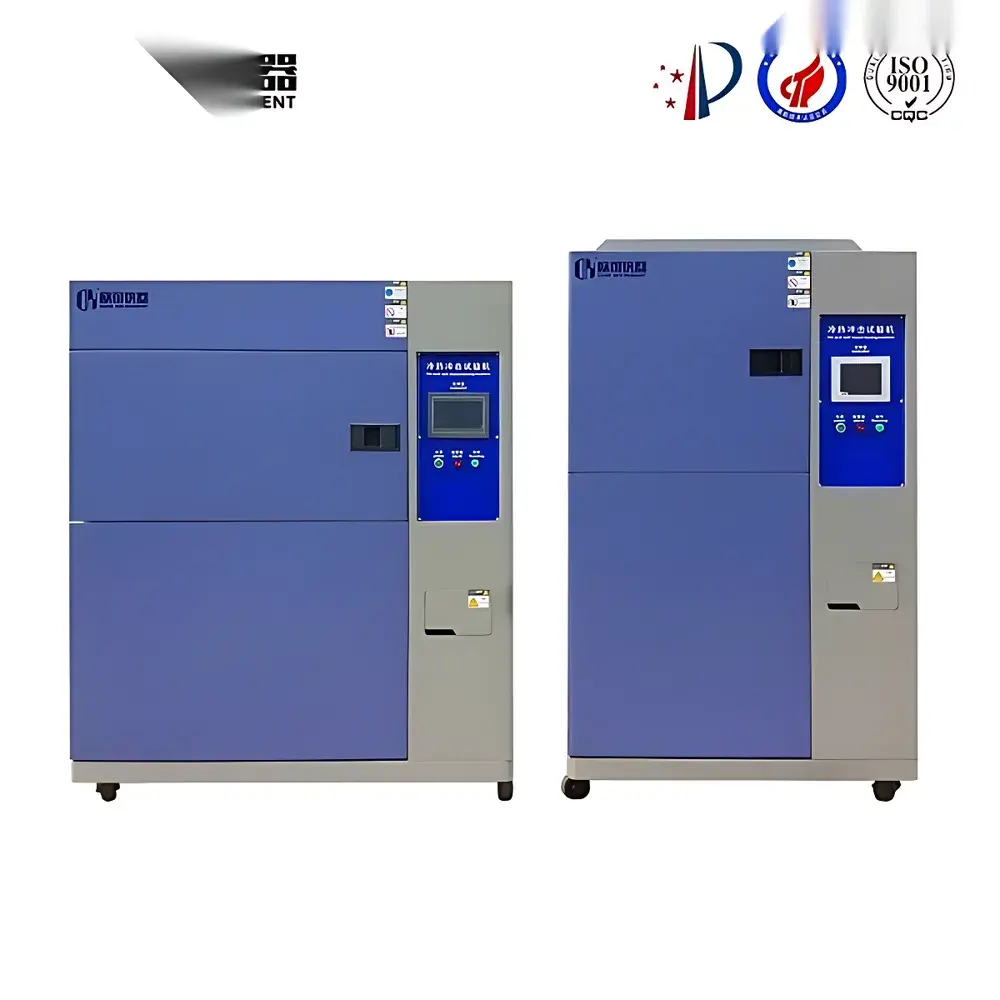
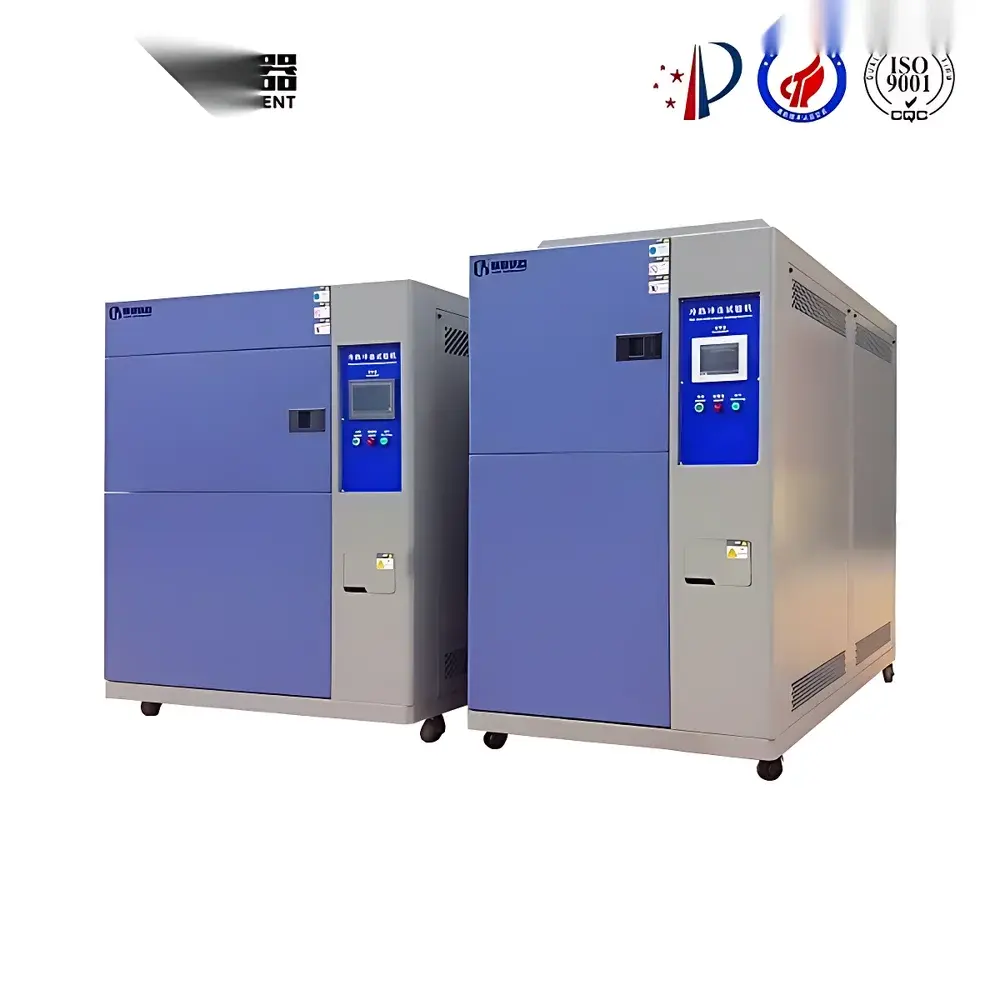
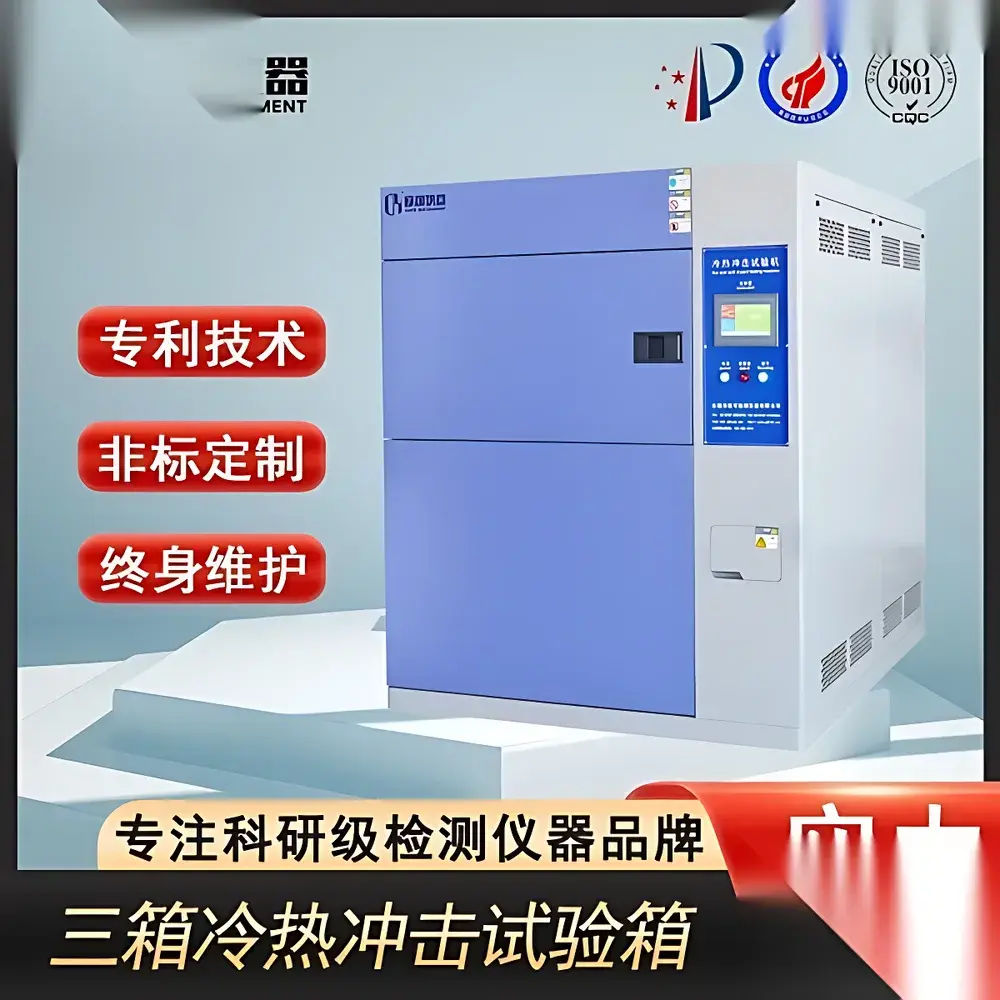
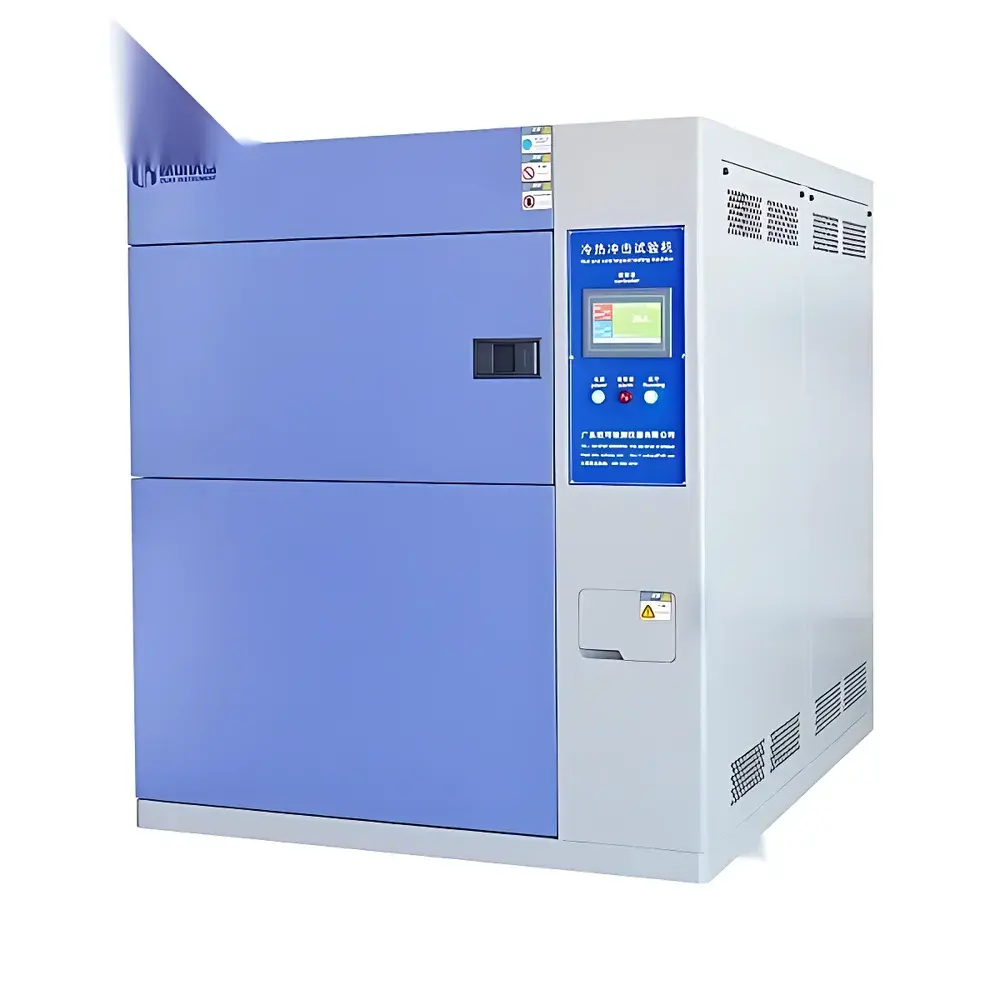
Thermal Shock Test Chamber – Dual-Chamber Rapid Temperature Transition System
| Brand | OEM |
|---|---|
| Origin | Imported |
| Manufacturer Type | Authorized Distributor |
| Price | USD 11,200 (FOB) |
| Cooling Method | Water-Cooled Dual-Stage Refrigeration |
| Max Cycle Count | 9999 |
| Max Dwell Time per Zone | 999 h |
| Control Interface | Touchscreen HMI |
| Thermal Transition Mode | Basket-Transfer (Dynamic Specimen Movement) |
| Operating Temperature Range | –70°C to +180°C |
| Compliance | ASTM D648, ISO 22088-3, IEC 60068-2-14, MIL-STD-810H Method 503.6 |
Overview
The Thermal Shock Test Chamber – Dual-Chamber Rapid Temperature Transition System is an engineered environmental test platform designed to evaluate material and component resilience under extreme, rapid thermal transitions. It operates on the principle of mechanical basket transfer between physically isolated high-temperature and low-temperature chambers, enabling precise, repeatable exposure of test specimens to abrupt thermal gradients—typically defined as transitions exceeding 10°C/s between preset dwell zones. This methodology conforms to the fundamental requirements of thermal shock testing per ISO 22088-3 and IEC 60068-2-14, where specimen integrity is assessed after discrete cycles of exposure to alternating thermal extremes. Unlike single-chamber air-sweep systems, this dual-zone architecture eliminates thermal cross-contamination and ensures stable, uniform temperature maintenance in each zone during dwell phases—critical for evaluating microstructural fatigue, interfacial delamination, solder joint reliability, and polymer chain mobility shifts.
Key Features
- Dual independent chamber design: High-temperature zone (up to +180°C) and low-temperature zone (down to –70°C), thermally isolated by vacuum-insulated stainless-steel partitioning.
- Motorized horizontal basket transfer mechanism with position feedback sensors, ensuring reproducible specimen movement within ±0.5 s timing accuracy per transition.
- Water-cooled dual-stage refrigeration system utilizing R404A/R23 cascade configuration, achieving ≤15 min average cooling from +150°C to –65°C (empty chamber, per IEC 60068-3-10).
- Industrial-grade touchscreen HMI with multi-language support (English, German, Japanese), real-time trend logging, and configurable alarm thresholds for chamber deviation, door interlock, and refrigerant pressure.
- Programmable cycle control: Supports up to 9999 total cycles; individual high/low dwell durations adjustable from 1 min to 999 h; automatic or manual mode selection with emergency pause/resume capability.
- Integrated safety architecture: Over-temperature cut-off, refrigerant high-pressure shutdown, chamber door safety lock with electromagnetic release, and redundant PT100 sensor validation across both zones.
Sample Compatibility & Compliance
The chamber accommodates specimens up to 500 mm × 500 mm × 500 mm (W×D×H) and supports standard test fixtures for PCB assemblies, automotive ECUs, aerospace fasteners, elastomeric seals, and composite laminates. It meets essential compliance requirements for qualification testing under ASTM D648 (deflection temperature under load), ISO 22088-3 (plastics—thermal shock resistance), and MIL-STD-810H Method 503.6 (temperature shock). Data traceability supports GLP/GMP-aligned workflows through optional audit trail activation (21 CFR Part 11-compliant electronic signatures available via firmware upgrade). Calibration certificates are provided per ISO/IEC 17025-accredited third-party laboratory protocols upon request.
Software & Data Management
The embedded controller logs temperature, cycle count, dwell time, basket position status, and system alarms at user-defined intervals (1–60 s resolution). Exportable data files (CSV, PDF) include timestamped metadata and digital signature fields for QA documentation. Optional PC-based software (Windows 10/11 compatible) enables remote monitoring, multi-chamber fleet management, statistical process control charting (X̄/R charts), and automated report generation compliant with internal quality manuals or customer-specific test plans (e.g., Ford WERS, GM GP-10). All firmware updates are delivered via secure HTTPS interface with SHA-256 checksum verification.
Applications
- Electronics reliability engineering: Solder joint fatigue analysis in BGA packages and flex-rigid PCBs subjected to JEDEC J-STD-020D reflow simulation profiles.
- Automotive component validation: Testing of engine control modules, battery pack housings, and ADAS sensor enclosures under cold-start and heat-soak conditions per SAE J2380.
- Aerospace materials qualification: Assessing thermal cycling endurance of titanium alloy fasteners and carbon-fiber reinforced polymer (CFRP) panels per RTCA DO-160 Section 4.11.
- Medical device packaging: Evaluating seal integrity of Tyvek®-based sterile barrier systems following ISO 11607-2 accelerated aging protocols.
- Academic research: Quantifying glass transition hysteresis in shape-memory polymers and cryogenic embrittlement thresholds in high-strength aluminum alloys.
FAQ
What is the minimum specimen mass that can be reliably tested without affecting chamber thermal stability?
Chamber performance specifications assume a maximum thermal mass of 10 kg per test cycle. For specimens below 0.5 kg, optional thermal mass dummy loads are recommended to maintain consistent thermal inertia and minimize dwell overshoot.
Does the system support ramp-and-soak profiles in addition to step-change shock cycles?
No—this is a dedicated thermal shock platform optimized for discrete high/low dwell transitions. For continuous ramp profiling, refer to our programmable environmental stress screening (ESS) chamber series.
Is nitrogen purge integration available for oxygen-sensitive materials?
Yes—optional inert gas purging (N₂ or Ar) with mass flow controller and O₂ sensor feedback loop can be factory-installed to maintain <100 ppm residual oxygen during low-temperature dwells.
How is calibration traceability maintained over the equipment lifecycle?
Annual recalibration is recommended using NIST-traceable PT100 reference probes. The controller stores calibration offset history and supports import/export of correction tables aligned with ISO/IEC 17025 documentation requirements.
Can the basket transfer mechanism be disabled for static chamber-only operation?
No—the mechanical transfer is intrinsic to the dual-zone shock methodology. Static exposure testing requires use of a single-zone thermal chamber variant.



