
UV Weathering Aging Chamber
No specifications available.
Overview
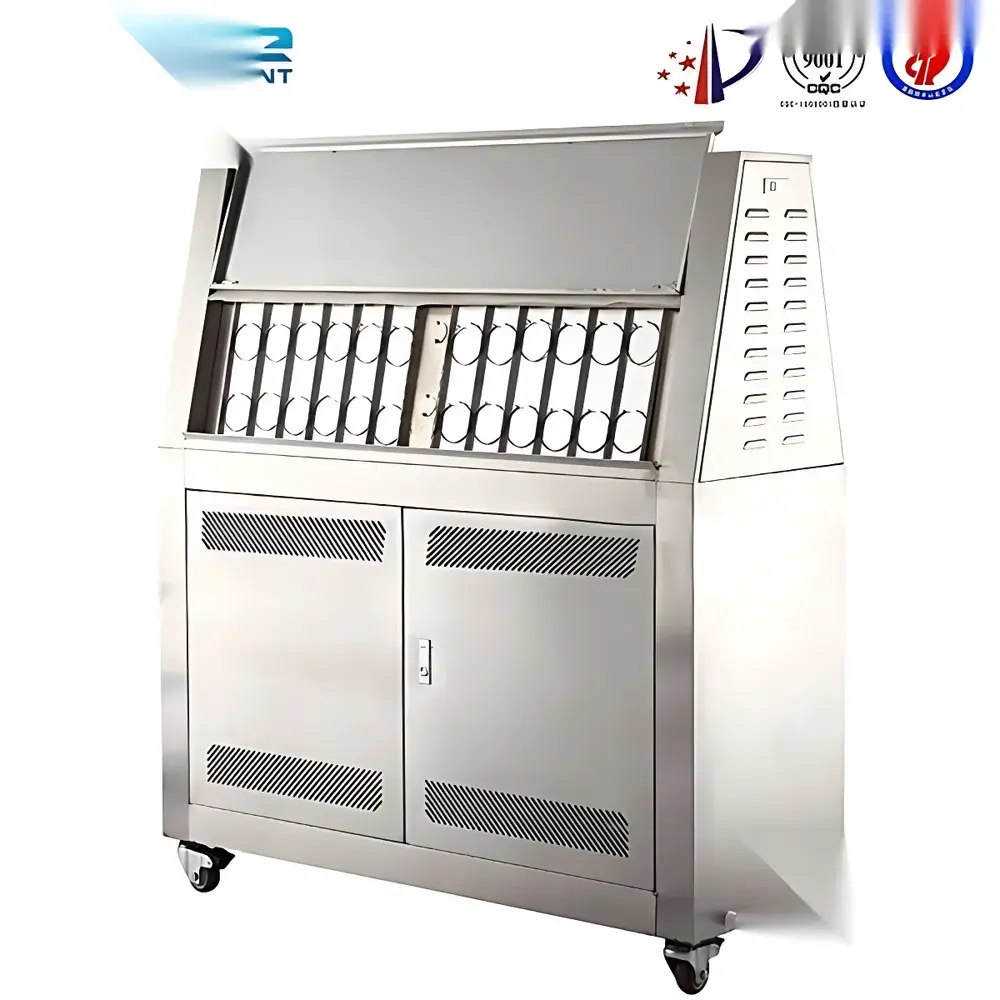
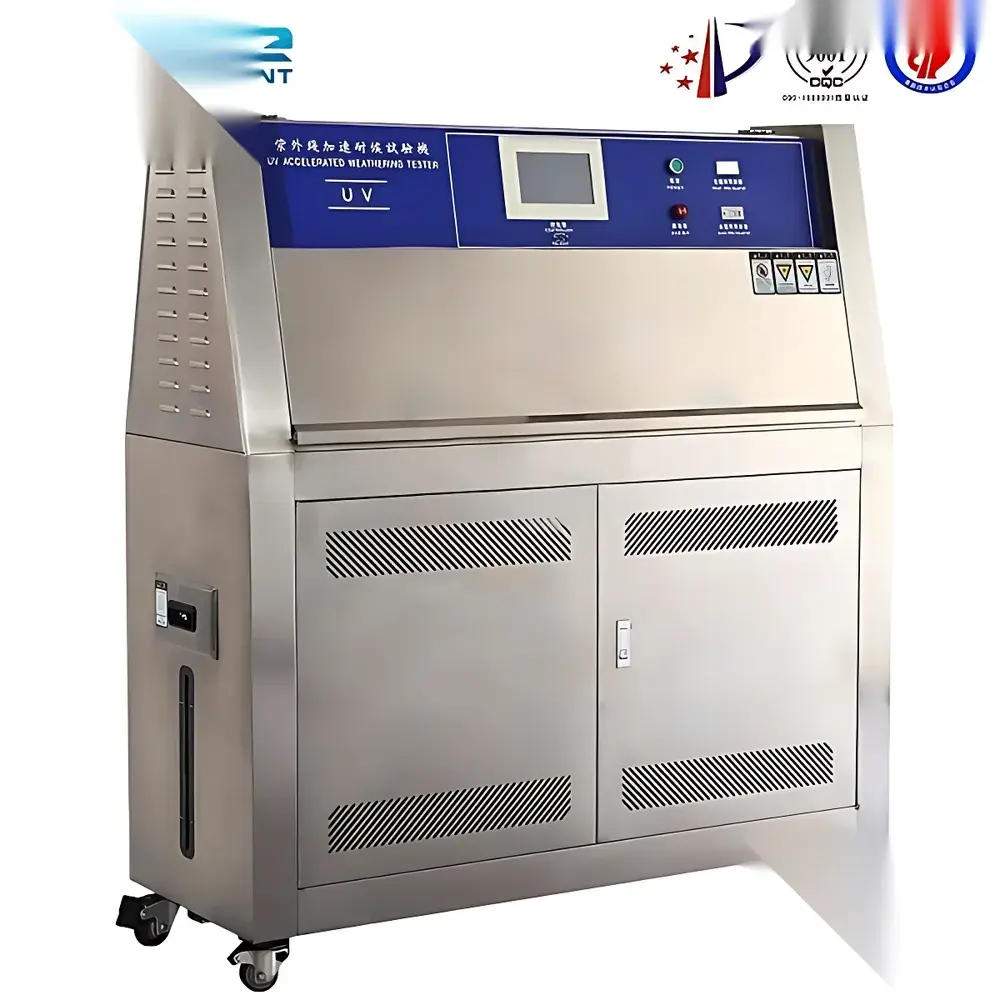
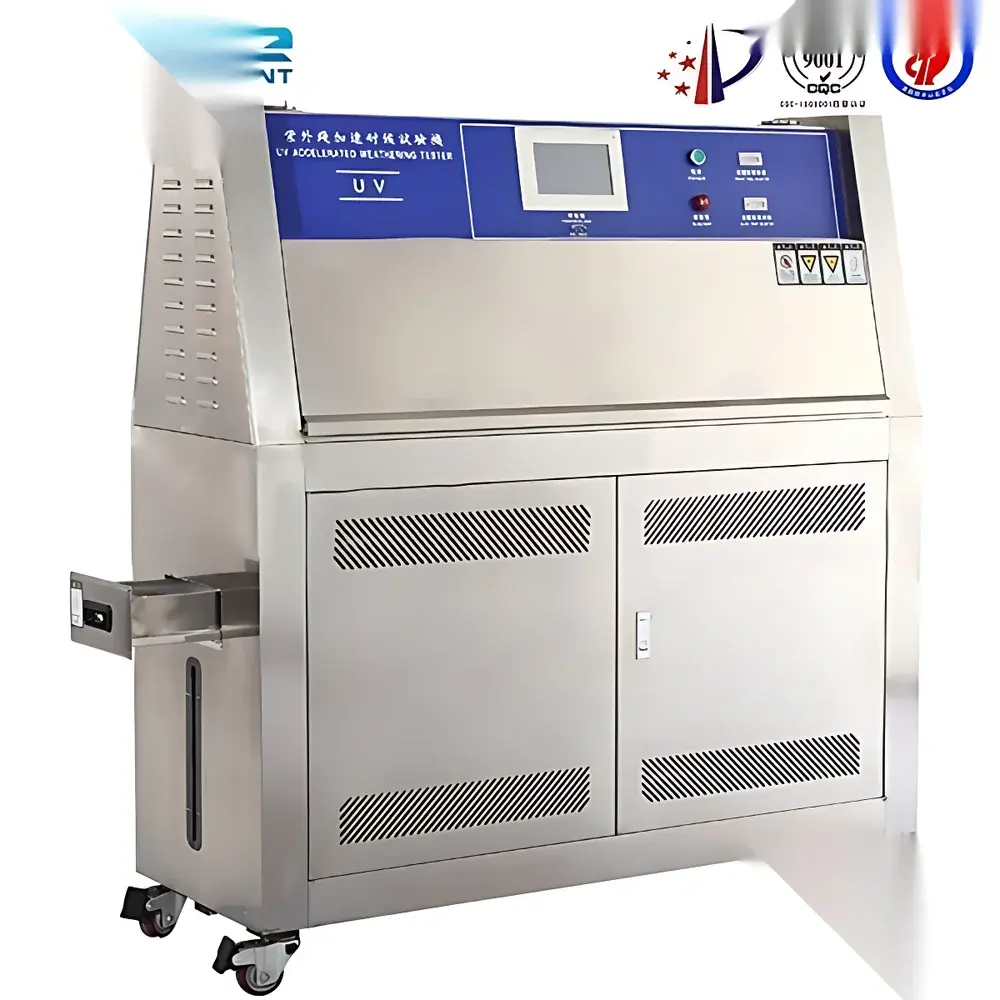
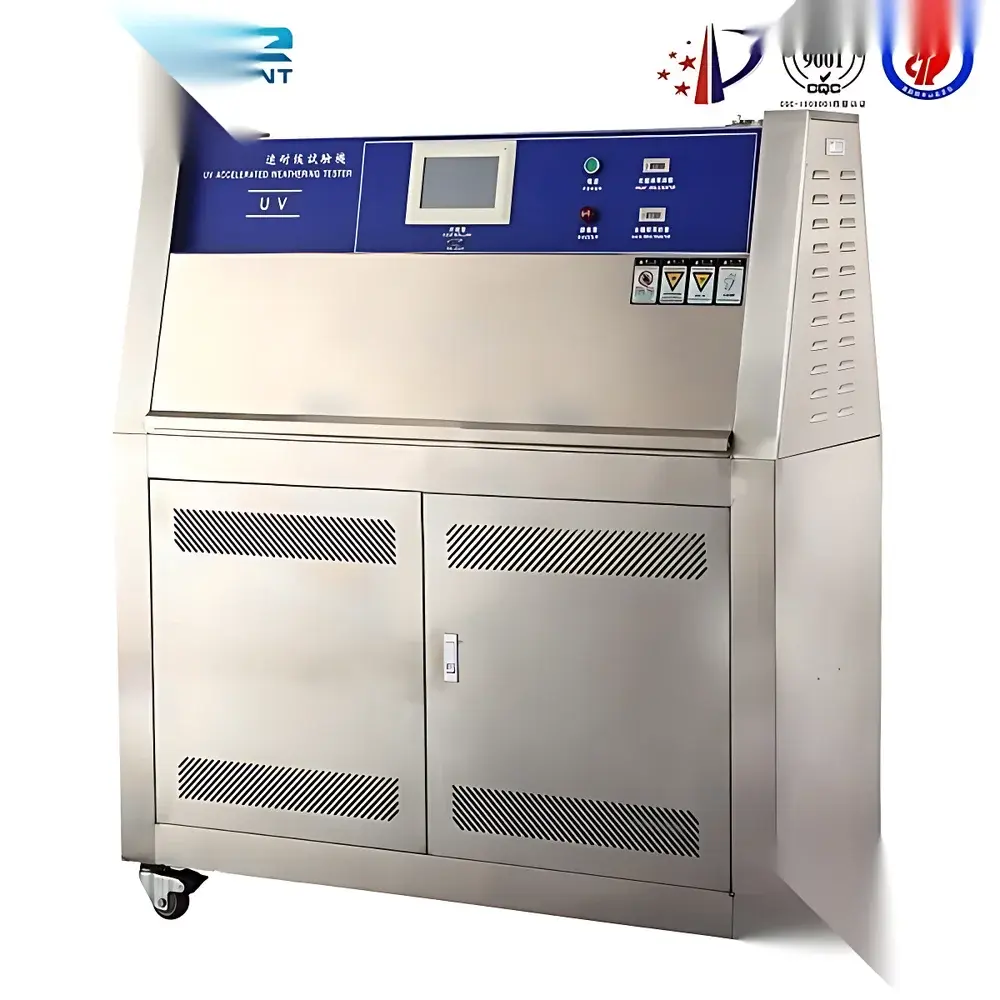
The UV Weathering Aging Chamber is an accelerated environmental testing instrument engineered for evaluating the long-term durability of polymeric, coating, textile, automotive, and architectural materials under controlled ultraviolet (UV) radiation and cyclic condensation humidity. Unlike natural outdoor exposure—which may require months or years to manifest degradation—this chamber replicates critical photochemical and thermo-hygrometric stressors using fluorescent UV lamps (typically UVA-340 or UVB-313) calibrated to match solar spectral irradiance in the 290–400 nm range. The system operates on a precisely programmable cycle combining UV irradiation at elevated temperatures (typically 40–80 °C) with condensation phases that simulate nocturnal dew formation via controlled water vapor saturation on specimen surfaces. This dual-stress methodology enables reproducible assessment of photodegradation mechanisms including chain scission, oxidation, chromophore bleaching, and surface microcracking—phenomena directly linked to real-world failures such as color fading, gloss loss, chalking, embrittlement, and adhesion loss.
Key Features
- Fluorescent UV lamp array (UVA-340 standard-compliant) with spectral output traceable to NIST-referenced calibration protocols
- Programmable irradiance control (0.35–1.55 W/m² @ 340 nm) and adjustable UV exposure duration per cycle
- Condensation humidity system generating stable dew-point conditions (typically 40–60 °C, >95% RH) without external water supply dependency
- Integrated spray function delivering deionized water mist during irradiation or dark cycles to simulate rain erosion and thermal shock
- Stainless steel 316L test chamber interior with corrosion-resistant hardware and quartz UV-transmissive lamp housings
- Digital PID temperature control with ±0.5 °C uniformity across specimen plane (ASTM G154 Annex A1 compliant)
- Real-time monitoring of chamber temperature, black-panel temperature (BPT), and relative humidity via calibrated sensors
- Lockable safety interlock system with UV-shielded viewing window and automatic lamp cutoff upon door opening
- Compliance-ready design supporting audit trails for GLP/GMP environments (optional data logging module available)
Sample Compatibility & Compliance
The chamber accommodates flat specimens up to 75 mm thick and 150 mm × 300 mm in planar dimension, mounted vertically on non-reflective aluminum sample racks. Compatible substrates include thermoplastics (PP, ABS, PC), elastomers, paints, powder coatings, adhesives, geotextiles, and composite laminates. Test protocols align with internationally recognized standards including ASTM G154 (Standard Practice for Operating Fluorescent Ultraviolet (UV) Lamp Apparatus for Exposure of Nonmetallic Materials), ISO 4892-3 (Plastics — Methods of Exposure to Laboratory Light Sources — Part 3: Fluorescent UV Lamps), and SAE J2020 (Automotive Exterior Materials UV Exposure). All operational parameters—including irradiance setpoints, cycle timing, and temperature profiles—are fully configurable to meet specific OEM or regulatory validation requirements.
Software & Data Management
Equipped with embedded microprocessor-based controller featuring intuitive touchscreen interface, the system supports up to 10 user-defined test programs with nested UV/condensation/spray sequences. Optional Ethernet-enabled data acquisition module provides timestamped logging of BPT, chamber temperature, irradiance, and runtime status at 1-minute intervals. Export formats include CSV and PDF reports compatible with LIMS integration. For regulated industries, optional 21 CFR Part 11-compliant software add-on delivers electronic signatures, role-based access control, and immutable audit trails—fully traceable to individual operator sessions and parameter modifications.
Applications
- Accelerated weathering qualification of automotive exterior trim, headlamp lenses, and sealants per OEM specifications (e.g., GMW14124, Ford CETP 00.00-L-467)
- UV stability screening of pharmaceutical packaging films (PVC, PVDC, Alu-Alu blisters) per USP
- Coating formulation development and batch release testing for aerospace primers and marine antifouling systems
- Photostability assessment of organic photovoltaic (OPV) encapsulants and perovskite layer protective barriers
- Quality assurance of architectural cladding materials (aluminum composite panels, fiber-cement boards) prior to CE marking
- Research into polymer degradation kinetics using Arrhenius modeling of carbonyl index evolution via FTIR correlation
FAQ
What UV lamp types are supported, and how often must they be replaced?
Standard configurations use UVA-340 lamps (peak emission 340 nm), with recommended replacement after 1,600 hours of operation or when irradiance drops below 90% of initial calibration value. UVB-313 lamps are available for aggressive testing but require stricter safety controls.
Is distilled or deionized water required for the condensation and spray systems?
Yes—only Type II or higher purity water per ASTM D1193 must be used to prevent mineral deposits on lamps and sensor surfaces, which would compromise irradiance uniformity and measurement accuracy.
Can the chamber operate unattended for extended periods?
Yes, provided the facility meets electrical grounding standards, ambient temperature remains between 15–30 °C, and the exhaust ventilation rate exceeds 3 air changes per hour to dissipate ozone generated by UV lamps.
How is black-panel temperature (BPT) measured, and why is it critical?
BPT is monitored via a thermocouple embedded in a matte-black metal panel mounted adjacent to specimens. It reflects actual surface heating under UV exposure—more relevant than chamber air temperature for predicting real-world thermal degradation pathways.
Does the system support remote diagnostics or preventive maintenance alerts?
With optional connectivity package, firmware updates and diagnostic logs can be accessed remotely; predictive alerts trigger when lamp output variance exceeds ±5% or condensation cycle deviation exceeds ±2 °C over three consecutive runs.
Related Products






