
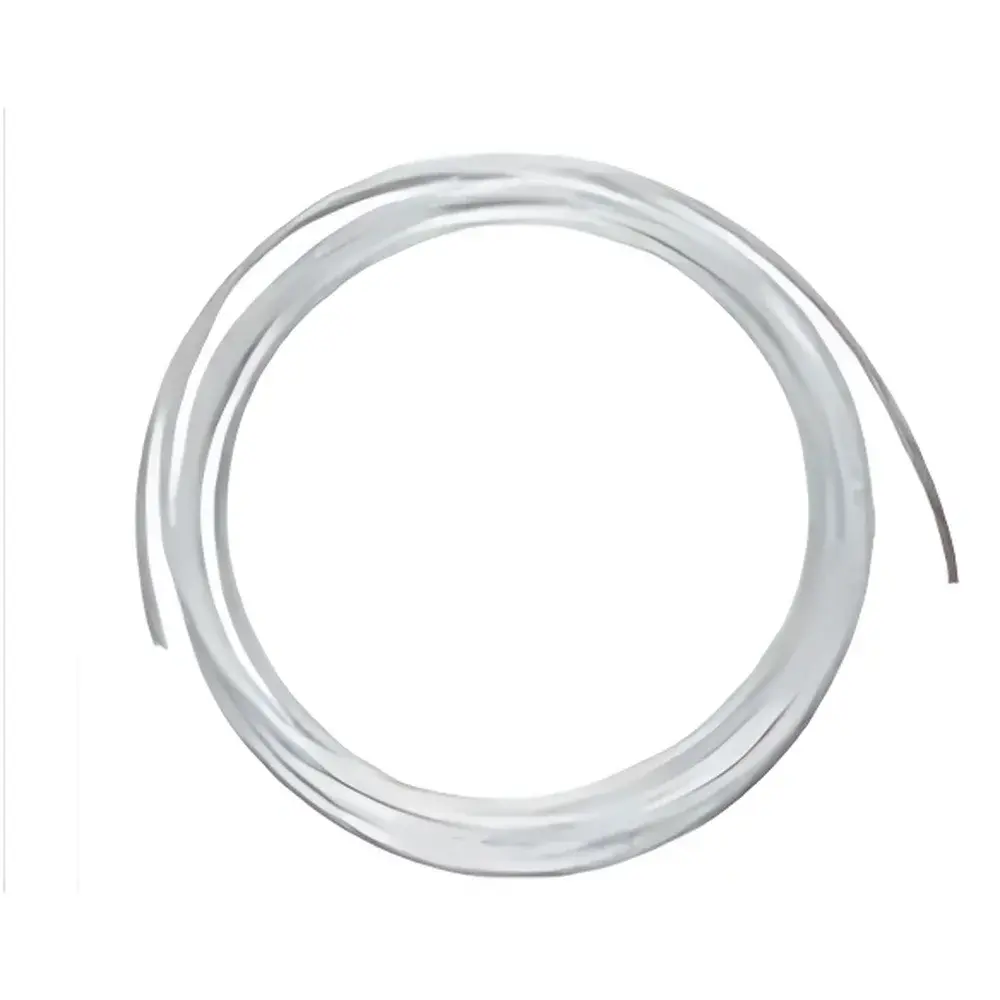
RWD PE Tubing for Life Science Applications – Model 62320 Series
| Brand | RWD |
|---|---|
| Origin | Shenzhen, China |
| Manufacturer Type | Direct Producer |
| Origin Category | Domestic (China) |
| Model | 62320 |
| Pricing | Upon Request |
Overview
RWD PE Tubing (Polyethylene Tubing) is a precision-engineered consumable designed specifically for demanding in vivo and in vitro life science applications. Constructed from medical-grade high-density polyethylene (HDPE) or low-density polyethylene (LDPE), these tubes exhibit excellent chemical resistance to common biological solvents, high thermal stability (withstanding autoclaving at 121 °C for 30 min), and superior flexibility without kinking—critical attributes for chronic implantation and microfluidic interfacing. The tubing operates on passive capillary and pressure-driven fluid transport principles, making it suitable for low-flow-rate delivery, sampling, and perfusion systems where biocompatibility, dimensional consistency, and low protein binding are essential. Unlike rigid or reactive materials, PE tubing maintains structural integrity under physiological bending radii and exhibits minimal leachables—ensuring experimental fidelity in sensitive pharmacokinetic, neurochemical, and metabolic studies.
Key Features
- Medical-grade polyethylene formulation compliant with USP Class VI requirements for biocompatibility
- Precision extruded dimensions with tight tolerances (±0.02 mm OD/ID) ensuring reproducible flow resistance and system calibration
- Autoclavable (121 °C, 30 min, saturated steam) for all variants except model 62322—validated per ISO 17665-1
- Low surface energy and non-polar chemistry minimize adsorption of peptides, neurotransmitters, and lipophilic compounds
- Compatible with standard luer-lock fittings, microdialysis connectors (e.g., CMA/Microdialysis-compatible stubs), and stainless-steel cannulae
- Available in nine standardized inner/outer diameter configurations—including internationally recognized PE10, PE20, PE25, PE50, and PE60 designations—enabling cross-platform method transfer
Sample Compatibility & Compliance
This PE tubing series is routinely employed in rodent and large-animal models for arterial, venous, bile duct, portal vein, subcutaneous, and intracerebroventricular (ICV) catheterization. Its inert surface supports long-term implantation (≥7 days) with reduced thrombogenicity and fibrotic encapsulation compared to PVC or silicone alternatives. All lots undergo rigorous endotoxin testing (<0.03 EU/mL by LAL assay) and particulate analysis per USP . Documentation includes full traceability to raw material lot numbers, extrusion batch records, and sterility validation reports. The product line aligns with GLP-compliant study conduct and supports audit readiness for FDA 21 CFR Part 58 and OECD 407/408 submissions.
Software & Data Management
As a passive physical consumable, RWD PE Tubing does not incorporate embedded electronics or firmware. However, its dimensional specifications are fully integrated into RWD’s companion experimental design tools—including the Tubing Flow Resistance Calculator (freely accessible via RWD’s technical portal) and the In Vivo Catheterization Protocol Builder. These web-based utilities enable users to compute expected laminar flow rates (using Hagen–Poiseuille equation inputs), select optimal tubing lengths for target hydraulic resistance, and generate SOP-compliant implantation schematics. All specification sheets, sterilization validation summaries, and biocompatibility dossiers are available in English as downloadable PDFs with version-controlled revision history and ISO 9001-certified document management metadata.
Applications
- Microdialysis probe perfusion and analyte collection in brain, tumor, or adipose tissue
- Chronic intravenous or intra-arterial infusion for pharmacodynamic monitoring
- Bile duct cannulation in hepatic metabolism and transporter studies
- Subcutaneous osmotic pump connection for sustained drug delivery
- Lateral ventricle or cisterna magna access for CSF sampling and CNS-targeted administration
- Ex vivo organ perfusion systems (e.g., isolated heart, kidney, or liver preparations)
- Interface between syringe pumps, pressure transducers, and custom-built microfluidic manifolds
FAQ
Which PE tubing models are compatible with autoclave sterilization?
All models except 62322 (PE Tubing – 0.50 × 0.25 mm) are validated for steam sterilization at 121 °C for 30 minutes.
Can these tubes be used for human clinical research applications?
These tubes are intended for preclinical research use only; they are not CE-marked or FDA 510(k)-cleared for human use.
What is the shelf life and recommended storage condition?
Unopened packages retain specification integrity for 36 months when stored at 15–25 °C in original sealed packaging, protected from UV exposure and ozone.
Do you provide certificates of analysis (CoA) or conformity (CoC)?
Yes—each shipment includes a lot-specific CoA detailing dimensional verification, endotoxin levels, and sterility test results, issued per ISO/IEC 17025-accredited internal protocols.
Are custom diameters or cut-to-length options available?
Custom extrusions and precision-cut segments (±0.5 mm tolerance) are available under NDA; minimum order quantities apply.



