
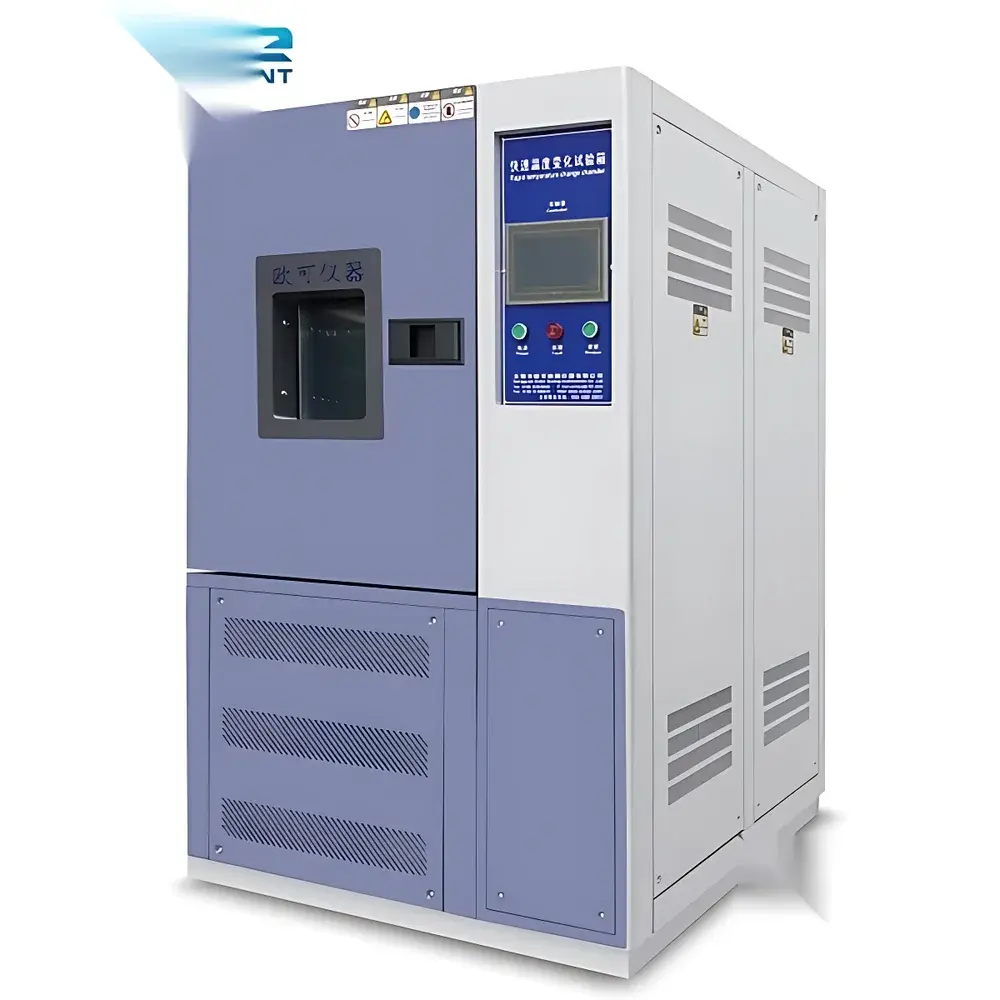
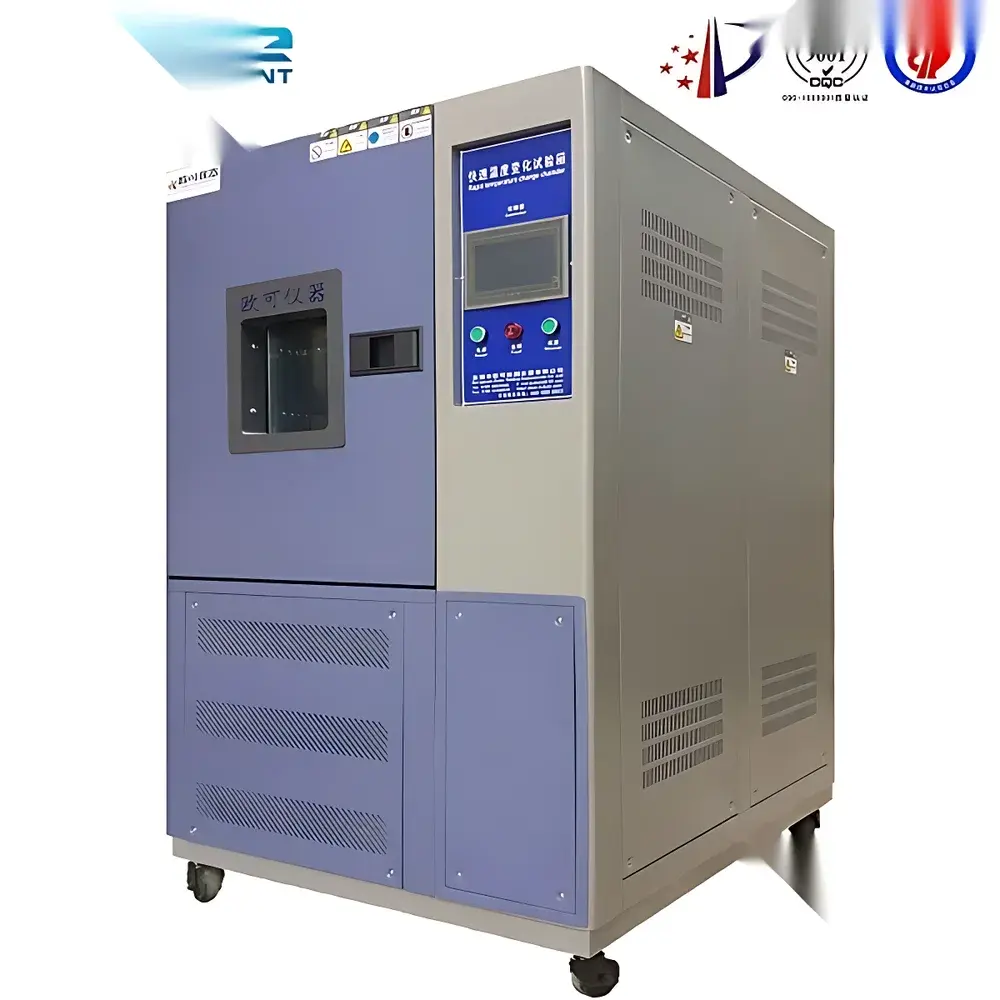
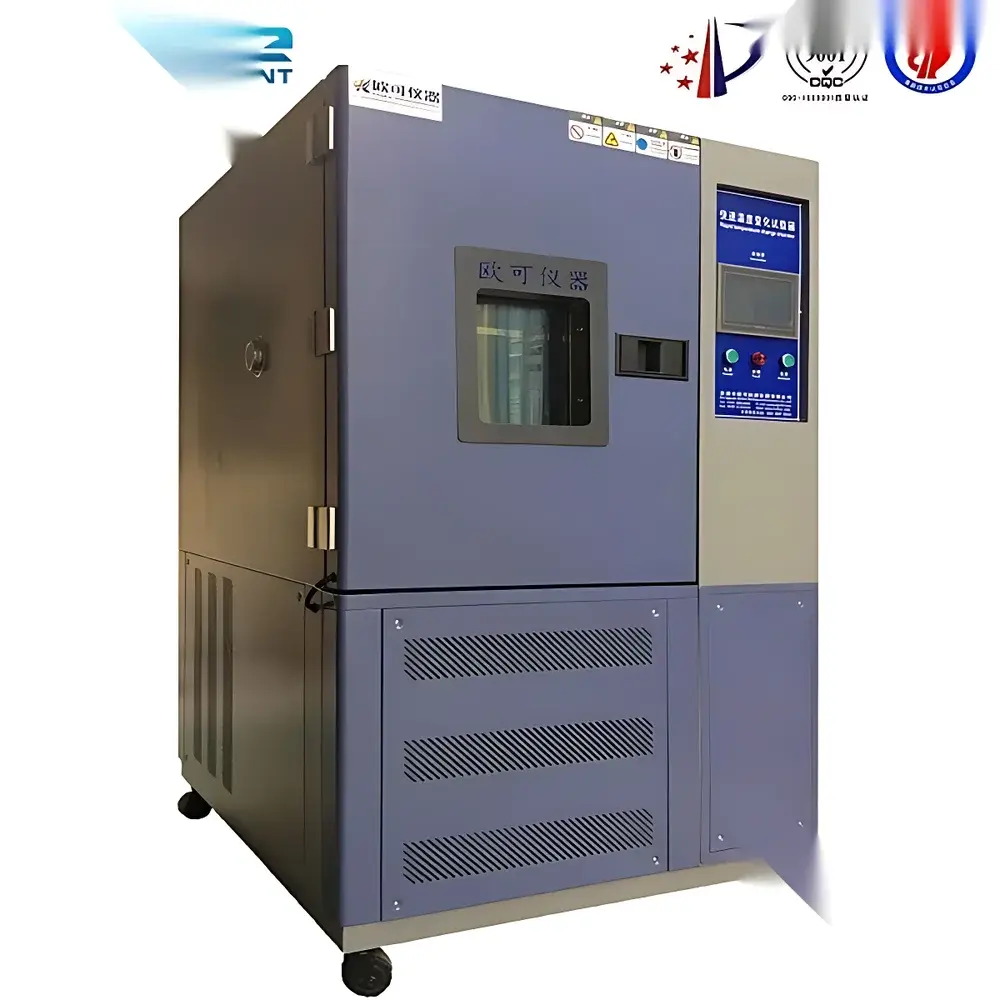
English Product Name
| Brand | Other Brands |
|---|---|
| Origin | Imported |
| Manufacturer Type | General Distributor |
| Price | USD 14,000 (approx.) |
| Temperature Range | −20 to +150 °C / −40 to +150 °C / −50 to +150 °C / −60 to +150 °C / −70 to +150 °C / −85 to +150 °C |
| Temperature Stability | ±0.5 °C |
| Temperature Uniformity | ±1.5 °C |
| Heating Rate (−20 °C → +150 °C, no load) | <45 min |
| Cooling Rates (20 °C → −20/−40/−50/−60/−70/−85 °C, no load) | <45 / <60 / <65 / <70 / <75 / <100 min |
| Controller | TEMI 880 Touchscreen PID Controller (5.7″ or 10.4″ LCD, 320×240 resolution, bilingual interface, 100 programs × 1000 segments, max segment duration 99 h 59 min, up to 999 cycles per segment) |
Overview
The KS-TH Series Rapid Temperature Transition Environmental Test Chamber is an engineered solution for accelerated thermal stress evaluation of electrochemical energy storage devices under tightly controlled temperature and humidity conditions. Based on forced-air convection with dual-axis adjustable air distribution and high-efficiency refrigeration architecture, the chamber delivers precise, repeatable, and traceable environmental profiles required for compliance-driven battery safety validation. Its core functionality centers on rapid, non-linear thermal transitions—enabling standardized thermal abuse (e.g., oven exposure), thermal shock (step-change cycling), and humidity-coupled thermal cycling tests in accordance with international regulatory frameworks. Designed for laboratory-grade reproducibility and long-term operational stability, the system integrates a robust mechanical structure with fail-safe thermal management and real-time process monitoring capabilities.
Key Features
- Multi-range low-temperature capability: Configurable operating envelopes down to −85 °C, supporting ultra-low thermal shock protocols required for advanced lithium-based chemistries.
- High-fidelity temperature control: TEMI 880 microprocessor-based controller with dual PID tuning, programmable ramp/soak profiles, and auto-tuning functionality for optimized thermal response across wide dynamic ranges.
- Uniform airflow architecture: Vertically mounted long-life axial motor combined with horizontally and vertically adjustable dual-layer louvered air diffusers ensures ≤±1.5 °C spatial uniformity across full working volume (408 L / 800 L / 1000 L).
- Optimized observation interface: Triple-layer vacuum-coated viewing window with integrated heating film and high-luminance fluorescent lighting prevents condensation and enables continuous visual monitoring without compromising thermal integrity.
- Dual-redundant safety system: Independent electronic overtemperature limiter (settable per test specimen), plus comprehensive mechanical protection including phase-loss detection, refrigerant high-pressure cutoff, compressor oil pressure monitoring, dry-heater overcurrent protection, and earth-leakage circuit interruption.
- Structural reliability: Seamless stainless-steel inner chamber, corrosion-resistant exterior cladding, flat-panel ergonomic handle design, and vibration-dampened compressor mounting for extended service life under continuous thermal cycling duty.
Sample Compatibility & Compliance
The KS-TH series is validated for testing primary and secondary battery cells and modules—including Li-ion, Ni-MH, Ni-Cd, lead-acid, and metal hydride systems—under defined thermal stress conditions specified in globally recognized safety standards. It supports full execution of thermal abuse testing per IEC 62133:2012 (Ed. 2.0), UL 1642:2012, GB 8897.4–2002 (identical to IEC 60086-4:2000), GB 8897.5–2006 (IEC 60086-5:2005), IEC 61951-1:2017 and -2:2017, and IEC 61960:2011. The chamber’s thermal transition performance meets the minimum ramp rate requirements outlined in Annex B of UN Manual of Tests and Criteria, Part III, Subsection 38.3 for transport safety qualification. All control parameters are logged with timestamped audit trails, supporting GLP-compliant documentation and FDA 21 CFR Part 11–aligned data integrity practices when paired with optional secure software modules.
Software & Data Management
The TEMI 880 controller provides native support for up to 100 independent test programs, each comprising up to 1000 programmable segments with user-defined ramp rates, dwell times, and cycle repetition counts. Real-time data logging includes chamber setpoint, actual temperature/humidity, compressor status, alarm history, and PID output values—all stored internally with time/date stamping. Optional RS-485/Modbus RTU or Ethernet interfaces enable integration into centralized laboratory information management systems (LIMS) or SCADA platforms. Exportable CSV logs facilitate post-test statistical analysis (e.g., Cpk, trend charts) and regulatory submission packages. Firmware supports firmware update via USB and includes password-protected parameter locking for SOP enforcement.
Applications
This chamber serves as a critical tool in battery development laboratories, quality assurance departments, and third-party certification facilities performing: thermal shock validation per MIL-STD-810G Method 503.5; high-temperature storage life assessment per IEC 61427-1; accelerated aging simulations under variable RH/temperature coupling; preconditioning prior to mechanical or electrical abuse testing; and failure mode analysis during thermal runaway propagation studies. Its rapid transition capability also supports automotive OEM AEC-Q200 stress screening, aerospace component qualification (RTCA DO-160 Section 4), and R&D-level investigation of solid-electrolyte interphase (SEI) stability under extreme thermal gradients.
FAQ
What is the maximum allowable humidity range for this chamber?
Humidity control capability is model-dependent and must be confirmed at time of order; standard configurations support 20–98% RH at temperatures ≥+10 °C. Humidity operation below 0 °C is not supported.
Can the chamber operate continuously for 72 hours or longer?
Yes—the system is rated for unattended continuous operation with active thermal management and redundant safety interlocks. Scheduled maintenance intervals are defined per ISO 13374-2 for predictive condition monitoring.
Is calibration traceability provided with delivery?
Each unit ships with a factory calibration certificate traceable to NIST or equivalent national metrology institute (NMI), covering temperature uniformity and stability verification at three points across the operational range.
Does the controller support remote access or network integration?
Standard configuration includes RS-485 Modbus RTU; optional Ethernet module enables TCP/IP communication, web-based status monitoring, and secure remote parameter adjustment via authenticated HTTPS interface.
What refrigerant is used in the cooling system?
Environmentally compliant R-404A or R-507A refrigerant is employed, selected per regional F-Gas Regulation (EU) No 517/2014 or EPA SNAP program requirements, with documented GWP values and leak-check compliance records supplied.



