
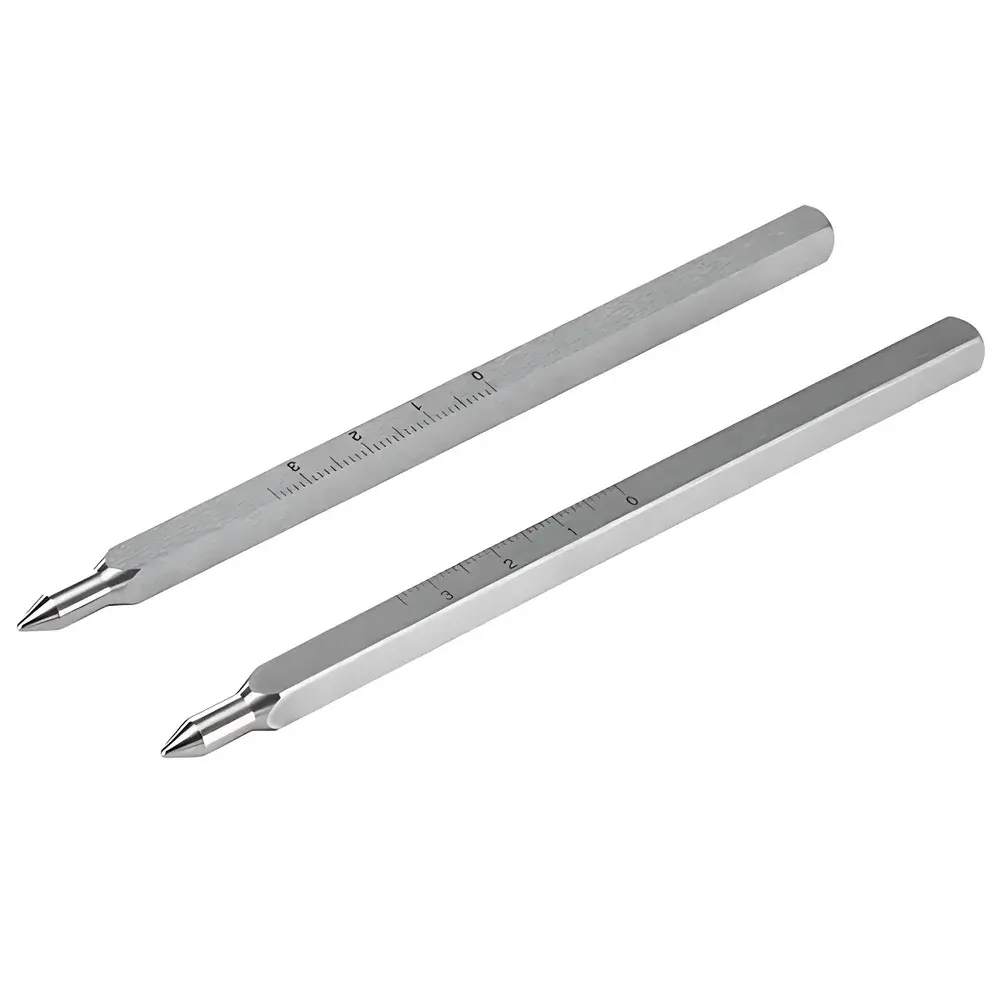
RWD 68308 Soft-Tip Mouse Ear Bars
| Brand | RWD |
|---|---|
| Origin | Shenzhen, China |
| Manufacturer Type | OEM Manufacturer |
| Country of Origin | China |
| Model | 68308 |
| Pricing | Available Upon Request |
Overview
The RWD 68308 Soft-Tip Mouse Ear Bars are precision-engineered stereotaxic accessories designed for reliable, atraumatic head fixation of adult mice during neuroscientific procedures—including electrophysiology, microinjection, optogenetics, and cranial window surgery. Unlike rigid metal ear bars, this model features compliant, medical-grade silicone ear tips that conform to the anatomical contours of the murine external auditory meatus, distributing mechanical load over a larger surface area and eliminating localized pressure points. The underlying stainless-steel core ensures dimensional stability and torque resistance under stereotaxic frame clamping, while the soft-tip interface minimizes risk of tympanic membrane perforation, cartilage deformation, or temporal bone stress—critical considerations in longitudinal studies requiring repeated handling.
Key Features
- Biocompatible soft silicone ear tips (Shore A 30–40) certified to ISO 10993-5 for cytotoxicity and ISO 10993-10 for skin sensitization
- Corrosion-resistant 316L stainless-steel shaft with threaded M4 interface compatible with standard RWD, Stoelting, and Kopf stereotaxic frames
- Adjustable insertion depth via dual-scale micrometer collar (0.1 mm resolution), enabling precise alignment relative to bregma/lambdah coordinates
- Autoclavable at 134 °C, 2 bar saturated steam (EN 285), supporting strict GLP-compliant surgical workflows
- Integrated anti-rotation keyway prevents tip slippage during craniotomy or electrode advancement
Sample Compatibility & Compliance
The RWD 68308 is validated for use with C57BL/6, BALB/c, CD-1, and FVB/N adult mice (20–30 g). It accommodates natural inter-strain variation in pinna morphology and external ear canal diameter (1.8–2.4 mm). Device design adheres to the principles outlined in the NIH Guide for the Care and Use of Laboratory Animals (8th Edition) and supports compliance with AAALAC International accreditation standards. All materials meet USP Class VI biological safety requirements, and the assembly is free of phthalates, latex, and BPA. Documentation includes full material traceability (mill test reports), RoHS 2011/65/EU conformity declaration, and CE marking per Directive 2017/745 (MDR) for laboratory-use accessories.
Software & Data Management
While the 68308 is a mechanical accessory and does not incorporate embedded electronics or firmware, its dimensional repeatability (±0.02 mm positional variance across 50 insertion cycles) enables seamless integration into digitally coordinated workflows. When used with RWD’s STO-1000 Stereotaxic System or third-party platforms featuring digital coordinate logging (e.g., NeuroStar, Angle2), the ear bar’s consistent zero-reference positioning contributes to inter-session spatial reproducibility—a prerequisite for longitudinal fMRI correlation, serial two-photon imaging, or chronic electrode array mapping. Audit trails generated by associated acquisition software (e.g., Spike2, MATLAB-based custom rigs) remain fully compliant with FDA 21 CFR Part 11 when paired with appropriate electronic signature protocols.
Applications
- Chronic implantation of microdrives and tetrode arrays requiring multi-day stability
- High-resolution two-photon calcium imaging through thinned-skull or glass-window preparations
- Stereotaxic delivery of AAV vectors, CRISPR-Cas9 constructs, or pharmacological agents into hippocampal, cortical, or striatal targets
- In vivo patch-clamp recordings where minimal head movement artifact (< 5 µm RMS displacement) is essential
- Behavioral electrophysiology paradigms involving simultaneous video tracking and neural signal acquisition
FAQ
Are the soft ear tips replaceable independently of the metal shaft?
Yes—RWD supplies replacement silicone tips (Part No. 68308-TIP) as consumables; each set includes two tips with pre-installed retention rings.
Can these ear bars be used for rat stereotaxy?
No—the 68308 is specifically sized for mouse anatomy; RWD offers separate models (e.g., 68310) for rats and larger rodents.
What sterilization methods are validated?
Autoclaving (134 °C, 2 bar, 5 min), ethylene oxide (EtO) gas, and low-temperature hydrogen peroxide plasma (e.g., STERRAD®); alcohol immersion is not recommended due to potential silicone swelling.
Is there documentation available for IACUC protocol submission?
Yes—RWD provides a full technical dossier including biocompatibility reports, dimensional drawings, and animal welfare justification statements upon request to support institutional animal care committee approvals.
Related Products





