
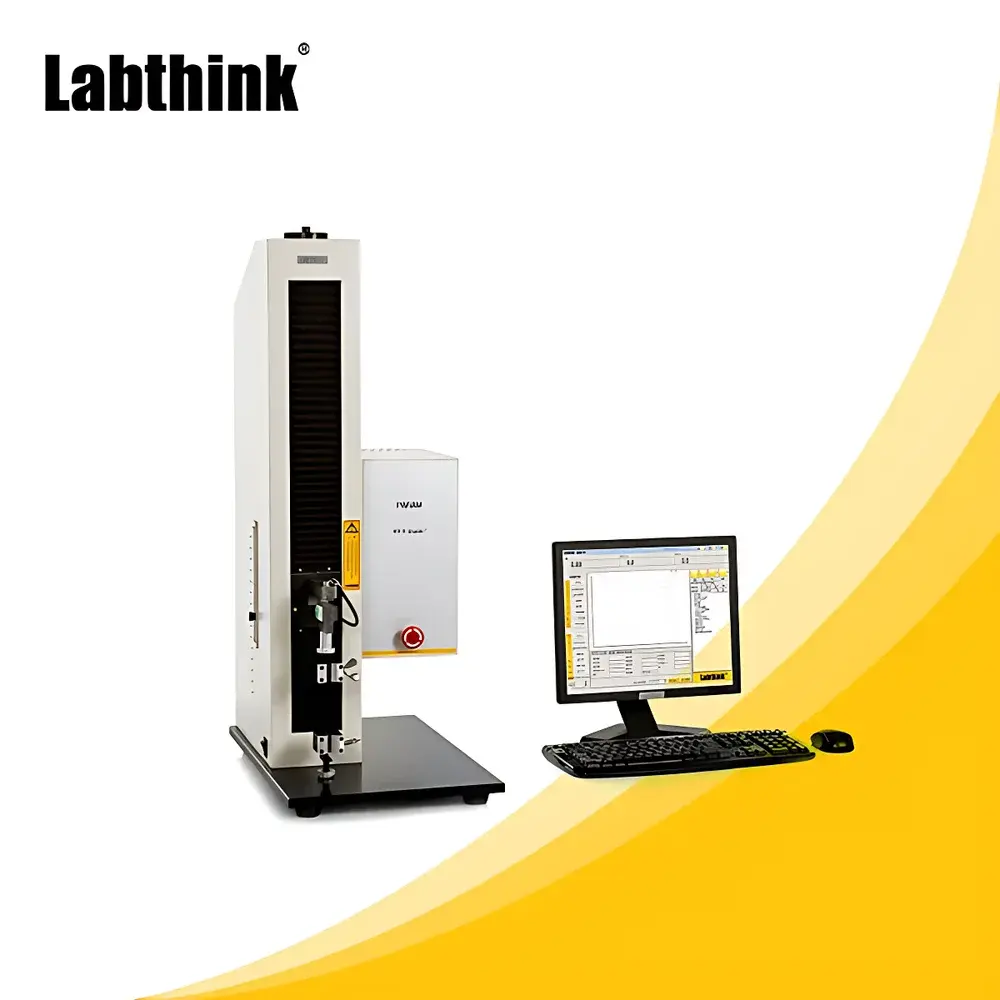
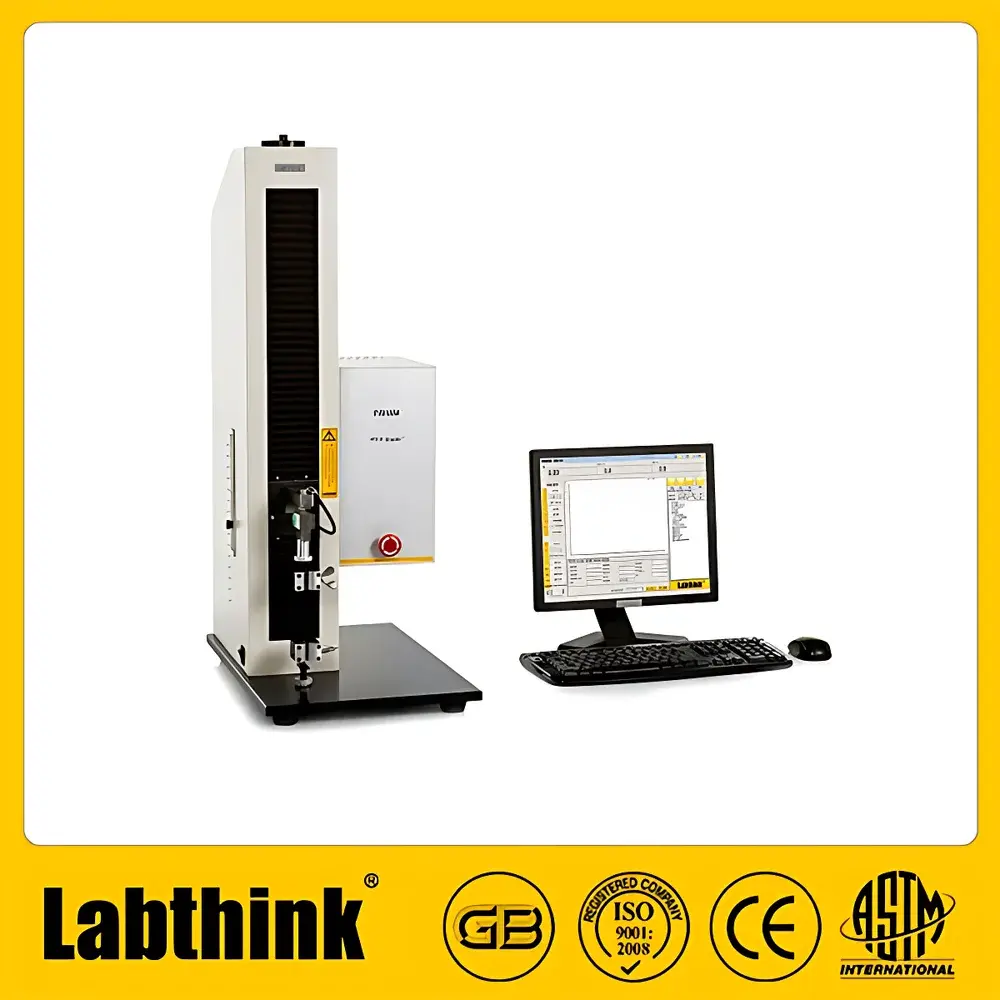
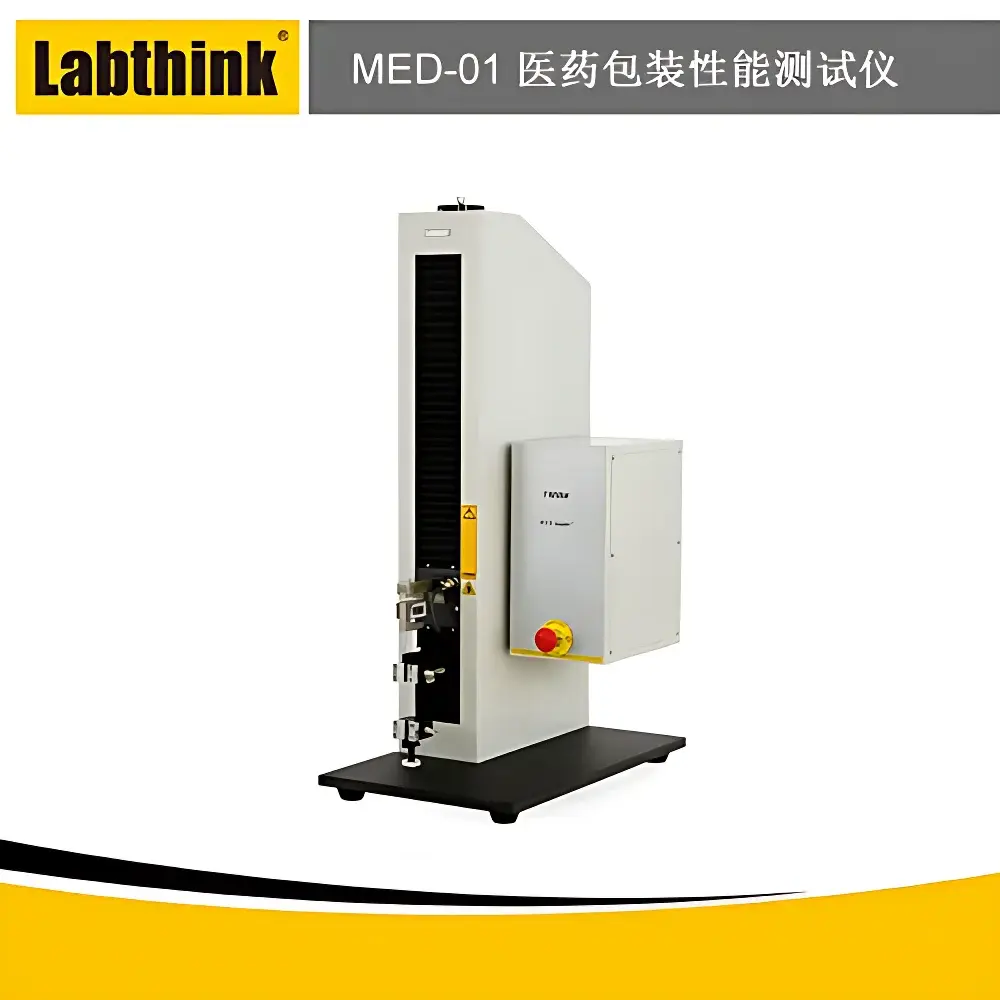
Labthink PARAM-BoMei MED-01 Pharmaceutical Packaging Mechanical Tester
| Brand | Labthink |
|---|---|
| Model | PARAM-BoMei MED-01 |
| Type | Electromechanical Tensile Testing System |
| Force Accuracy | Better than Class 0.5 (per ISO 7500-1 / ASTM E4) |
| Standard Load Cell | 200 N |
| Optional Load Cells | 50 N, 100 N, 500 N |
| Test Speed (Extension/Retraction) | 10, 50, 100, 150, 200 mm/min |
| Specimen Width Capacity | 30 mm (standard), 50 mm (optional) |
| Maximum Travel | 600 mm |
| Dimensions | 851 × 500 × 940 mm (L×W×H) |
| Weight | 68 kg |
| Power Supply | AC 220 V, 50 Hz, 60 W |
| Compliance | GB, YY, YBB, ISO 37, ASTM D882/D1938/F88/F904, JIS P8113, QB/T 2358/1130 |
Overview
The Labthink PARAM-BoMei MED-01 Pharmaceutical Packaging Mechanical Tester is a CE-compliant, microprocessor-controlled electromechanical tensile testing system engineered specifically for the quantitative mechanical evaluation of pharmaceutical primary and secondary packaging materials. It operates on the principle of uniaxial force-displacement measurement under controlled strain rate conditions—applying precisely regulated tensile, compressive, or peel motion between two synchronized grips while continuously acquiring real-time load (via high-stability S-type load cells) and displacement (via optical encoder-based crosshead position feedback) data. This architecture enables traceable determination of critical mechanical parameters including tensile strength, elongation at break, yield point, peel adhesion, puncture resistance, seal integrity, cap removal torque simulation, and plunger glide force—each aligned with pharmacopoeial and regulatory test methods required for quality control in GMP-compliant manufacturing environments.
Key Features
- Class 0.5 force accuracy certified per ISO 7500-1 and ASTM E4—validated across full load range using NIST-traceable calibration standards
- Dual-directional actuation system supporting tension, compression, and cyclic loading protocols with programmable speed profiles (10–200 mm/min in both extension and return phases)
- Modular grip architecture accommodating over 100 application-specific fixtures—including ASTM F88 peel jigs, ISO 8503-2 puncture assemblies, YY0613-2007 syringe plunger glide fixtures, YBB00042002 rubber stopper penetration units, and custom-engineered fixtures for ampoule break force or vial cap pull-off simulation
- Embedded Linux-based control platform running Labthink’s proprietary Lystem™ OS v3.2—featuring intuitive touchscreen interface, multi-language support (EN/DE/FR/ES/ZH), and built-in method templates for all major pharmacopoeial tests
- Full audit trail capability compliant with FDA 21 CFR Part 11 requirements—supporting electronic signatures, user role-based access control, and immutable data logging with timestamped metadata
Sample Compatibility & Compliance
The MED-01 supports mechanical characterization of diverse pharmaceutical packaging substrates: laminated foils (Alu-PVC, Alu-Alu), thermoformed blisters, flexible pouches (PET/AL/PE, PET/PE), pre-filled syringe barrels, elastomeric closures (bromobutyl, chlorobutyl), glass vials, plastic ampoules, child-resistant closures, and medical device packaging (Tyvek®/PET/PE sterile barrier systems). All test configurations adhere to internationally recognized standards including ISO 37 (rubber tensile properties), ASTM D882 (thin plastic film tensile), ASTM F88 (seal strength), ASTM F904 (peel adhesion), YY 0613-2007 (syringe performance), YBB 00042002 (rubber stoppers), YBB 00112004 (plastic caps), and GB/T 17200 (general tensile testing principles). Instrument validation documentation—including IQ/OQ/PQ protocols, uncertainty budgets, and metrological traceability statements—is provided upon request to support GLP/GMP laboratory accreditation.
Software & Data Management
Lystem™ Laboratory Data Management Software (v5.1) serves as the central hub for test execution, result analysis, and regulatory reporting. It enables automated calculation of derived metrics (e.g., seal strength in N/15mm, puncture force in N, glide force in N), statistical process control (SPC) charting (X-bar/R, Cp/Cpk), batch-level trending, and PDF/Excel export with embedded digital signatures. When deployed in networked lab environments, the system integrates seamlessly with Lystem™ Enterprise Server—enabling centralized instrument monitoring, cross-lab data harmonization, electronic batch record (EBR) linkage, and automated report distribution to QMS platforms such as TrackWise or MasterControl. Raw data files (.lsm) are stored in vendor-neutral XML format with SHA-256 hash verification for long-term archival integrity.
Applications
- Tensile testing of blister lidding foil and cold-form foil per YBB00042002 and ASTM D882
- Seal strength evaluation of pouches and sachets per ASTM F88 and ISO 11607-2
- Puncture resistance of rubber stoppers using standardized needle geometry per YY0613-2007 and ISO 8536-2
- Plunger glide force measurement for prefilled syringes per ISO 11040-4 and USP <381>
- Ampoule break force assessment per Ph. Eur. 3.2.1 and JP 17
- Peel adhesion of pressure-sensitive labels on HDPE/PP containers per ASTM D3330
- Closure removal torque simulation for child-resistant packaging per ISO 8317
- Compression testing of desiccant canisters and tablet blister cavities per USP <661>
- Shear strength of adhesive-coated backing layers in transdermal patches per ISO 2286-2
FAQ
Does the MED-01 comply with FDA 21 CFR Part 11 requirements for electronic records and signatures?
Yes—the system includes role-based user authentication, audit trail logging with immutable timestamps, electronic signature workflows, and data encryption at rest and in transit, fully satisfying Part 11 Subpart B controls.
Can the instrument be validated for use in a GMP-regulated environment?
Yes—Labthink provides comprehensive IQ/OQ/PQ documentation packages, including protocol templates, acceptance criteria, calibration certificates, and uncertainty analysis reports aligned with Annex 15 and ASTM E2500.
Is third-party calibration support available globally?
Yes—Labthink maintains partnerships with ISO/IEC 17025-accredited calibration laboratories in North America, EU, APAC, and LATAM to ensure ongoing metrological traceability.
What is the warranty coverage and service response time?
Standard warranty is 24 months parts-and-labor; extended service plans include 4-hour remote diagnostics SLA and 72-hour on-site engineer dispatch for priority contracts.
Are software updates and regulatory compliance patches provided post-purchase?
Yes—Lystem™ OS receives biannual feature releases and quarterly security/regulatory updates, all distributed via secure firmware portal with version-controlled release notes.



