
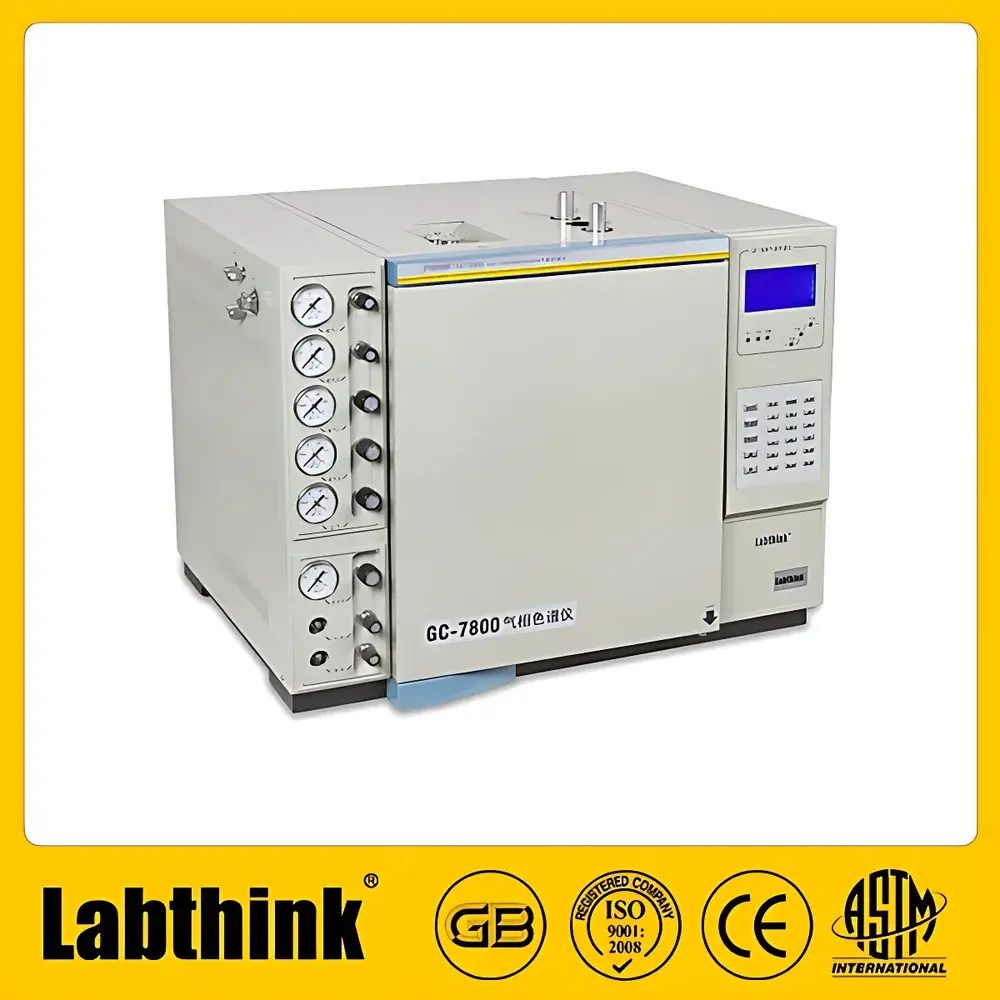
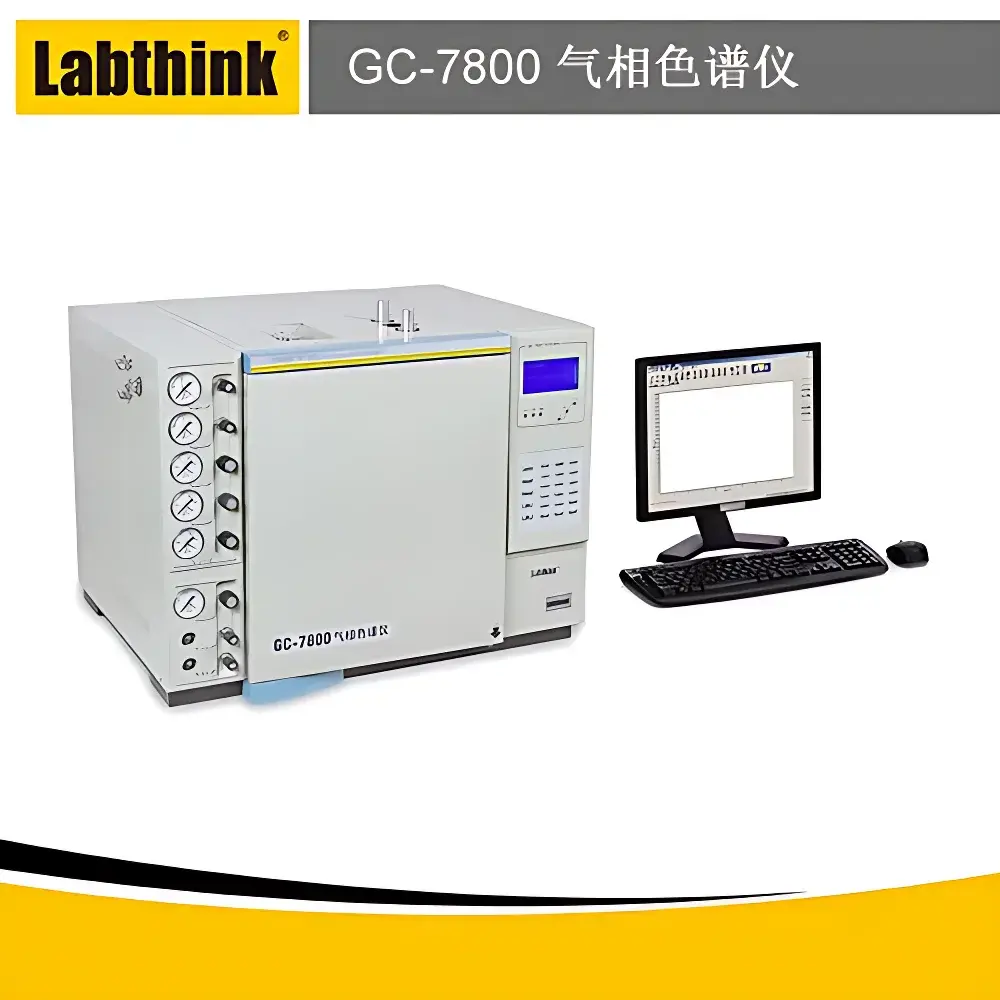
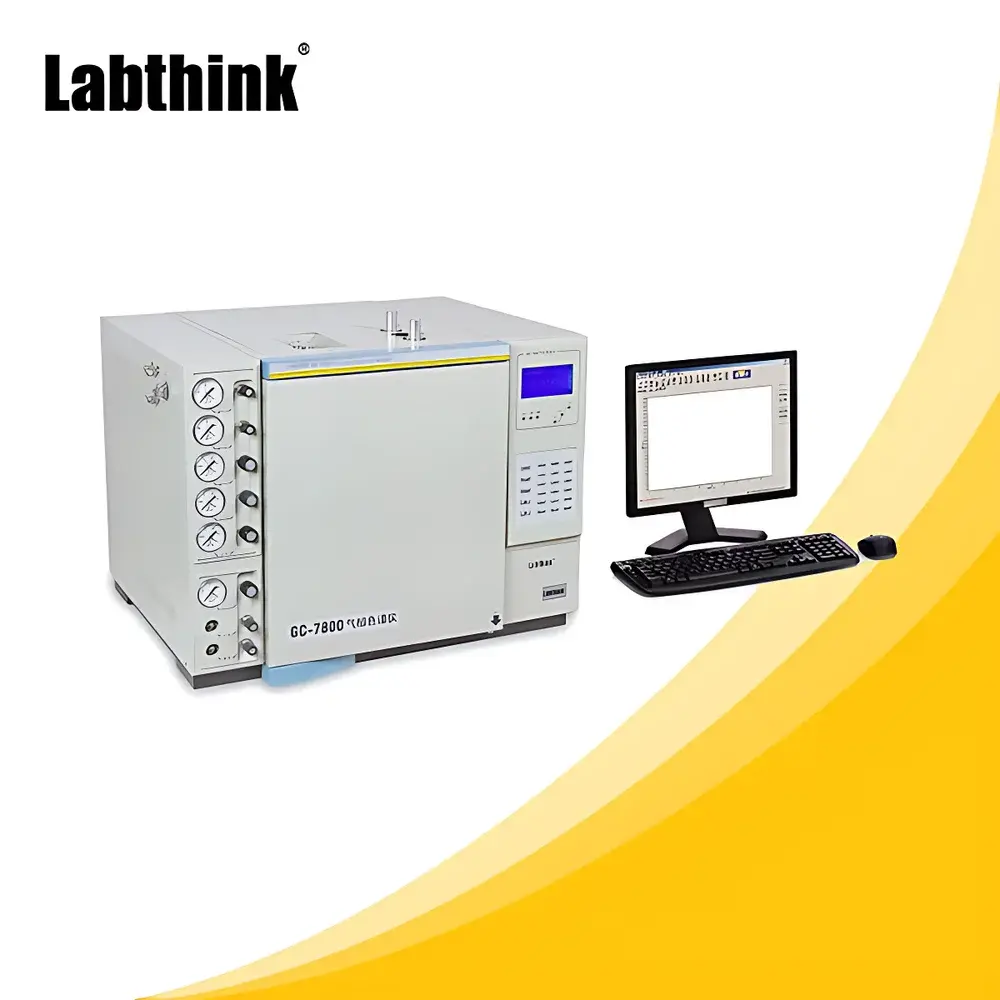
Labthink GC-7800 Gas Chromatograph for Solvent Residue Analysis in Packaging Materials
| Brand | Labthink |
|---|---|
| Origin | Shandong, China |
| Manufacturer Type | Direct Manufacturer |
| Instrument Type | Benchtop Laboratory Gas Chromatograph |
| Model | GC-7800 |
| Price Range | USD 7,000–14,000 (FOB) |
| Temperature Control Range | Ambient +15 °C to 200 °C |
| Heating Rate | 1–30 °C/min |
| Maximum Column Oven Temperature | 399 °C |
| Temperature Stability | ±0.1 °C |
| Programmed Temperature Ramping | 5-step linear |
| Detector Options | FID (detection limit ≤1×10⁻¹¹ g/s for benzene), TCD (sensitivity ≥3000 mV·mL/mg for benzene in H₂ carrier) |
| Column Compatibility | Packed & capillary columns (including dedicated water-content analysis column and solvent residue separation column) |
| Data System | Integrated Windows-based chromatography workstation with ASTM/ISO-compliant reporting, GLP audit trail, and 21 CFR Part 11-ready user access control |
Overview
The Labthink GC-7800 is a purpose-engineered benchtop gas chromatograph designed specifically for quantitative determination of residual organic solvents in flexible packaging materials—such as laminated films, pouches, cigarette packaging, and pharmaceutical blister foils. It operates on the fundamental principle of gas-liquid partition chromatography: volatile analytes (e.g., toluene, xylene, ethyl acetate, methyl ethyl ketone, butyl acetate, ethanol, isopropanol) are vaporized in the inlet, separated based on differential partitioning between the mobile phase (high-purity carrier gas) and stationary phase (capillary or packed column), and detected via flame ionization (FID) or thermal conductivity (TCD) detection. The instrument complies with internationally recognized test standards including ISO 11843-1, ASTM D6983, GB/T 10004–2008, and YBB 00302004–2015 for packaging solvent residue testing. Its architecture prioritizes analytical robustness, thermal precision, and method reproducibility—critical for regulatory compliance in food contact and pharmaceutical packaging quality assurance.
Key Features
- Optimized thermal management system: column oven with ambient +3 °C near-room-temperature operation, ±0.1 °C temperature stability, and five-stage linear programmed ramping (1–30 °C/min) with ≤2% retention time repeatability.
- Dual-detector modularity: interchangeable FID and TCD units mounted on standardized interfaces; supports simultaneous dual-channel analysis with independent temperature control for detector chambers (ambient +15 °C to 200 °C).
- Flexible injection system: configurable for split/splitless capillary injection (with septum purge), packed-column headspace injection, or direct liquid injection—enabling compatibility with standard 1-mL glass syringes and 20-mL headspace vials.
- Integrated safety architecture: dual hardware self-locking overtemperature protection, carrier gas low-pressure cutoff, automatic power-off at >20 °C deviation from setpoint, and real-time software-monitored thermal integrity.
- High-fidelity signal processing: 1500 mV full-scale analog output range, <0.025 mV baseline noise (FID), and drift <0.15 mV/h—ensuring reliable quantification of trace-level residuals down to sub-μg/m² levels.
- Full-system automation: embedded microprocessor control, backlit LCD interface, keyboard-driven parameter entry, non-volatile memory for method storage, and seamless integration with external data acquisition systems via RS-232 or USB.
Sample Compatibility & Compliance
The GC-7800 is validated for analysis of residual solvents in multilayer polymer films, aluminum foil composites, paperboard laminates, and coated cigarette packaging substrates. It accommodates both direct solvent extraction (per ISO 11843-1) and static headspace sampling (per ASTM D6983). Column configurations include polar and mid-polarity fused-silica capillaries optimized for resolution of C₂–C₈ aliphatics, aromatics, and oxygenated solvents. The system meets essential regulatory requirements for GMP/GLP environments: its chromatography workstation provides electronic signatures, user role-based access control, audit-trail logging, and raw-data immutability—fully aligned with FDA 21 CFR Part 11 and EU Annex 11 expectations for analytical instrumentation used in quality control laboratories.
Software & Data Management
The GC-7800 ships with Labthink ChromaSoft™, a Windows-based chromatography data system compliant with ISO/IEC 17025 documentation standards. It enables automated peak identification using retention time indexing, multi-point calibration curve generation (linear/non-linear), and direct calculation of solvent residue concentration in mg/m² per ISO 105-E04 referencing. All analytical sequences—including method parameters, integration settings, and report templates—are stored in encrypted project files. The software supports export to CSV, PDF, and XML formats, and includes built-in tools for system suitability testing (SST), tailing factor evaluation, and resolution verification per USP . Audit trails record operator ID, timestamp, parameter modifications, and result approvals—ensuring full traceability for internal audits or regulatory inspections.
Applications
- Quantitative analysis of residual solvents in food-grade flexible packaging (e.g., snack bags, frozen meal pouches, dairy laminates)
- Compliance testing for pharmaceutical primary packaging per YBB 00302004–2015 and ICH Q5C guidelines
- Quality control of cigarette packaging materials (carton wraps, inner liners, foil barriers)
- Verification of solvent purity in ink and adhesive formulations prior to production use
- Water content determination in hydrophilic solvents (e.g., ethanol, isopropanol) using dedicated TCD-compatible columns
- Method development support for emerging packaging substrates including bio-based polymers and metallized PET alternatives
FAQ
What regulatory standards does the GC-7800 support for solvent residue testing?
It is configured to meet ISO 11843-1, ASTM D6983, GB/T 10004–2008, and YBB 00302004–2015 requirements out-of-the-box, with pre-validated methods available upon request.
Can the GC-7800 perform both FID and TCD detection simultaneously?
Yes—the dual-detector configuration allows concurrent operation with independent temperature zones and signal routing, enabling cross-verification of results without re-injection.
Is method development assistance included with purchase?
Labthink provides complimentary application support: method establishment, column selection guidance, and on-site or remote operator training—all covered under standard warranty terms.
What consumables and accessories require user-supply?
Users must provide high-purity carrier gases (N₂, H₂, zero-air), analytical-grade solvents for calibration, 1-mL glass syringes with 5-gauge needles, 20-mL crimp-top headspace vials, and a Windows PC meeting minimum OS and hardware specifications.
How is data integrity ensured during long unattended runs?
The system implements hardware-level watchdog timers, continuous memory checksum validation, automatic file backup on power interruption, and write-protected raw-data directories—fully satisfying 21 CFR Part 11 electronic record requirements.
Related Products





