
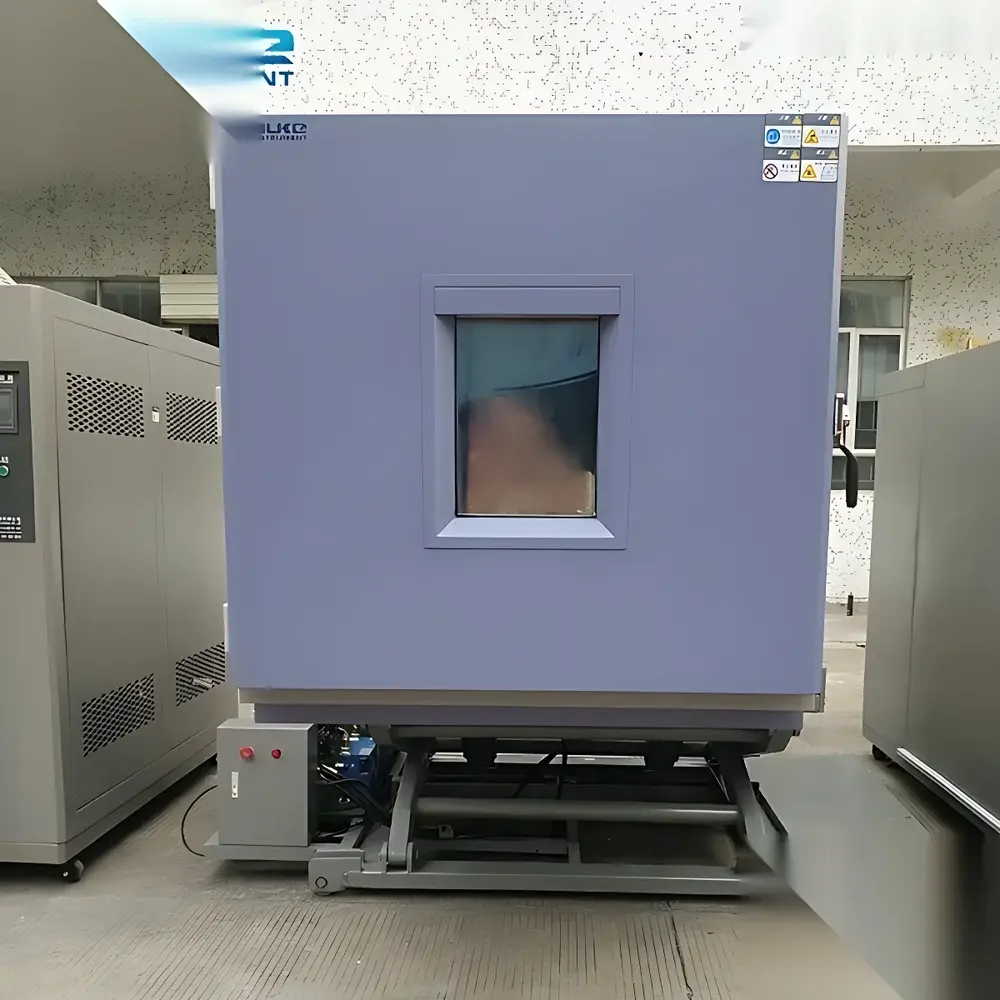
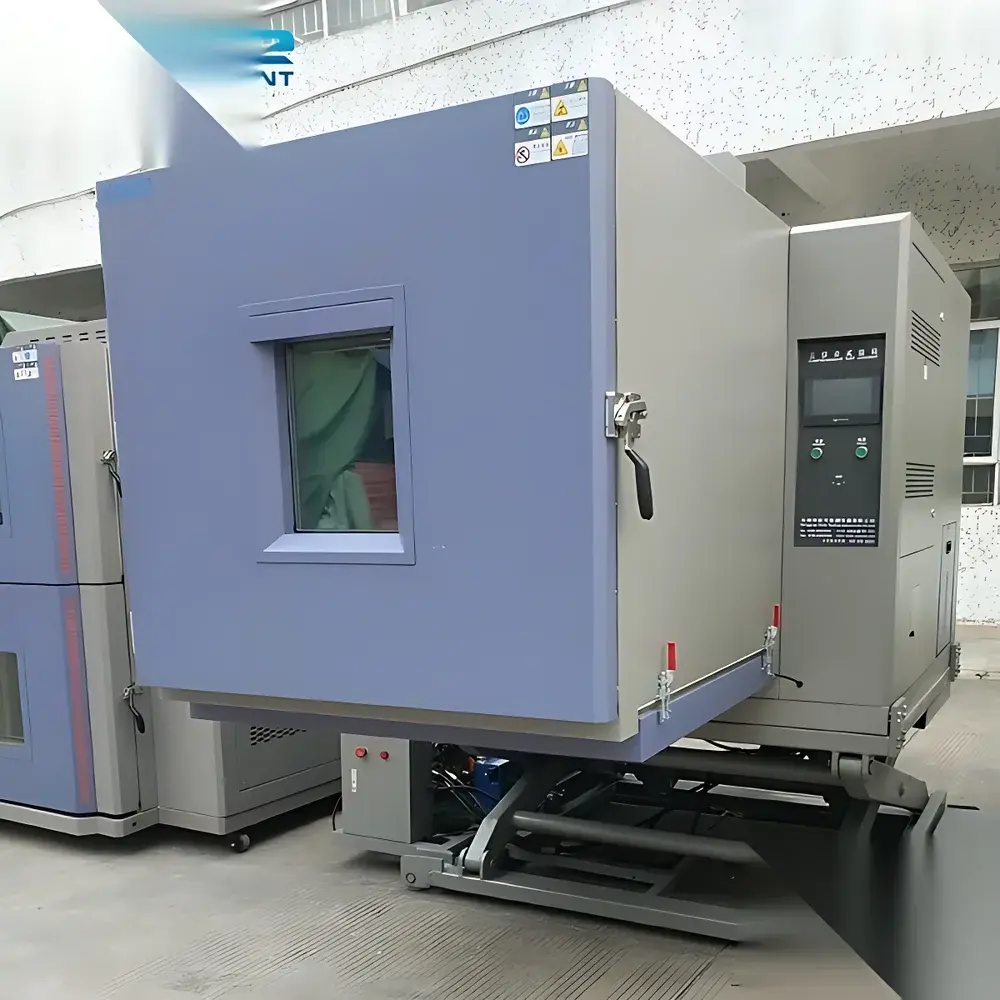
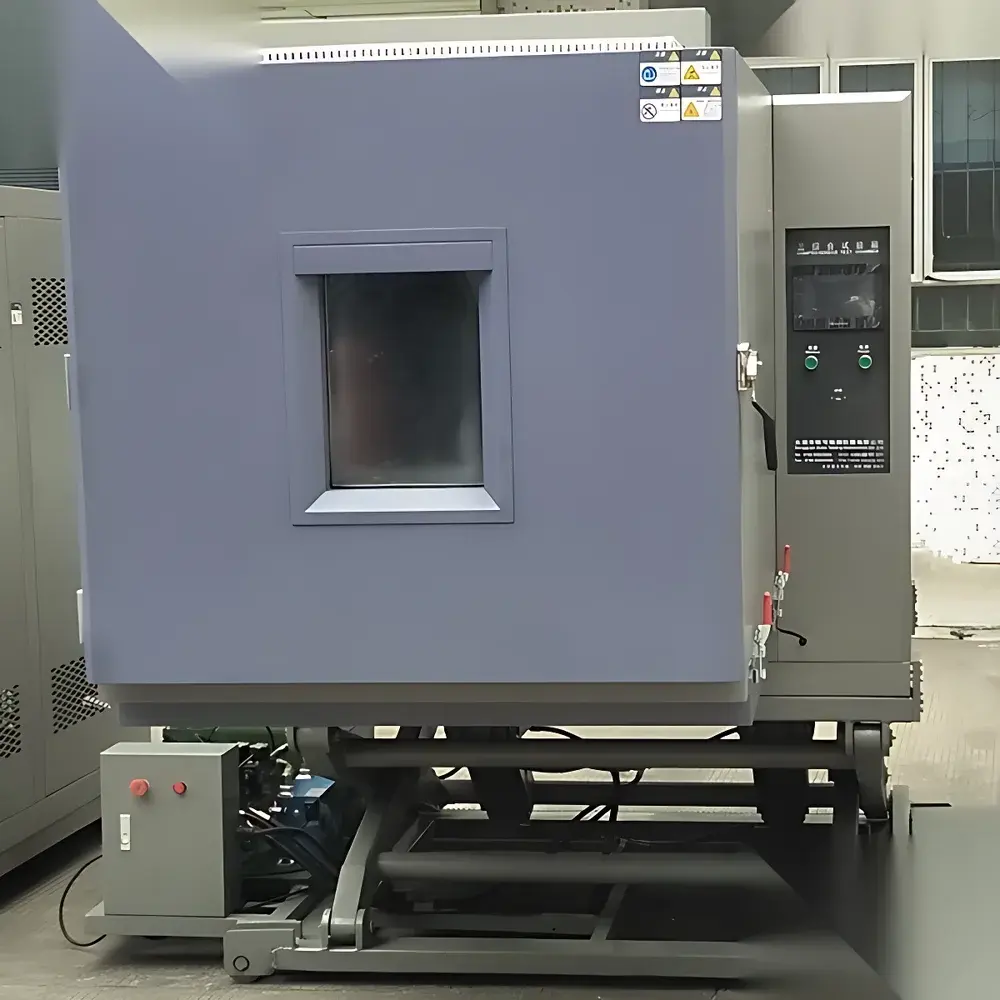
Combined Temperature-Humidity-Vibration Environmental Test System – Custom-Engineered for Multi-Environmental Stress Screening
| Key | Brand: OEM/White-Label |
|---|---|
| Origin | Imported (Non-US/EU Designated Source) |
| Manufacturer Type | Authorized Distributor |
| Price | USD 21,500 (FOB Origin, Excl. Customs & Installation) |
| Internal Chamber Dimensions | Customer-Specified |
| Temperature Range | −70 °C to +150 °C |
| Humidity Range | 20–98 % RH (standard) |
| Temp. Control Accuracy | ±0.5 °C |
| RH Control Accuracy | ±2.5 % RH |
| Temp. Resolution/Distribution | 0.1 °C / ±2.0 °C |
| RH Resolution/Distribution | 0.1 % RH / ±3.0 % RH |
| Heating Rate | ~4.0 °C/min |
| Cooling Rate | ~1.0 °C/min |
| Insulation Material | High-Density Polyisocyanurate Foam (High-Temp Rated) |
| Interior/Exterior Material | SUS304 Stainless Steel |
| Compressor | Tecumseh (France-sourced) |
| Refrigerant | R404A (ASHRAE-certified, non-ozone-depleting) |
| Viewing Window | Double-layer Low-E Tempered Glass with Anti-Fog Heater & LED Illumination |
| Controller | LCD Touch Interface with Multi-Step Programmable Profile Support (QUICK/SLOPE Modes) |
| Optional Features | External Test Port (Power/Signal), Adjustable Shelves, Integrated Water Recovery System, Castor-Mounted Chassis with Locking Mechanism |
| Compliance | UL 1703, IEC 61215, ISO 16750-4, MIL-STD-810H (Vibration Module Configurable per ASTM D4728 & ISO 10326-1) |
Overview
The Combined Temperature-Humidity-Vibration Environmental Test System is an integrated reliability validation platform engineered for simultaneous or sequential application of thermal, hygroscopic, and mechanical stress stimuli. Unlike standalone environmental chambers or shaker tables, this triaxial test system conforms to the fundamental principle of combined stress testing—a methodology defined in IEC 60068-2-60 and ASTM D4728—where synergistic failure modes (e.g., solder joint fatigue under thermal cycling + vibration, or condensation-induced corrosion during humidity soak + mechanical shock) are deliberately induced to accelerate latent defects. The system integrates a climatic chamber compliant with ISO 16750-4 (road vehicle environments) and a servo-hydraulic or electrodynamic vibration exciter (configurable per customer specification), all synchronized via a centralized real-time controller. Its architecture supports both deterministic and random vibration profiles across three orthogonal axes (X/Y/Z), while maintaining precise temperature and humidity control within the same test volume—enabling true multi-stress correlation without sample transfer or ambient interruption.
Key Features
- Triple-Parameter Synchronization: Independent yet coordinated control of temperature (−70 °C to +150 °C), relative humidity (20–98 % RH), and broadband vibration (5–2000 Hz, programmable acceleration/sweep/dwell) within a single sealed chamber.
- Optimized Thermal-Humidity Dynamics: Dual-stage refrigeration using Tecumseh compressors and R404A refrigerant ensures stable dew-point control; integrated water recovery loop minimizes manual replenishment and maintains consistent RH stability during extended tests.
- Observability & Accessibility: Large double-glazed viewing window with anti-fog heating element and high-lumen LED lighting enables real-time visual inspection; dual-purpose test ports accommodate power feeds, thermocouple leads, and signal lines without compromising chamber integrity.
- Structural Integrity & Safety: SUS304 stainless steel interior and exterior construction resists corrosion from condensate and saline mist; dual-lip silicone gasket door seal achieves ≤0.5 °C/h thermal leakage rate per ISO 16750-4 Annex B verification.
- Programmable Logic Controller (PLC)-Based Interface: 7-inch capacitive touchscreen interface supports up to 99 multi-segment test profiles with independent ramp/soak settings for temperature, humidity, and vibration parameters—including QUICK (step-change) and SLOPE (linear ramp) execution modes.
- Mobility & Integration Readiness: Heavy-duty casters with locking brakes facilitate repositioning; modular base frame accommodates bolt-down anchoring and integration into automated test cells or HALT/HASS workflows.
Sample Compatibility & Compliance
This system accommodates samples up to 600 mm × 600 mm × 600 mm (L×W×H), with customizable internal dimensions available upon request. Load capacity is rated at 50 kg static mass with center-of-gravity alignment verified per ISO 10326-1. It meets regulatory requirements for photovoltaic module qualification (IEC 61215:2016, Clause 10.12 “Damp Heat + Mechanical Stress”), solar panel fire safety (UL 1703, Section 27), and automotive electronics (ISO 16750-4:2010, “Combined Climate and Vibration”). All control firmware logs timestamped operational data with audit-trail capability compliant with GLP/GMP documentation standards (21 CFR Part 11-ready when paired with validated software).
Software & Data Management
The embedded controller records time-synchronized datasets—including chamber temperature, chamber humidity, vibration acceleration (g-rms), displacement (mm), and frequency spectrum (FFT)—at user-selectable intervals (100 ms to 10 s). Export formats include CSV, Excel-compatible .xls, and binary .tdms (NI DIAdem compatible). Optional PC-based software provides real-time waveform visualization, spectral analysis (1/3-octave & FFT), pass/fail threshold mapping against MIL-STD-810H or JEDEC JESD22-B103, and automated report generation with digital signature support. All calibration constants are stored in EEPROM with write-protection to prevent unauthorized modification.
Applications
- Accelerated life testing of PCB assemblies subjected to thermal cycling + random vibration (e.g., automotive ECUs per ISO 16750-4)
- Damp heat endurance validation of encapsulated optoelectronic modules (LED/LCD backlights, camera sensors)
- Reliability screening of lithium-ion battery packs under combined thermal abuse + mechanical shock
- Qualification of aerospace avionics housings per MIL-STD-810H Method 514.7 (Vibration) + Method 502.7 (Temperature/Humidity)
- Failure mode analysis of solder joints in high-density interconnects using combined thermal gradient + resonant frequency sweep
- Material compatibility assessment of adhesives, conformal coatings, and potting compounds under hygrothermal aging + cyclic strain
FAQ
What standards does this system comply with for photovoltaic testing?
It satisfies IEC 61215:2016 (damp heat + mechanical load sequence), UL 1703 (fire classification under thermal cycling), and IEC 61730-2 (safety qualification with combined stress protocols).
Can the vibration module be upgraded post-purchase?
Yes—vibration exciters are field-replaceable; configurations range from 50 kN electrodynamic shakers to 100 kN servo-hydraulic systems, with optional slip-tables for large-format samples.
Is remote monitoring supported?
Standard Ethernet (RJ45) and optional RS-485 interfaces enable integration with SCADA platforms; Modbus TCP and OPC UA drivers are available under NDA.
How is humidity uniformity verified inside the chamber?
Per ISO 16750-4 Annex C, 9-point sensor mapping (including corners and center) confirms spatial RH deviation ≤±3.0 % RH at steady state.
What maintenance intervals are recommended for the refrigeration system?
Compressor oil analysis and filter dryer replacement every 24 months; full refrigerant charge verification annually per ASHRAE Guideline 3-2021.



