
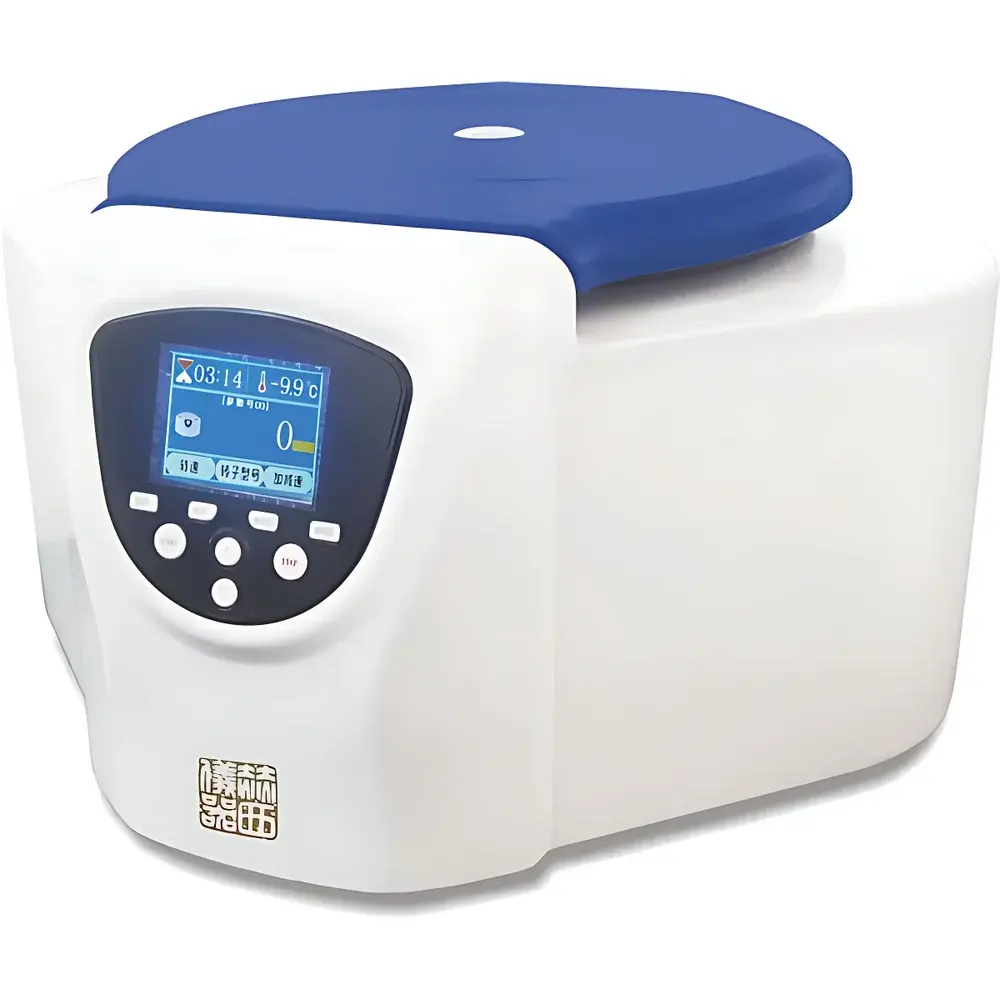
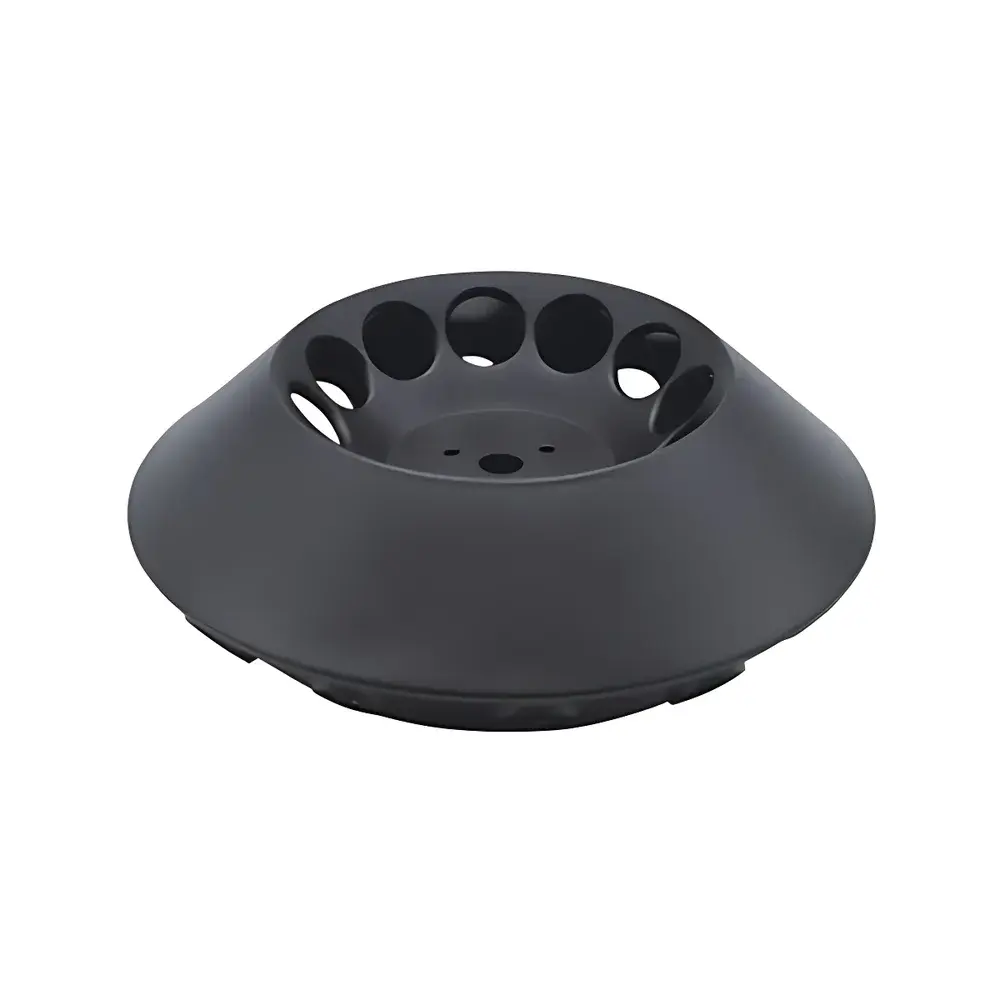
Hershey TDZ4 Benchtop Low-Speed Centrifuge
| Brand | Hershey |
|---|---|
| Origin | Hunan, China |
| Model | TDZ4 |
| Centrifuge Type | Benchtop Low-Speed Centrifuge |
| Max Speed | 4000 rpm |
| Max RCF | 2320 ×g |
| Max Capacity | 4 × 100 mL (or 12 × 20 mL / 18 × 10 mL / 24 × 10 mL) |
| Speed Accuracy | ±30 rpm |
| Timer Range | 0–99 h 59 min / Continuous / Short-Term Spin |
| Noise Level | ≤60 dB(A) |
| Power Supply | AC 220 V, 50 Hz |
| Net Weight (with rotor) | 20 kg |
| Dimensions (L×W×H) | 500 × 450 × 280 mm |
| Drive System | Brushless Frequency-Controlled Motor |
| Control Interface | TFT True-Color Touchscreen |
| Safety Features | Electromechanical Door Lock, Stainless Steel Chamber, Multi-Stage Damping System, Automatic Rotor Balance Detection |
| Programmability | 20 User-Defined Protocols |
| Construction | Full Steel Frame, Ergonomic Streamlined Housing |
Overview
The Hershey TDZ4 Benchtop Low-Speed Centrifuge is an engineered solution for routine sedimentation and phase separation tasks in life science and applied research laboratories. Operating on the principle of centrifugal force generation via controlled rotational acceleration, the TDZ4 delivers reproducible separation of suspended particles—such as cells, organelles, precipitates, and macromolecular complexes—from liquid matrices based on differences in density, size, and shape. With a maximum rotational speed of 4000 rpm and a corresponding relative centrifugal force (RCF) of 2320 ×g, the instrument is optimized for low-speed applications where thermal stability, mechanical integrity, and gentle handling of sensitive biological specimens are critical. Its benchtop footprint and modular rotor compatibility make it especially suitable for core facilities, clinical diagnostics labs, pharmaceutical QC units, and academic teaching environments requiring reliable, repeatable, and compliant sample preparation workflows.
Key Features
- Brushless frequency-controlled motor ensures consistent torque delivery, extended service life, and minimal electromagnetic interference—critical for stable operation in shared instrumentation suites.
- TFT true-color touchscreen interface provides intuitive navigation, real-time parameter visualization, and immediate access to all operational modes including timed spin, continuous run, and short-pulse centrifugation.
- Electromechanical door lock system meets IEC 61010-1 safety standards, preventing accidental lid opening during operation and automatically disabling rotation if lid integrity is compromised.
- Stainless steel centrifuge chamber resists corrosion from common reagents (e.g., ethanol, acetone, saline buffers) and supports routine decontamination protocols required under GLP and ISO/IEC 17025 environments.
- Multi-stage damping architecture—including precision-balanced rotor mounts and vibration-absorbing feet—ensures stable operation at full load, with noise levels maintained at ≤60 dB(A), complying with ISO 15714 acoustic emission guidelines for laboratory equipment.
- Automatic rotor imbalance detection halts acceleration if mass asymmetry exceeds safe thresholds, protecting both sample integrity and mechanical components.
- 20 programmable protocol slots allow storage of standardized methods—including speed, time, acceleration/deceleration profiles, and hold temperature (if equipped with refrigeration option)—supporting audit-ready documentation per FDA 21 CFR Part 11 requirements when integrated with validated LIMS or ELN systems.
Sample Compatibility & Compliance
The TDZ4 accommodates a broad range of sample formats through interchangeable angular rotors and adapters, supporting tubes from 0.2 mL microcentrifuge tubes up to 100 mL conical centrifuge bottles. Standard configurations include 4 × 100 mL angular rotors (for high-capacity cell pelletization), 12 × 20 mL carriers (ideal for serum separation), and combinatorial setups for parallel processing of heterogeneous sample sets. All rotors are certified to ISO 15852:2019 for mechanical safety and undergo static/dynamic balancing verification prior to shipment. The device complies with CE marking directives (2014/30/EU EMC and 2014/35/EU LVD), RoHS 2011/65/EU material restrictions, and conforms to national metrological verification standards JJG 636–2018 for centrifuge performance calibration in China—facilitating cross-border validation in harmonized regulatory frameworks.
Software & Data Management
While the TDZ4 operates as a standalone instrument, its embedded firmware supports timestamped event logging—including start/stop times, actual vs. setpoint speed deviations, rotor ID recognition, and error codes—for internal traceability. When connected to external laboratory information management systems (LIMS) via RS-232 or optional USB-to-serial interface, operational metadata can be exported in CSV or XML format for integration into electronic lab notebooks (ELN) and quality assurance records. Audit trail functionality enables reconstruction of user actions, parameter changes, and runtime anomalies—aligning with ALCOA+ data integrity principles and supporting GxP-compliant documentation practices.
Applications
The TDZ4 serves as a foundational tool across multiple domains: isolation of peripheral blood mononuclear cells (PBMCs) and erythrocyte sedimentation rate (ESR) assays in clinical labs; clarification of bacterial lysates and crude protein extracts in molecular biology workflows; removal of particulates from food homogenates and environmental water samples in regulatory testing; and preparative separation of polymer emulsions and nanoparticle suspensions in materials science research. Its robust construction and calibrated performance also support ISO 13485-certified medical device manufacturing environments where equipment qualification (IQ/OQ/PQ) and preventive maintenance scheduling are mandatory.
FAQ
What is the maximum tube volume supported by the standard angular rotor?
The primary angular rotor configuration supports four 100 mL centrifuge tubes; alternative configurations accommodate twelve 20 mL tubes or twenty-four 10 mL tubes.
Does the TDZ4 meet international electrical safety standards?
Yes—it carries CE marking under the Low Voltage Directive (2014/35/EU) and Electromagnetic Compatibility Directive (2014/30/EU), and complies with IEC 61010-1 for laboratory electrical equipment safety.
Can rotor imbalance be detected before full-speed operation?
Yes—the system performs dynamic imbalance assessment during ramp-up and will abort acceleration if detected mass asymmetry exceeds 5 g·cm threshold.
Is remote monitoring or network connectivity available?
Standard configuration includes RS-232 serial output; Ethernet or Wi-Fi modules are not factory-installed but may be added via third-party industrial gateways compatible with Modbus RTU protocol.
How frequently should calibration verification be performed?
Per ISO/IEC 17025 and manufacturer recommendations, speed and timer accuracy should be verified semiannually using NIST-traceable tachometers and stopwatch standards, with records retained for quality audits.



