
VISIR Animal Behavior Observation and Analysis System
| Origin | Czech Republic |
|---|---|
| Manufacturer Type | Authorized Distributor |
| Origin Category | Imported |
| Model | VISIR |
| Price Range | USD 14,000 – 70,000 |
Overview
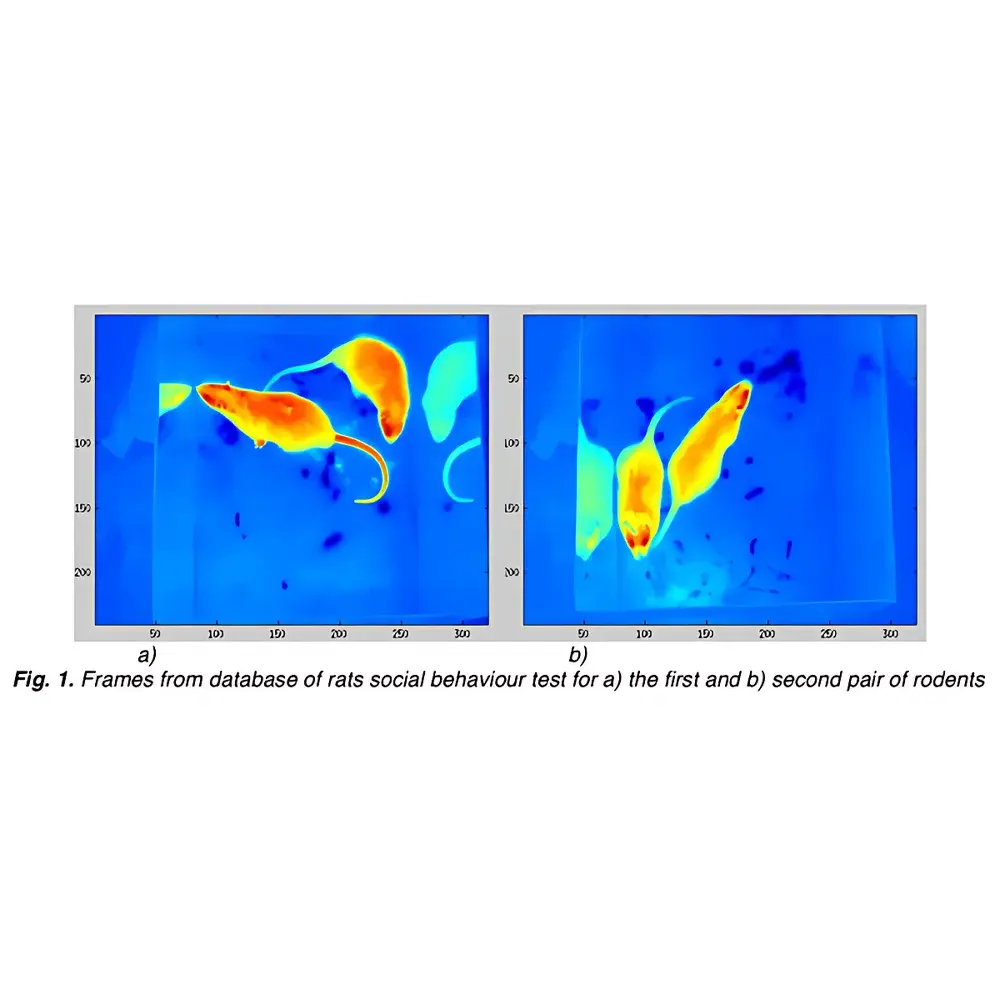
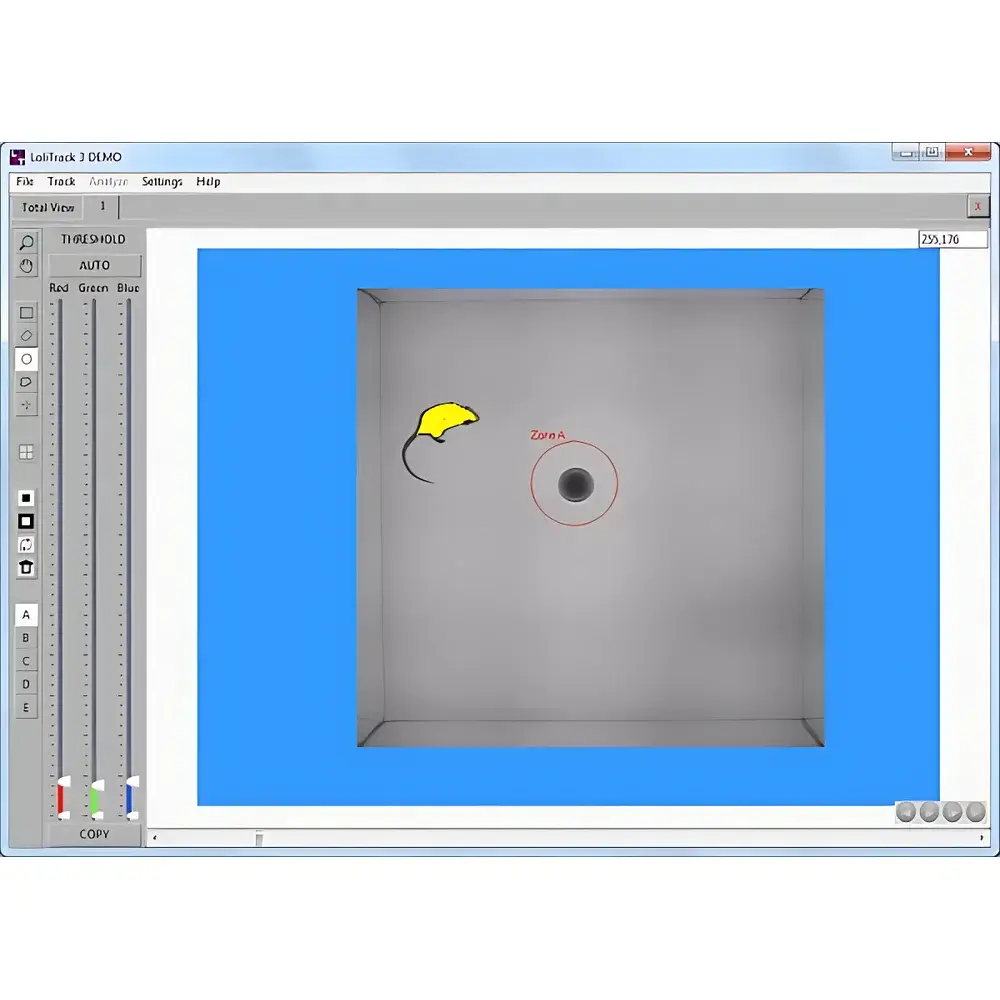
The VISIR Animal Behavior Observation and Analysis System is a dual-modal, high-resolution behavioral phenotyping platform engineered for quantitative ethological research under controlled laboratory and semi-field conditions. It integrates synchronized visible-light digital imaging (RGB) with long-wave infrared (LWIR) thermography (7.5–13.5 µm spectral band) to simultaneously capture spatial-temporal behavioral kinematics and surface temperature dynamics of freely moving animals. Unlike conventional single-modality tracking systems, VISIR leverages complementary contrast mechanisms: visible-light contrast (luminance and chromatic differentiation) and thermal contrast (emissivity-driven radiometric disparity), enabling robust detection and segmentation even in low-visibility or complex-background environments—such as darkened arenas, transparent aquatic tanks, dense vegetation, or nocturnal field settings. The system operates on the principle of pixel-level spatiotemporal registration between co-aligned RGB and LWIR video streams, allowing concurrent extraction of trajectory coordinates (X/Y/Z for 3D-capable configurations), locomotor parameters (velocity, acceleration, orientation, body curvature), and thermoregulatory metrics (regional temperature time-series, thermal frequency histograms, ROI-based thermal gradients). Its architecture supports both single-subject high-fidelity profiling and multi-animal cohort analysis, with native handling of occlusion, overlap, and transient out-of-frame events via adaptive background subtraction and multi-object association algorithms.
Key Features
- Dual-sensor synchronization: Hardware-triggered alignment of USB 3.1 RGB camera (5.04 MP, 48 fps) and LWIR thermal imager (640 × 512 px, NETD ≤ 30 mK, 9/30 Hz selectable frame rate)
- Multi-scale tracking capability: Supports 2D planar tracking (X/Y), optional 3D reconstruction (X/Y/Z) using stereo or depth-assisted configurations
- Occlusion-resilient analytics: Adaptive background subtraction, contrast-based segmentation, and path interpolation for collision, crossing, and temporary concealment scenarios
- Thermal metrology compliance: Factory-calibrated LWIR sensor with NIST-traceable certificate; supports ambient humidity, distance, and emissivity compensation per ISO 18434-1
- Modular arena ecosystem: Interchangeable behavior chambers—including insect arenas, rodent open fields, CO₂-controlled enclosures, olfactometers, and aquatic observation pools—with standardized mounting interfaces
- Expandable peripheral integration: Native support for respirometry coupling (O₂/CO₂ gas exchange), implanted telemetry (core temperature, ECG), hypoxia control modules, and environmental parameter loggers (TC-2000 precision temperature monitor)
Sample Compatibility & Compliance
The VISIR system accommodates a broad taxonomic range: arthropods (e.g., Drosophila, ants), teleost fish (zebrafish, medaka), reptiles (lizards, snakes), avian models (quail, zebra finch), and mammalian subjects (mice, rats, voles, ferrets). It is validated for use in GLP-compliant preclinical studies and aligns with key regulatory frameworks including OECD Test Guidelines 208/210 (aquatic toxicity), ASTM E2575-22 (infrared thermography for biological applications), and ISO/IEC 17025 requirements for measurement uncertainty reporting. All thermal measurements adhere to IEC 62906-5-2 (infrared imaging systems) and are traceable to national standards laboratories. For field deployments, the optional WIRIS Pro variant meets IP67 ingress protection and MIL-STD-810G environmental durability specifications.
Software & Data Management
The VISIR software suite comprises two tightly integrated modules: VISIR-Behavior (for motion quantification) and VISIR-Thermo (for radiometric analysis), both running on Windows 10/11 x64 platforms. Data acquisition, processing, and export follow ALCOA+ principles (Attributable, Legible, Contemporaneous, Original, Accurate, Complete, Consistent, Enduring, Available). Audit trails record all user actions, parameter changes, and calibration events in accordance with FDA 21 CFR Part 11 requirements. Raw video streams (RGB + LWIR) are stored losslessly in AVI/SEQ format; processed outputs include CSV time-series tables, HDF5 hierarchical datasets, and annotated MP4 exports. ROI-based analysis supports up to 64 user-defined zones per frame, with automated calculation of dwell time, entry/exit counts, inter-individual distance (IID), thermal variance across anatomical regions (e.g., tail base vs. snout), and cross-correlation between behavioral states and thermal transients. Export options include MATLAB (.mat), Python (NumPy), and Excel-compatible formats for downstream statistical modeling.
Applications
- Insect physiology: Quantifying thermoregulatory responses to thermal stress, pesticide exposure, or circadian disruption—correlating locomotor arrest with localized cooling or hyperthermia
- Social hierarchy mapping: Detecting rank-associated thermal signatures (e.g., elevated tail-tip temperature in dominant mice) during resident-intruder assays or group-housing observations
- Wildlife census & welfare assessment: Passive nocturnal monitoring of bat colonies, deer aggregations, or nesting birds using LWIR-only mode—minimizing observer-induced bias and photic disturbance
- Neuropharmacology: Evaluating drug-induced alterations in exploratory behavior, thigmotaxis, and thermogenic response in rodent models of anxiety or depression
- Aquatic toxicology: Tracking zebrafish shoaling cohesion, burst swimming, and gill operculum temperature shifts under chemical challenge
- Metabolic-behavioral coupling: Synchronizing VISIR with open-flow respirometry to correlate activity bouts with O₂ consumption peaks and thermal efflux patterns
FAQ
What is the minimum detectable temperature difference the system can resolve?
The standard LWIR module achieves a thermal sensitivity (NETD) of ≤ 30 mK at 30 Hz and ≤ 20 mK at 9 Hz, per ISO 18434-1 Annex B.
Can VISIR track animals in complete darkness?
Yes—using LWIR-only acquisition without visible illumination; optional 850 nm IR panels provide supplemental contrast in semi-transparent enclosures without disrupting circadian rhythms.
Is 3D tracking supported out-of-the-box?
Stereo 3D tracking requires dual synchronized cameras and calibration rig (sold separately); monocular depth estimation is available via optional AI-powered inference module (VISIR-Depth v2.1).
How does the system handle overlapping animals of identical appearance?
It employs temporal continuity modeling, shape-context descriptors, and probabilistic data association (PDAF) to maintain identity across occlusions—even for same-strain, same-sex rodents in social interaction assays.
Does the software support batch processing of multiple experiments?
Yes—batch pipelines allow parallel analysis of >100 video files with uniform parameter sets, automatic metadata tagging, and QC flagging for outlier trajectories or thermal saturation events.




