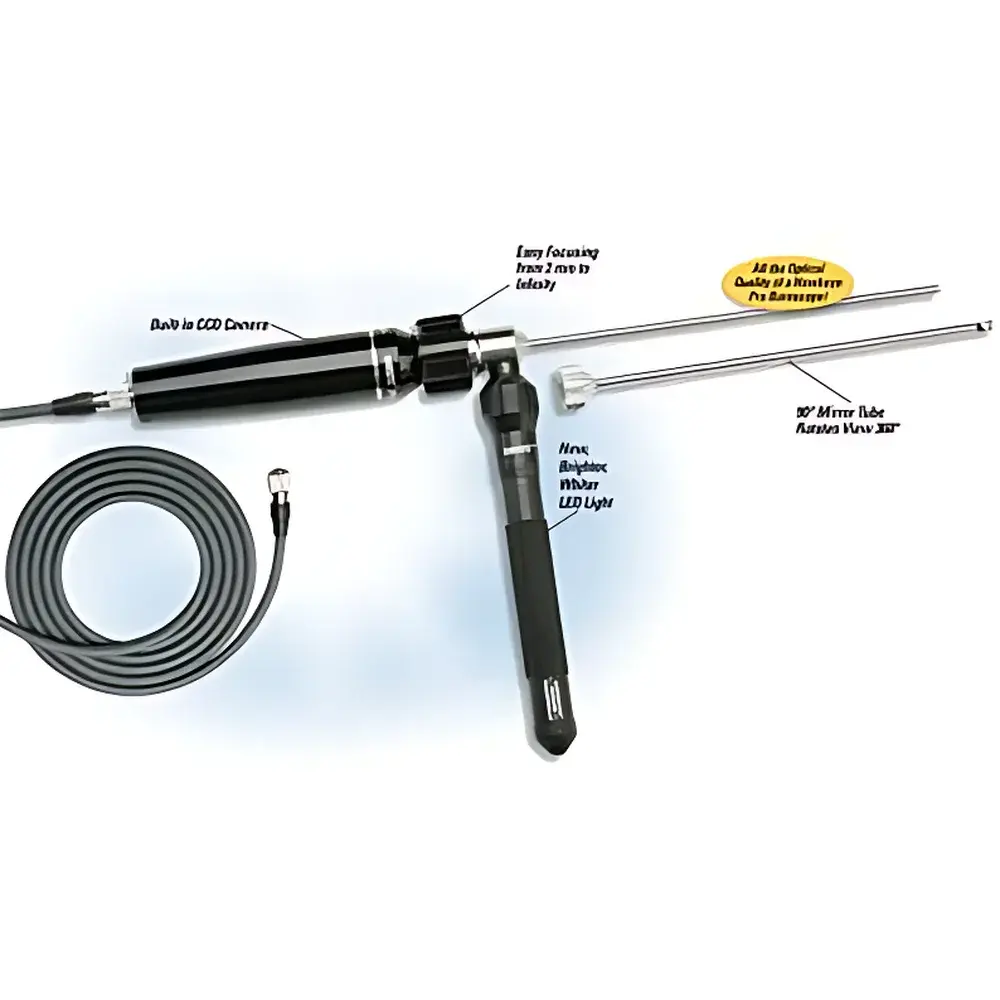
EcoTech SoilTron-Rhizo Rhizosphere Ecological Observational Lysimeter
| Brand | EcoTech |
|---|---|
| Origin | Imported (Sensors & Data Logger: Europe |
| Rhizotron Imaging Unit | USA) |
| Model | SoilTron-Rhizo |
| Construction | Stainless Steel Cylinder (Rhizo-50: Ø125 cm, H=250 cm, 3 mm wall |
| Rhizo-80 | Ø200 cm, H=375 cm, 4 mm wall) |
| Root Observation Zones | 4 (Rhizo-50) or 5 (Rhizo-80) horizontal layers |
| Soil Moisture Sensors | TRIME PICO 32 TDR probes (0–100% vol., ±1% @ 0–40%, IP68) |
| Temperature Range | –15–50 °C (±0.2 °C) |
| Imaging System | SuperHAD II 1/3" IT CCD, 768×494 px, 30 fps, 55° FOV, 360° rotatable mirror tube, fiber-optic illumination |
| Data Logger | 16-channel (optional 32), 16-bit resolution, ±20 mV to ±2.5 V, 0.03% accuracy, 220,000 timestamped records, 3 s–4 h sampling interval, GSM/GPRS/Internet telemetry |
| Software | RootFly (standard), WinRhizo (optional), proprietary data analysis suite with statistical aggregation, regression, and time-series visualization |
| Compliance | Designed for GLP-aligned long-term ecological monitoring |
Overview
The EcoTech SoilTron-Rhizo Rhizosphere Ecological Observational Lysimeter is an integrated, field-deployable research platform engineered for non-destructive, three-dimensional quantification of root architecture dynamics in situ. It combines precision lysimetric mass-balance methodology—measuring precipitation input, evapotranspiration loss, drainage output, and soil water storage—with horizontally mounted minirhizotron imaging technology to eliminate vertical installation artifacts common in conventional angled rhizotron deployments. Unlike vertically inserted observation tubes—which induce preferential root growth along the tube interface—the SoilTron-Rhizo’s horizontal micro-rhizotron arrays establish discrete, depth-stratified observation bands across the soil profile (4 layers for Rhizo-50; 5 for Rhizo-80), enabling spatially resolved tracking of root elongation, branching, senescence, and mortality without mechanical disturbance. Coupled with high-fidelity, co-located TDR-based soil moisture and temperature profiling at each observation depth, the system delivers temporally synchronized datasets essential for mechanistic modeling of root-soil hydraulic coupling, drought response phenotyping, and rhizosphere carbon flux estimation under controlled or natural environmental gradients.
Key Features
- Modular stainless-steel lysimeter cylinder design: Rhizo-50 (125 cm diameter, 250 cm height, 3 mm wall thickness) and Rhizo-80 (200 cm diameter, 375 cm height, 4 mm wall thickness), both engineered for structural integrity under saturated soil loads and freeze-thaw cycling.
- Horizontally oriented minirhizotron tubes—22-inch (Rhizo-50) or 28-inch (Rhizo-80)—mounted at standardized depths to ensure consistent optical access across the root zone without inducing axial bias.
- TRIME PICO 32 TDR sensors deployed in tandem with each rhizotron layer: calibrated for volumetric water content (0–100%) with ±1% accuracy in the biologically critical 0–40% range and IP68-rated encapsulation for continuous subsoil operation.
- Digital rhizotron imaging unit featuring a SuperHAD II 1/3-inch interline transfer CCD sensor, 55° field-of-view, 30 fps real-time acquisition, and 360° motorized mirror rotation for full circumferential root inspection within each tube.
- 16-channel high-resolution data logger (expandable to 32 channels) with 16-bit analog-to-digital conversion, onboard timestamping, and dual-storage architecture—internal flash memory (220,000 records) plus optional SD card backup—ensuring data continuity during extended无人值守 deployments.
- GSM/GPRS-enabled telemetry supporting remote configuration, scheduled data pull, and alarm-triggered transmission for early detection of anomalous root dieback or rapid desiccation events.
Sample Compatibility & Compliance
The SoilTron-Rhizo accommodates herbaceous and woody perennials, annual crops, and native grassland species across diverse soil textures (sand to clay loam) and bulk densities up to 1.6 g/cm³. Its open-bottom design permits unrestricted root penetration into undisturbed subsoil horizons, while the sealed sidewall prevents lateral water leakage—critical for accurate drainage quantification per ISO 10381-3 (Soil quality — Sampling — Part 3: Guidance on sampling of soil and soil gas). Sensor calibrations follow ASTM D5084 (Standard Test Methods for Measurement of Hydraulic Conductivity of Saturated Porous Materials) and USDA-ARS protocols for TDR validation. The system architecture supports 21 CFR Part 11-compliant electronic records when configured with user-authenticated software access, audit trails, and digital signature capability—making it suitable for regulatory-grade ecotoxicology studies and GxP-aligned plant stress trials.
Software & Data Management
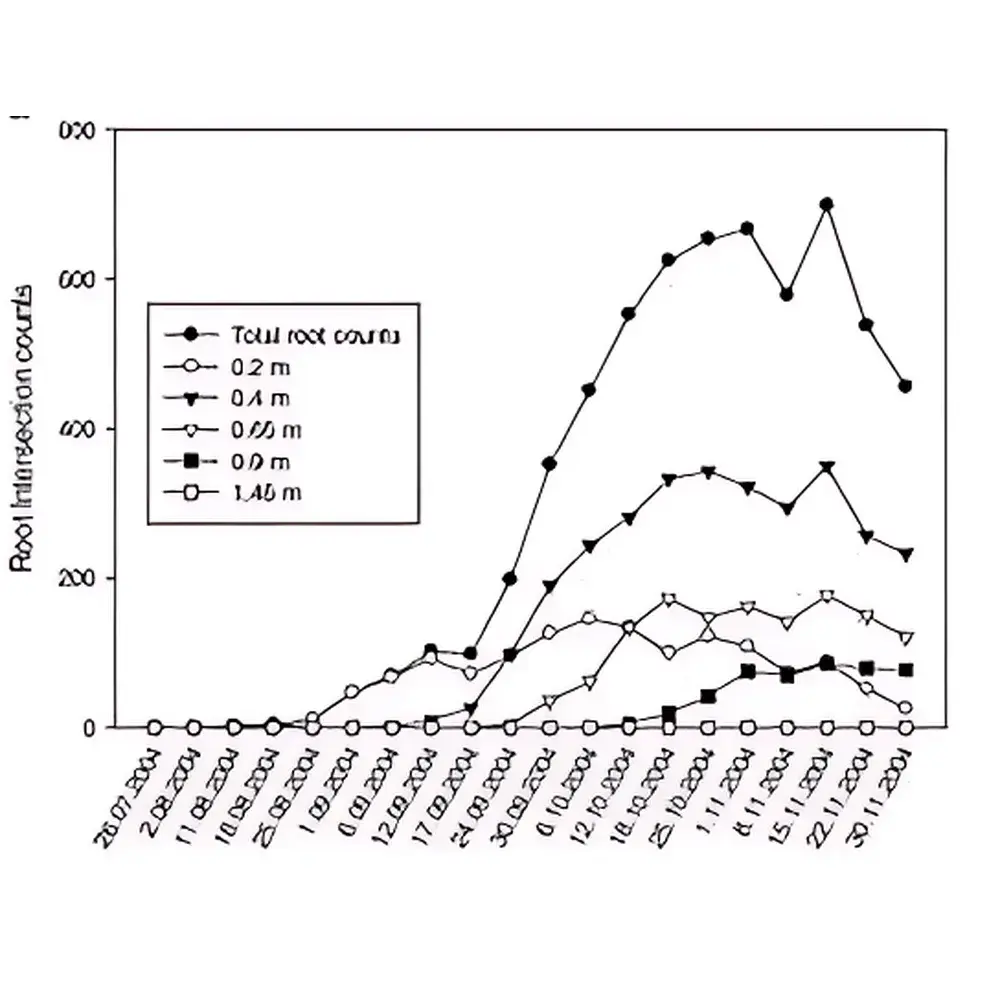
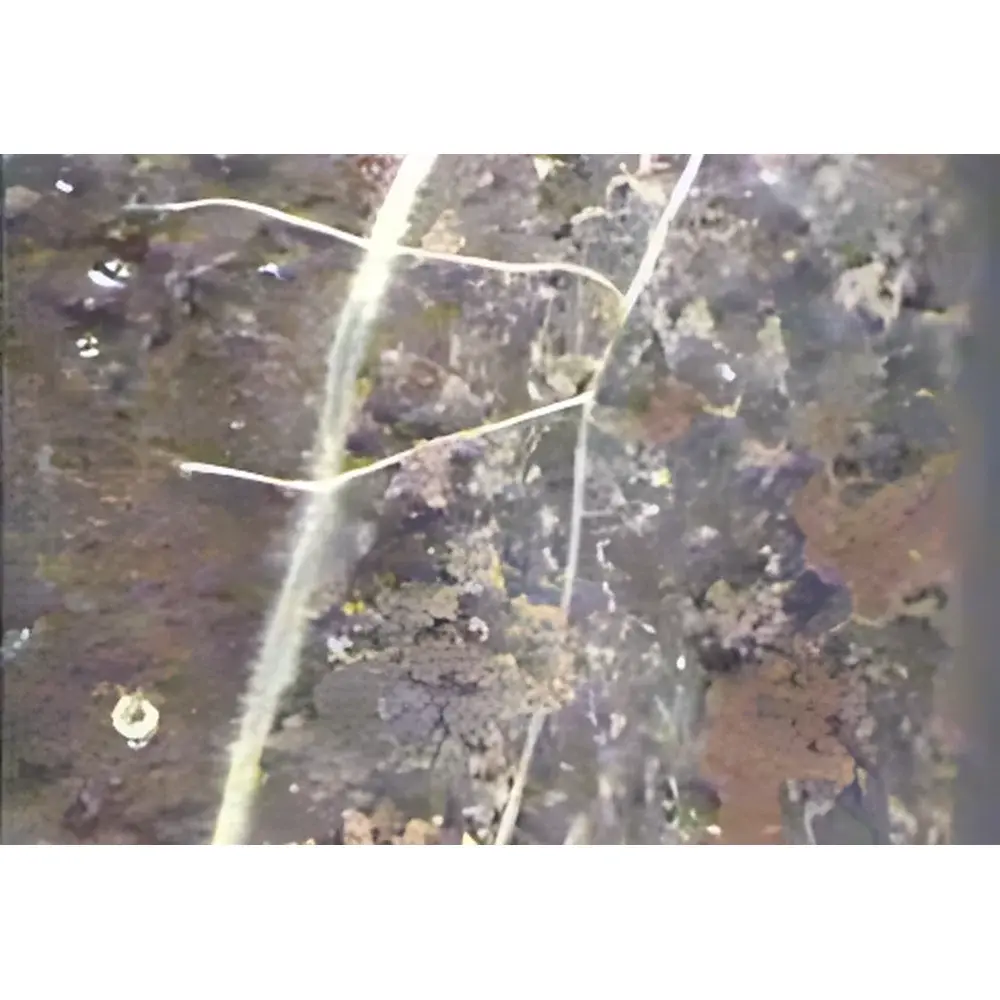
RootFly software—supplied as standard—performs automated segmentation, skeletonization, and morphometric extraction from rhizotron images, delivering time-series metrics including total root length, average diameter distribution, color-indexed vitality scoring (based on RGB reflectance gradients), daily elongation rates, and cohort-specific mortality incidence. Raw image metadata (acquisition time, depth layer, illumination intensity, focus setting) are embedded and preserved in TIFF format. The companion data analysis suite enables synchronized overlay of root growth trajectories with volumetric water content, thermal gradients, and drainage volume curves. Statistical modules support rolling-window averaging, cross-correlation analysis between root growth rate and soil matric potential, and linear/nonlinear regression against climatic drivers (e.g., vapor pressure deficit, cumulative radiation). All datasets export natively to CSV, MATLAB .mat, and NetCDF-4 formats for integration into ecosystem models such as APSIM or STICS.
Applications
- Long-term phenotyping of root architectural plasticity under water-limited regimes, including identification of genotypes exhibiting deep-rooting persistence or shallow-root avoidance strategies.
- Quantifying rhizodeposition dynamics via temporal alignment of fine-root turnover with soil CO₂ efflux and dissolved organic carbon leaching profiles.
- Evaluating mycorrhizal colonization patterns across depth strata using contrast-enhanced imaging and spectral analysis of hyphal networks adjacent to root surfaces.
- Validating coupled land-surface models (e.g., CLM, ORCHIDEE) by providing empirical constraints on root water uptake depth distribution and compensatory redistribution following partial drying.
- Assessing phytoremediation efficacy in contaminated soils through concurrent monitoring of root proliferation into metal-enriched horizons and associated changes in redox-sensitive soil chemistry.
FAQ
What distinguishes horizontal minirhizotron placement from traditional vertical insertion?
Horizontal installation eliminates preferential root growth along the tube-soil interface—a well-documented artifact in vertically angled systems—and establishes true stratified observation planes aligned with natural soil horizon boundaries.
Can the system operate autonomously for over one year without maintenance?
Yes—the data logger’s ultra-low-power design (150 µA standby current) and integrated 3 V lithium backup battery (rated for >5 years) enable unattended operation across multi-seasonal cycles, provided solar charging or periodic battery replacement is implemented in low-light environments.
Is calibration traceability documented for all sensors?
TRIME PICO 32 probes ship with individual factory calibration certificates traceable to NIST standards; temperature sensors are validated against PT100 reference thermometers per IEC 60751. Field recalibration protocols are included in the operator manual.
How is image focus maintained across varying soil moisture conditions?
The imaging unit employs a fixed-focus optical train optimized for the nominal refractive index of moist mineral soil (n ≈ 1.52); no active autofocus is used to ensure mechanical stability and repeatability across thousands of acquisition cycles.
Does the system support integration with third-party weather stations or eddy covariance towers?
Yes—via RS-485 Modbus RTU or analog voltage outputs, the data logger accepts external inputs from net radiometers, PAR sensors, and sonic anemometers, enabling full environmental context synchronization in flux tower co-deployments.