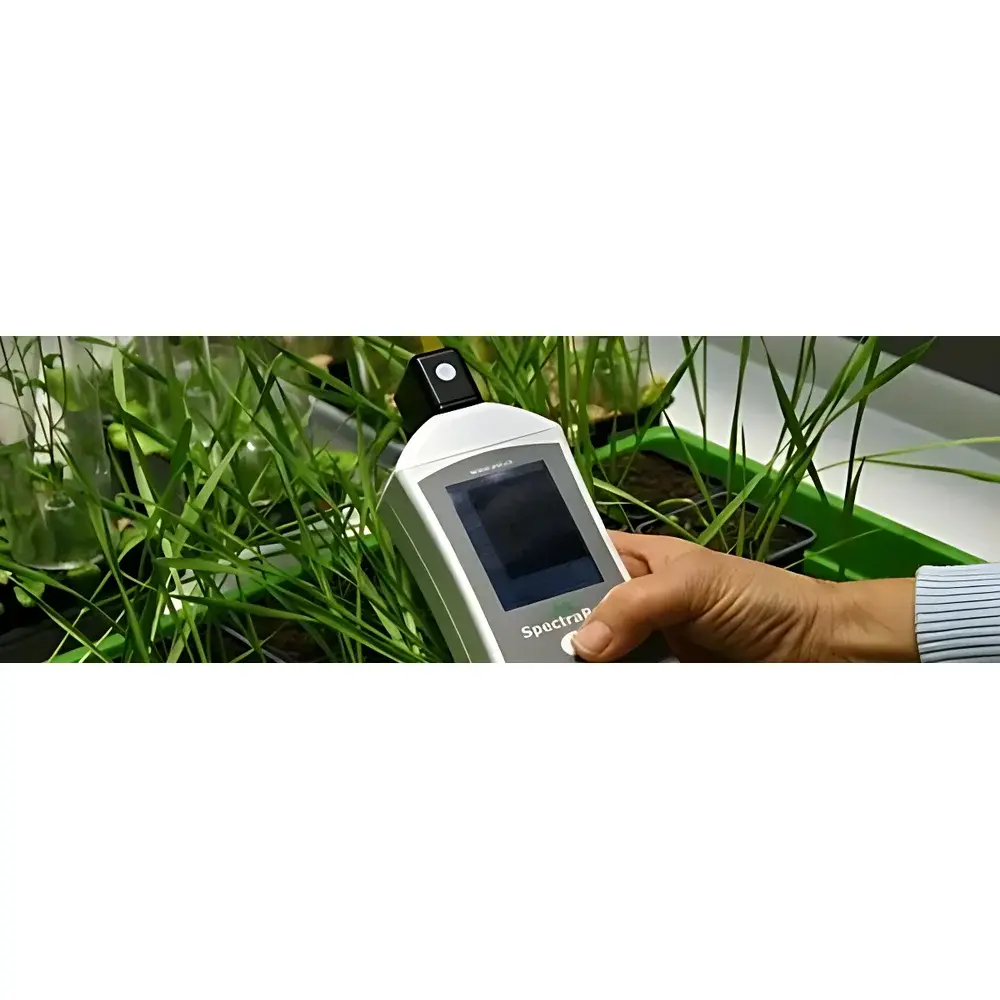
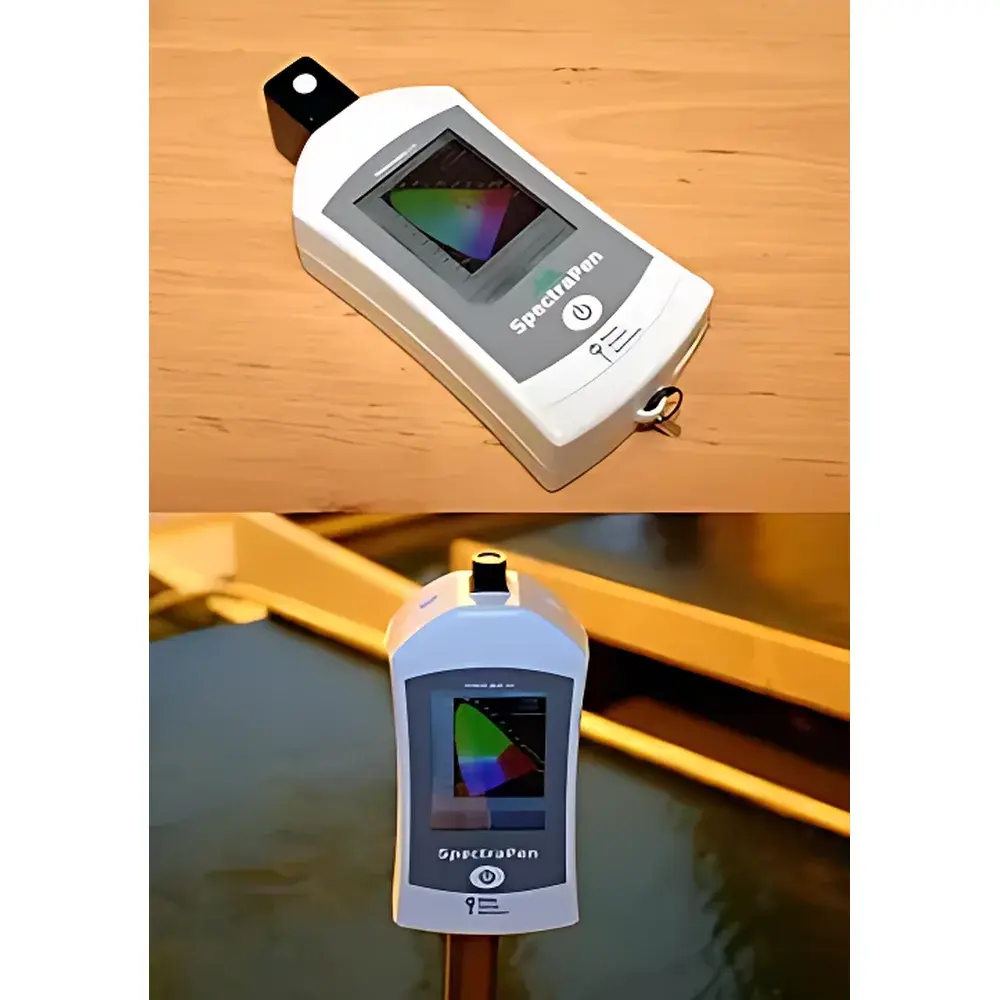
SpectraPen LM500 Handheld Spectroradiometer
| Origin | Czech Republic |
|---|---|
| Manufacturer Type | Authorized Distributor |
| Origin Category | Imported |
| Model | LM500 |
| Pricing | Available Upon Request |
Overview
The SpectraPen LM500 Handheld Spectroradiometer is a precision-engineered field-deployable instrument designed for quantitative spectral characterization of light sources and ambient illumination across life science, agricultural, and environmental research domains. Based on high-fidelity CCD-based spectroradiometry, the LM500 captures absolute irradiance spectra (μW·cm⁻²·nm⁻¹) and photosynthetic photon flux density (PPFD) spectra (μmol·m⁻²·s⁻¹·nm⁻¹) with 7 nm full width at half maximum (FWHM) optical resolution. Its dual-band configuration—UVIS (340–780 nm) and NIR (640–1050 nm)—enables comprehensive photobiological assessment, including PAR (400–700 nm), UV-A/B exposure, and far-red/near-infrared reflectance proxies. The device operates on the principle of cosine-corrected spectral radiometry, ensuring angular response compliance with CIE 63-1984 and ISO/CIE 19476:2014 standards for irradiance measurement. Engineered for reproducibility in variable environments—from growth chambers to open-field canopies—the LM500 delivers traceable, calibrated spectral data without requiring external reference standards during routine operation.
Key Features
- Two interchangeable optical configurations: UVIS (340–780 nm) and NIR (640–1050 nm), selectable at time of order
- Cosine-corrected input optics compliant with CIE S 023/E:2013 for accurate hemispherical irradiance collection
- High-stability 16-bit ADC with RMS noise ≤15 LSB and wavelength repeatability ±0.5 nm
- Integrated 2.4″ color TFT touchscreen (240 × 320 px, 65,535 colors) with intuitive icon-driven interface
- Onboard 16 MB non-volatile memory supporting >4,000 full-spectrum measurements with timestamping
- Rechargeable Li-ion battery enabling up to 48 hours of continuous spectral acquisition (typical use)
- IP54-rated splash-resistant enclosure (180 × 75 × 40 mm; 300 g) suitable for greenhouse, canopy, and outdoor deployment
- Auto-ranging integration time (5 ms – 10 s) with real-time saturation warning and dynamic exposure optimization
Sample Compatibility & Compliance
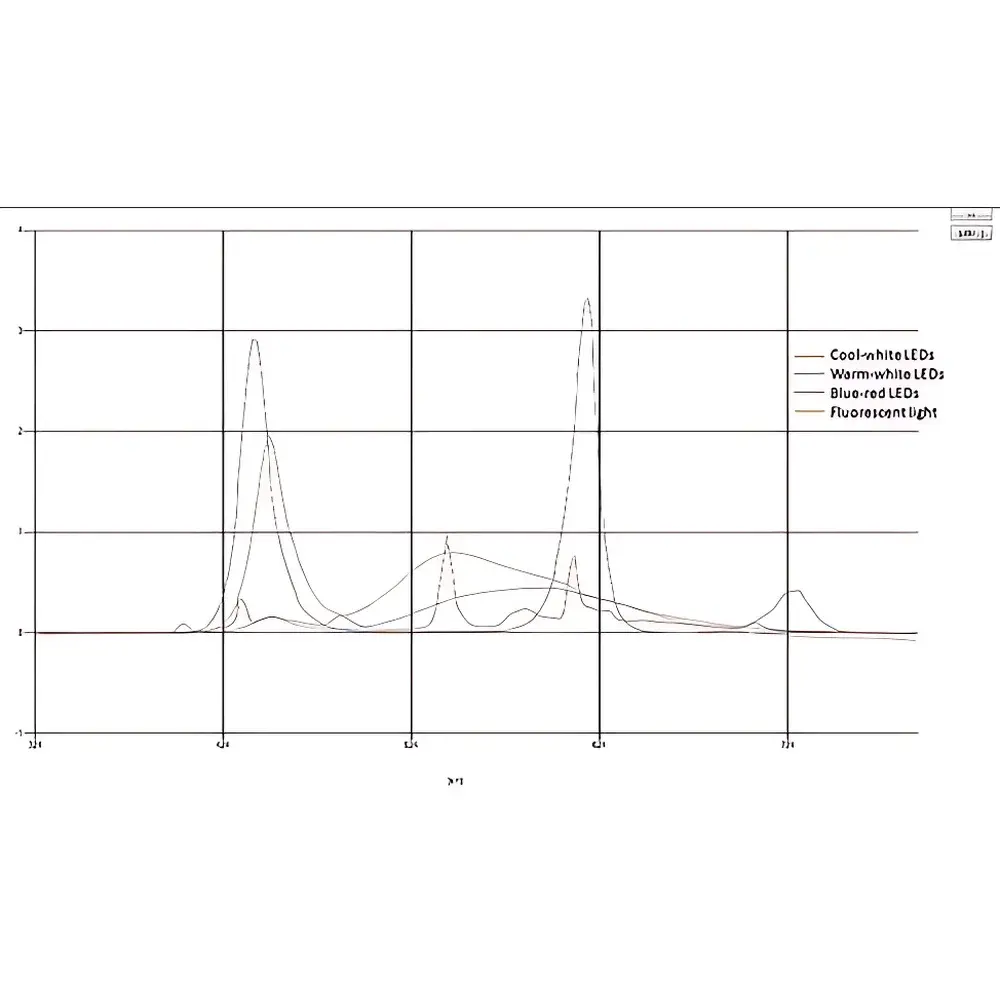
The LM500 is optimized for non-contact measurement of planar and diffuse light fields—including LED arrays, fluorescent tubes, sunlight, skylight, and plant-canopy transmitted/reflected radiation. Its cosine collector eliminates angular bias under oblique incidence, critical for ecological PAR mapping and horticultural lighting validation. The instrument complies with key photometric and radiometric standards: CIE S 023/E:2013 (cosine error specification), ISO/CIE 19476:2014 (spectral irradiance measurement), and ASTM E2913-22 (spectral power distribution reporting). UVIS models further support CIE 1931 chromaticity coordinate calculation, correlated color temperature (CCT), and general color rendering index (CRI Ra) per CIE 13.3-1995—enabling cross-platform comparison of horticultural lighting quality against industry benchmarks. Data provenance is maintained via embedded firmware versioning, UTC timestamping, and sensor-specific calibration coefficients stored in read-only memory.
Software & Data Management
The proprietary SpectraPen Control Suite (Windows/macOS) provides secure, audit-ready data handling aligned with GLP principles. Functions include batch download via USB 2.0, spectral smoothing (Savitzky-Golay), user-defined band-integrated calculations (e.g., UV-B dose, FR/R ratio, Yellowness Index), and export to CSV or Excel-compatible XLSX formats. The software supports metadata tagging (location, operator ID, experimental condition), automated report generation (PDF), and firmware update verification with SHA-256 checksum validation. All raw spectral datasets retain native 16-bit resolution and embedded calibration parameters, ensuring traceability for regulatory submissions (e.g., USDA-APHIS lighting efficacy dossiers or EU Ecodesign Annex IV reporting). No cloud dependency: all processing occurs locally to preserve data sovereignty and meet institutional IT security policies.
Applications
- Quantitative PAR mapping in vertical farms and controlled-environment agriculture (CEA) facilities
- Validation of horticultural LED spectral output against ASABE S640.2 and IEC TR 63139
- In situ solar radiation monitoring for phenology and ecosystem productivity modeling
- UV stress assessment in crop breeding trials using biologically weighted UV-A/UV-B integrals
- NIR reflectance profiling for vegetation indices (e.g., NDVI, PRI) in ecological transects
- Light source quality control in manufacturing QA/QC labs per ISO/IEC 17025 requirements
- Chromaticity analysis of architectural and circadian lighting systems
FAQ
What spectral bands are supported by the LM500? Why are there two variants?
The LM500 is available in UVIS (340–780 nm) and NIR (640–1050 nm) configurations. UVIS enables photobiologically relevant metrics including PAR, lux, CCT, and CRI; NIR supports vegetation reflectance and water-content proxies. The two versions use distinct grating and detector optimizations—users select based on primary application domain.
Is the cosine corrector interchangeable between H and V head orientations?
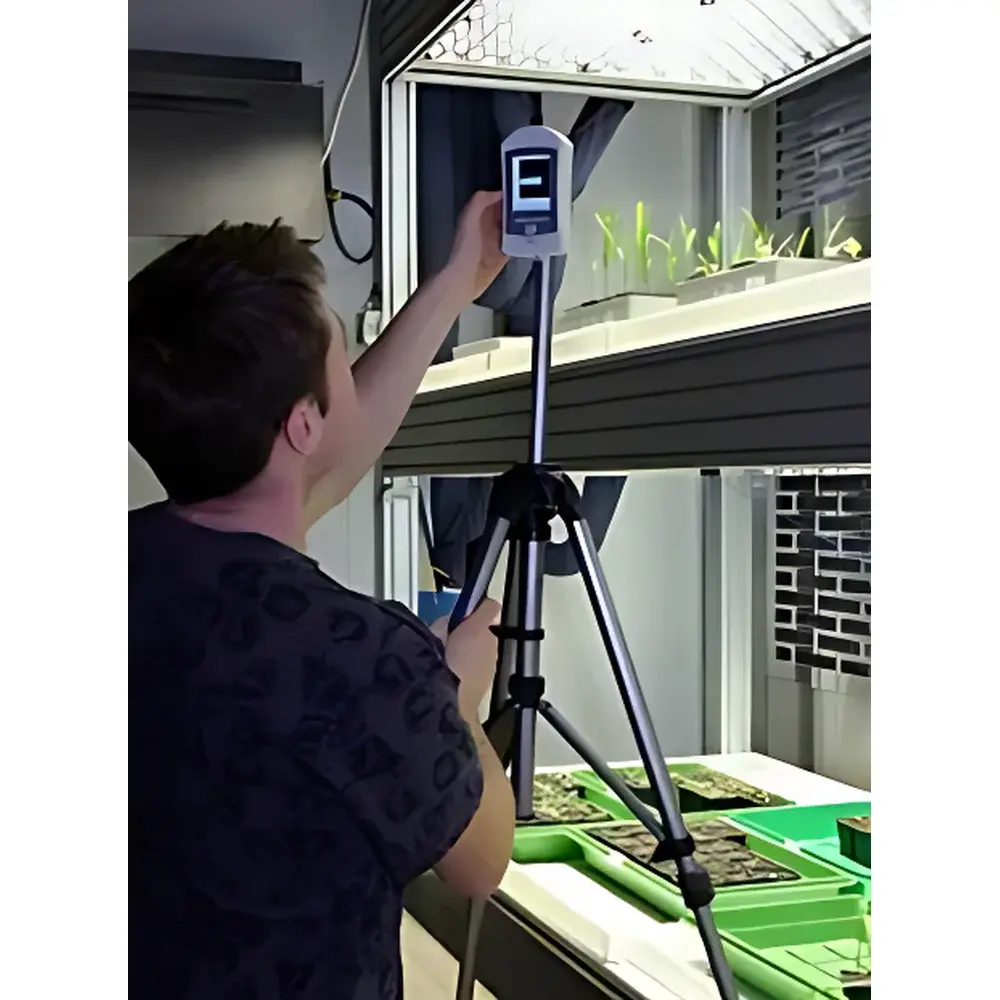
Yes. The H (horizontal) and V (vertical) cosine correctors are mechanically identical but differ in mounting geometry. The H-type mounts flush to the top surface for confined-space use (e.g., growth chambers); the V-type extends forward for tripod-mounted field surveys. Both maintain identical angular response characteristics per CIE 63-1984.
Does the LM500 meet FDA 21 CFR Part 11 requirements for electronic records?
While the LM500 itself is not a regulated medical device, its data pipeline supports Part 11 compliance when used within validated laboratory workflows: SpectraPen Control Suite offers operator authentication, electronic signatures, immutable audit trails, and encrypted data export—features documented in the Instrument Qualification Package (IQP) provided with each unit.
Can I perform custom spectral integrations beyond the built-in PAR or Lux calculations?
Yes. The software includes a formula editor supporting user-defined band limits, weighting functions (e.g., McCree action spectrum), and arithmetic combinations of multiple spectral integrals—enabling derivation of research-specific indices such as R:FR ratio, UV-B:PAR quotient, or phytochrome photostationary state (PSS) estimates.
What is the calibration stability over time and temperature?
Factory calibration is NIST-traceable and valid for 24 months under normal operating conditions (0–50 °C). Wavelength drift is <±0.2 nm over the specified temperature range; irradiance sensitivity drift is <±1.5% per year. Optional annual recalibration services include updated certificate of conformance and spectral responsivity verification at three wavelengths.