
SpectraPen SP-100 Handheld Spectrometer
| Origin | Czech Republic |
|---|---|
| Manufacturer Type | Authorized Distributor |
| Origin Category | Imported |
| Model | SP-100 |
| Pricing | Upon Request |
Overview
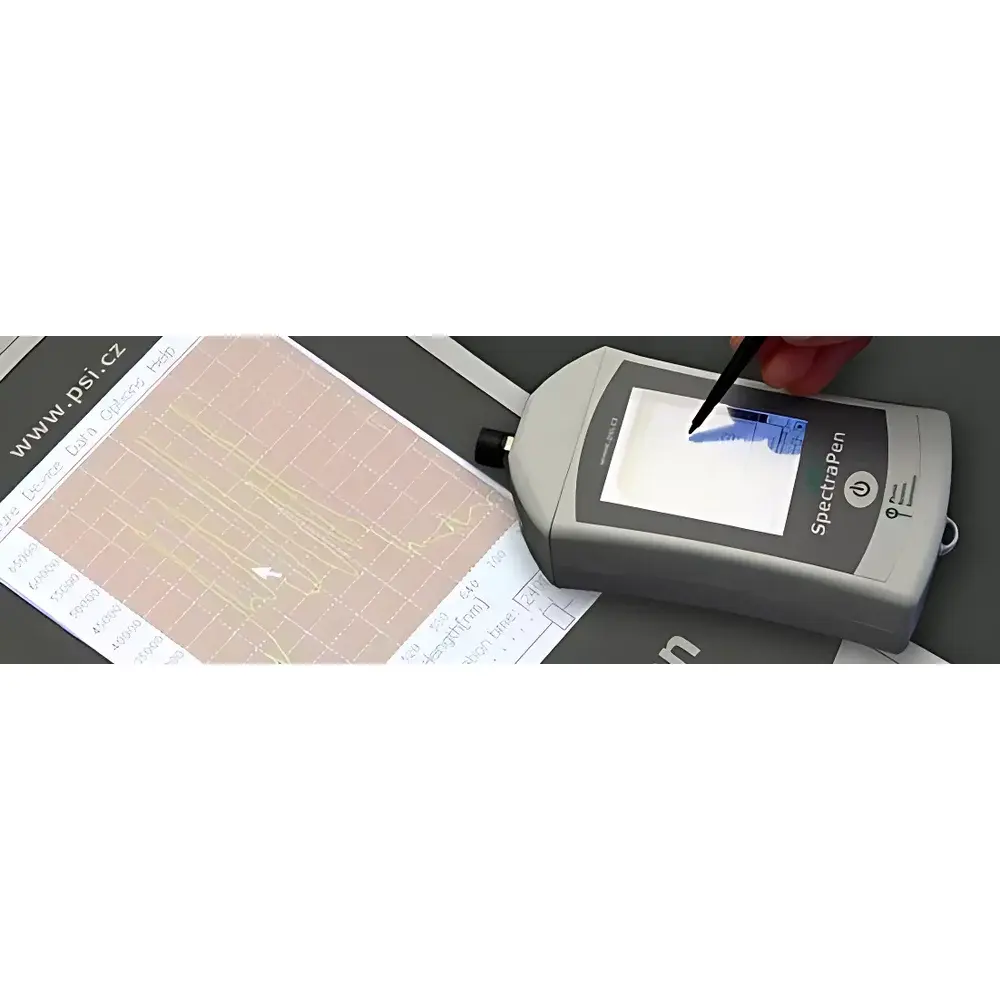
The SpectraPen SP-100 Handheld Spectrometer is a compact, self-contained optical measurement instrument engineered for field-deployable and laboratory-based spectral analysis in plant physiology, ecophysiology, and photobiology research. Operating on the principle of grating-based dispersive spectroscopy, the SP-100 captures full-range spectral irradiance (radiant flux per unit wavelength) across either the UV-VIS or NIR spectral bands with high wavelength fidelity and radiometric stability. Its integrated 16-bit analog-to-digital conversion, low-stray-light optical path (−30 dB), and sub-nanometer wavelength repeatability (±0.5 nm) ensure quantitative consistency required for comparative reflectance, transmittance, and absorbance studies—particularly in non-destructive leaf optical property characterization. Designed for operational autonomy, the device integrates a rechargeable Li-ion battery, a 240×320-pixel color touchscreen interface, and onboard 32 MB memory capable of storing over 8,000 full-spectrum acquisitions—eliminating dependency on external computers during data collection.
Key Features
- Two interchangeable optical configurations: SP-100-UVIS (340–780 nm) and SP-100-NIR (640–1050 nm), optimized for photosynthetically active radiation (PAR) and near-infrared vegetation indices
- High-resolution spectral response: FWHM of 9 nm (UVIS) and 8 nm (NIR), enabling discrimination of narrowband pigment absorption features (e.g., chlorophyll a/b, carotenoids, anthocyanins)
- Integrated cosine-corrected input optic (optional accessory) for accurate hemispherical irradiance measurements under natural or artificial lighting conditions
- Detachable SMA905 fiber-optic probe (0.22 NA, 1 m length, optional) for flexible sample coupling—including leaf clips, cuvette holders, or remote light source profiling
- IP-rated splash-resistant housing (IEC 60529 IPX4 equivalent), robust mechanical design for outdoor deployment in variable environmental conditions (0–50 °C operating range)
- USB 2.0 interface supporting both data export (CSV, TXT) and real-time tethered acquisition; firmware update capability via same interface
Sample Compatibility & Compliance
The SP-100 supports non-contact and contact-based optical measurements across diverse biological and material samples—including intact leaves, algal suspensions, soil surfaces, LED grow lights, and standard color reference tiles. Its spectral calibration traceability aligns with ISO/IEC 17025-accredited procedures performed by the original European manufacturer. While not certified for clinical or regulatory-grade photometry, the instrument meets functional requirements for method development under ASTM E308 (Standard Practice for Computing the Colors of Objects by Using the CIE System) and ISO 11664 (Colorimetry series). Data integrity complies with GLP-aligned documentation practices, including timestamped metadata embedding and uneditable spectral file headers—facilitating audit-ready reporting in academic and industrial plant science workflows.
Software & Data Management
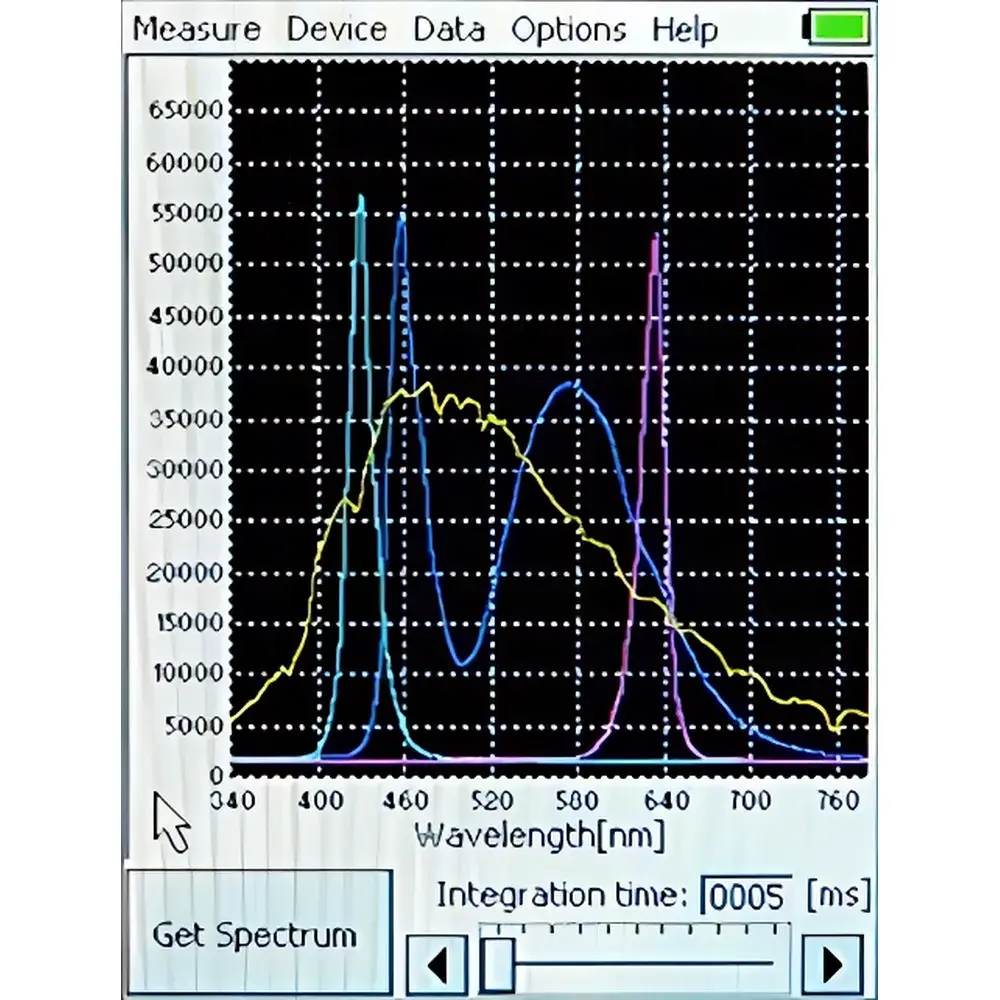
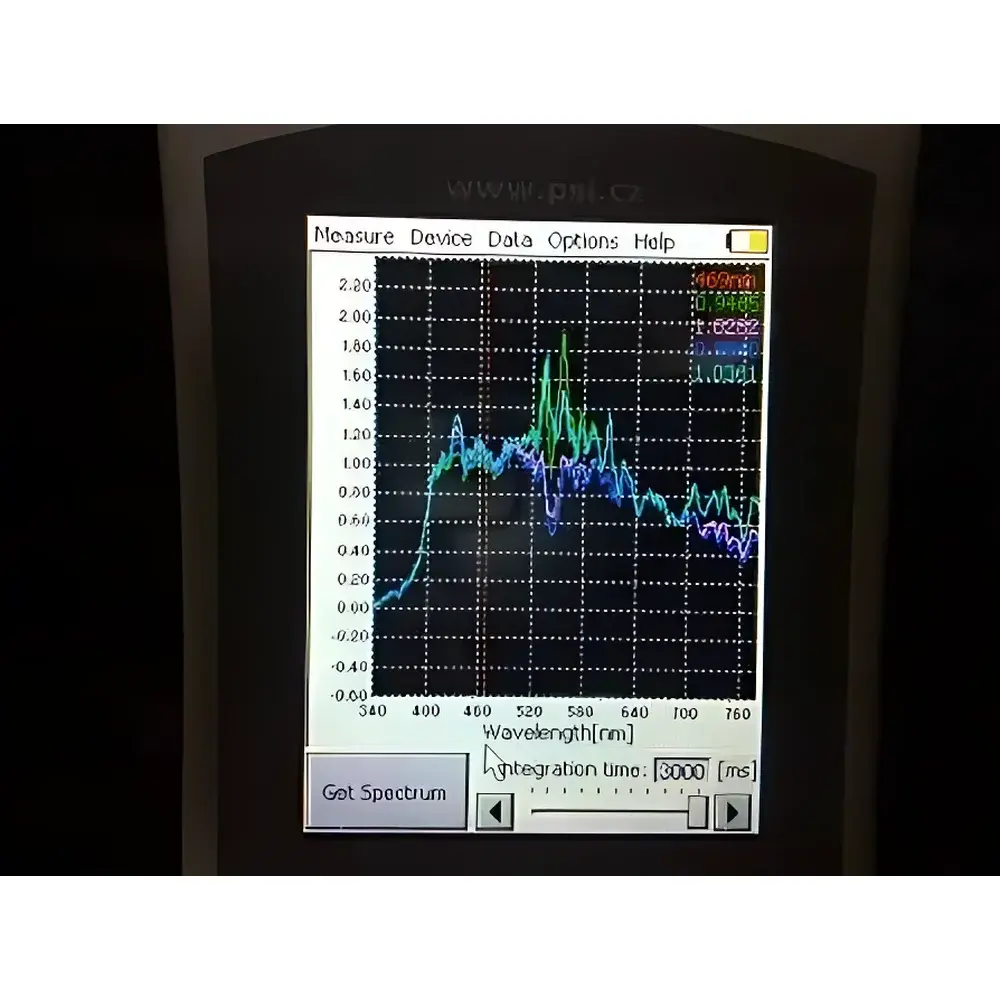
The SP-100 operates natively via its embedded Linux-based firmware, delivering real-time spectral visualization, peak identification, and ratio-based index calculation (e.g., NDVI, PRI, ANTH) directly on the touchscreen. Exported spectra are structured as ASCII-compatible files containing wavelength (nm) and intensity (digital counts or relative irradiance units) columns. Companion PC software enables batch processing, baseline correction, Savitzky-Golay smoothing, and conversion to Excel (.xlsx) format. All spectral datasets retain embedded acquisition parameters (integration time, gain setting, probe type), ensuring reproducibility across multi-user laboratories. No cloud dependency or subscription model is required—data ownership remains fully local and exportable without proprietary lock-in.
Applications
- Leaf-level spectral phenotyping: Quantification of chlorophyll, nitrogen, and water content via reflectance indices derived from 340–1050 nm spectra
- Light environment characterization: Spectral power distribution (SPD) analysis of horticultural LEDs, greenhouse glazing, and canopy-transmitted radiation
- Photosynthetic pigment screening: Discrimination of C3 vs. C4 photosynthetic pathway signatures through differential absorption minima in the red and far-red regions
- Non-destructive stress monitoring: Early detection of biotic/abiotic stress (drought, nutrient deficiency, pathogen infection) via shifts in red-edge position and NIR plateau amplitude
- Chemometric model development: Generation of reference spectral libraries for PLSR, PCA, or machine learning-based prediction of physiological traits
FAQ
What spectral resolution does the SP-100 achieve, and how is it validated?
The SP-100-UVIS achieves a spectral resolution of 9 nm FWHM; the SP-100-NIR achieves 8 nm FWHM—measured using mercury-argon emission line standards traceable to NIST SRM 2035. Resolution is factory-verified and stable across the specified integration time range (5 ms–10 s).
Can the SP-100 measure absolute irradiance?
The SP-100 provides relative spectral irradiance calibrated against a NIST-traceable tungsten halogen standard. Absolute irradiance quantification requires optional factory-applied radiometric calibration—available as a service prior to shipment.
Is the device compliant with FDA 21 CFR Part 11 or EU Annex 11 for regulated environments?
No—the SP-100 is intended for research use only (RUO) and does not include electronic signature, audit trail, or role-based access control features required for GxP compliance.
How many spectra can be stored internally without connecting to a computer?
The onboard 32 MB flash memory supports ≥8,000 full-spectrum acquisitions (each ~3.5 kB), with automatic timestamping and metadata tagging for traceability.
Does the cosine corrector accessory require recalibration when attached?
No—each cosine corrector is pre-matched to its corresponding SP-100 unit during final assembly. The firmware automatically applies the appropriate angular response correction factor upon accessory detection via mechanical keying.




