
PSI FMT150 Photobioreactor System for Algal Cultivation and Real-Time Physiological Monitoring
| Brand | PSI (Czech Republic) |
|---|---|
| Origin | Czech Republic |
| Model | FMT150 |
| Volume Options | 400 mL / 1000 mL / 3000 mL |
| Temperature Control Range | 5–75 °C (dependent on vessel type) |
| PAR Intensity | Up to 3000 µmol photons·m⁻²·s⁻¹ (configurable per wavelength) |
| Light Sources | Red, Blue, White LEDs (single/dual/multi-spectral) |
| Fluorescence Detection | Dual-modulation chlorophyll fluorometer (F₀, Fₘ, Fₘ′, QY, ΦPSII) |
| Optical Density | OD₆₈₀ & OD₇₂₀ via PIN photodiode + bandpass filter (665–750 nm) |
| Gas Control | Optional GMS high-precision gas mixing system (N₂, air, CO₂, O₂) |
| pH/DO/CO₂ Sensing | Optional calibrated electrochemical sensors |
| Pump Capacity | Up to 8 per unit (PP600 peristaltic pumps) |
| Software | PSI FMT150 Control Suite (Basic & Advanced editions, FDA 21 CFR Part 11–compliant audit trail optional) |
| Compliance | CE-marked |
Overview
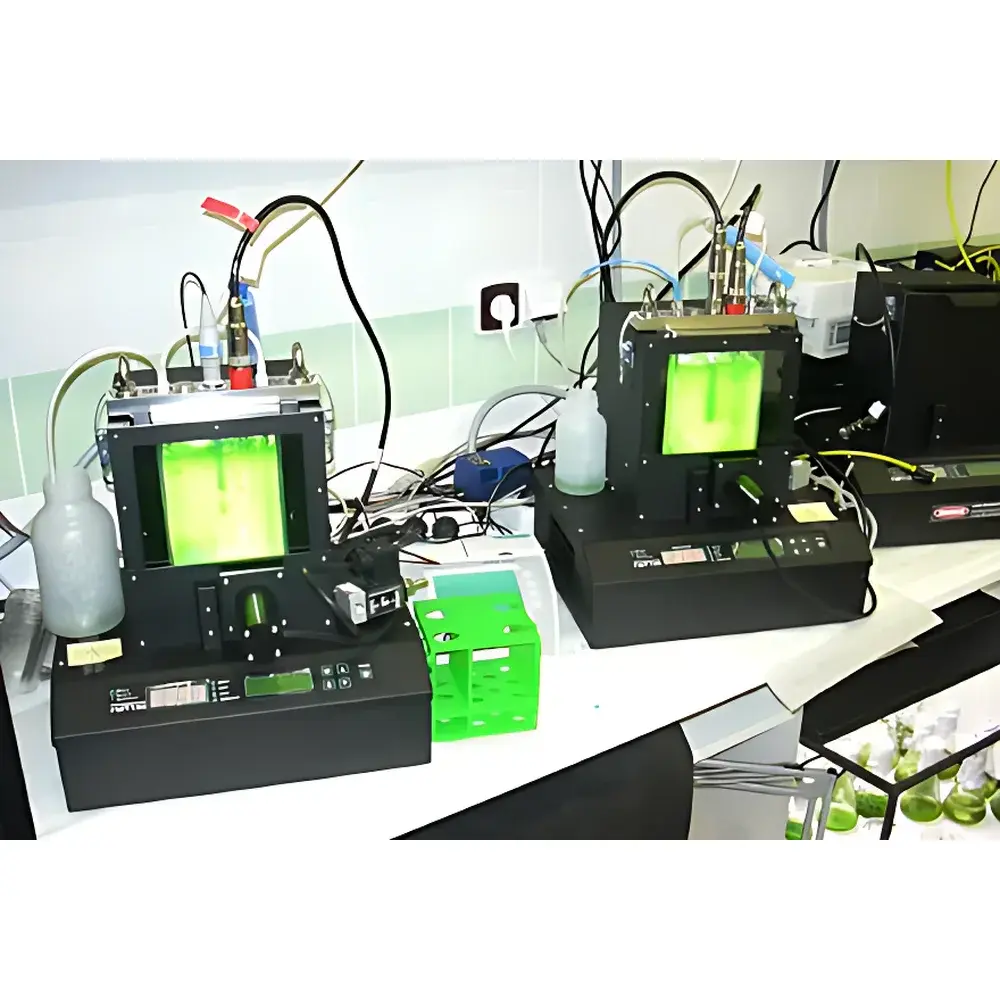
The PSI FMT150 Photobioreactor System is a fully integrated, modular platform engineered for controlled cultivation and real-time physiological monitoring of photoautotrophic microorganisms—including freshwater and marine microalgae, cyanobacteria (blue-green algae), and anoxygenic phototrophic bacteria. Unlike conventional bioreactors, the FMT150 embeds dual optical sensing modalities—pulse-amplitude modulated (PAM) chlorophyll fluorescence and dual-wavelength optical density—at the core of its architecture, enabling simultaneous quantification of photosynthetic efficiency and biomass dynamics under dynamically programmable environmental conditions. Its operation is grounded in the principles of photobiological kinetics: light absorption drives electron transport in Photosystem II (PSII), generating variable chlorophyll fluorescence that correlates directly with quantum yield (ΦPSII), non-photochemical quenching (NPQ), and photoinhibitory status; concurrently, OD₆₈₀ and OD₇₂₀ provide non-invasive, calibration-referenced proxies for cell density and relative chlorophyll-a concentration. This dual-signal acquisition allows researchers to decouple growth from physiological performance—critical for studies in carbon fixation optimization, stress response phenotyping, or metabolic engineering validation.
Key Features
- Integrated dual-modulation chlorophyll fluorometer delivering standardized fluorescence parameters: F₀, Fₘ, Fᵥ (Fₘ−F₀), QY (Fᵥ/Fₘ), Fₜ, Fₘ′, Fᵥ′, and ΦPSII under both dark- and light-adapted states.
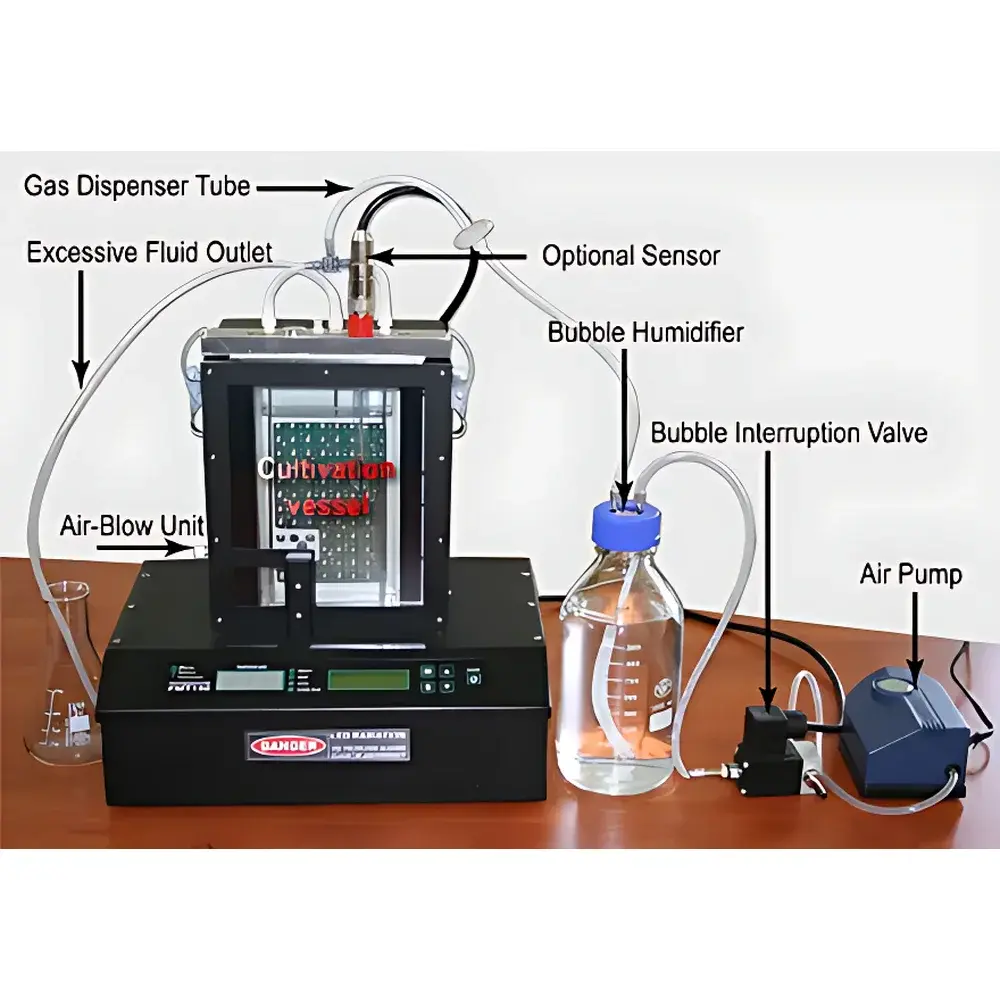
- High-precision optical density measurement at 680 nm and 720 nm using temperature-stabilized LED sources and narrowband (665–750 nm) filtered PIN photodiodes—minimizing scattering artifacts via bubble-trapping valve and humidified gas delivery.
- Programmable multi-spectral LED illumination system supporting single-, dual-, or triple-wavelength configurations (red, blue, white, infrared), with PAR intensity scalable up to 3000 µmol photons·m⁻²·s⁻¹ and dynamic spectral tuning to simulate diurnal light cycles, cloud cover, or spectral stress regimes.
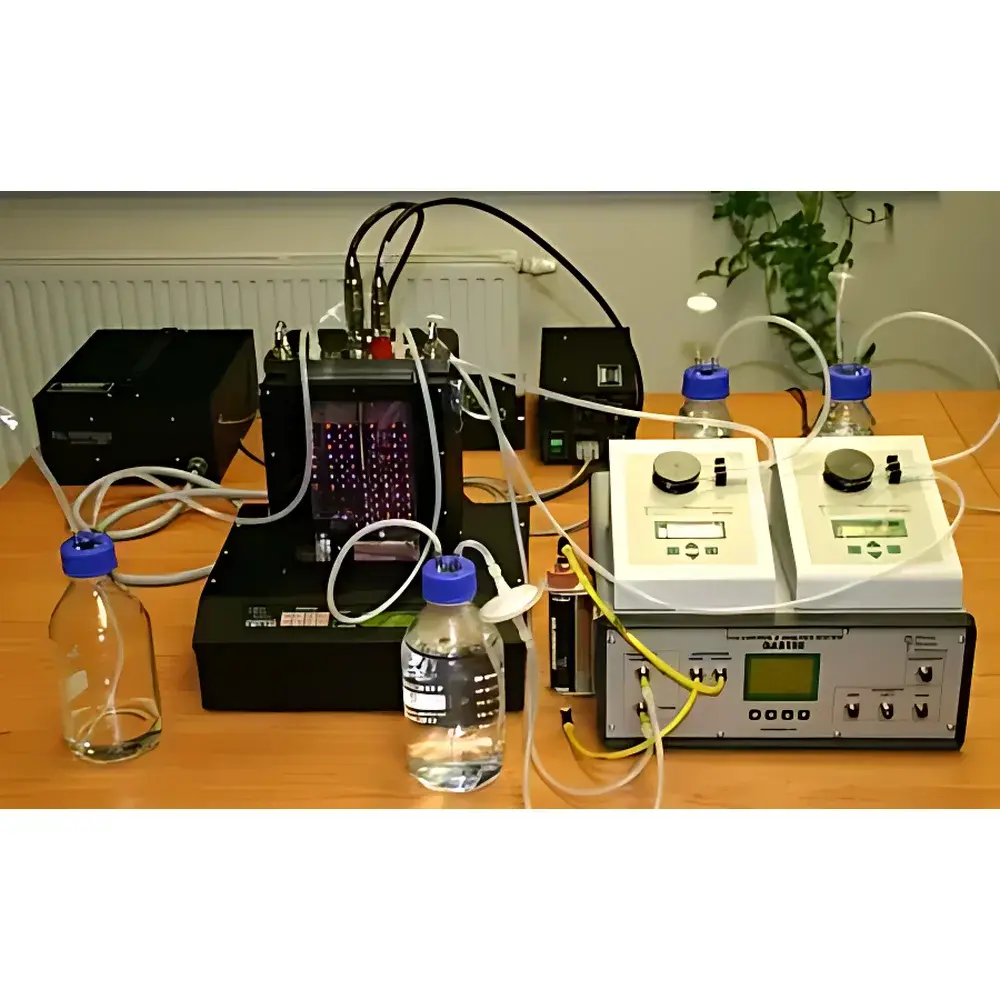
- Multi-parameter environmental control: independent regulation of temperature (±0.1 °C stability), pH (via optional acid/base dosing modules), dissolved oxygen (DO), dissolved CO₂, and gas composition (N₂, O₂, CO₂, air) using optional GMS gas mixing system with mass flow controllers.
- Modular chemostat/turbidostat capability: up to eight PP600 peristaltic pumps support automated constant-pH (chemostat), constant-OD (turbidostat), or CO₂-mediated pH stabilization modes—all governed by real-time sensor feedback and user-defined control algorithms.
- Robust mechanical construction: borosilicate glass vessels rated for autoclaving (121 °C), aerospace-grade aluminum chassis, stainless-steel fittings, and silicone-free sealing—ensuring sterility integrity and long-term operational reliability in GLP-compliant laboratories.
Sample Compatibility & Compliance
The FMT150 accommodates a broad phylogenetic range of photoautotrophs—including Chlorella vulgaris, Scenedesmus obliquus, Cyanothece spp., Synechocystis PCC 6803, and Dixoniella grisea—across freshwater, brackish, and full-strength seawater media. Vessel volumes (400 mL, 1000 mL, 3000 mL) are optimized for scalability from screening assays to process-relevant pilot studies. All sensors comply with ISO/IEC 17025 traceability requirements when calibrated against NIST-traceable standards. Optional Oxzala differential O₂/CO₂ flux monitoring satisfies ASTM D5504–21 specifications for respiratory gas exchange quantification. The system architecture supports 21 CFR Part 11–compliant electronic records when deployed with Advanced Edition software, including role-based access control, electronic signatures, and immutable audit trails—essential for regulated bioprocess development in pharmaceutical or nutraceutical applications.
Software & Data Management
The PSI FMT150 Control Suite (v5.x) provides unified interface for experimental design, real-time visualization, and post-acquisition analysis. Basic Edition enables synchronized control of up to two reactors, event logging, raw data export (CSV, Excel-compatible), and sensor calibration. Advanced Edition extends functionality to unlimited reactor networks, script-based protocol automation (Python API), scheduled experiment initiation, email alerts for parameter deviations, regression modeling of fluorescence kinetics, and integration with third-party gas analyzers (Oxzala, GMS). All data streams—including fluorescence transients, OD time series, temperature ramps, and gas composition logs—are timestamped with microsecond precision and stored in hierarchical, metadata-enriched HDF5 files. Exported datasets conform to MIAME/MINSEQE standards for deposition in public repositories such as ENA or GEO.
Applications
- Environmental Science: Simulation of harmful algal bloom (HAB) dynamics under nutrient limitation, UV-B exposure, or thermal stress; assessment of phytoplankton resilience to ocean acidification and warming per IPCC AR6 scenarios.
- Carbon Capture & Utilization: Quantification of CO₂ fixation rates and photorespiratory losses under variable [CO₂], light quality, and O₂ partial pressure—supporting techno-economic analysis per ISO 14040/14044.
- Biopharmaceutical Development: Production of recombinant therapeutics (e.g., monoclonal antibodies, tumor antigens) in engineered Chlamydomonas strains under tightly controlled redox and light regimes.
- Bioenergy Research: Two-stage cultivation optimization for lipid accumulation in oleaginous species (Scenedesmus, Nannochloropsis) under nitrogen starvation, validated via real-time QY decline and OD-coupled biomass tracking.
- Genomics & Phenomics: High-fidelity pre-culture generation for RNA-seq, ChIP-seq, or metabolomics under precisely defined photo-physiological states—enabling genotype–phenotype mapping across light-responsive gene families.
FAQ
What regulatory standards does the FMT150 support for GMP environments?
The system meets CE marking requirements and, when configured with Advanced Edition software and hardware-locked license, supports full 21 CFR Part 11 compliance—including electronic signatures, audit trail generation, and user permission hierarchies.
Can the FMT150 operate under anaerobic conditions?
Yes—optional magnetic stirrer and PWM-controlled gas dosing enable strict O₂ depletion; dissolved O₂ sensors (with Clark-type electrodes) provide real-time verification of anoxia.
Is remote monitoring supported?
Remote access is enabled via secure HTTPS interface when deployed on a static IP network; all sensor data, video feeds (if external camera integrated), and control commands are encrypted using TLS 1.3.
How is calibration traceability maintained for fluorescence and OD measurements?
Fluorometer gain and offset are validated using certified fluorescent reference standards (e.g., Rhodamine B in ethanol); OD pathlength is verified geometrically and cross-checked against NIST-traceable absorbance standards (SRM 2036).
Does PSI offer application-specific method development support?
Yes—PSI’s Application Scientists provide protocol optimization services, including strain-specific light-response curve derivation, chemostat dilution rate calibration, and fluorescence induction kinetics modeling (JIP-test, OJIP analysis).







