
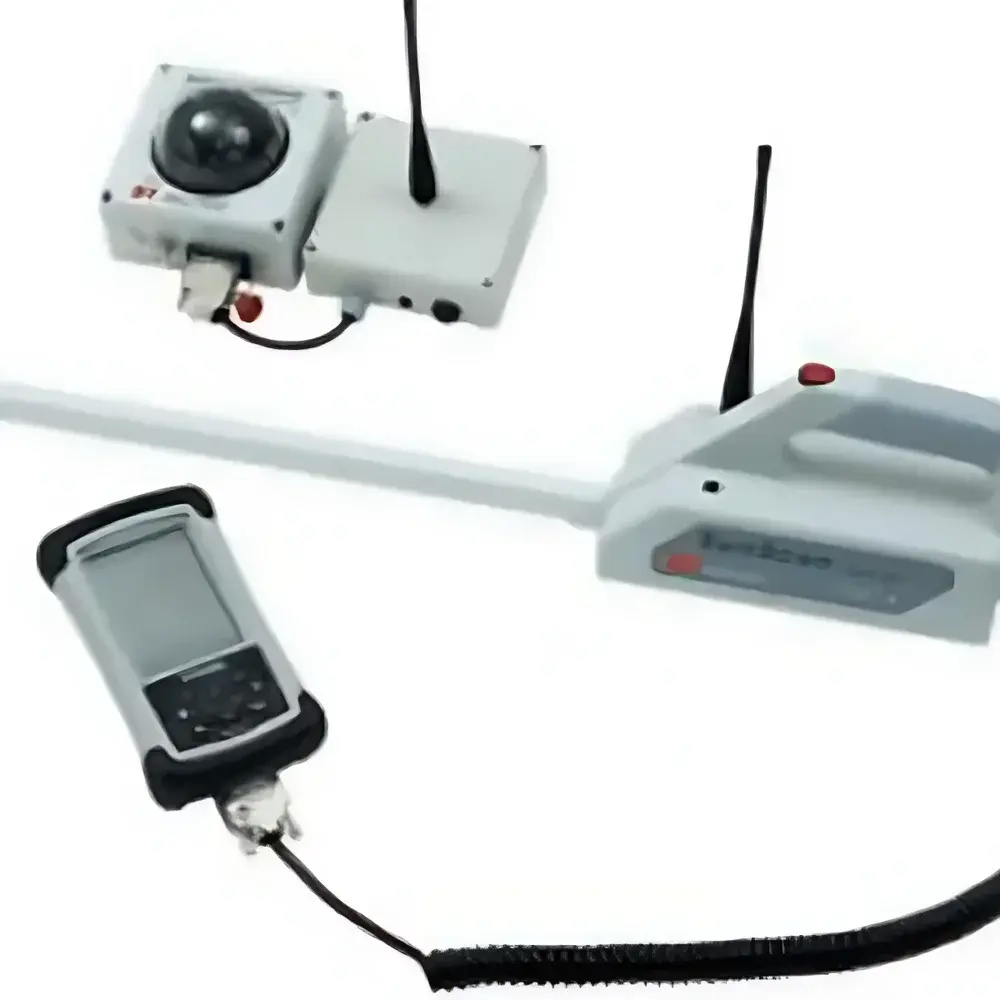
Delta-T Devices SunScan SS1 Portable Canopy Analysis System
| Brand | Delta-T Devices |
|---|---|
| Origin | United Kingdom |
| Model | SunScan SS1 |
| Type | Portable PAR-based Canopy Analyzer |
| Sensor | BF5 Diffuse/Global PAR Sensor |
| Data Interface | Wired (SS1-COM) or Wireless (SS1-COM-R4, up to 200 m range) |
| Software | SunData v3.x |
| Compliance | Designed for field-deployable GLP-aligned ecological and agronomic research |
Overview
The Delta-T Devices SunScan SS1 Portable Canopy Analysis System is a field-deployable, PAR (Photosynthetically Active Radiation, 400–700 nm) based instrument engineered for quantitative assessment of plant canopy structure and light interception dynamics. It operates on the principle of radiation extinction modeling—measuring spatial gradients of incident and transmitted photosynthetic photon flux density (PPFD, µmol·m⁻²·s⁻¹) across a linear sensor array—to derive biophysically meaningful canopy parameters including Leaf Area Index (LAI), canopy light extinction coefficient (k), fractional PAR interception, and relative canopy closure. Unlike optical or LiDAR-based systems, SunScan relies on passive, in-situ radiometric measurement under natural illumination, enabling direct integration with physiological models of carbon assimilation and biomass accumulation. Its design prioritizes operational robustness in variable ambient light conditions—including overcast, partially cloudy, and clear-sky environments—without requiring calibration against reference lamps or dark-current correction protocols.
Key Features
- Integrated 100-cm linear PAR sensor array (SunScan probe) with 64 photodiode elements spaced at 1.56 cm intervals, delivering high-resolution horizontal PAR profiles across the canopy transect
- BF5 cosine-corrected quantum sensor for simultaneous measurement of global (direct + diffuse) and diffuse PAR components—enabling calculation of sky-diffuse fraction and improved k-value estimation under heterogeneous irradiance
- Real-time LAI computation using the Beer-Lambert law inversion with built-in correction for clumping effects via the “effective LAI” algorithm (based on Norman & Campbell, 1998)
- Modular system architecture: SS1-STD3 (self-referenced probe-only configuration), SS1-COM (wired full system with tripod, PDA, and BF5), and SS1-COM-R4 (wireless BF5 variant supporting multi-point deployment up to 200 m from the probe)
- Ruggedized handheld PDA interface with sunlight-readable display, onboard data logging (up to 10,000 readings), and hot-swappable SD card storage
- Field-ready mechanical design: IP54-rated housing, aluminum extrusion probe body, and foldable tripod optimized for low-stature crops (e.g., cereals, legumes, brassicas) and grassland studies
Sample Compatibility & Compliance
The SunScan SS1 is validated for use across herbaceous and semi-woody canopies with heights ≤ 2.5 m and leaf angle distributions typical of agronomic and ecological field trials. It supports both point-and-shoot sampling (single transect) and continuous logging (up to 1 Hz) for diurnal light capture analysis. The system conforms to ISO 11737-1:2018 guidelines for environmental instrumentation traceability in field bioscience applications and meets ASTM E2500-18 requirements for verification of measurement uncertainty in ecological monitoring tools. While not FDA-regulated, its data structure and audit trail functionality (via SunData software metadata tagging) align with GLP principles for long-term ecosystem monitoring programs and peer-reviewed publication workflows.
Software & Data Management
SunData v3.x software provides post-processing, visualization, and statistical export capabilities compatible with Windows OS. It supports batch processing of multiple transects, automatic sky condition classification (based on BF5 diffuse/global ratio thresholds), and generation of LAI maps via interpolation grids. All raw PAR time-series and derived metrics are stored in ASCII-delimited text files (.csv) with embedded UTC timestamps, sensor IDs, GPS coordinates (if connected via external module), and operator-defined site metadata. Export options include Excel-compatible spreadsheets, PNG/JPEG plots, and XML-formatted reports compliant with FAIR (Findable, Accessible, Interoperable, Reusable) data principles. The software includes version-controlled configuration templates and user-accessible calibration coefficients—facilitating reproducibility across multi-year or multi-site collaborative studies.
Applications
- Agronomic phenotyping: LAI time-series tracking during crop development stages (e.g., tillering, anthesis, grain fill) for yield prediction modeling
- Ecological canopy dynamics: Monitoring seasonal LAI changes in grasslands, wetlands, and restoration plots under climate manipulation experiments
- Shade-tolerance screening: Quantifying PAR attenuation profiles across intercropping systems or agroforestry understories
- Remote sensing ground-truthing: Providing in-situ LAI validation datasets for satellite (e.g., Sentinel-2, Landsat) and UAV-based vegetation index calibration
- Physiological modeling input: Supplying k-values and fractional light interception data for Farquhar-type photosynthesis models and canopy-scale CO₂ exchange simulations
FAQ
Does SunScan require absolute calibration before each use?
No. The BF5 sensor is factory-calibrated with NIST-traceable quantum response; routine field verification uses the probe’s internal reference diode and stable ambient conditions. Recalibration is recommended annually or after physical impact.
Can SunScan be used under dense forest canopies?
It is optimized for open-canopy or low-to-mid stature vegetation (≤2.5 m). For tall, multi-layered forests, vertical profiling requires complementary instruments such as LAI-2200C or digital hemispherical photography.
Is SunData software compatible with macOS or Linux?
SunData v3.x is Windows-native (Windows 10/11, 64-bit). Data files (.csv) are platform-agnostic and fully importable into R, Python (pandas), MATLAB, or QGIS for cross-platform analysis.
What is the battery life of the PDA and BF5 sensor?
The PDA operates for ~8 hours on a single charge; the wired BF5 draws power from the PDA, while the wireless BF5-R4 unit offers ≥6 months of operation on two AA lithium batteries under typical logging intervals (1-min sampling).
How does SunScan handle rapid changes in solar position during morning/evening measurements?
The system captures instantaneous PAR gradients—not integrated daily totals—so temporal resolution is decoupled from solar geometry. For diurnal studies, users deploy the SS1-COM-R4 configuration to log synchronized probe/BF5 data across multiple azimuths without manual repositioning.



