
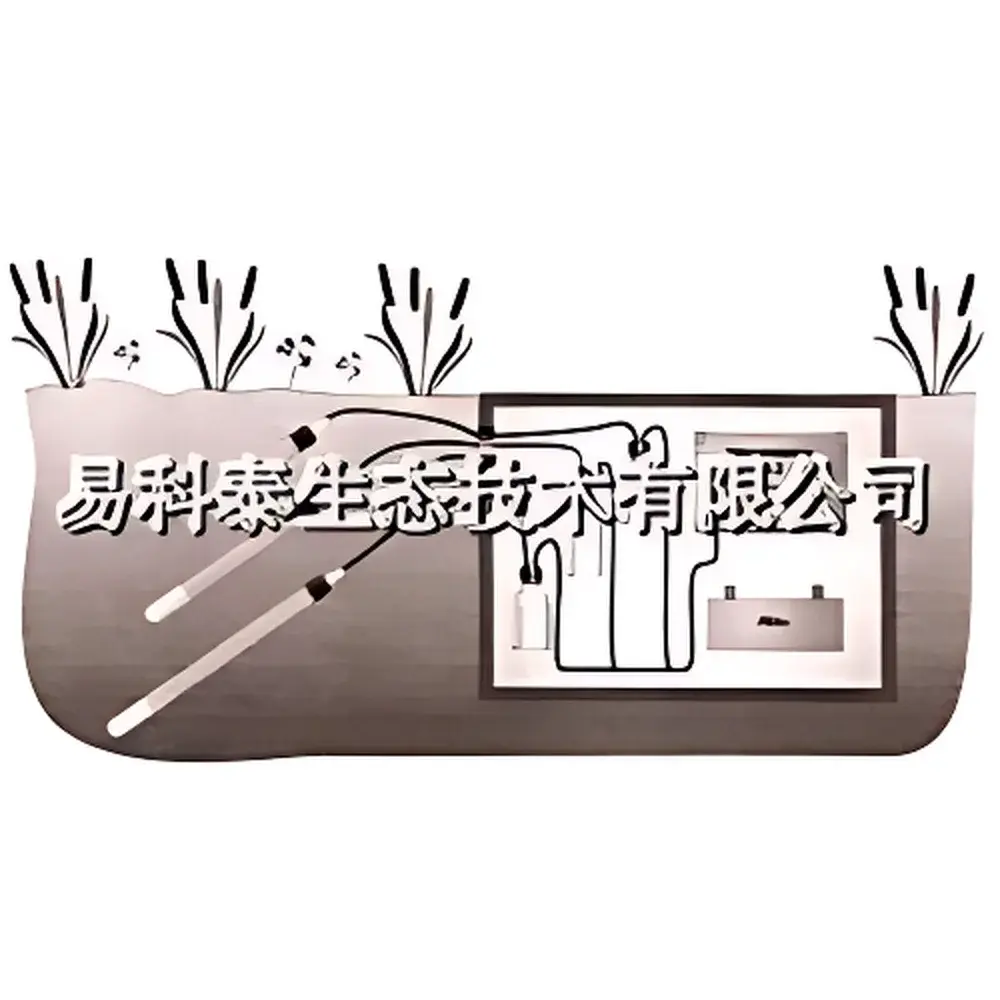
Soil Moisture Sampler (German-imported Ceramic Tension Lysimeter)
| Origin | Germany |
|---|---|
| Manufacturer Type | Authorized Distributor |
| Origin Category | Imported |
| Model | Soil Moisture Sampler |
| Pricing | Available Upon Request |
Overview
The Soil Moisture Sampler is a precision-engineered ceramic tension lysimeter designed for in situ extraction of soil solution from unsaturated and partially saturated zones. It operates on the principle of capillary suction under controlled negative pressure (tension), enabling representative sampling of pore water chemistry without disturbing soil structure or inducing preferential flow paths. This device is widely deployed in environmental monitoring, vadose zone hydrology, agricultural research, and contaminated site assessment where accurate characterization of solute transport—such as nitrate, heavy metals, pesticides, or dissolved organic carbon—is required. Its operation conforms to established methodologies referenced in ASTM D5088–22 (Standard Practice for Soil Solution Sampling) and ISO 11274:2023 (Soil Quality – Determination of Water Retention Characteristics).
Key Features
- Ceramic sampling cup fabricated from high-purity, sintered alumina-based ceramic with uniform pore size distribution and chemically inert surface—minimizing adsorption artifacts during long-term deployment.
- Active ceramic surface area: 34 cm² ±1 cm²; porosity: 45% ±2%, optimized to balance hydraulic conductivity and mechanical robustness under field conditions.
- Modular stainless-steel sampling tube assembly available in multiple standard lengths (e.g., 15 cm, 30 cm, 60 cm, and 100 cm) to accommodate variable installation depths across diverse soil profiles.
- Compatible with both manual vacuum pumps (for discrete, low-frequency sampling) and programmable electric vacuum controllers (for automated, time-series collection at defined tension thresholds).
- Integrated O-ring sealing system and corrosion-resistant fittings ensure long-term integrity under fluctuating soil moisture and redox conditions.
- Designed for repeated use: ceramic cups are autoclavable and resistant to common laboratory cleaning agents (e.g., dilute HCl, NaOH, or hydrogen peroxide solutions) for cross-sample decontamination.
Sample Compatibility & Compliance
This sampler is validated for use in mineral soils (sandy loam to clay loam), organic-rich peatlands, and engineered landfill cover systems. It is not recommended for highly gravelly or lithic soils where ceramic contact cannot be assured. All components comply with EU RoHS Directive 2011/65/EU and REACH Regulation (EC) No. 1907/2006. When used in regulated environmental monitoring programs—including those supporting EPA Region-specific guidance documents or EU WFD (Water Framework Directive) reporting—the system supports full traceability when paired with GLP-compliant documentation protocols. Data generated using this instrument may contribute to regulatory submissions requiring adherence to ISO/IEC 17025:2017 (General Requirements for the Competence of Testing and Calibration Laboratories).
Software & Data Management
While the core sampler is hardware-based and does not require embedded firmware, it integrates seamlessly with third-party vacuum control units equipped with digital pressure logging (e.g., Eijkelkamp Vacuum Controller VAC-2000 or UMS TDR200-compatible modules). These systems record applied tension (kPa), duration, and temperature-compensated vacuum stability—enabling correlation of extraction efficiency with soil matric potential. Exported CSV or Excel-compatible logs support integration into LIMS platforms and statistical analysis tools (R, Python pandas, or JMP). For audit readiness, users are advised to maintain metadata logs covering installation date, depth, ceramic batch number, and post-extraction filtration method (e.g., 0.45 µm PVDF membrane filtration per ASTM D5129).
Applications
- Long-term monitoring of leachate composition beneath agricultural fields to assess nitrogen leaching risk and inform precision fertigation strategies.
- Baseline and post-remediation pore water profiling at brownfield sites contaminated with chlorinated solvents or transition metals.
- Validation of numerical models simulating solute transport in the unsaturated zone (e.g., HYDRUS-1D or STANMOD input calibration).
- Ecotoxicological studies evaluating bioavailability of contaminants via freely dissolved concentration (Cfree) estimation in rhizosphere zones.
- Climate change research examining shifts in soil solution chemistry under altered precipitation regimes and drought stress scenarios.
FAQ
What tension range is typically applied during sampling?
Field applications commonly employ tensions between −10 kPa and −80 kPa, selected based on soil texture and target matric potential; finer-textured soils often require higher tensions to initiate flow.
How frequently should the ceramic cup be cleaned or replaced?
Routine cleaning after each sampling event is recommended; replacement is generally required only after visible cracking, irreversible clogging, or deviation from baseline hydraulic conductivity (>20% reduction observed during calibration checks).
Can this sampler be used in frozen or water-saturated soils?
No—it is intended for use in the unsaturated zone; operation below −10 kPa in saturated conditions risks air entry and non-representative sampling; freezing may cause ceramic fracture due to ice expansion.
Is the sampler compatible with isotopic analysis (e.g., δ18O, δ2H)?
Yes—provided strict contamination controls are followed during installation, extraction, and storage (e.g., pre-rinsing with ultra-pure water, use of HDPE or glass sample vials, and immediate refrigeration at 4 °C).
Does the system meet FDA or EPA validation requirements for regulatory submissions?
The sampler itself is not individually certified but is routinely cited in EPA Method 9060A (Soil Solution Sampling) and supports data quality objectives aligned with EPA QA/G-5S and ISO 5725 series for reproducibility and trueness assessment.
Related Products







