
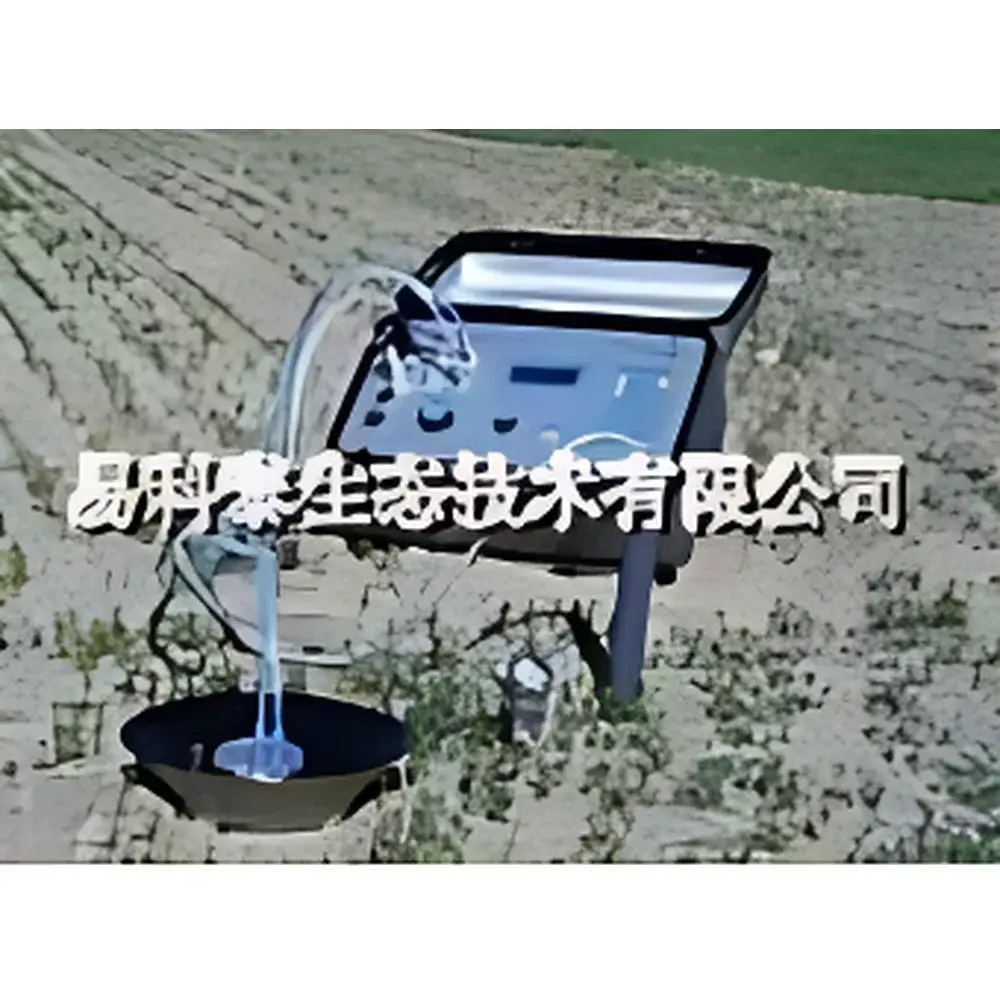
PL-300 Soil Air Permeability (PL) Measurement System
| Origin | Germany |
|---|---|
| Manufacturer Type | Authorized Distributor |
| Origin Category | Imported |
| Model | PL-300 |
| Pricing | Upon Request |
| Measurement Range | 0.003–3 cm/s |
| Applied Pressure Gradient | 1–3 hPa |
| Stabilization Time | 2 s |
| Measurement Chamber Diameter | 72 mm |
| Soil Water Potential Range | 0–800 hPa |
| Volumetric Soil Water Content Range | 0–60 vol.% |
| Data Storage Capacity | 1,000 measurements |
| Sensor Compatibility | Integrated soil moisture and soil water potential sensor options |
Overview
The PL-300 Soil Air Permeability (PL) Measurement System is an engineered field-deployable instrument designed to quantify the air permeability of unsaturated soils under controlled pressure gradients. Based on Darcy’s law for gas flow through porous media, the system determines the intrinsic air conductivity (often denoted as PL, or *Permeabilität Luft*)—a critical parameter reflecting the connectivity, size distribution, and tortuosity of air-filled pores in the soil matrix. Unlike saturated hydraulic conductivity, PL is measured under low-pressure, non-destructive conditions and is highly sensitive to soil structure, compaction state, and drying history. The PL-300 operates by applying a precisely regulated airflow across a defined soil volume enclosed within a sealed measurement chamber (72 mm diameter), then measuring the resulting pressure gradient using high-stability differential pressure transducers. The derived PL value—expressed in cm/s—is calculated in real time using the fundamental Darcian relationship: q = −Kair·(dP/dx), where q is volumetric air flux, Kair is air permeability, and dP/dx is the pressure gradient. This principle enables rapid, repeatable assessment of soil structural integrity without sample disturbance—making it particularly valuable for long-term monitoring of tillage effects, biopore development, and soil resilience to compaction.
Key Features
- Field-portable, battery-powered design with integrated data logging (1,000 measurements capacity) and intuitive LCD interface
- Dual-chamber configuration: surface-mounted measurement chamber for topsoil profiling and optional DARCY chamber for deeper, stratified sampling
- Real-time calculation and display of air permeability (PL) using embedded Darcy-based algorithms compliant with ISO 22975-2 and ASTM D5084 guidelines for unsaturated soil gas transport
- Modular sensor integration: supports optional calibrated TDR-based soil moisture sensors (0–60 vol.%) and tensiometric or ceramic-based water potential sensors (0–800 hPa) for concurrent hydrological context
- Factory-calibrated pressure transducers with 1–3 hPa operational range and ≤2 s stabilization time ensure high reproducibility across heterogeneous field sites
- Includes standardized calibration kit, stainless-steel sampling rings, and traceable reference standards for on-site verification
Sample Compatibility & Compliance
The PL-300 is validated for use with mineral, organic, and mixed-texture soils ranging from coarse sands to structured loams and clay-rich aggregates. It requires minimal sample preparation—only surface leveling and chamber sealing—and is insensitive to minor root intrusion or biological activity during measurement. The system conforms to internationally recognized protocols for unsaturated soil characterization, including ISO 11272 (soil physical analysis), ISO 22975-2 (air permeability testing), and EU COST Action ES1302 recommendations for soil structural quality indicators. All firmware and data output formats support GLP-compliant metadata tagging (time stamp, GPS coordinates via optional Bluetooth module, operator ID, ambient temperature/humidity). Audit trails and exportable CSV/Excel logs meet requirements for environmental monitoring programs governed by national regulatory frameworks (e.g., German LAWA standards, UK Environment Agency SUDS guidance).
Software & Data Management
The PL-300 features embedded firmware with configurable measurement protocols (single-point, time-series, multi-depth profiling) and on-device statistical summary (mean, SD, CV%). Raw and processed data—including pressure curves, flow rates, PL values, and co-registered moisture/water potential readings—are stored internally and exportable via USB-C or optional wireless Bluetooth 5.0. Companion desktop software (Windows/macOS) provides advanced visualization tools: overlay plots of PL vs. matric potential, correlation matrices with texture data, and automated report generation compliant with ISO/IEC 17025 documentation templates. Software supports FDA 21 CFR Part 11–compatible user authentication, electronic signatures, and version-controlled audit logs—essential for accredited laboratories conducting soil health assessments under QA/QC frameworks.
Applications
- Long-term monitoring of soil structural degradation or recovery following conservation practices (e.g., no-till, cover cropping, biochar amendment)
- Validation of soil hydraulic models requiring air-entry value and pore-size distribution parameters
- Assessment of compaction risk in agricultural fields, forest roads, and green infrastructure substrates
- Research on biopore networks and earthworm-mediated aeration pathways in agroecosystems
- Regulatory compliance reporting for landfill cap performance, brownfield remediation, and sustainable drainage systems (SuDS)
- Calibration support for remote sensing indices correlating surface PL with radar backscatter or thermal inertia
FAQ
What physical principle does the PL-300 use to determine air permeability?
It applies Darcy’s law for laminar gas flow through porous media, measuring the pressure gradient required to maintain a known volumetric air flux across a defined soil volume.
Can the PL-300 operate under frozen or water-saturated conditions?
No—PL measurement requires air-filled porosity; the system is specified for unsaturated soils with volumetric water content below field capacity (typically <40 vol.% for most mineral soils).
Is factory recalibration required annually?
Yes—pressure transducers and flow controllers must be verified against NIST-traceable standards at least once per year to maintain measurement integrity per ISO/IEC 17025 requirements.
Does the system support third-party sensor integration?
Only certified, pre-configured sensors supplied by the authorized distributor are supported to ensure signal linearity, temperature compensation, and firmware compatibility.
How is measurement repeatability ensured across different operators?
Through standardized chamber seating force (via torque-limited mounting ring), fixed chamber height (15 mm soil depth), and automated zero-drift compensation before each measurement cycle.
Related Products







