
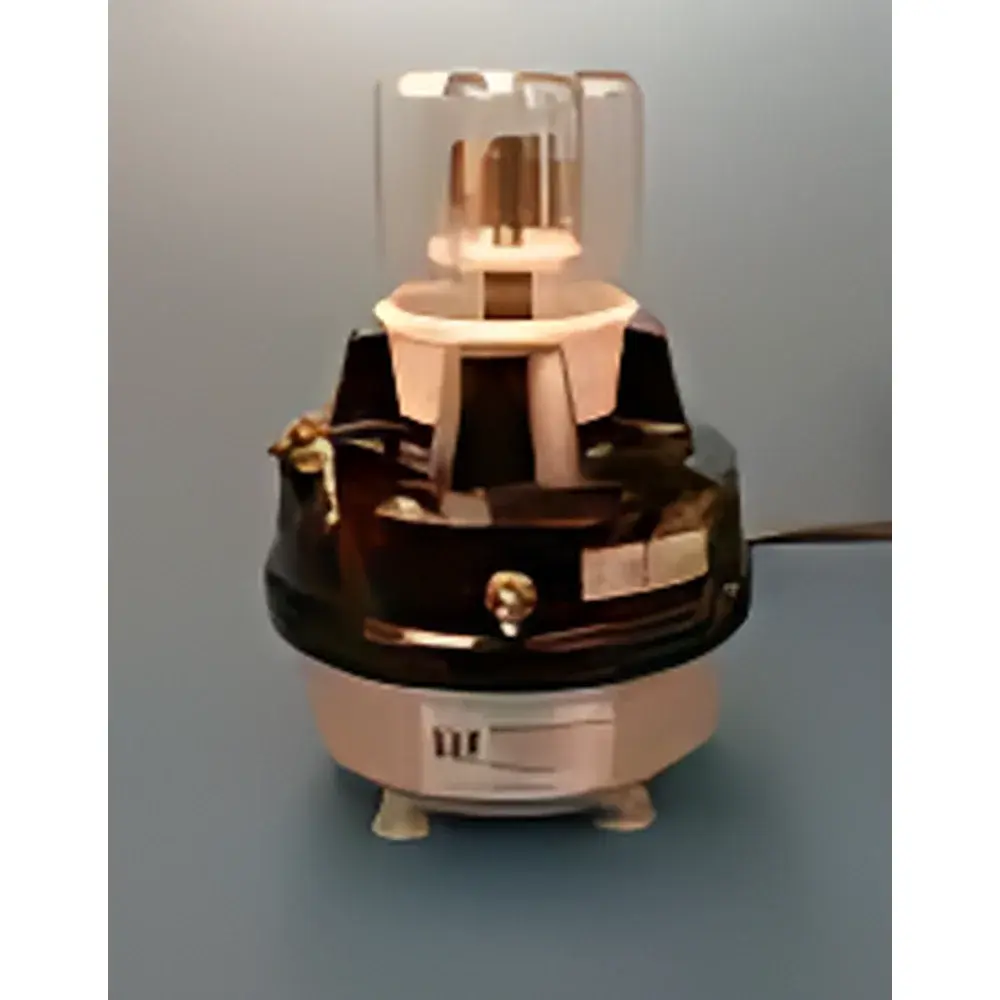
Biospec BeadBeater Bead Mill Homogenizer
| Brand | Biospec |
|---|---|
| Origin | USA |
| Manufacturer Type | Authorized Distributor |
| Product Origin | Imported |
| Model | BeadBeater |
| Instrument Type | Bead Mill Homogenizer |
| Sample Compatibility | Soft Tissues, Cells, Microorganisms, Plant Material |
| Output Particle Size | < 0.01 mm |
| Input Particle Size | < 10 mm |
| Batch Processing Volume | 50 mL (standard) |
| Maximum Throughput | 200 mL (with stainless-steel chamber) |
| Operating Speed Range | 15,800 rpm |
| Chamber Options | Stainless-steel chamber (15–200 mL), Aluminum chamber (15 mL) |
| Compliance | Designed for GLP-compliant laboratories |
Overview
The Biospec BeadBeater Bead Mill Homogenizer is a high-energy, mechanical disruption system engineered for rapid and reproducible lysis of biological samples through bead-based impact grinding. It operates on the principle of horizontal reciprocating motion—rather than rotational agitation—delivering controlled, high-frequency oscillation to a sealed sample chamber containing grinding beads and target material. This mechanism generates intense shear, collision, and compression forces, effectively disrupting cell membranes, organelles, and extracellular matrices without significant thermal buildup when operated in short cycles. Unlike rotor-stator or ultrasonic homogenizers, the BeadBeater avoids probe contamination and acoustic energy decay, making it particularly suitable for parallel processing of multiple low-volume samples under consistent mechanical conditions. Its robust architecture supports routine use in molecular biology, microbiology, proteomics, and environmental sample preparation workflows where integrity of nucleic acids, proteins, or metabolites must be preserved.
Key Features
- High-speed horizontal oscillation at precisely controlled 15,800 rpm, ensuring uniform energy transfer across all sample positions.
- Modular chamber system: interchangeable stainless-steel chambers (15–200 mL capacity) and aluminum chambers (15 mL) for optimized throughput and thermal management.
- Sealed, single-use or reusable chamber design minimizes cross-contamination and enables processing of hazardous or volatile samples under containment.
- No moving parts in direct contact with samples—beads serve as the sole grinding medium, eliminating wear debris from rotors or blades.
- Programmable cycle control (time and pause intervals) supports method standardization across users and labs, critical for inter-laboratory reproducibility.
- CE-marked electrical safety compliance; designed for operation in Class II biosafety cabinets when configured with appropriate chamber seals.
Sample Compatibility & Compliance
The BeadBeater accommodates a broad range of soft biological matrices—including mammalian cells, yeast, bacteria, fungal mycelia, plant leaf tissue, and soil suspensions—without requiring pre-chopping or enzymatic pretreatment. Its mechanical action preserves analyte integrity better than high-shear rotor-stator methods when used with cryogenic or room-temperature protocols. All chamber materials comply with USP Class VI biocompatibility standards; stainless-steel components meet ASTM A276 specifications for corrosion resistance. The system supports documentation traceability required under ISO/IEC 17025 and FDA 21 CFR Part 11 when integrated with validated electronic lab notebook (ELN) platforms. Routine calibration verification is performed using certified reference beads and torque-load validation procedures per manufacturer-recommended maintenance schedules.
Software & Data Management
While the base BeadBeater operates via front-panel mechanical controls, optional digital interface modules enable RS-232 or USB connectivity for integration into laboratory information management systems (LIMS). These modules log timestamped run parameters—including speed, duration, cycle count, and chamber ID—for audit-ready recordkeeping. Exported CSV files are compatible with statistical process control (SPC) software and support trending analysis of homogenization efficiency across batches. Firmware updates maintain alignment with evolving IEC 61000-4 electromagnetic compatibility standards and include enhanced motor protection logic to prevent overcurrent during high-viscosity sample processing.
Applications
- Routine genomic DNA and total RNA extraction from Gram-positive bacteria and fibrous plant tissues.
- Preparation of intracellular protein extracts for downstream Western blotting or mass spectrometry.
- Homogenization of environmental biofilm samples prior to metagenomic sequencing library construction.
- Disruption of frozen yeast pellets for enzyme activity assays under non-denaturing conditions.
- Standardized particle size reduction of pharmaceutical excipients in early-stage formulation development.
- Support of AOAC 990.11 and ISO 16140-2 validated methods for food pathogen enrichment and detection.
FAQ
What types of grinding beads are compatible with the BeadBeater?
Glass, ceramic, stainless-steel, and zirconium oxide beads (0.1–2.0 mm diameter) are supported; bead selection must match sample hardness and downstream analytical requirements (e.g., silica-free protocols require zirconia beads).
Can the BeadBeater be used for cryogenic grinding?
Yes—when equipped with pre-chilled stainless-steel chambers and liquid nitrogen-cooled bead loads, it achieves sub-zero operating temperatures essential for thermolabile analytes.
Is validation documentation available for GMP environments?
Biospec provides IQ/OQ protocol templates and factory calibration certificates; full PQ execution requires site-specific testing per user-defined acceptance criteria.
How does the BeadBeater compare to vortex-based bead mills?
Its horizontal oscillation delivers higher kinetic energy transfer per cycle and superior batch-to-batch consistency compared to orbital or vortex-driven systems, especially above 10 mL volumes.
What maintenance is required for long-term reliability?
Biannual inspection of drive arm bushings, periodic torque verification of chamber clamps, and replacement of O-rings per 500 operational hours—or after exposure to organic solvents—are recommended per the service manual.



