
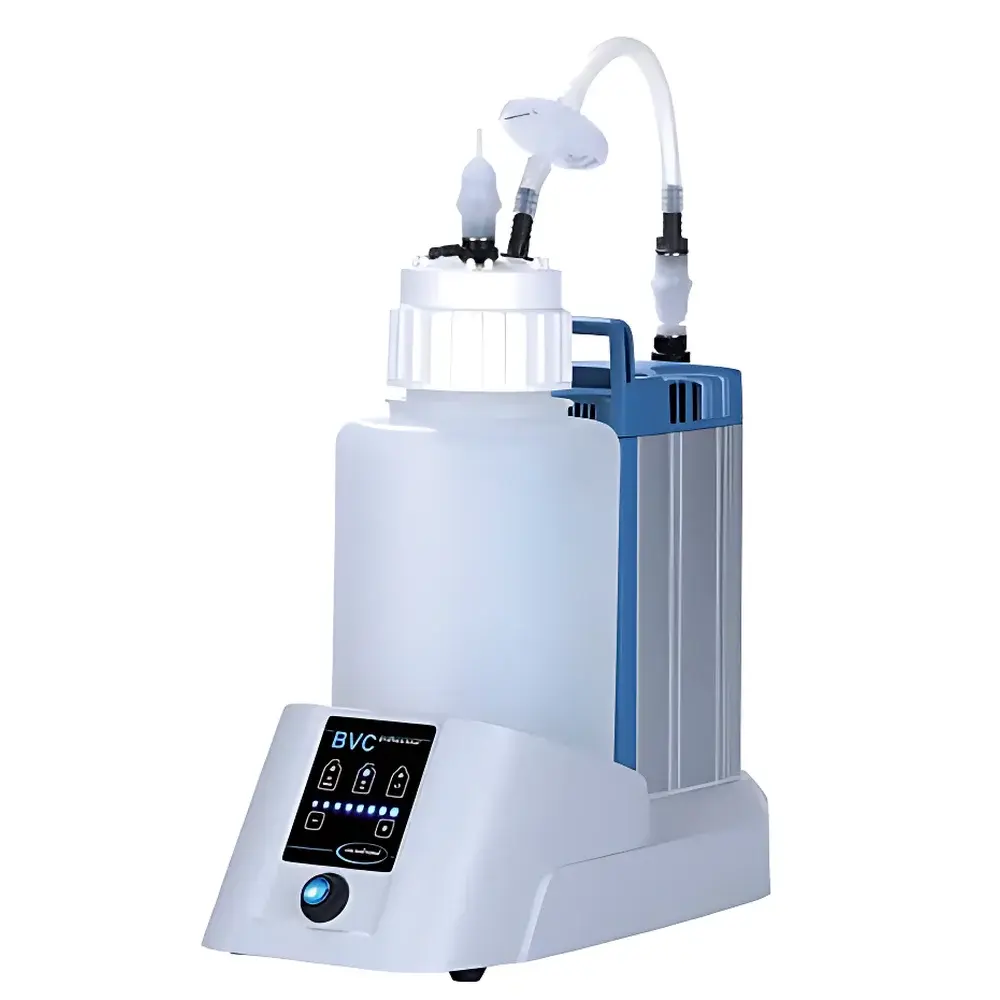
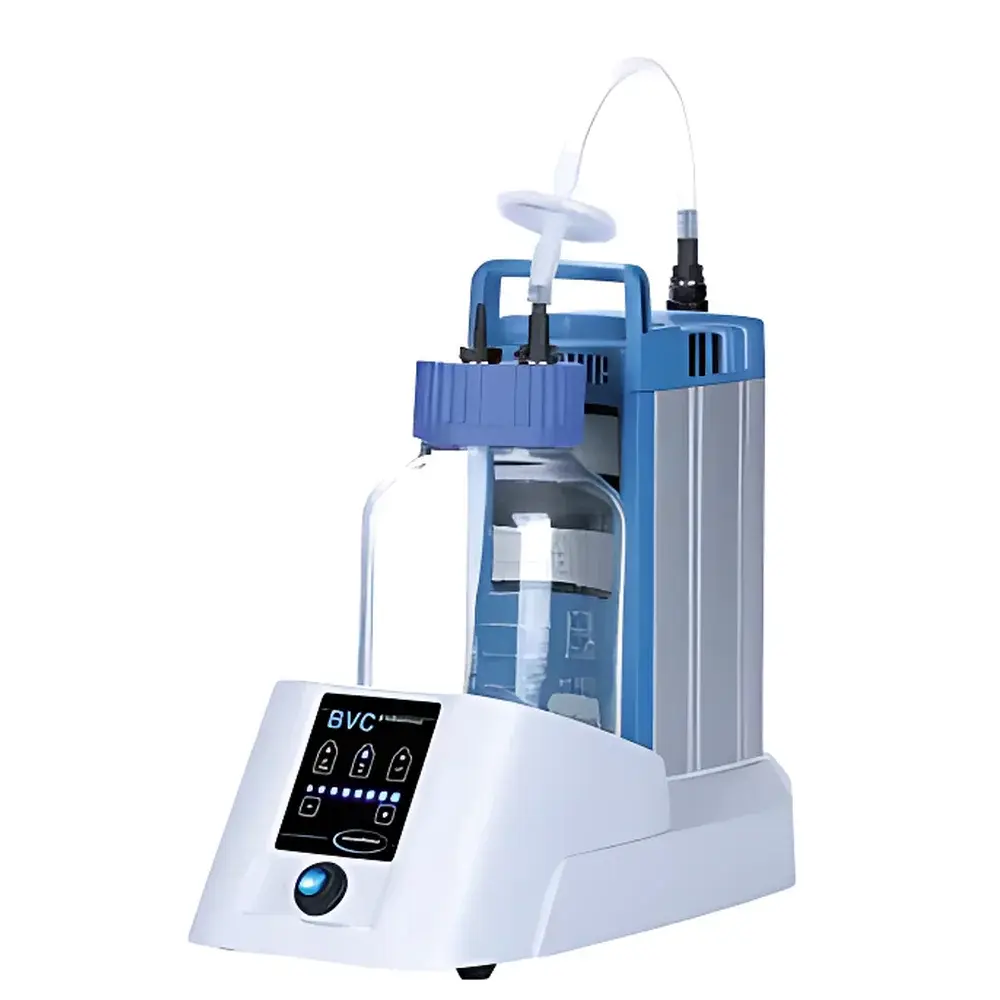
VACUUBRAND BVC professional Vacuum Liquid Handling System
| Brand | VACUUBRAND® |
|---|---|
| Origin | Germany |
| Model | BVC professional |
| Bottle Options | 4 L PP bottle with self-locking quick-connect fitting, PVDF tubing, 0.2 µm sterile filter (autoclavable) |
| Optional Variant | BVC professional G — 2 L borosilicate glass bottle with shatterproof coating and chemical resistance to hypochlorite solutions |
| Compliance | Fully autoclavable components |
Overview
The VACUUBRAND BVC professional Vacuum Liquid Handling System is an engineered solution for safe, precise, and compliant aspiration of biological and hazardous liquids in research laboratories, clinical diagnostics, and pharmaceutical QC environments. Built upon VACUUBRAND’s legacy of high-integrity vacuum technology, the system operates on a controlled negative-pressure principle—using a dedicated diaphragm vacuum pump (not included) to generate suction through chemically resistant fluid pathways. Its core architecture integrates ergonomic design with critical biosafety functions: non-contact capacitive level sensing prevents overfilling; integrated disinfection routing enables automated post-use decontamination of handpieces and tubing; and fully autoclavable assemblies ensure repeatable sterility assurance. Unlike generic vacuum aspirators, the BVC professional is purpose-built for regulated workflows where operator safety, sample integrity, and audit-ready documentation are non-negotiable.
Key Features
- Capacitive non-contact liquid level detection: Continuously monitors fill height in real time without physical contact—eliminating sensor fouling and enabling reliable overflow prevention across variable liquid viscosities and surface tensions.
- Dedicated disinfection circuit: After pump shutdown, the system draws disinfectant (e.g., 0.5% sodium hypochlorite or 70% ethanol) through a separate channel into the handpiece and suction tubing—ensuring validated decontamination without manual disassembly.
- Self-locking quick-connect interface (BVC professional): Secure, one-handed attachment/detachment of 4 L polypropylene collection bottles—reducing exposure risk during hazardous waste transfer and minimizing environmental contamination.
- Chemical-resistant construction: Standard configuration uses PVDF tubing and a 0.2 µm hydrophobic PTFE sterile filter; optional BVC professional G variant substitutes a 2 L borosilicate glass bottle with shatterproof polymer coating—certified for sustained exposure to oxidizing agents including chlorine-based disinfectants.
- Full autoclavability: All wetted components—including bottle, cap, tubing, filter housing, and handpiece—are rated for repeated sterilization at 121 °C, 2 bar (20 min), supporting ISO 13485 and FDA 21 CFR Part 11–aligned validation protocols.
Sample Compatibility & Compliance
The BVC professional is validated for use with aqueous buffers, cell culture media, serum, blood derivatives, and low-viscosity biological suspensions. It meets IEC 61000-6-3 EMC standards and conforms to EN 61010-1 safety requirements for laboratory equipment. Its design supports compliance with biosafety guidelines per CDC/NIH Biosafety in Microbiological and Biomedical Laboratories (BMBL), 6th Edition, and aligns with EU Directive 2009/48/EC for equipment used in containment Level 2 (BSL-2) settings. The inclusion of a 0.2 µm sterile filter ensures particulate and microbial retention upstream of the vacuum source—critical for protecting both pump longevity and facility HVAC integrity.
Software & Data Management
While the BVC professional is a standalone hardware platform without embedded firmware or touchscreen interface, its operational parameters integrate seamlessly into lab-wide digital workflows. Each unit ships with a traceable serial number and full component-level calibration documentation. When paired with VACUUBRAND’s optional VARIO control module (sold separately), users gain access to programmable suction profiles, runtime logging, and event-triggered alerts—data exportable via USB to support 21 CFR Part 11–compliant electronic records. All autoclave cycles and disinfection routines can be documented manually in lab notebooks or imported into LIMS systems using standardized SOP templates provided in the user manual.
Applications
- Aspiration of supernatants and wash buffers during cell culture passaging and transfection procedures.
- Safe removal of infectious waste from biosafety cabinets during virology or mycobacteriology workflows.
- High-throughput liquid decanting in molecular biology labs performing DNA/RNA extraction and NGS library prep.
- Decontamination of pipette tips, centrifuge rotors, and electrophoresis apparatus prior to maintenance.
- Controlled aspiration of corrosive reagents (e.g., bleach solutions) in environmental testing and public health laboratories—enabled by the BVC professional G configuration.
FAQ
Is the BVC professional compatible with vacuum pumps from other manufacturers?
Yes—provided the external pump delivers stable vacuum levels between –0.8 and –0.95 bar and features a gas ballast valve to prevent condensate ingress. VACUUBRAND recommends pairing with its MD 4C NT or RC 6 series diaphragm pumps for optimal flow consistency and chemical compatibility.
Can the 4 L PP bottle be reused after autoclaving?
Yes—the polypropylene bottle, cap, and filter assembly are certified for ≥50 autoclave cycles at 121 °C without dimensional deformation or filter integrity loss, as verified per ASTM F838-22 bacterial challenge testing.
Does the system meet USP <797> requirements for compounding sterile preparations?
While not a Class II biosafety cabinet, the BVC professional supports USP <797> Section 10.1.3 “liquid waste removal” best practices when used inside ISO Class 5 laminar flow hoods—particularly with its non-contact sensing and closed-loop disinfection capability.
What maintenance intervals are recommended?
Inspect tubing and filters before each use; replace the 0.2 µm filter after every 50 L of aspirated volume or immediately following aspiration of protein-rich or viscous fluids. Diaphragm pump oil (if applicable) should be changed per manufacturer schedule—typically every 6 months under continuous operation.



