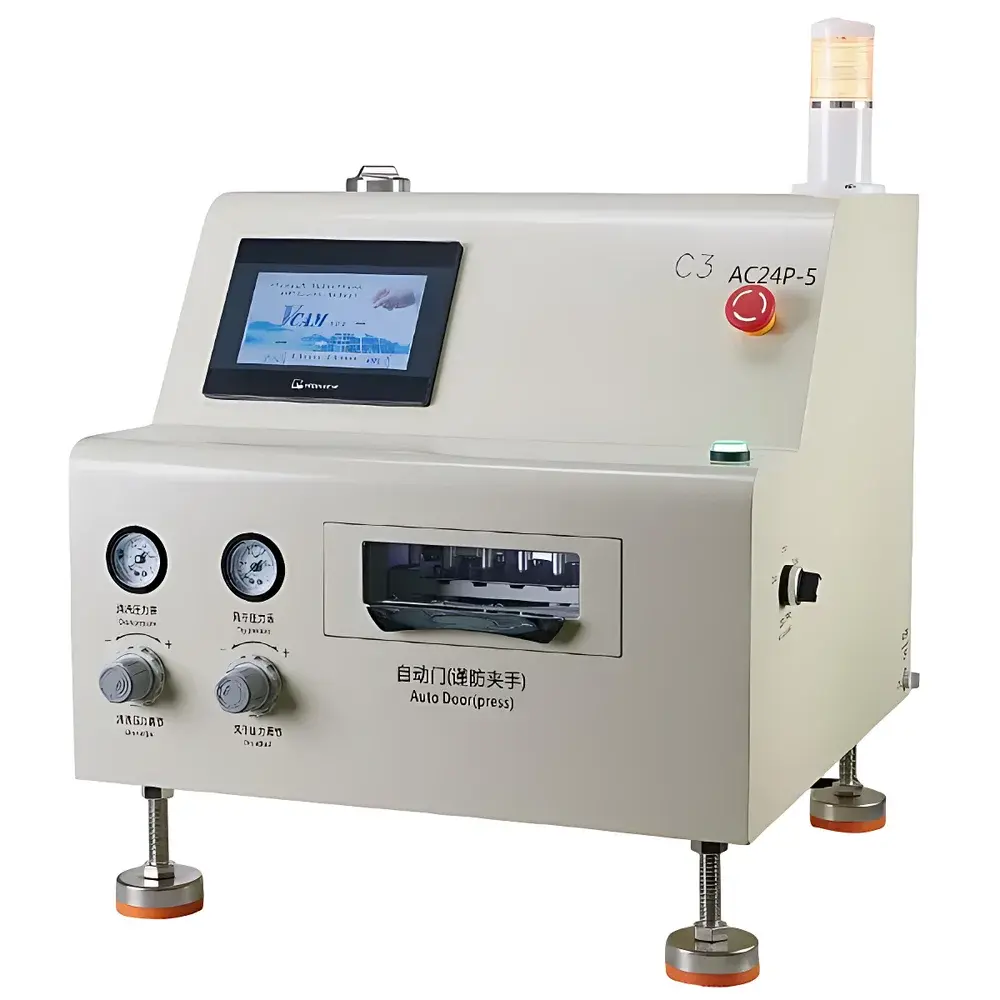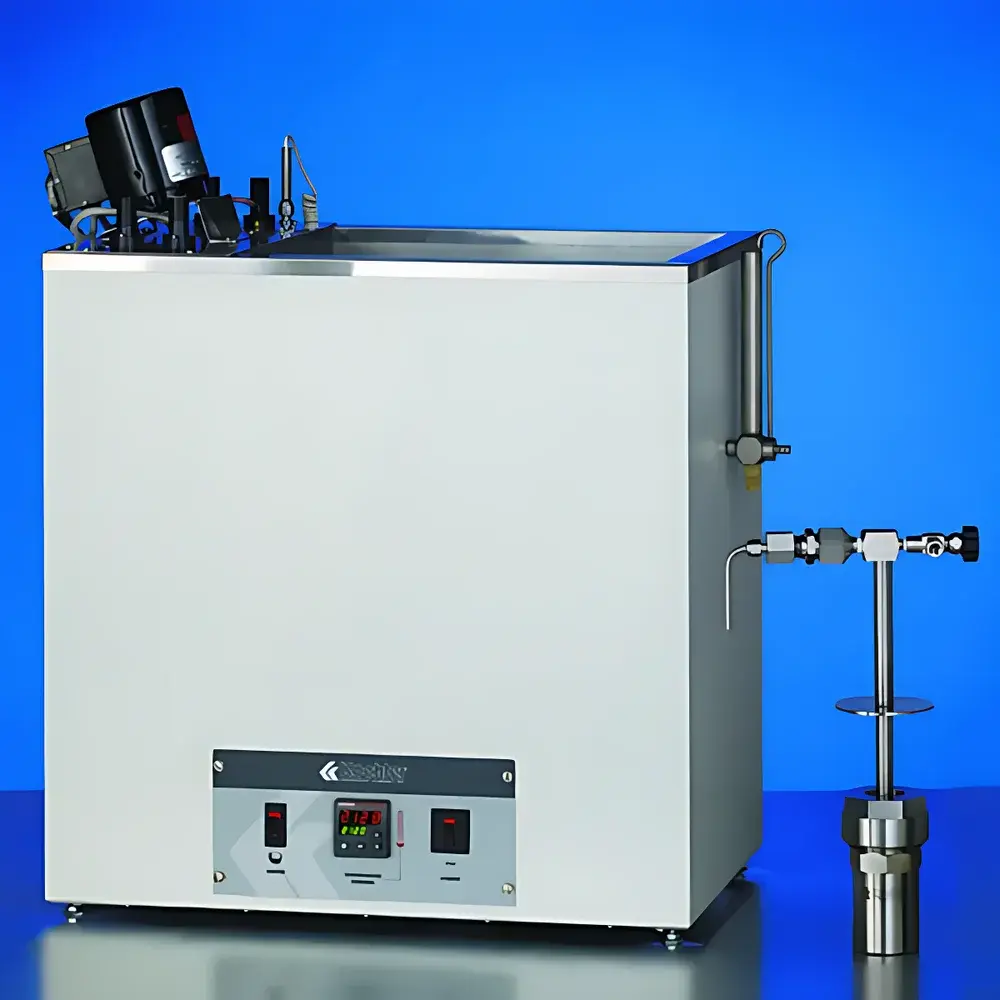
Koehler K10491/K10493/K10404 Oxidation Stability Tester (Induction Period Method)
| Brand | Koehler |
|---|---|
| Origin | USA |
| Model | K10491, K10493, K10404 |
| Temperature Range | Ambient to 121 °C |
| Operating Pressure | 689 kPa (100 psi) |
| Compliance | ASTM D525, ASTM D873, ISO 7536, IP 40, IP 138, GB/T 8018, DIN 51780, DIN 51799, FTM 791-3352/3354, NF M 07-012/07-013 |
| Software | Oxidata™ (Windows-based, multi-channel real-time monitoring) |
| Bath Options | Solid-state (2- or 4-position) or liquid bath (4-position) |
| Safety Features | Over-temperature cutoff, pressure-relief membrane, direct-mounted pressure transducer, integrated pressure tracking and data logging |
Overview
The Koehler K10491, K10493, and K10404 Oxidation Stability Testers implement the induction period method—based on controlled oxygen pressure decay under accelerated thermal stress—to quantitatively assess the oxidative resistance of gasoline, aviation turbine fuels, and related hydrocarbon distillates. The instrument subjects a precisely weighed sample to high-purity oxygen at 689 kPa (100 psi) inside a stainless-steel bomb, then heats the assembly to 100 ± 2 °C in a thermostatically regulated bath. As oxidation proceeds, dissolved oxygen is consumed, causing measurable pressure decline. The induction period—the elapsed time from initiation of heating to the inflection point in the pressure–time curve—is recorded as the primary stability metric. This endpoint correlates directly with the fuel’s propensity to form insoluble gums and sediments during long-term storage, making it a critical quality control parameter for refinery off-gas specifications, military fuel certification (e.g., MIL-DTL-83133), and aviation fuel acceptance per DEF STAN 91-91.
Key Features
- Modular thermal bath architecture: Selectable solid-state (K10491/K10493) or liquid-bath (K10404) configurations supporting 2- or 4-sample parallel testing, enabling throughput scalability without sacrificing temperature uniformity.
- Oxidata™ software platform: Windows-native application providing synchronized real-time acquisition of pressure and temperature across all active channels; supports user-defined alarm thresholds, automatic inflection detection, and timestamped audit trails compliant with GLP/GMP documentation requirements.
- Direct-coupled pressure sensing: High-stability transducer mounted directly on the oxygen bomb manifold eliminates pneumatic line artifacts and minimizes drift, ensuring traceable pressure measurement accuracy within ±0.5 % FS over the full 0–1000 kPa range.
- Dual-stage thermal control: PID-regulated heating system maintains bath setpoint stability within ±0.1 °C over extended runs; integrated over-temperature cutoff (125 °C hard limit) and redundant thermal fusing prevent thermal runaway.
- Fail-safe mechanical design: Each oxygen bomb incorporates a calibrated rupture disc (pressure relief membrane) rated at 1200 kPa and a dual-seal lid mechanism engineered to ISO 13628-5 standards for repeatable sealing integrity.
- Comprehensive data handling: All raw pressure–time and temperature–time profiles are stored natively in CSV and proprietary .oxd formats; export options include PDF reports, printer-ready graphs, and database-compatible XML exports for LIMS integration.
Sample Compatibility & Compliance
The system accommodates standard 50 mL glass sample cups (ASTM D525-compliant geometry) and accepts samples ranging from unleaded gasoline (ASTM D439/D4814) to Jet A-1 and JP-8 fuels. It fully satisfies the apparatus and procedural requirements of ASTM D525 (gasoline), ASTM D873 (aviation gasoline), ISO 7536 (petroleum products), IP 40 (motor gasoline), IP 138 (aviation turbine fuels), GB/T 8018 (Chinese national standard), and multiple defense specifications including FTM 791-3352 (oxidation stability of aviation fuels) and NF M 07-012 (French petroleum standard). All hardware components—including pressure sensors, temperature probes, and bath vessels—are calibrated against NIST-traceable references, and the entire system supports 21 CFR Part 11–compliant electronic signatures when used with validated Oxidata™ configuration.
Software & Data Management
Oxidata™ operates as a dedicated, non-internet-connected control and analysis suite, eliminating cybersecurity exposure while maintaining full functionality. It logs data at user-selectable intervals (1–60 seconds), applies Savitzky–Golay smoothing for noise reduction, and computes the induction period using second-derivative inflection detection per ASTM D525 Annex A1. Audit logs record operator ID, method version, calibration status, and environmental conditions (ambient temperature/humidity). Data files retain embedded metadata (sample ID, test date, bath position, operator signature), and support automated backup to network drives or encrypted USB media. Optional LIMS interface modules enable bidirectional transfer of results via HL7 or ASTM E1384 protocols.
Applications
- Refinery QC labs: Routine screening of finished gasoline batches for conformance to API RP 2510 and ASTM D4814 volatility and stability limits.
- Military logistics depots: Certification of JP-8 and F-24 fuels per MIL-DTL-83133 and DEF STAN 91-91 before field deployment.
- Fuel additive development: Evaluation of antioxidant efficacy (e.g., hindered phenols, amines) through comparative induction period extension studies.
- Research institutions: Mechanistic oxidation kinetics modeling using pressure decay profiles under varied temperature gradients (Arrhenius analysis).
- Third-party testing laboratories: Accredited testing per ISO/IEC 17025:2017, with documented uncertainty budgets covering temperature, pressure, and timing contributions.
FAQ
What standards does this instrument validate against?
ASTM D525, ASTM D873, ISO 7536, IP 40, IP 138, GB/T 8018, DIN 51780, DIN 51799, FTM 791-3352/3354, and NF M 07-012/07-013.
Can the system operate unattended for overnight tests?
Yes—Oxidata™ supports scheduled start/stop, automatic shutdown upon completion, and continuous power-failure recovery with data retention.
Is calibration traceable to national standards?
All pressure transducers and PT100 temperature sensors are supplied with NIST-traceable calibration certificates; annual recalibration services are available through Koehler-authorized service centers.
How many samples can be processed simultaneously?
K10491: 2 samples (solid bath); K10493/K10404: 4 samples (solid or liquid bath, respectively).
Does the software meet FDA 21 CFR Part 11 requirements?
When deployed with validated user access controls, electronic signatures, and audit trail archiving, Oxidata™ supports Part 11 compliance for regulated pharmaceutical and fuel additive testing environments.