Young Instruments ATC 300A Automatic Oxygen Bomb Calorimeter
| Brand | Young Instruments |
|---|---|
| Origin | Zhejiang, China |
| Manufacturer Type | Authorized Distributor |
| Country of Origin | China |
| Model | ATC 300A |
| Pricing | Available Upon Request |
Overview
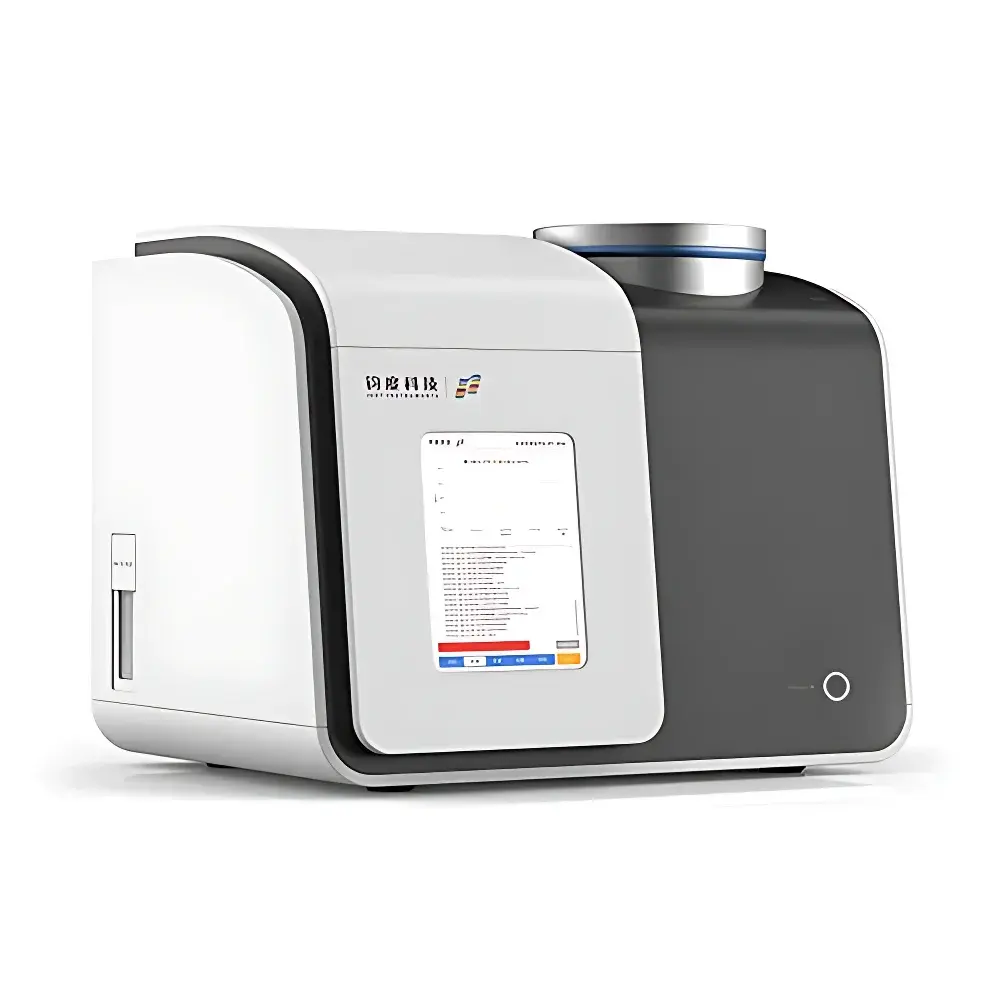
The Young Instruments ATC 300A Automatic Oxygen Bomb Calorimeter is a precision-engineered instrument designed for the accurate and reproducible determination of gross calorific value (GCV), net calorific value (NCV), and bomb calorific value of solid and liquid fuels. It operates on the principle of adiabatic or isothermal oxygen bomb combustion calorimetry—where a precisely weighed sample is combusted under high-pressure oxygen (typically 3.0–3.5 MPa) inside a robust stainless steel or Hastelloy®-lined bomb. The resulting temperature rise in a thermally stabilized water jacket is measured with ultra-high-resolution thermometry (0.0001 °C), enabling traceable quantification of energy release per unit mass. Compliant with internationally recognized standards—including GB/T 213, GB 384, ASTM D240, ASTM D4809, ISO 1928, and EN 14918—the ATC 300A delivers metrologically sound data suitable for quality control, regulatory reporting, and fuel certification in industrial and research laboratories.
Key Features
- Fully automated oxygen bomb handling: motorized bomb lifting/lowering, RFID-based bomb identification, programmable oxygen charging (up to 3.5 MPa) and controlled venting
- Auto-quantified inner bucket water filling via gravimetric or volumetric calibration—eliminating manual pipetting errors
- Thermoelectric (Peltier) cooling/heating water circulation system with dual-stage filtration (≤5 µm particulate retention), enabling rapid thermal equilibration (<60 s) and minimizing ambient drift
- Intelligent ignition diagnostics: real-time continuity monitoring of fuse wire, short-circuit protection, and automatic pre-ignition resistance verification
- 7-inch capacitive touchscreen interface with embedded Linux OS; live graphical display of temperature vs. time curves, heat flow profiles, and calibration status
- Multi-parameter thermal correction engine: automatically compensates for fuse wire combustion enthalpy, nitric acid formation, sulfur oxidation, and hydrogen oxidation contributions
- RS232/RS485 serial architecture supporting multi-instrument daisy-chaining with independent experiment scheduling and timestamped isolation
- Integrated audit trail: all raw sensor readings, operator actions, calibration events, and environmental logs are immutably timestamped and stored locally
- Dual-control architecture: synchronized operation between onboard touchscreen and Windows-based PC software (ATC-Control Suite v4.x), with role-based access control and session mirroring
- Direct digital integration: optional RS232/USB interface for analytical balance input (Sartorius, Mettler Toledo, Ohaus); parallel port and USB printer support for GLP-compliant hardcopy output
Sample Compatibility & Compliance
The ATC 300A accommodates solid fuels (coal, coke, biomass pellets, refuse-derived fuel), liquid hydrocarbons (diesel, biodiesel blends, heating oil), and certified reference materials (CRM) such as benzoic acid (NIST SRM 39j). Sample mass range: 0.5–1.2 g (solids), 0.2–0.8 mL (liquids), with auto-adjusted oxygen fill pressure based on sample type and expected energy density. All operational protocols align with ISO/IEC 17025 requirements for testing laboratories. Data integrity complies with FDA 21 CFR Part 11 (electronic signatures, audit trails, user authentication) when deployed with validated PC software configuration. Routine calibration verification follows ASTM E659 and GB/T 213 Annex B procedures.
Software & Data Management
The ATC-Control Suite provides full lifecycle data management: from method definition (isothermal mode only) and instrument validation (thermal stability, repeatability, drift assessment) to report generation (PDF/CSV/XLSX). Each test record includes raw thermistor voltage traces, corrected ΔT values, baseline interpolation parameters, and uncertainty propagation per GUM (JCGM 100:2008). Historical datasets (>10,000 tests) are indexed by sample ID, operator, date/time, and calibration batch. Search filters support statistical analysis (mean, SD, RSD, confidence intervals) across user-defined groups. Exported files include embedded metadata compliant with ASTM E1447 and ISO 22093 for LIMS interoperability.
Applications
Primary use cases include coal quality assurance in power generation plants; specification compliance testing for ASTM D3699 (kerosene), D975 (diesel), and EN 590; R&D of alternative fuels (HVO, FT-diesel, pyrolysis oils); and routine calorimetric characterization in cement, metallurgical, and municipal waste incineration facilities. The instrument supports both routine QC workflows and method development under ISO 5725-2 precision studies.
FAQ
What combustion standards does the ATC 300A support?
It natively implements GB/T 213, GB 384, ASTM D240, ASTM D4809, ISO 1928, and EN 14918 methodologies.
Is the system compliant with 21 CFR Part 11 for regulated environments?
Yes—when operated with validated ATC-Control Suite v4.x and configured with electronic signatures, audit trails, and role-based permissions.
Can the calorimeter accommodate high-sulfur or corrosive samples?
Yes—the oxygen bomb is available in Hastelloy C-276 alloy option for extended service life with sulfur-rich coals or petcoke.
How is thermal drift minimized during long-duration tests?
Via active Peltier-based water bath control, dual-stage filtration, and real-time slope detection algorithms that trigger dynamic baseline correction.
What is the minimum detectable energy change?
Based on 0.0001 °C resolution and typical heat capacity (~10,500 J/K), the system achieves <1.05 J sensitivity under standard operating conditions.