
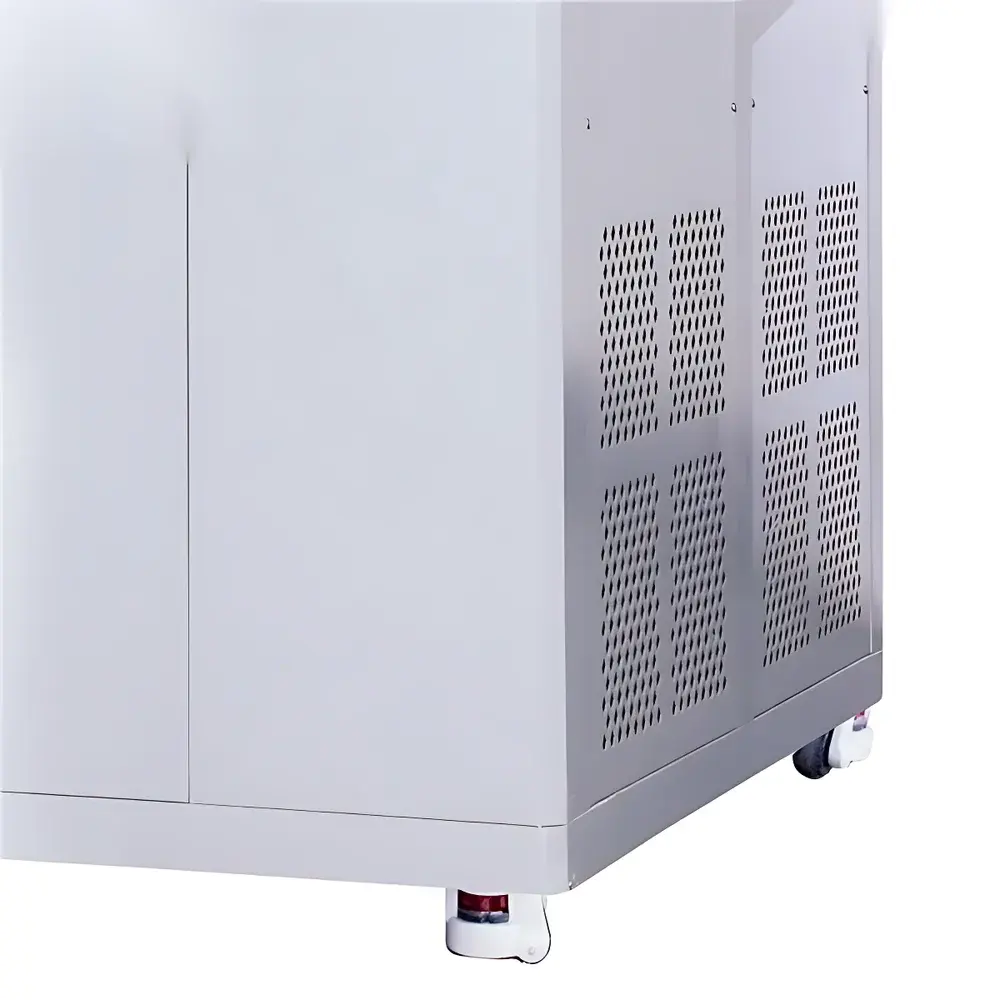
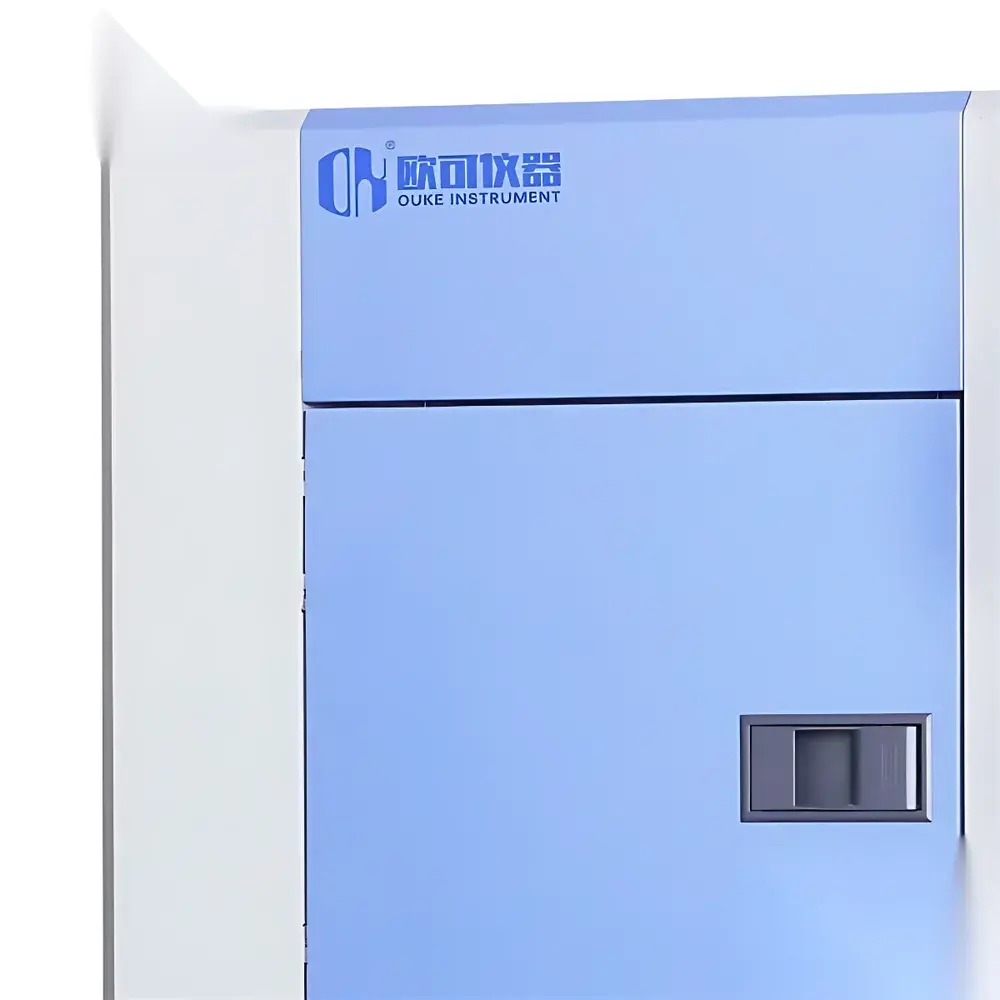
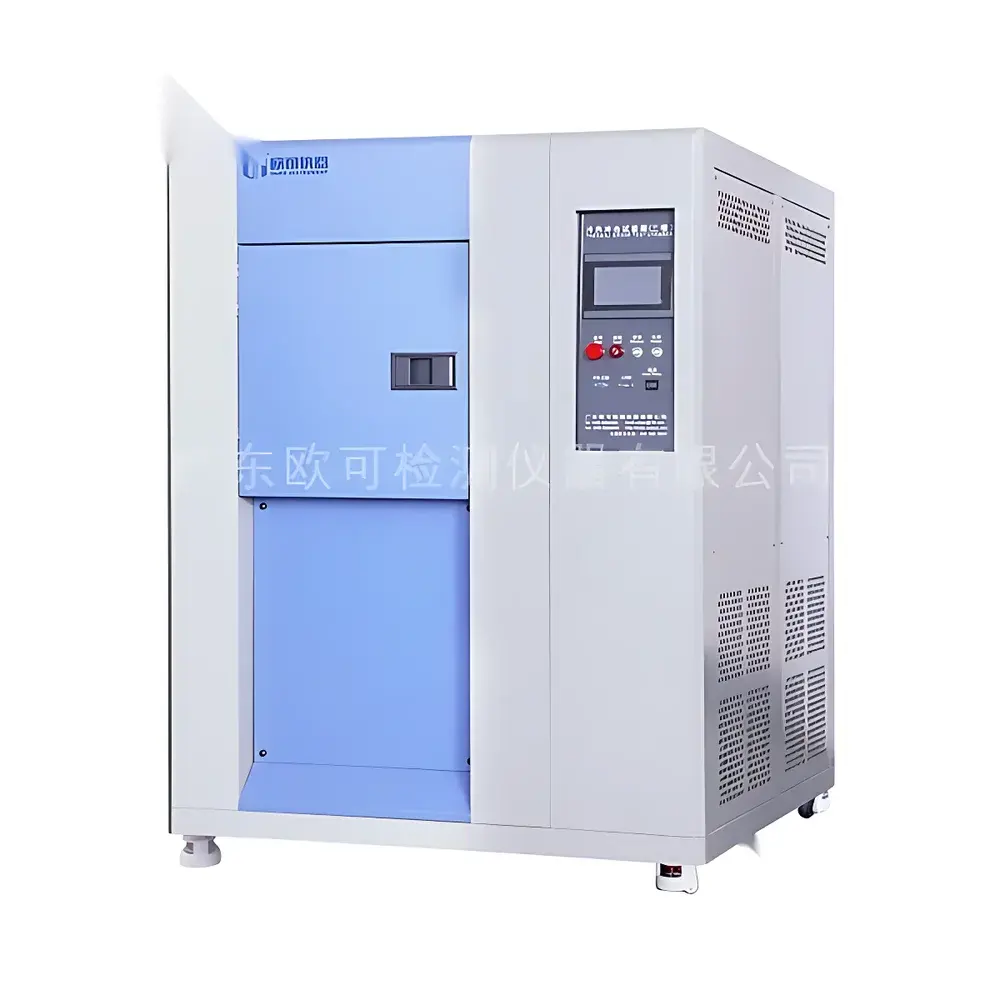
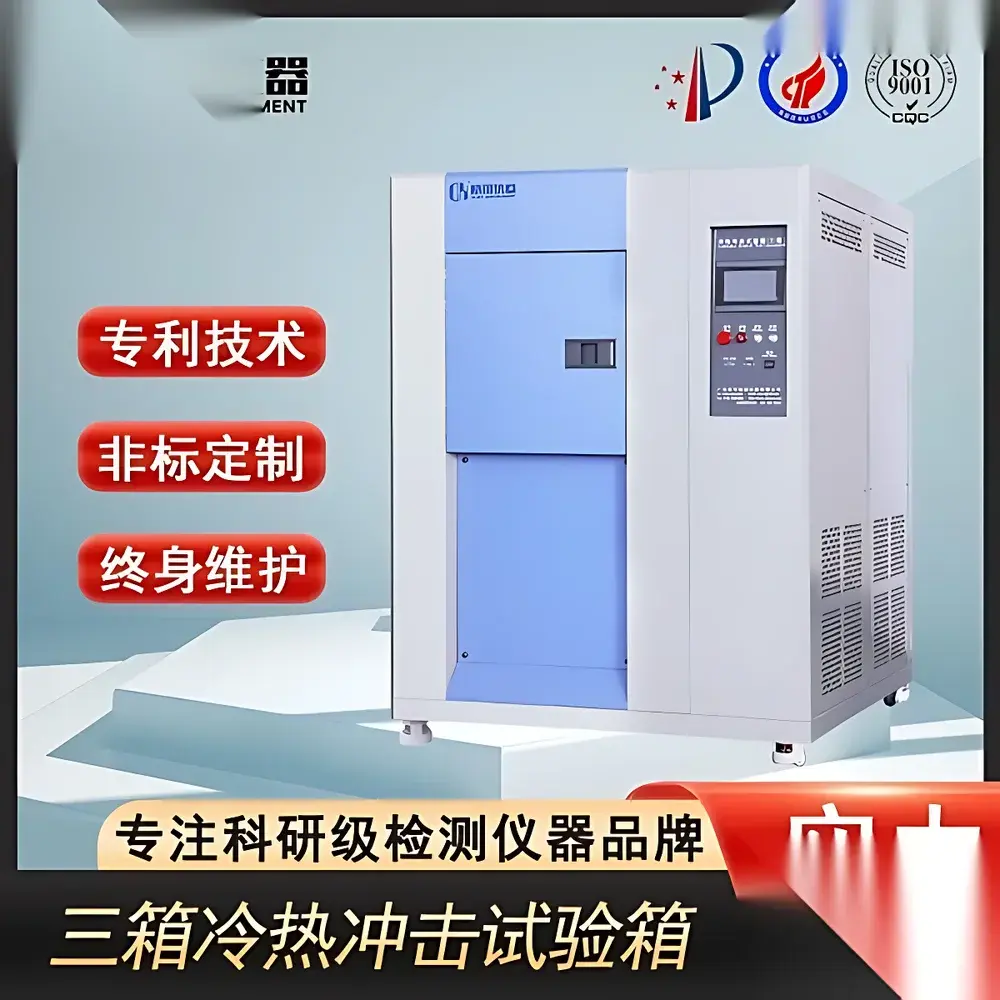
Thermal Shock Test Chamber – Industrial-Grade Environmental Test System
| Brand | OEM / Custom-Built |
|---|---|
| Origin | Imported (Global Sourcing) |
| Manufacturer Type | Authorized Distributor |
| Pricing | USD 11,200 (FOB) |
Overview
The Thermal Shock Test Chamber is an industrial-grade environmental test system engineered for rapid, high-reproducibility thermal cycling between extreme temperature extremes. It operates on the principle of controlled, accelerated thermal transients—subjecting test specimens to abrupt transitions between high-temperature and low-temperature environments within seconds. This enables evaluation of material integrity, interfacial adhesion, solder joint reliability, and packaging robustness under conditions simulating real-world thermal stress events such as power-on/off cycles, altitude changes, or operational duty shifts. Unlike standard temperature-humidity chambers, this system is purpose-built for thermal shock, not gradual ramping—making it indispensable for qualification testing in aerospace, automotive electronics, semiconductor packaging, and military-grade component validation.
Key Features
- Two-chamber (hot/cold) and three-chamber (hot/cold/test) configurations available—optimized for specimen stability (three-chamber) or cycle speed (two-chamber with motorized transfer basket)
- Dual-stage cascade refrigeration system using imported semi-hermetic compressors (Germany-sourced), enabling stable operation at −70 °C to +180 °C with ≤5 s transfer time between zones
- Evaporative condenser-based energy coupling architecture ensures efficient heat exchange between high- and low-temperature circuits, minimizing compressor load fluctuations
- Water-cooled condensing unit (external cooling tower required: 10 m³/h flow rate, 30–35 °C inlet water temperature) for sustained high-capacity thermal extraction
- Energy modulation control logic dynamically adjusts refrigerant mass flow and compressor staging to maintain setpoint accuracy ±0.5 °C while reducing long-term OPEX and mechanical wear
- Stainless steel 304 interior chamber with insulated double-wall construction and silicone-sealed access door for thermal integrity and corrosion resistance
- Programmable controller with Ethernet interface supporting Modbus TCP and optional RS-485 for integration into factory MES or lab automation networks
Sample Compatibility & Compliance
This chamber accommodates specimens up to 500 mm × 500 mm × 500 mm (W×D×H) and supports rigid, semi-rigid, and assembled electronic modules—including PCBAs, MEMS sensors, hermetically sealed packages, and polymer-encapsulated connectors. It is fully compliant with internationally recognized thermal shock and temperature change standards, including:
- IEC 60068-2-14:2021 (Test N: Change of temperature)
- MIL-STD-810H Method 503.6 (Temperature Shock)
- GJB 150.5A-2009 (Chinese Military Standard for Temperature Shock)
- GB/T 2423.22–2012 (Environmental testing – Part 2: Tests – Test N: Change of temperature)
- QC/T 17–1992 (Automotive component environmental endurance requirements)
- EIA-364-32 (Thermal shock testing for electrical connectors)
All configurations support GLP-compliant audit trails when paired with optional data logging firmware (EN 61000-4-30 Class A compliance for embedded controller EMC performance).
Software & Data Management
The integrated controller provides real-time monitoring of chamber temperatures, transfer timing, compressor status, and alarm history via a 7-inch capacitive touchscreen HMI. Optional PC-based software (Windows 10/11 compatible) enables full test sequence scripting, multi-channel data acquisition (up to 8 external thermocouple inputs), and automated report generation per ISO/IEC 17025 Annex A.2 requirements. Data export supports CSV, PDF, and XML formats; audit logs include user ID, timestamp, parameter modifications, and system event flags—all traceable for FDA 21 CFR Part 11 compliance when configured with electronic signature modules and role-based access control.
Applications
- Qualification of avionics components per DO-160 Section 4 (Temperature Shock)
- Reliability screening of BGA and CSP packages during JEDEC JESD22-A106 qualification
- Validation of adhesive bond strength in multi-material assemblies (e.g., metal-to-ceramic, plastic-to-metal)
- Accelerated life testing of automotive ECUs under ISO 16750-4 environmental stress profiles
- Failure analysis root cause determination for popcorning, delamination, or solder fatigue in encapsulated devices
- Pre-compliance verification for IEC 60747-19 (discrete semiconductor devices) and IEC 61851-23 (EV charging systems)
FAQ
What is the difference between two-chamber and three-chamber thermal shock configurations?
Two-chamber systems use a motorized basket to shuttle samples between hot and cold zones—offering faster transition times but introducing mechanical vibration. Three-chamber systems isolate the test zone, eliminating motion-induced stress and enabling static mounting for precision metrology applications.
Is external cooling infrastructure mandatory?
Yes. The dual-stage refrigeration system requires a dedicated closed-loop cooling water supply (10 m³/h, 30–35 °C inlet) to reject condenser heat. Air-cooled variants are not offered due to insufficient thermal capacity for sustained −70 °C operation.
Can the chamber be validated for IQ/OQ/PQ protocols?
Yes. Full documentation packages—including FAT/SAT checklists, sensor calibration certificates (NIST-traceable Pt100 probes), and uncertainty budgets—are provided. On-site installation qualification and operational qualification support are available upon request.
Does the system support custom test profiles beyond standard specifications?
Yes. The controller supports user-defined ramp rates, dwell times, cycle counts, and conditional branching (e.g., “if chamber temp deviates >1.0 °C, pause and log error”). Profiles may be imported/exported via USB or network.
What maintenance intervals are recommended for long-term reliability?
Compressor oil analysis every 2,000 operating hours; refrigerant leak detection and filter-drier replacement annually; evaporator coil cleaning every 6 months in high-particulate environments.
Related Products



