
Quick Temperature Change Environmental Test Chamber Manufacturer in Fuzhou
No specifications available.
Overview
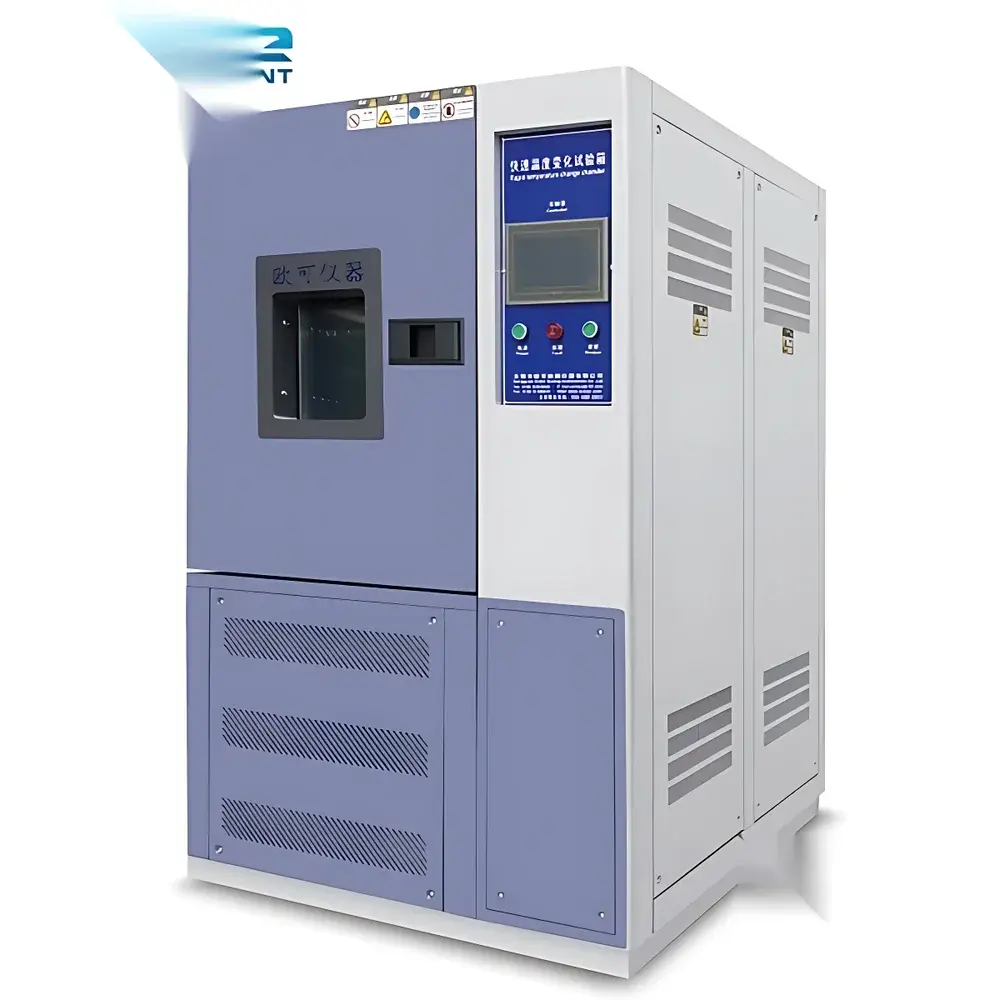
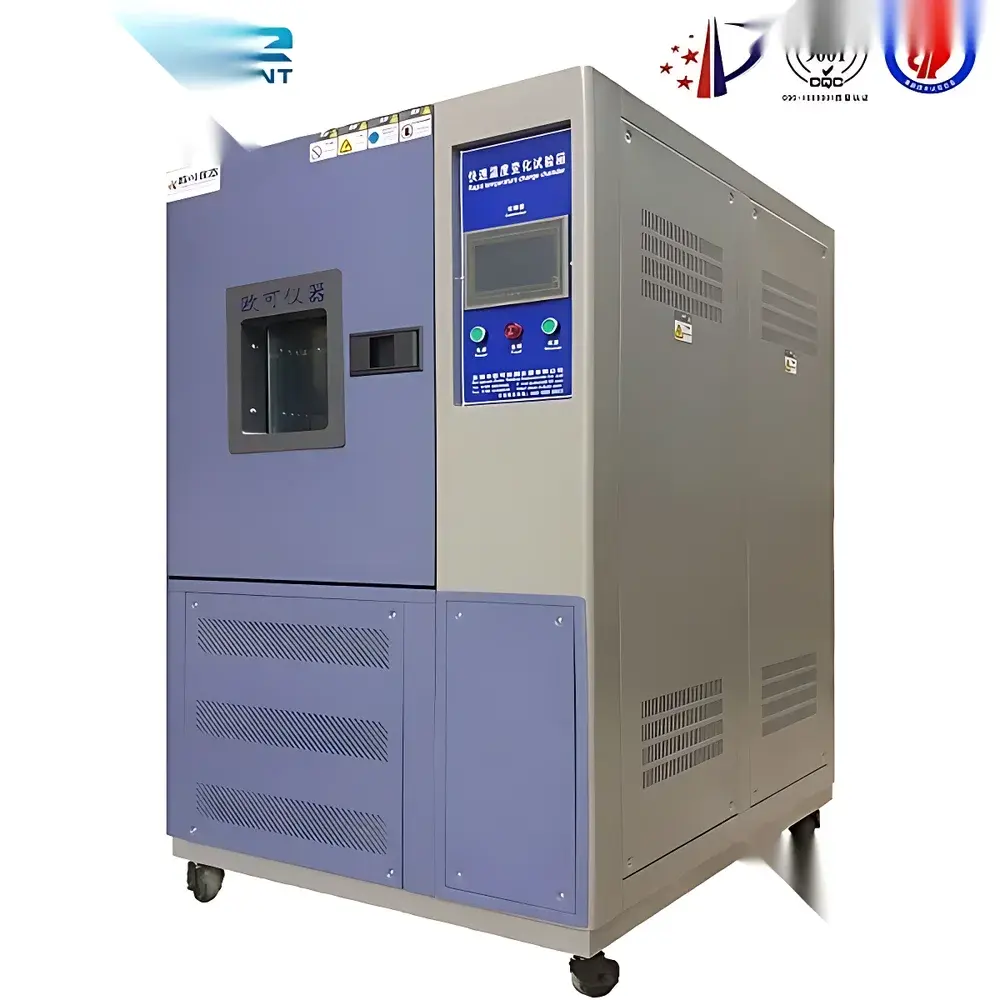
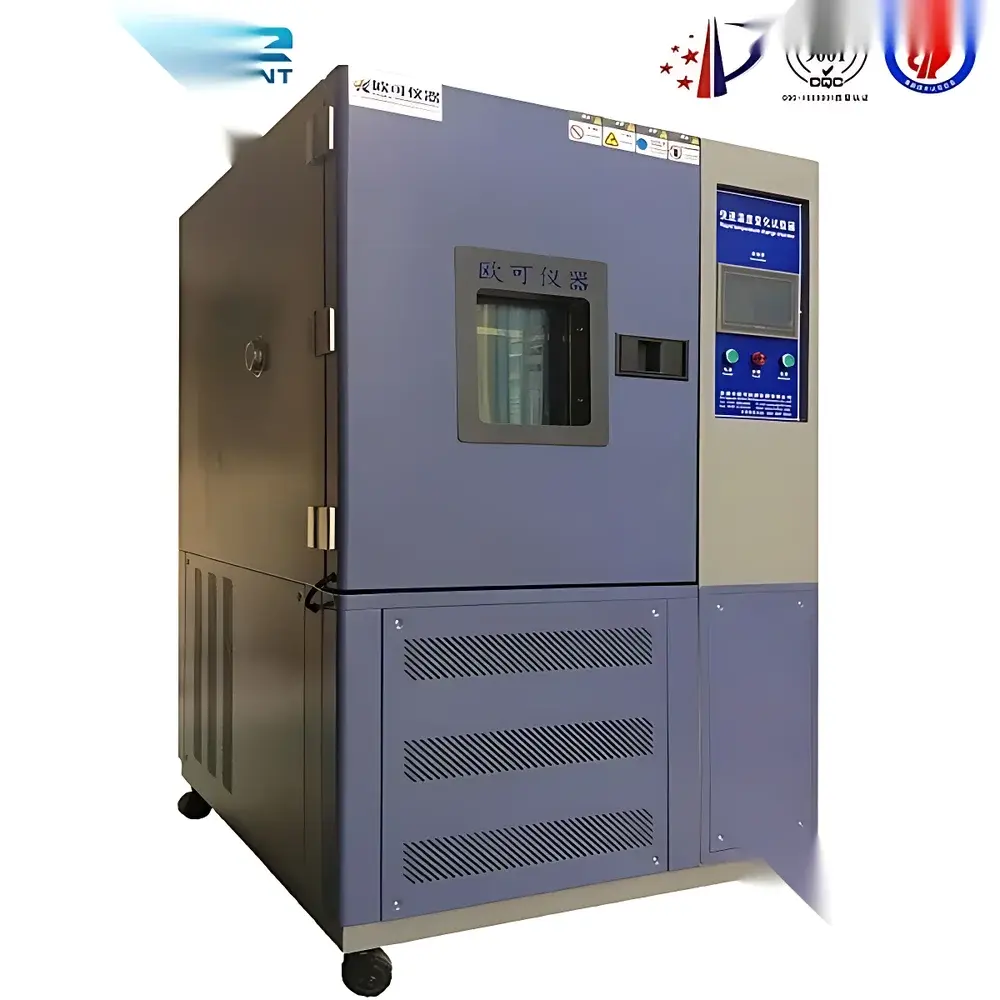
The Quick Temperature Change Environmental Test Chamber is an engineered thermal stress screening system designed for accelerated reliability validation of electronic components, automotive modules, aerospace assemblies, and industrial materials. It operates on the principle of controlled, high-rate thermal cycling—inducing repetitive expansion and contraction within test specimens to expose latent defects such as microcracks in solder joints, interfacial delamination in multilayer PCBs, coefficient-of-thermal-expansion (CTE) mismatch failures, and moisture-related degradation in encapsulated devices. Unlike standard temperature-humidity chambers, this system delivers programmable ramp rates up to 25 °C/min across a wide operational envelope (–70 °C to +150 °C; 5–98% RH), enabling precise simulation of real-world thermal shock profiles defined in MIL-STD-810H Method 503.7, IEC 60068-2-14, and JEDEC JESD22-A106B. Its architecture supports both steady-state conditioning and dynamic thermal transition testing under reproducible, auditable conditions compliant with GLP and GMP documentation requirements.
Key Features
- Wide operational range: –70 °C to +150 °C temperature span with optional humidity control from 5% to 98% RH
- Selectable rapid thermal ramp rates: 5, 10, 15, 20, or 25 °C/min—configurable per test segment via profile programming
- High-stability control performance: ±0.5 °C temperature fluctuation, ±2.5% RH humidity fluctuation (at ≥75% RH)
- Uniform thermal distribution: ±2 °C temperature uniformity and ±3.0% RH humidity uniformity across working volume
- Corrosion-resistant internal chamber constructed from SUS#304 stainless steel with seamless welded corners
- Hermetically sealed dual-stage refrigeration system using environmentally compliant refrigerants R404A and R23
- Intuitive 7-inch LCD touchscreen controller with bilingual (English/Chinese) interface and real-time data logging
- Robust power configuration: AC 380 V ±5%, 50 Hz ±0.5 Hz, 3-phase 5-wire supply (2.5 m cable included)
Sample Compatibility & Compliance
The chamber accommodates diverse sample geometries through four standard internal volumes (225 L, 408 L, 800 L, and 1000 L), all customizable to client-specified dimensions. Internal airflow design ensures laminar, non-turbulent circulation—critical for maintaining thermal homogeneity during high-speed transitions. The system meets or exceeds technical requirements specified in GB/T 2423.1–2022 (cold testing), GB/T 2423.2–2022 (dry heat), GB/T 2423.22–2012 (temperature change), and GJB 150.3–2009 (military high-temp), GJB 150.4–2009 (low-temp), and GJB 150.5–2009 (temperature shock). All control firmware supports audit-ready event logging—including setpoint changes, alarm triggers, and sensor calibration timestamps—to facilitate FDA 21 CFR Part 11 compliance when integrated into validated laboratory workflows.
Software & Data Management
The embedded controller enables creation of multi-step thermal profiles with independent ramp/soak parameters, dwell times, and humidity modulation sequences. Data is recorded at user-selectable intervals (1–60 seconds) and stored internally for up to 30 days. Export options include USB flash drive (CSV format) and optional Ethernet connectivity for remote monitoring via TCP/IP. Optional PC-based software provides advanced analysis tools: derivative calculation of dT/dt for ramp verification, statistical process control (SPC) charts for chamber stability assessment, and automated report generation aligned with ISO/IEC 17025 documentation standards. All logged data includes digital signatures, time stamps, and operator ID fields to satisfy traceability requirements in regulated industries.
Applications
This chamber is routinely deployed in failure analysis labs for pre-screening newly manufactured batches prior to field deployment; in R&D settings for evaluating thermal fatigue resistance of polymer composites and ceramic substrates; and in qualification testing per AEC-Q200 for passive components and AEC-Q100 for ICs. Typical use cases include: burn-in stress screening of power modules, validation of conformal coating integrity under cyclic condensation, evaluation of battery pack thermal management systems, and verification of optical sensor housing dimensional stability across extreme ambient gradients. Its ability to replicate transient environmental excursions makes it indispensable for HALT/HASS protocols where identifying design margin limits is essential.
FAQ
What is the maximum achievable ramp rate with full load capacity?
Ramp rates are verified at no-load condition per IEC 60068-3-5. Under nominal load (≤70% chamber volume occupied), ramp performance remains within ±10% of rated specification when using recommended mounting fixtures and airflow clearance.
Does the system support humidity control below 10% RH?
Standard configuration covers 20–98% RH. Sub-10% RH operation requires optional dehumidification upgrade with desiccant wheel or cryogenic drying module—quoted separately.
Can test profiles be exported/imported between multiple units?
Yes. Profile files (.prf) are fully interoperable across identical model series and retain all parameter metadata, including alarm thresholds and sensor compensation values.
Is remote access and alarm notification supported?
Ethernet-enabled models support SNMP traps, email alerts, and Modbus TCP integration for SCADA-level supervision—available as factory-installed option.
What calibration documentation is provided upon delivery?
Each unit ships with NIST-traceable temperature and humidity calibration certificates (per ISO/IEC 17025), including as-found/as-left data for primary sensors and verification reports against GB/T 5170.2 and GB/T 5170.5.



