
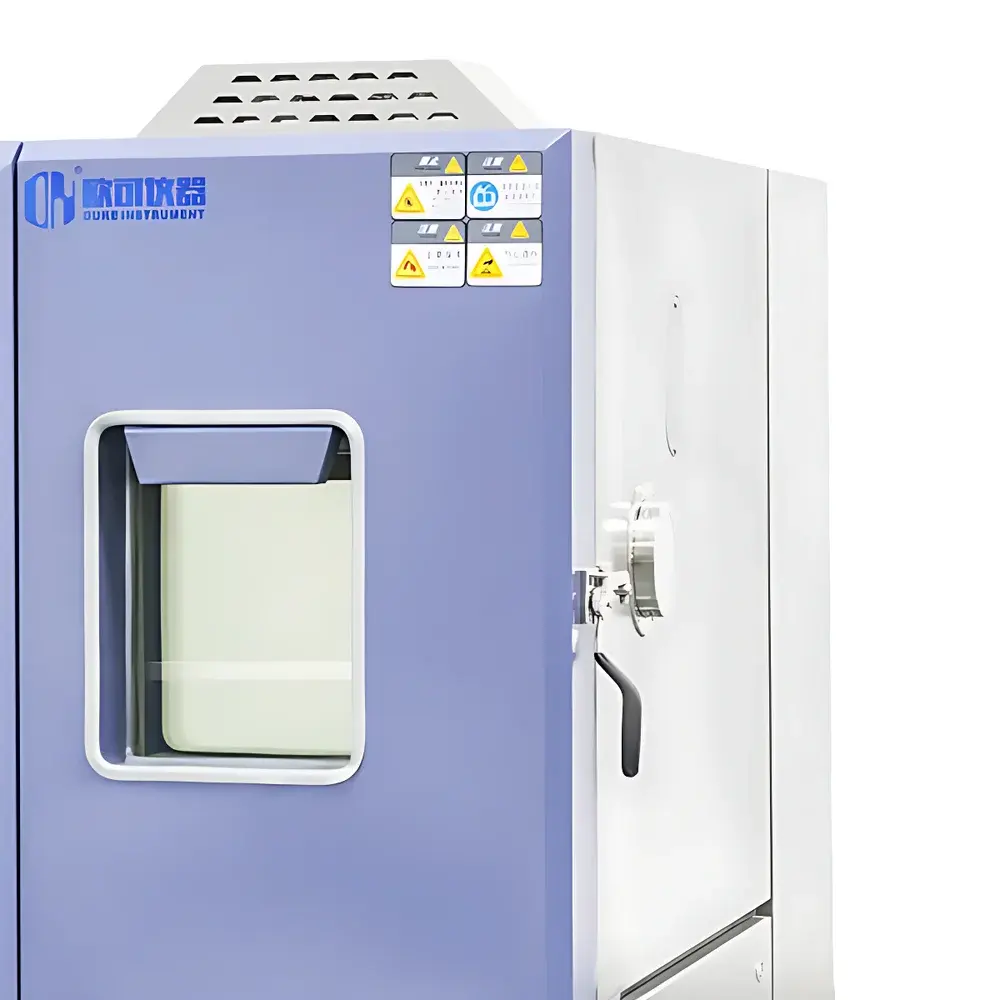
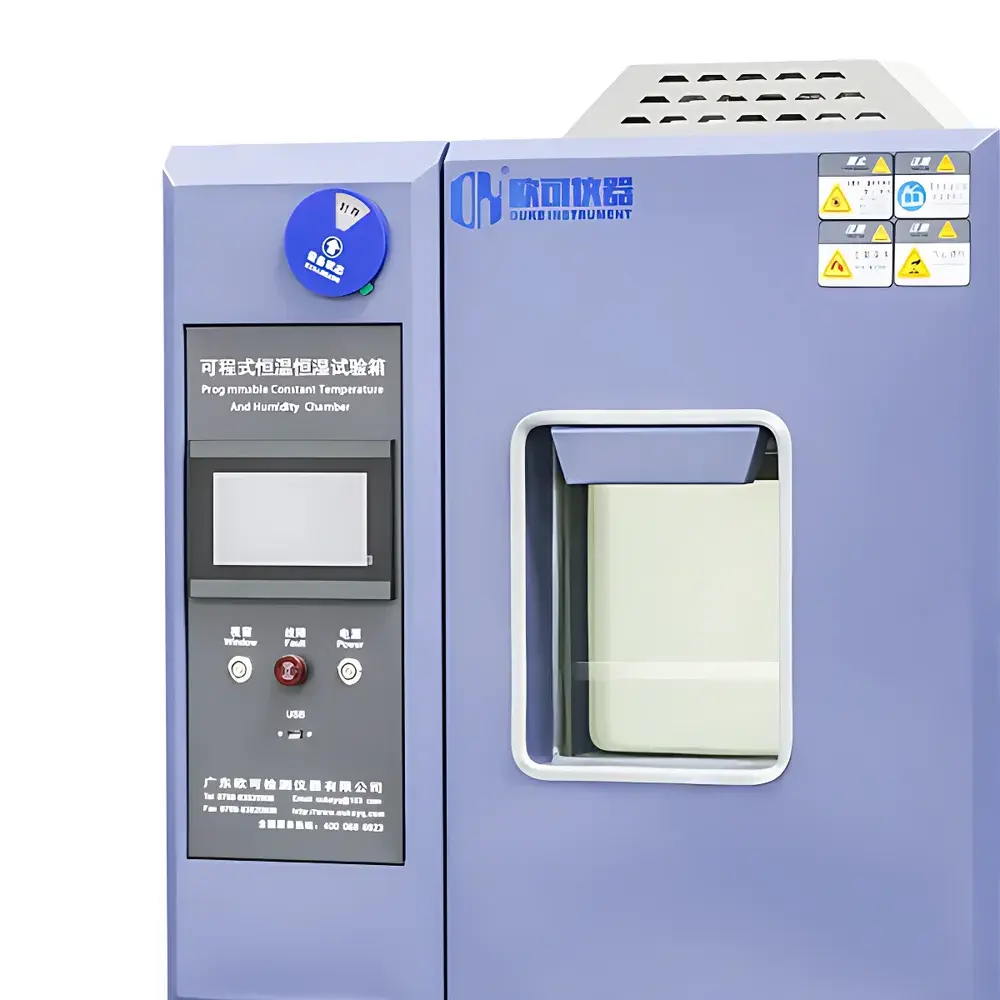
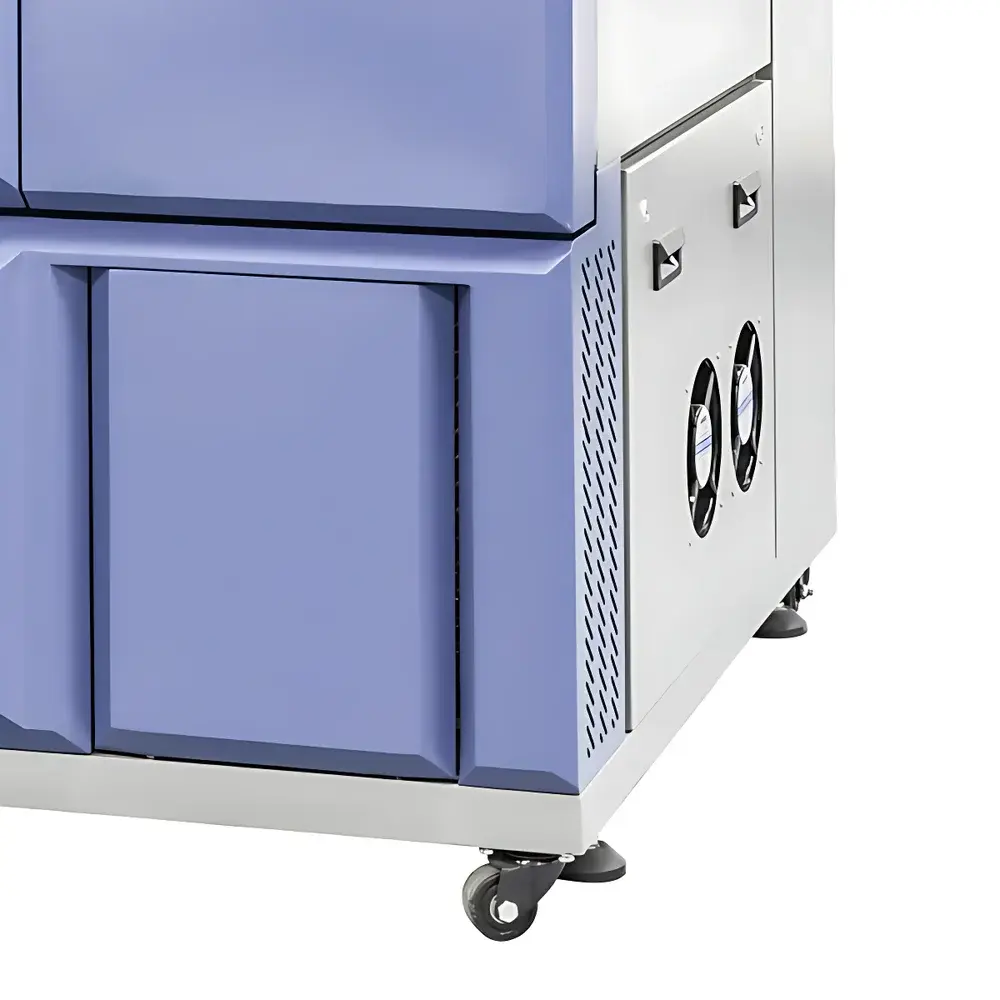
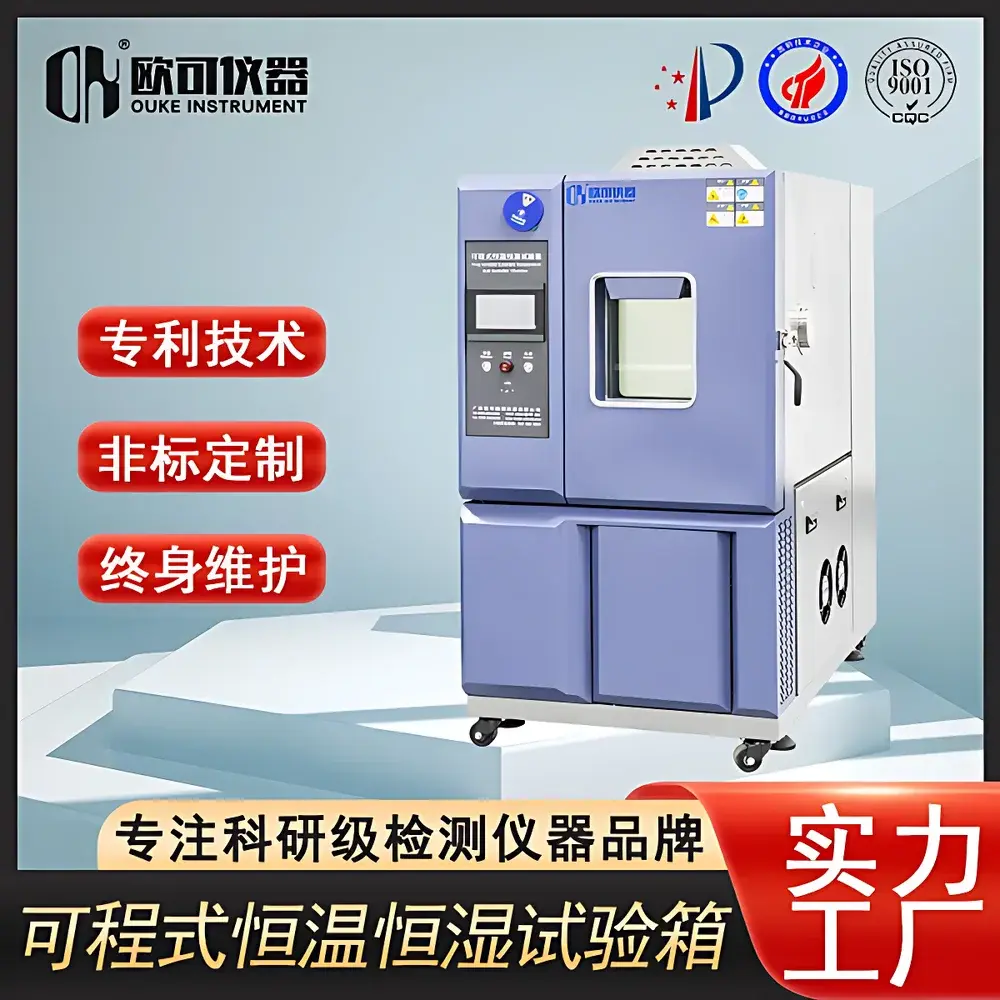
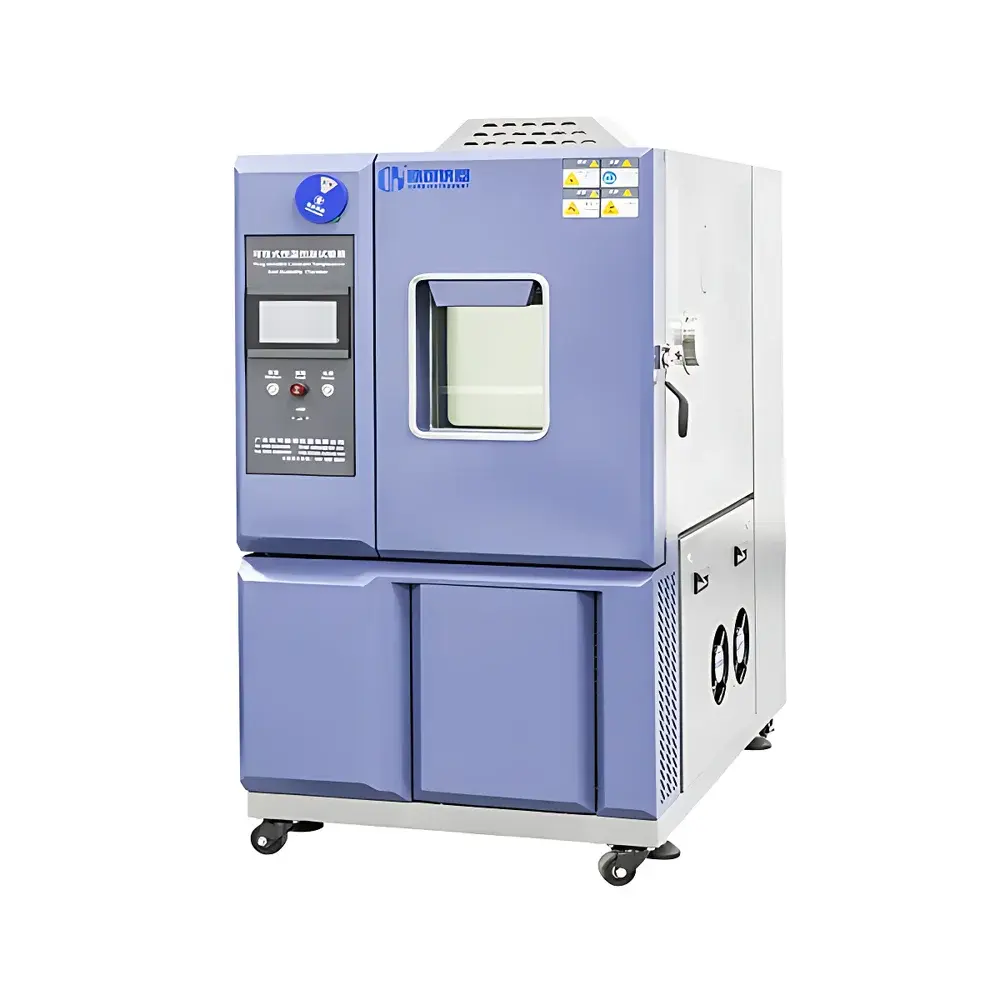
OK Instrument OK-TH-225.1 Temperature and Humidity Controlled Environmental Test Chamber
| Brand | OK Instrument |
|---|---|
| Origin | Guangdong, China |
| Manufacturer Type | Direct Manufacturer |
| Product Category | Domestic |
| Model | OK-TH-225.1 |
| Instrument Type | Benchtop |
| Condensation Method | Air-Cooled |
| Temperature Range | −40 °C to +150 °C |
| Humidity Range | 20–98 % RH (at 10–85 °C) |
| Temperature Deviation | ≤ ±2 °C |
| Temperature Uniformity | ±1.0 °C |
| Temperature Fluctuation | ±1 °C (high-temp), ±2 °C (low-temp) |
| Humidity Deviation | ≤ ±3 % RH |
| Humidity Fluctuation | ±3 % RH |
| Heating Rate | 1.0–3.0 °C/min |
| Internal Chamber Dimensions | 600 × 750 × 500 mm (W × H × D) |
Overview
The OK Instrument OK-TH-225.1 is a benchtop temperature and humidity controlled environmental test chamber engineered for precision simulation of climatic conditions in laboratory and quality assurance environments. It operates on the principle of forced-air convection combined with dual-loop PID control architecture—separately regulating refrigeration, heating, and humidification subsystems—to maintain stable, repeatable thermal and hygroscopic profiles across its operational range. Designed to meet the physical property testing requirements of electronics, automotive components, aerospace hardware, polymer materials, and battery systems, the chamber supports standardized environmental stress screening per ISO 16750-4, IEC 60068-2-1 (cold), IEC 60068-2-2 (dry heat), IEC 60068-2-30 (damp heat cyclic), and GB/T 2423 series test protocols. Its compact footprint and air-cooled refrigeration system make it suitable for integration into QC labs, R&D facilities, and production line validation stations where space efficiency and operational reliability are critical.
Key Features
- 7-inch high-resolution color TFT touchscreen interface with 800 × 480 pixel resolution, supporting both English and Chinese language modes and intuitive icon-based navigation.
- Programmable multi-segment controller supporting ≥100 user-defined test cycles; each segment allows independent configuration of temperature setpoint, humidity setpoint, dwell time, ramp rate (0.5–3.0 °C/min), and loop count (1–999).
- Real-time graphical display of temperature and humidity trends with zoom/pan functionality, enabling immediate visual assessment of profile fidelity during test execution.
- Dual-sensor redundancy architecture: high-accuracy capacitive humidity sensor (±2 % RH typical) and PT100 Class A temperature probe (±0.15 °C at 25 °C), both calibrated traceable to NIST standards.
- Integrated fault diagnostics with audible/visual alarms and on-screen error code mapping (e.g., E01 = compressor overload, E05 = low water level, E12 = sensor open-circuit), facilitating rapid root-cause identification.
- Onboard data logging with non-volatile memory capacity exceeding 12 months of continuous 1-minute interval recording; export via USB flash drive in CSV or Excel-compatible format.
- Standard RS485 Modbus RTU communication port for integration with SCADA systems, PLC networks, or centralized IoT monitoring platforms compliant with MQTT or OPC UA frameworks.
Sample Compatibility & Compliance
The OK-TH-225.1 accommodates samples up to 600 × 750 × 500 mm within its 225 L stainless-steel (AISI 304) working chamber. The interior features rounded corners and seamless welds to minimize contamination traps and support GMP-aligned cleaning procedures. External casing utilizes powder-coated cold-rolled steel with 100 mm thick polyurethane insulation (thermal conductivity ≤ 0.022 W/m·K), ensuring energy-efficient operation and minimal external surface temperature rise. The chamber complies with electromagnetic compatibility requirements per EN 61326-1 and safety standards per IEC 61010-1. While not certified for Class I Div 1 hazardous locations, it is routinely deployed in GLP- and ISO/IEC 17025-accredited laboratories performing environmental qualification per MIL-STD-810H Method 502.7 (temperature), Method 507.6 (humidity), and UL 1604 (non-hazardous industrial use).
Software & Data Management
No proprietary PC software is required for basic operation—the touchscreen provides full local control and data visualization. For advanced analysis and regulatory compliance, optional Windows-based OK-LogView software enables remote supervision, automated report generation (PDF/HTML), and audit-trail-enabled user access logs meeting FDA 21 CFR Part 11 requirements (electronic signatures, change history, role-based permissions). All logged data includes timestamped metadata (operator ID, chamber ID, test ID, calibration status), and raw CSV exports retain millisecond-level time stamps for post-test statistical process control (SPC) evaluation. Data integrity is preserved through cyclic redundancy check (CRC) verification during USB transfer and automatic write-protection upon power loss.
Applications
- Thermal cycling and damp heat testing of printed circuit assemblies (PCBAs) per IPC-J-STD-004 and JEDEC JESD22-A104.
- Environmental aging of lithium-ion battery cells and modules under variable SOC and temperature-humidity stress conditions.
- Dimensional stability evaluation of injection-molded thermoplastics (e.g., PBT, PA66) under accelerated moisture absorption protocols.
- Validation of automotive electronic control units (ECUs) per ISO 16750-4 Annex C (combined temperature/humidity endurance).
- Stability testing of pharmaceutical packaging materials under ICH Q1A(R2) long-term and accelerated storage conditions.
- Pre-conditioning of optical sensors and MEMS devices prior to functional performance characterization.
FAQ
What is the maximum allowable sample mass for thermal stability during rapid ramping?
For optimal uniformity during 3 °C/min heating or cooling, total sample mass should not exceed 15 kg to avoid thermal inertia-induced deviation from programmed profiles.
Can the chamber operate continuously at 98 % RH below 10 °C?
No—humidification is disabled below 10 °C to prevent condensation-induced sensor drift and internal frost formation; operation at sub-10 °C requires dry-air purge mode.
Is third-party calibration certification available?
Yes—OK Instrument offers UKAS-accredited calibration services (ISO/IEC 17025) for temperature and humidity sensors, including as-found/as-left reports and uncertainty budgets.
Does the unit support Ethernet or Wi-Fi connectivity?
Not natively; however, RS485-to-Ethernet gateways (e.g., Moxa EDS-205A) may be integrated externally for TCP/IP-based telemetry and control.
What maintenance intervals are recommended for long-term accuracy?
Humidity sensor recalibration every 12 months; refrigerant pressure and condenser coil inspection every 6 months; door gasket integrity check before each high-humidity test cycle.



