
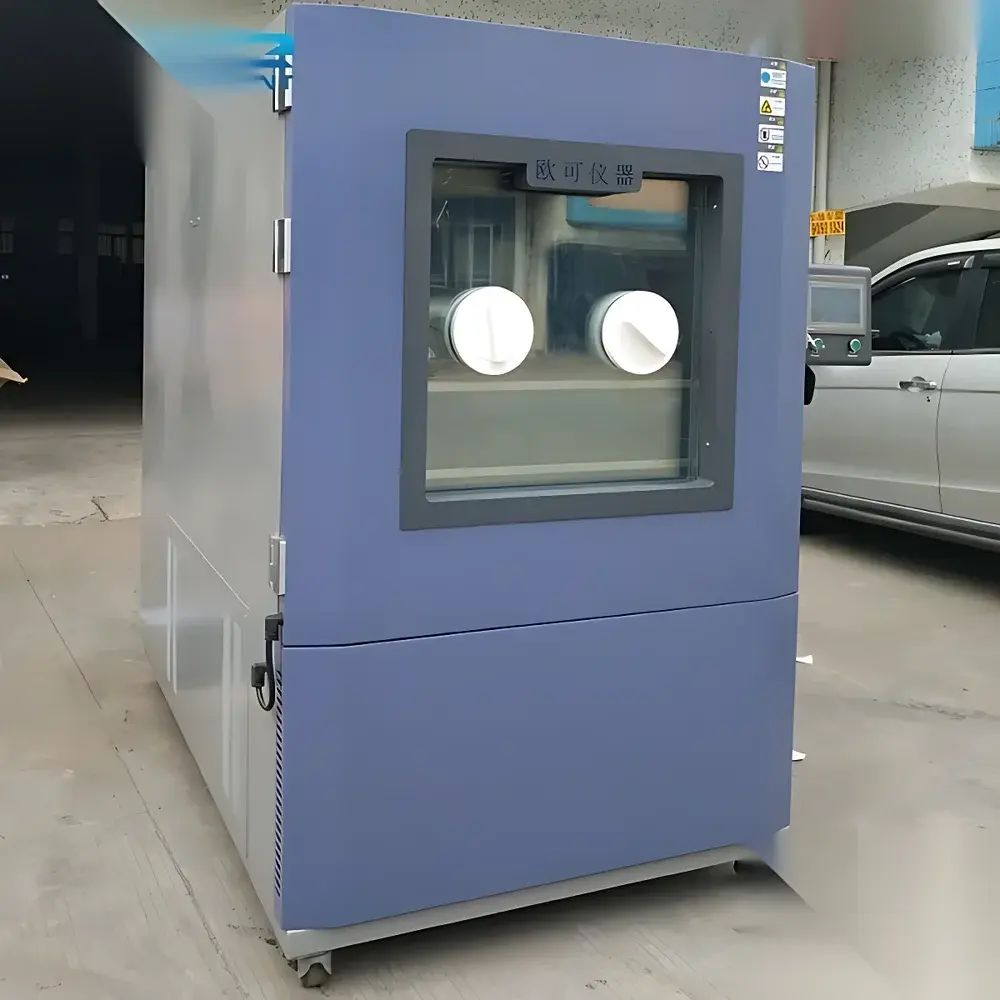
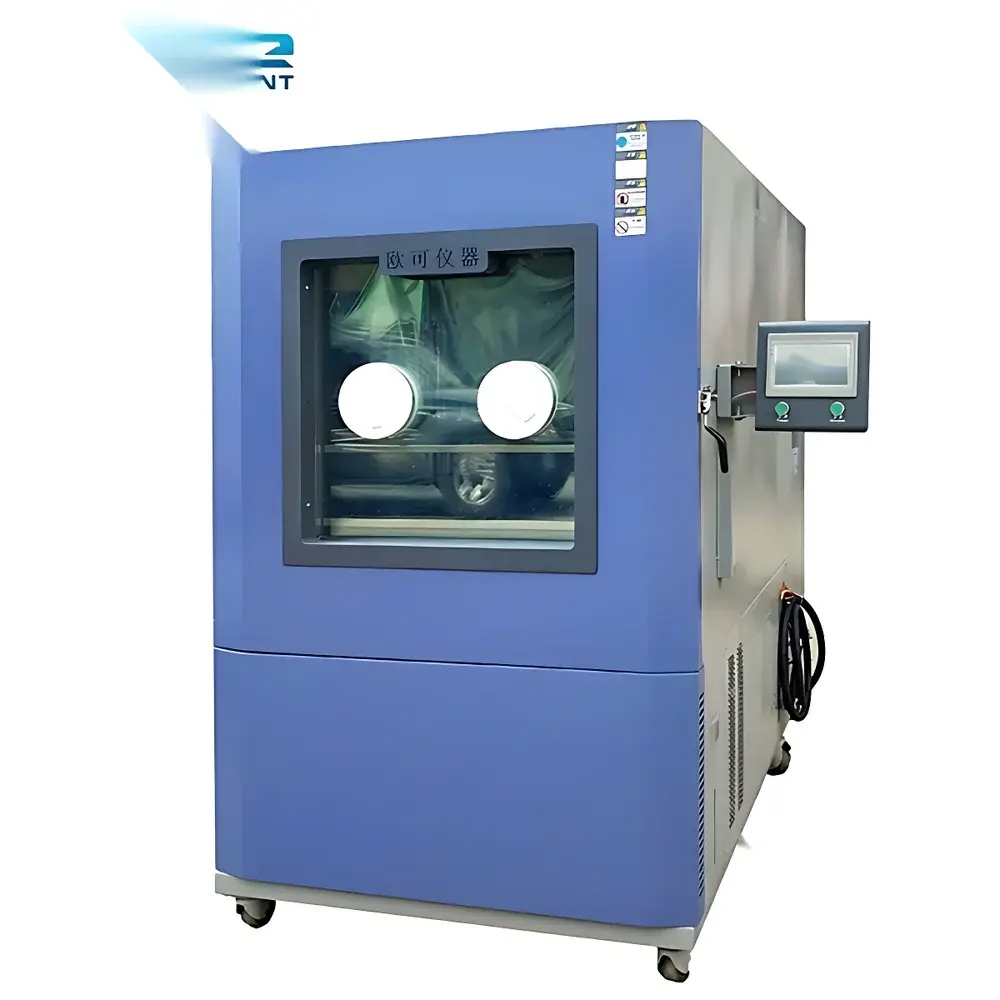
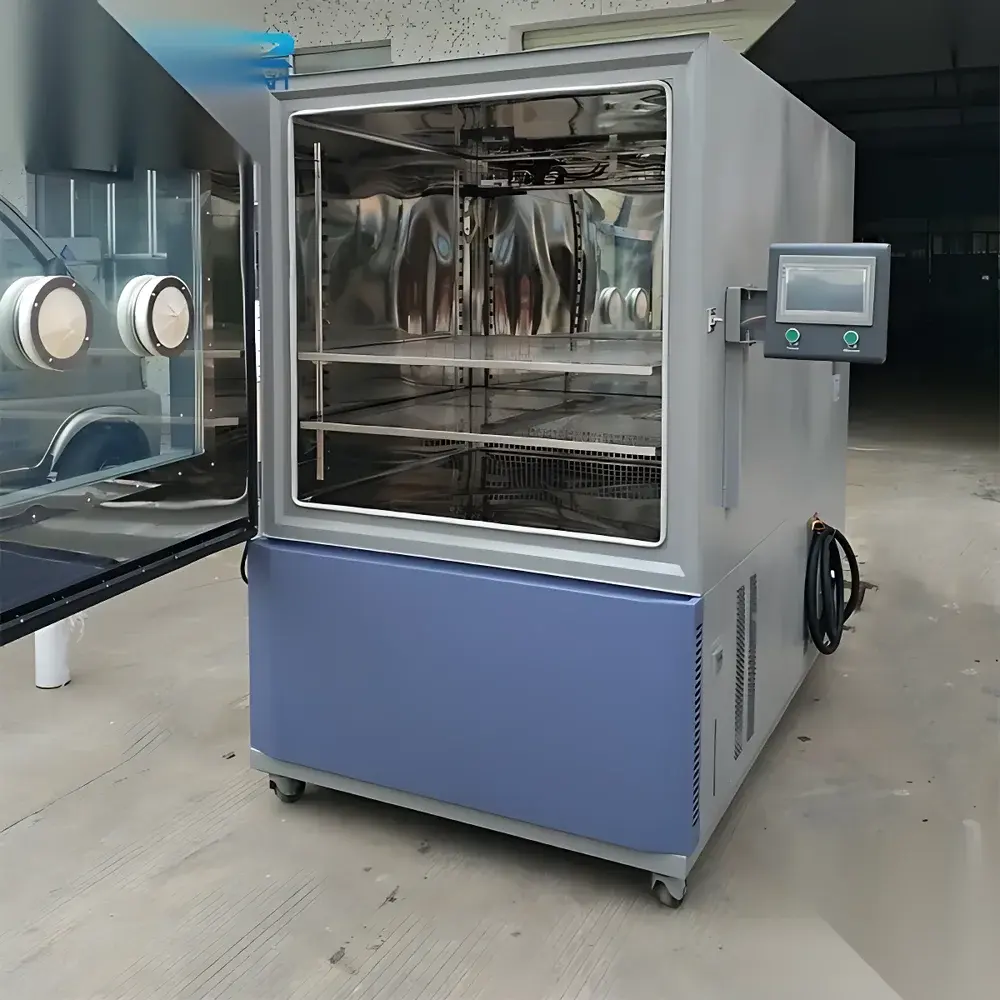
Plastic Environmental Test Chamber – TEMI880 Touchscreen Temperature & Humidity Controlled Chamber
| Key | Temperature Range: −40 °C to +150 °C (optional −120 °C to +150 °C) |
|---|---|
| Humidity Range | 30–98% RH (optional 5–98% RH) |
| Temp. Resolution | 0.01 °C |
| Humidity Resolution | 0.1% RH |
| Temp. Uniformity | ±0.5 °C |
| Temp. Deviation | ≤±2 °C |
| Humidity Deviation | ≤±2.5% RH |
| Heating Rate | 2.0–3.0 °C/min |
| Cooling Rate | 0.7–1.0 °C/min |
| Control System | TEMI880 color LCD touchscreen controller |
| Internal Construction | SUS304 stainless steel |
| Power Supply | 380 V ±5%, 50 Hz, 3P+N+G (custom 220 V available) |
Overview
The Plastic Environmental Test Chamber is a precision-engineered temperature and humidity controlled chamber designed for accelerated environmental stress testing of polymeric materials, plastic components, packaging systems, and composite specimens under rigorously defined climatic conditions. Built upon the principles of thermodynamic equilibrium control and psychrometric regulation, this chamber maintains stable, repeatable, and traceable thermal-hygrometric profiles across wide operating ranges—enabling standardized evaluation of dimensional stability, warpage, moisture absorption, embrittlement, and aging behavior in plastics per international test protocols.
Key Features
- Robust dual-wall construction with inner chamber fabricated from electropolished SUS304 stainless steel for corrosion resistance, cleanability, and long-term stability under cyclic humidity exposure.
- TEMI880 intelligent color LCD touchscreen controller with intuitive graphical interface, multi-segment programmable ramp-soak profiles, real-time data logging, and password-protected parameter locking for GLP-compliant operation.
- High-efficiency refrigeration system with cascade compressor design (for sub-zero models), optimized for stable cooling performance at inlet water temperatures between 10–28 °C and supply pressure of 0.1–0.3 MPa.
- Precise humidity generation via steam humidification and dehumidification through refrigerated coil condensation, delivering consistent RH control from 30% to 98% RH (expandable to 5–98% RH with optional configuration).
- Independent verification of temperature uniformity (±0.5 °C) and deviation (≤±2 °C), as well as humidity deviation (≤±2.5% RH), validated under no-load, ambient reference conditions (25 °C ±6 °C) per IEC 60068-3-5 and GB/T 5170.2–1996 / GB/T 5170.5–1996 calibration methodologies.
- Modular structural design supporting custom internal dimensions and walk-in configurations, accommodating large-volume plastic prototypes, automotive interior assemblies, or bulk packaging validation studies.
Sample Compatibility & Compliance
This chamber is engineered for non-destructive, non-intrusive environmental conditioning of thermoplastics (e.g., PP, PE, ABS, PC), thermosets (e.g., epoxy, phenolic), elastomers, foams, and laminated composites. It fully supports compliance-driven test execution aligned with ASTM D618 (conditioning of plastics), ISO 291 (standard atmospheres for conditioning and testing), ISO 62 (determination of water absorption), and IEC 60068-2 series (environmental testing—part 2: tests). All operational parameters—including heating/cooling rates (reported as air-average values, not specimen surface rates)—are specified in accordance with GB 2423.1–1989 (cold), GB 2423.2–1989 (dry heat), GB 2423.22–1987 (temperature change), and GB 11158–1989 (high-temperature chamber requirements).
Software & Data Management
The TEMI880 controller provides embedded data recording at user-defined intervals (1s–3600s), with onboard storage capacity for ≥10,000 hours of timestamped temperature/humidity traces. Export is supported via USB flash drive in CSV format for post-processing in MATLAB, Excel, or LIMS environments. Optional Ethernet or RS485 interfaces enable integration into centralized lab monitoring systems. Audit trail functionality—including operator ID, parameter changes, alarm events, and manual overrides—is configurable to meet FDA 21 CFR Part 11 and ISO/IEC 17025 documentation requirements for accredited testing laboratories.
Applications
- Accelerated aging studies of plastic enclosures, connectors, and housings under combined thermal-hygrometric stress.
- Validation of moisture barrier performance in pharmaceutical blister packaging and food-grade polymer films.
- Dimensional stability assessment of injection-molded parts before and after hygrothermal cycling (e.g., ISO 291 preconditioning).
- Qualification of automotive interior trim materials per GMW15635 or Ford CETP 00.00-L-467.
- Supporting QC/QA release testing for medical device polymer components under ISO 10993-12 environmental preconditioning guidelines.
- Research-level investigation of glass transition shifts (Tg) in amorphous polymers using controlled humidity ramping protocols.
FAQ
What is the difference between “air-average temperature change rate” and “specimen temperature change rate”?
Air-average rate refers to the mean thermal gradient measured by chamber-mounted sensors during programmed ramps; it does not reflect actual specimen thermal inertia or surface response time, which depend on mass, geometry, and thermal conductivity.
Can this chamber be used for freeze-thaw cycling of plastic-coated cables?
Yes—provided the specimen load remains within chamber thermal mass limits and airflow is unobstructed; recommended practice includes pre-conditioning cables to nominal ambient prior to initiation of low-temperature cycles.
Is calibration certification included with delivery?
Factory calibration reports per GB/T 5170.2 and GB/T 5170.5 are provided; NIST-traceable third-party calibration and IQ/OQ documentation are available as optional services.
Does the chamber support continuous operation at −70 °C?
Models equipped with cascade refrigeration systems are rated for continuous operation at −70 °C; sustained ultra-low operation requires verified cooling water supply stability and periodic defrost cycle management.
How is humidity accuracy maintained at low temperatures (e.g., below 0 °C)?
At sub-zero dew points, humidity control transitions to frost-point referencing; RH values below 10% are derived indirectly via calibrated chilled-mirror dew point measurement and psychrometric conversion.



