
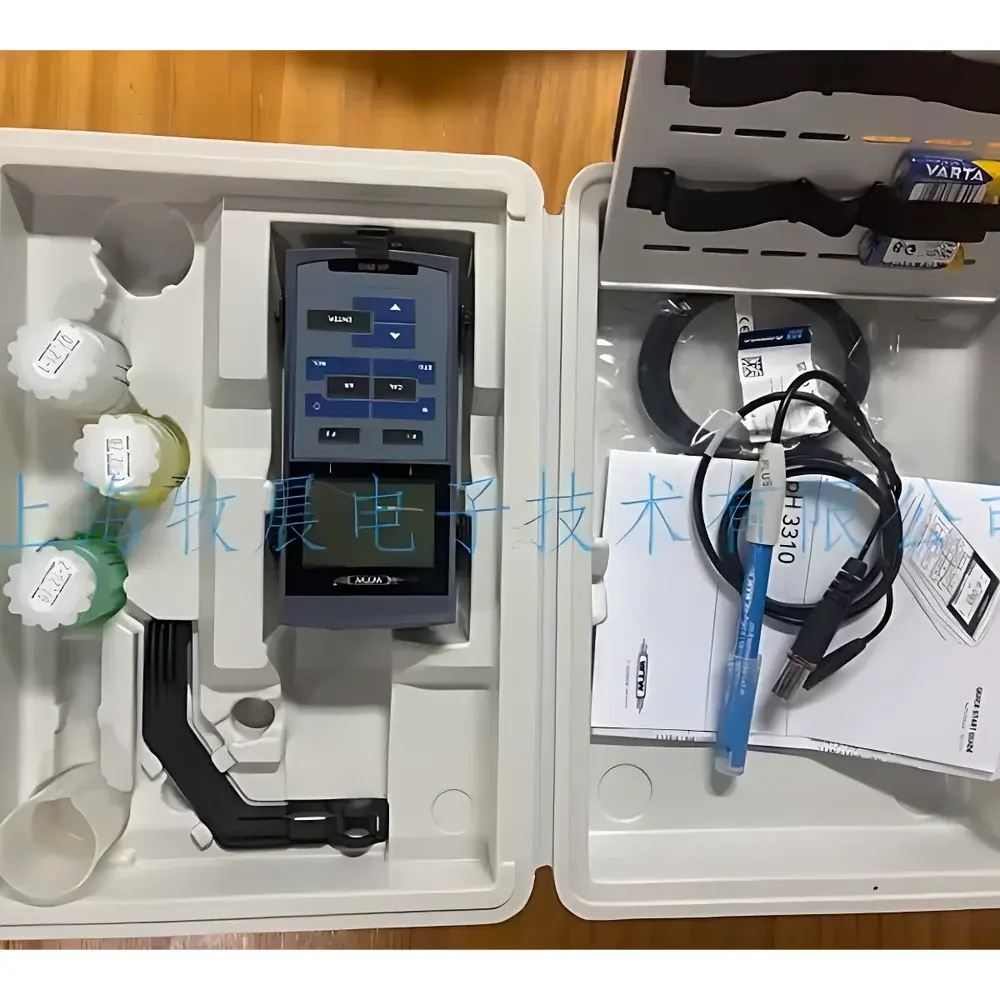
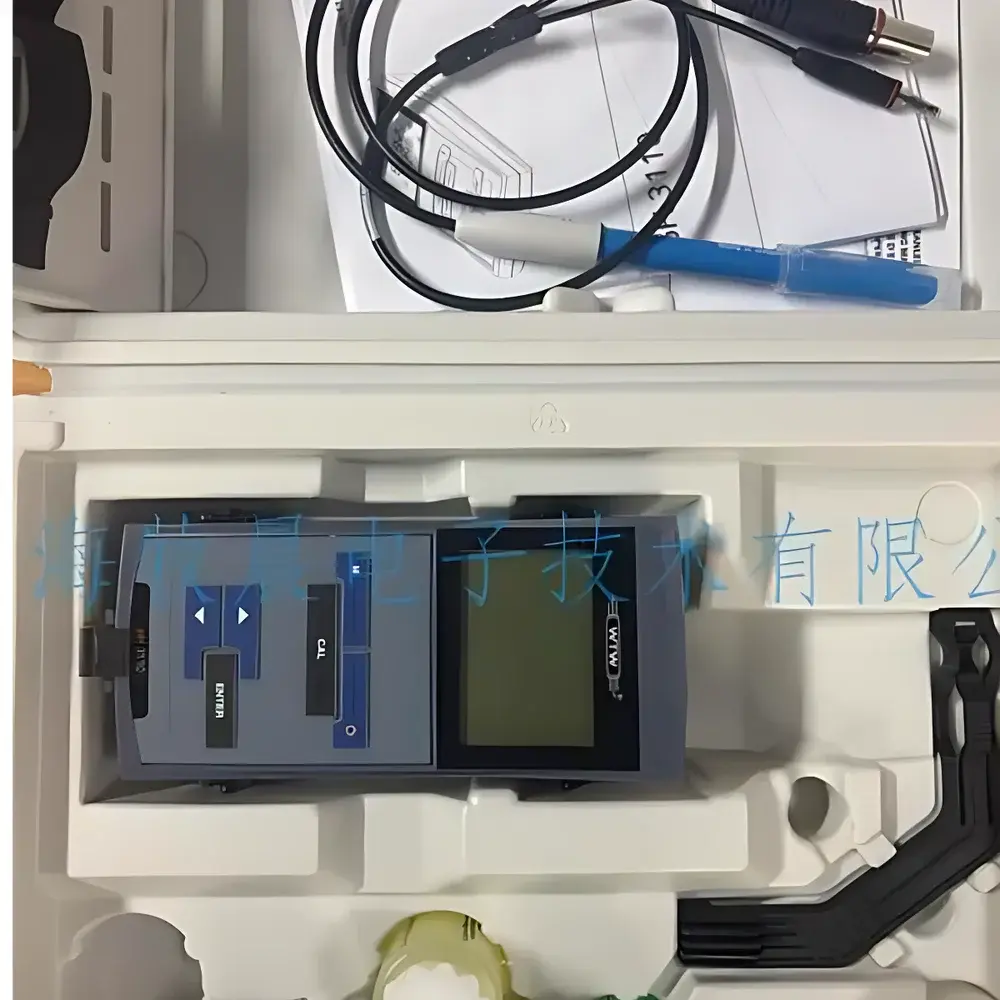
WTW pH 3110 Portable pH/mV/Temperature Meter
| Brand | WTW |
|---|---|
| Origin | Germany |
| Model | pH 3110 |
| Instrument Type | Portable |
| Parameter Type | Single-Parameter (pH/mV/°C) |
| Measurement Principle | Potentiometric (Glass Electrode / Reference Electrode System) |
| Resolution | 0.001 pH / 0.1 mV / 0.1 °C |
| Accuracy | ±0.005 pH (at 25 °C, range –2.000 to +19.999), ±0.1 mV (–1200.0 to +1200.0 mV), ±0.1 °C (–5.0 to +105.0 °C) |
| Calibration | Automatic 1-/2-/3-point with buffer recognition (DIN/NIST/USA buffers) |
| Response Time | ≤15 s (t₉₀) |
| Repeatability | <0.02 pH |
| Auto-Off Delay | Configurable from 10 min to 24 h |
| Battery Life | Up to 2500 h (4 × AA alkaline) |
| Enclosure Rating | IP67 |
| Operating Temperature | –10 °C to +55 °C |
| Storage Temperature | –25 °C to +65 °C |
| Dimensions | 180 × 80 × 55 mm |
| Weight | 0.4 kg |
Overview
The WTW pH 3110 is a high-precision, field-deployable potentiometric meter engineered for reliable pH, mV (redox), and temperature measurements in demanding environmental, industrial, and laboratory applications. Based on the Nernst equation, it interfaces with standardized combination pH electrodes or ORP sensors to deliver traceable electrochemical readings across aqueous matrices. Its compact, ruggedized housing meets IP67 ingress protection—ensuring full operational integrity during immersion, dust exposure, or harsh outdoor conditions. Designed for compliance-critical workflows, the instrument supports manual and automatic temperature compensation (ATC), real-time electrode diagnostics, and stable potential acquisition under variable ionic strength and junction potential conditions. The pH 3110 operates without external power sources, making it suitable for remote sampling, wastewater monitoring, drinking water verification, and process line checks where portability and regulatory readiness are essential.
Key Features
- Potentiometric measurement engine with triple-range pH resolution: 0.1 / 0.01 / 0.001 pH—enabling both rapid screening and high-fidelity lab-grade reporting
- Integrated temperature sensor with ±0.1 °C accuracy and manual temperature input capability (–20 °C to +130 °C) for non-ATC scenarios
- Automatic 1-, 2-, or 3-point calibration with intelligent buffer recognition (DIN, NIST, and USA standard buffers); calibration data stored with timestamp and buffer ID
- Response time ≤15 seconds to 90% of final value (t₉₀) under standard calibration conditions; repeatability <0.02 pH ensures consistent field-to-lab correlation
- User-configurable auto-off delay (10 minutes to 24 hours) and low-battery warning—optimized for extended unattended operation
- IP67-rated enclosure with chemical-resistant ABS/PC housing; withstands submersion up to 1 m for 30 minutes and full dust sealing
- Long-life power architecture: 4 × AA alkaline batteries provide up to 2500 hours of continuous operation (typical usage)
Sample Compatibility & Compliance
The pH 3110 is compatible with all DIN-standard pH composite electrodes (e.g., SenTix® 21, 41, 81) and ORP sensors featuring BNC or DIN connectors. It accommodates aqueous samples across wide conductivity ranges (≥50 µS/cm) and tolerates moderate turbidity, suspended solids, and low-level organic fouling when paired with appropriate open-junction or gel-filled electrodes. For drinking water analysis (e.g., EPA Method 150.1, ISO 10523), the SET3 configuration—including SenTix® 81 and certified pH 4.01/7.00 calibration standards—meets national regulatory requirements for routine compliance testing. The device conforms to EN 61010-1 (safety), EN 61326-1 (EMC), and carries CE marking. While not inherently 21 CFR Part 11 compliant, audit-ready calibration logs and manual entry tracking support GLP/GMP-aligned documentation practices when used with controlled procedures.
Software & Data Management
Data output is via RS232 interface (cable included) to PC-based software (supplied on CD-ROM). The bundled WTW LabX® Lite software enables export of measurement series—including date/time stamps, electrode ID, calibration history, and ambient temperature—to CSV or Excel formats. All calibration events are logged internally with user-defined IDs and buffer identifiers, supporting traceability per ISO/IEC 17025 Clause 7.7. No onboard memory or cloud connectivity is provided; data integrity relies on procedural controls during transfer and archiving. Firmware updates are performed via serial connection using manufacturer-provided utilities—ensuring long-term metrological stability and compatibility with evolving electrode technologies.
Applications
- Field-based potable water quality assessment (pH, redox potential) per WHO Guidelines and EU Drinking Water Directive (98/83/EC)
- Wastewater influent/effluent monitoring in municipal treatment plants (EN 14902, ASTM D1293)
- Environmental site characterization: surface water, groundwater, and soil leachate profiling
- Industrial process control in food & beverage, pharmaceutical, and chemical manufacturing (e.g., cleaning validation, rinse water checks)
- Educational laboratories requiring robust, maintenance-light instrumentation for electrochemistry fundamentals
- Emergency response and disaster recovery operations where battery independence and environmental resilience are critical
FAQ
Does the pH 3110 support automatic temperature compensation (ATC)?
Yes—when connected to a temperature-compensated pH electrode (e.g., SenTix® series with integrated Pt1000 sensor), the instrument applies real-time ATC using the Nernst slope correction algorithm. Manual temperature input is also supported for fixed-point reference applications.
Can I use non-WTW electrodes with this meter?
Yes—the pH 3110 accepts any standard BNC or DIN-compatible pH or ORP electrode meeting IEC 60746-1 electrical specifications. However, optimal performance and diagnostic functionality (e.g., electrode status indicators) require WTW-certified sensors.
Is the device suitable for measuring pH in non-aqueous or low-conductivity samples?
No—this instrument is validated exclusively for aqueous solutions with conductivity ≥50 µS/cm. Measurements in solvents, oils, or deionized water will yield unstable potentials and unreliable results due to high electrode impedance and junction potential drift.
How is calibration traceability ensured?
Each calibration event stores buffer type, measured mV/pH values, slope (%), offset (mV), and timestamp. When used with NIST-traceable calibration standards (e.g., WTW Titrisol®), full metrological traceability to SI units is maintained per ISO/IEC 17025 requirements.
What maintenance is required for long-term accuracy?
Regular electrode cleaning (e.g., mild detergent for organic residue; 0.1 M HNO₃ for inorganic deposits), storage in 3 mol/L KCl solution, and periodic slope verification (>95% at 25 °C) constitute minimum best practices. No internal recalibration or hardware adjustment is user-serviceable.




