
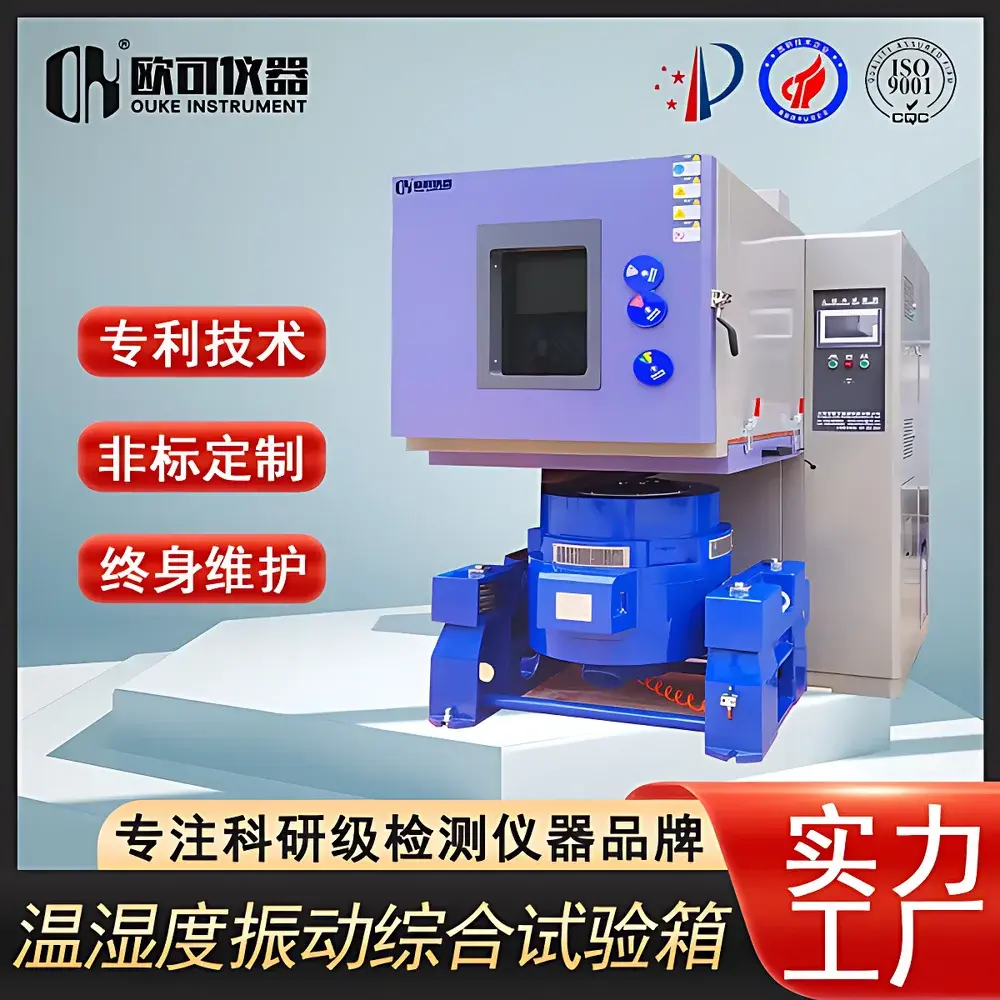
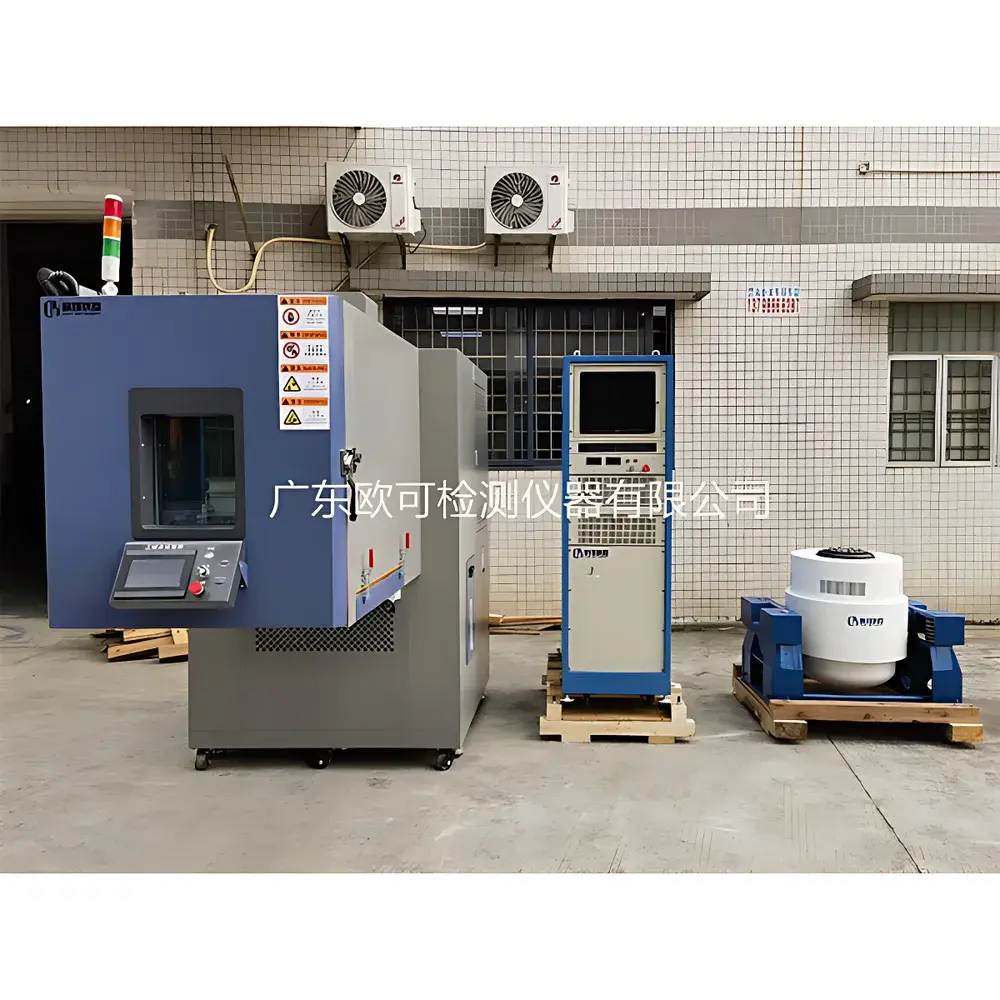
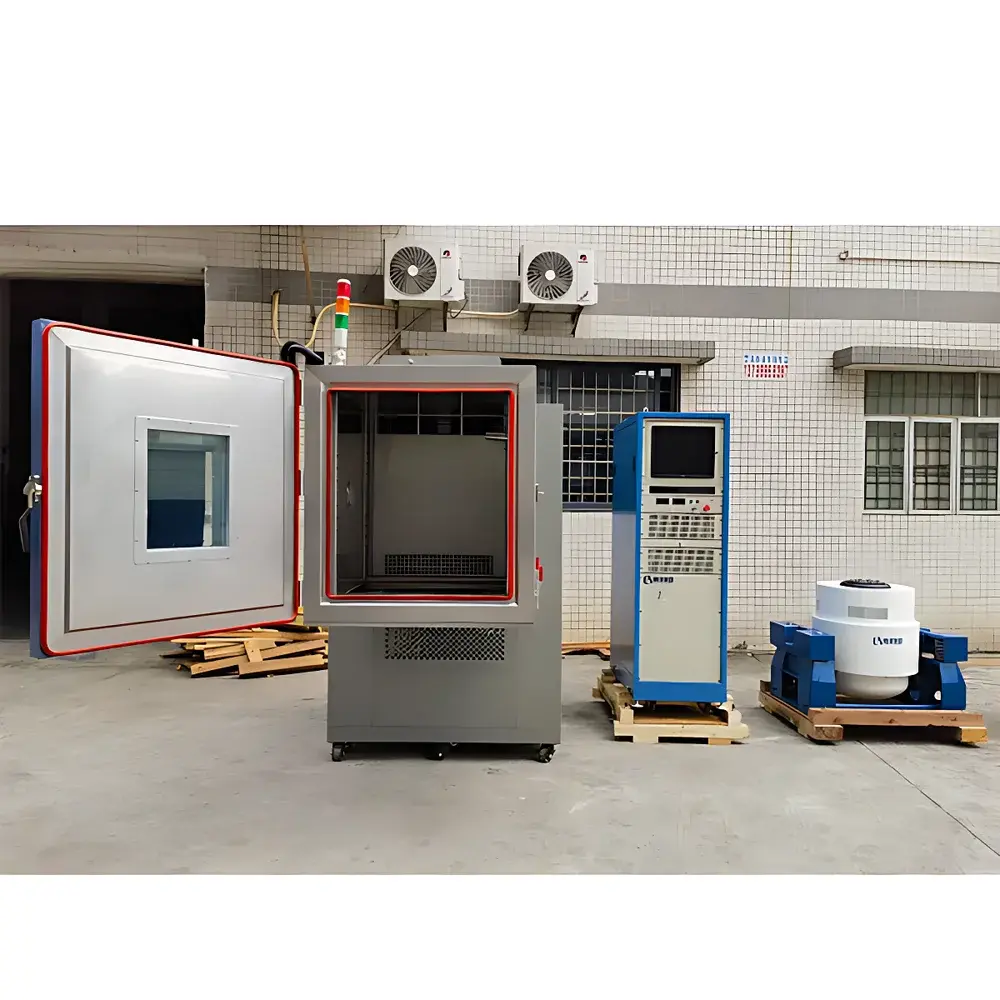
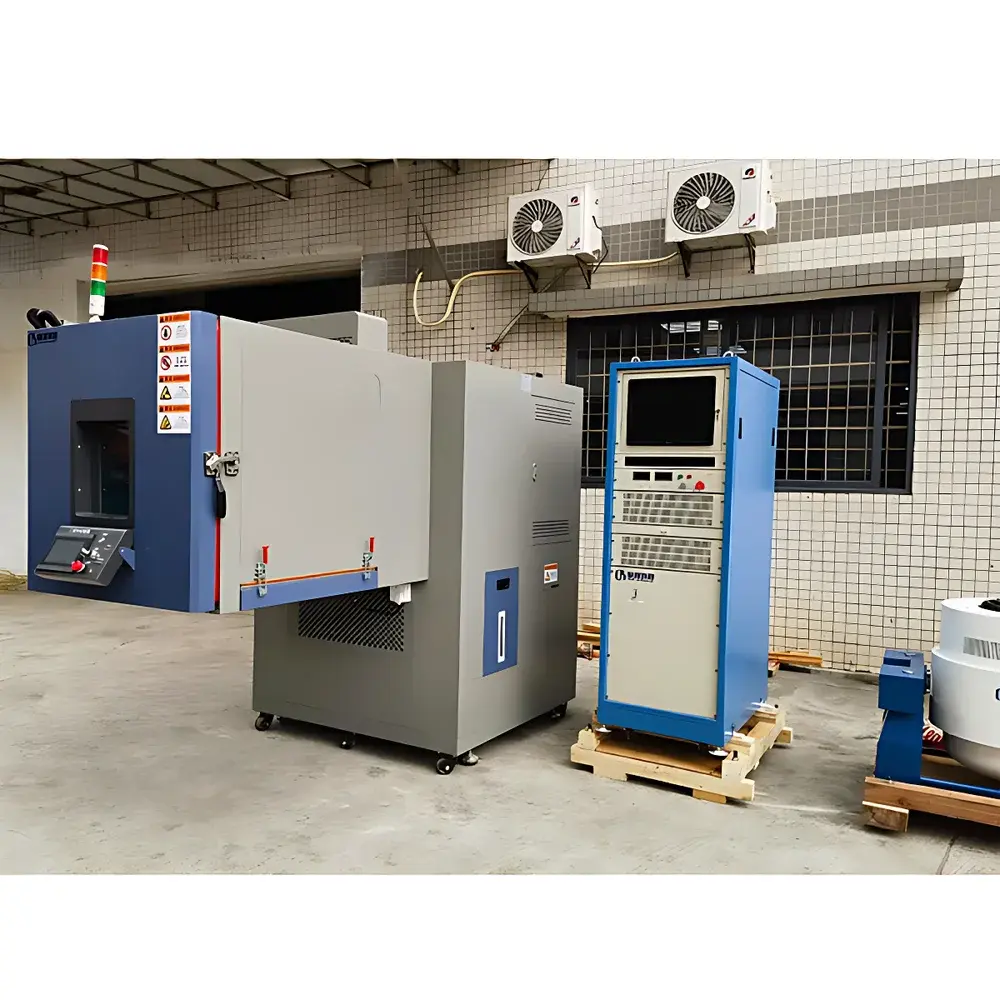
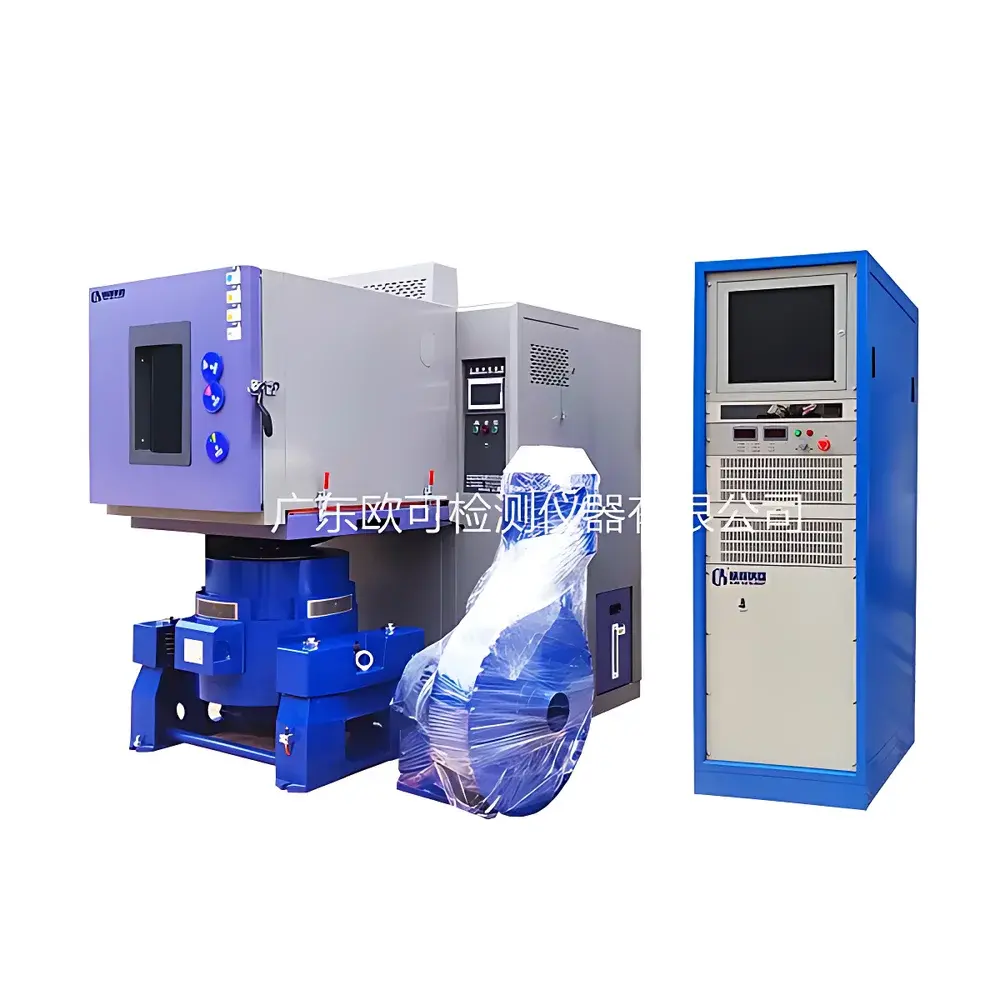
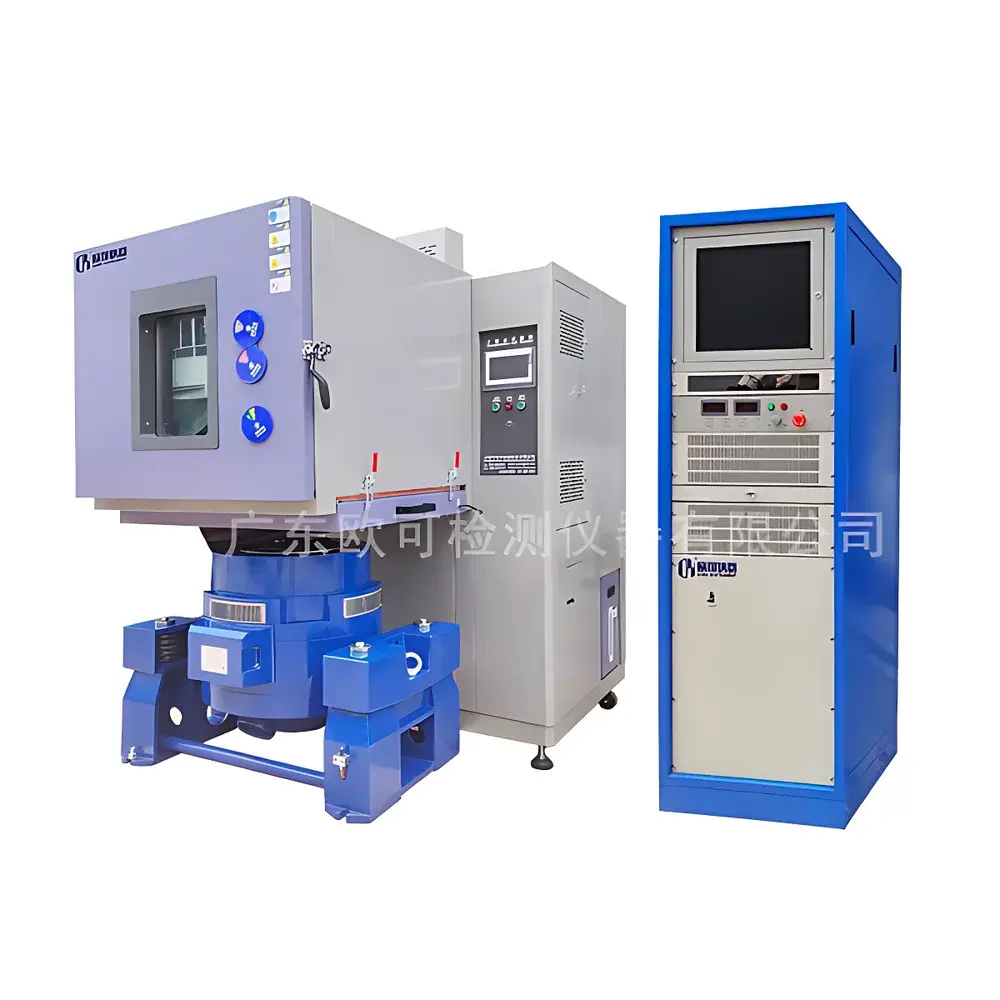
OK Instruments OK-ZTH-512.26 Combined Temperature-Humidity-Vibration Test System
| Brand | OK Instruments |
|---|---|
| Origin | Guangdong, China |
| Manufacturer Type | Direct Manufacturer |
| Product Origin | Domestic (China) |
| Model | OK-ZTH-512.26 |
| Temperature Range | −70 °C to +150 °C |
| Humidity Range | 20–98 %RH at 20–85 °C |
| Temperature Ramp Rates | 5 / 10 / 15 °C/min |
| Temperature Uniformity | ≤ ±0.5 °C |
| Standard Load Capacity | 15 kg aluminum mass, 350 W internal heat dissipation |
Overview
The OK Instruments OK-ZTH-512.26 Combined Temperature-Humidity-Vibration Test System is an integrated environmental reliability test platform engineered for simultaneous application of thermal, hygric, and mechanical stresses. Unlike sequential or single-stress testing methods, this tri-combined system replicates real-world operational extremes—such as those encountered during aerospace launch cycles, automotive under-hood operation, or military field deployment—where temperature gradients, moisture condensation, and broadband mechanical excitation co-occur. Its core measurement architecture is based on synchronized closed-loop control of three independent physical domains: refrigeration/heating subsystems (using cascade dual-stage compressors), steam-based humidity generation with PID-controlled saturation chamber, and electromagnetic shaker excitation (vertical orientation, integral base-mounted design). The system operates under deterministic time-correlated profiles, enabling precise temporal alignment between thermal transients (e.g., rapid cool-down from +125 °C to −55 °C) and vibration spectra (e.g., random PSD up to 2 kHz or sine sweep 5–2000 Hz), thereby exposing synergistic failure modes—including solder joint fatigue, polymer seal creep, connector fretting corrosion, and PCB delamination—that remain undetected in isolated stress tests.
Key Features
- Triple-domain synchronization engine with sub-second timestamp resolution across temperature, humidity, and acceleration channels
- Vertically integrated electromagnetic shaker (rated 26 kN peak force) mounted beneath a double-wall insulated environmental chamber with reinforced structural frame to minimize modal coupling
- Humidity generation via saturated steam injection with chilled mirror dew point monitoring (±0.2 °C accuracy) and dynamic RH compensation for load-induced latent heat effects
- High-efficiency cascade refrigeration system capable of sustaining −70 °C at full humidity range, with redundant compressor staging and oil management for extended low-temperature stability
- Real-time safety interlock network compliant with IEC 61508 SIL2 requirements, including over-temperature cutoff, shaker over-current shutdown, and chamber door open detection
- Modular cable feedthrough system with low-noise coaxial and thermocouple-compatible ports, rated for continuous operation under 10 gRMS vibration and ±85 °C ambient
Sample Compatibility & Compliance
The OK-ZTH-512.26 accommodates test specimens up to 15 kg mass on its rigid aluminum shaker table (600 mm × 600 mm active area), with provisions for custom fixture mounting using T-slots and M10 threaded inserts. Fixture design must account for thermal expansion mismatch (e.g., between aluminum table and stainless steel clamps) and modal decoupling above 500 Hz. The system meets essential compliance requirements for qualification testing per IEC 60068-2-64 (random vibration), IEC 60068-2-30 (damp heat cyclic), and MIL-STD-810H Method 520.5 (combined environments). It supports traceable calibration in accordance with ISO/IEC 17025-accredited procedures, and all environmental profiles are exportable in XML-based STF (Standard Test Format) for audit readiness under GLP and GMP frameworks. While not certified to FDA 21 CFR Part 11 out-of-the-box, the control software architecture supports optional electronic signature modules and full audit trail logging for regulated industries.
Software & Data Management
Control and data acquisition are managed through OK-TestSuite v4.x—a Windows-based application built on deterministic real-time kernel extensions. The software enables graphical profile construction with drag-and-drop event sequencing, automatic interpolation of ramp segments, and cross-domain constraint validation (e.g., preventing humidity activation below 0 °C without defrost logic). All test runs generate time-synchronized binary data streams (IEEE 754-2008 compliant), including chamber air temperature/humidity, shaker armature acceleration (triaxial), table surface temperature (via embedded RTD array), and user-defined analog inputs (e.g., DUT voltage/current). Raw datasets are stored in HDF5 format with embedded metadata (test ID, operator, calibration certificate IDs, hardware configuration hash), supporting post-processing in MATLAB, Python (h5py), or commercial FEA tools. Remote monitoring is available via secure TLS 1.3-enabled web interface with role-based access control (RBAC).
Applications
- Automotive: Validation of ADAS ECUs under combined thermal cycling and road-simulated vibration; battery module thermal runaway propagation studies with concurrent mechanical shock
- Aerospace: Ground testing of avionics line-replaceable units (LRUs) per DO-160G Section 25 (combined temp/vib)
- Defense electronics: Environmental screening of encrypted comms gear per MIL-STD-810H Figure 520.5-1
- Consumer electronics: Accelerated life testing of foldable smartphone hinge mechanisms under humid heat and torsional vibration
- Energy storage: Cycle testing of EV traction inverters exposed to condensing humidity and engine-bay-level vibration spectra
FAQ
What is the maximum allowable payload mass for simultaneous operation at −70 °C and 98 %RH?
The rated 15 kg capacity applies across the full environmental envelope; however, sustained operation at extreme low temperature with high humidity requires derating of internal power dissipation to ≤350 W to maintain chamber uniformity and prevent frost accumulation on shaker armature seals.
Does the system support horizontal vibration testing?
Yes—horizontal excitation is achievable via optional electrodynamic slip-table integration (OK-HTS-300 series), maintaining phase coherence with vertical axis and full environmental enclosure compatibility.
How is vibration isolation handled during non-operational thermal conditioning?
The shaker is hydraulically decoupled from the chamber base during static soak phases using pneumatic isolators with active position feedback, reducing parasitic thermal conduction paths by >92 % versus rigid-mount configurations.
Can third-party sensors be integrated into the data acquisition chain?
Absolutely—the system provides eight programmable analog input channels (±10 V, 24-bit resolution) and four digital I/O lines, fully configurable for strain gauges, LVDTs, acoustic emission transducers, or fiber-optic temperature probes.
What maintenance intervals are recommended for long-term reliability?
Compressor oil and filter replacement every 3,000 operating hours; shaker armature bearing inspection every 5,000 hours; humidity chamber steam generator descaling every 6 months; annual full-system metrology verification against NIST-traceable references.



