
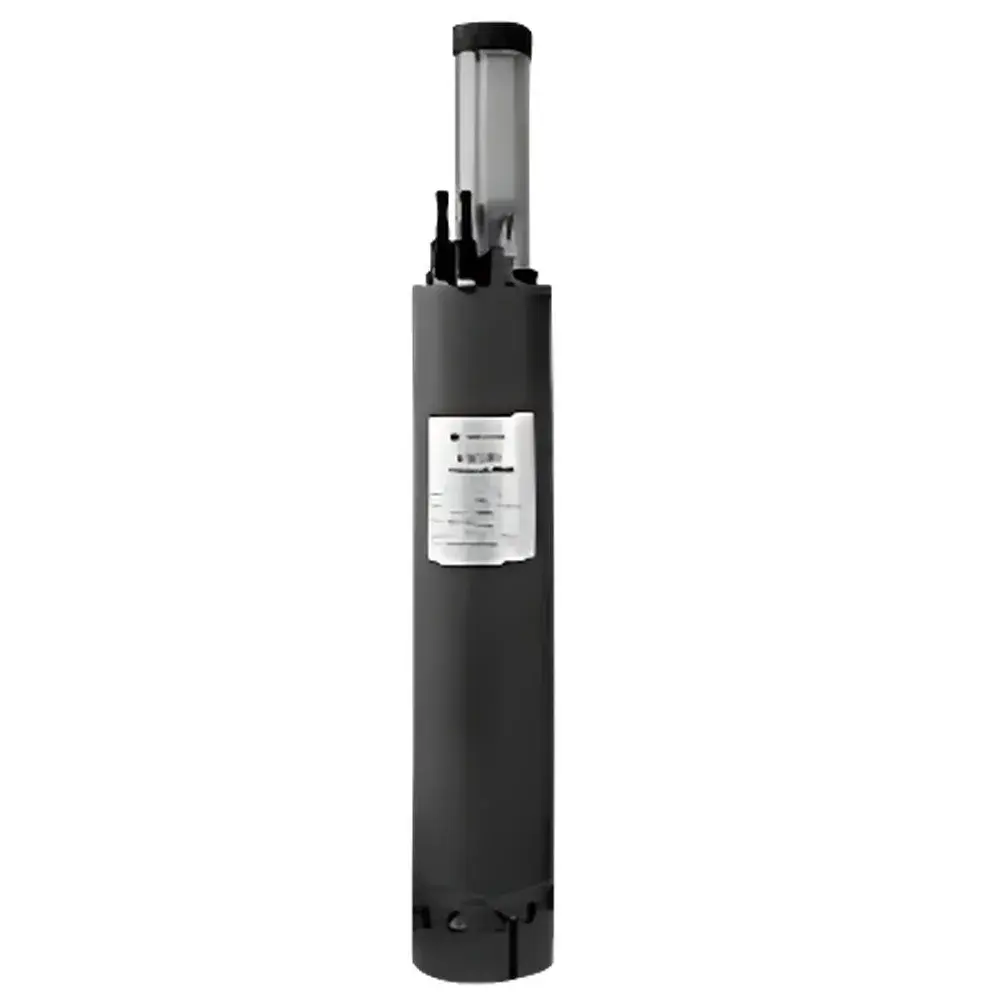
Zming Environmental HQ-8801 In-situ Phosphate and Ammonia-N Analyzer
| Brand | Zming Environmental Technology Co., Ltd. |
|---|---|
| Origin | Jiangsu, China |
| Manufacturer Type | Authorized Distributor |
| Country of Origin | China |
| Model | HQ-8801 |
| Pricing | Available Upon Request |
| Measurement Parameters | Phosphate (as PO₄³⁻), Ammonia-N (as NH₃-N) |
| Measurement Principles | Molybdate Blue Spectrophotometry (Phosphate), Salicylate Spectrophotometry (Ammonia-N) |
| Range | 0–1 mg/L (adjustable per application) |
| Detection Limit | Sub-ppb level (phosphate & ammonia-N) |
| Max Deployment Depth | 50 m |
| Integrated Sensors | Turbidity, Temperature, Humidity, Leak Detection |
| Onboard Display | Handheld touchscreen interface |
| Digestion | Rapid-heating chemical digestion module |
| Compliance | Designed for ISO 5667-3, ASTM D515-22, EPA 365.2 & 350.1 compatibility |
Overview
The Zming Environmental HQ-8801 In-situ Phosphate and Ammonia-N Analyzer is an integrated, submersible water quality monitoring instrument engineered for continuous, unattended operation in natural aquatic environments—including lakes, reservoirs, estuaries, coastal zones, and drinking water intake areas. Unlike laboratory-based or flow-through analyzers requiring sample extraction and transport, the HQ-8801 performs real-time, in-situ spectrophotometric analysis directly within the water column. It employs two validated colorimetric methodologies: molybdate blue spectrophotometry for orthophosphate (reported as PO₄³⁻ or optionally as P) and salicylate-based spectrophotometry for ammonia nitrogen (NH₃-N), both compliant with core principles outlined in EPA Method 365.2 (phosphate) and EPA Method 350.1 (ammonia-N). Its compact, pressure-rated housing (rated to 50 m water depth) enables deployment on buoys, moored platforms, autonomous surface vessels, or fixed shoreline stations without external sample pumps or conditioning lines—minimizing biofouling risk and operational drift.
Key Features
- True in-situ operation: Optical cells and reagent delivery systems are fully submerged, eliminating sampling delay and preserving redox-sensitive species.
- Multi-parameter environmental compensation: Integrated turbidity sensor enables adaptive correction of absorbance readings; concurrent temperature and humidity monitoring supports thermal drift compensation and diagnostic logging.
- Rapid thermal digestion module: Optimized heating profile reduces digestion time for phosphate to under 8 minutes, enabling cycle times ≤ 30 minutes per dual-parameter measurement.
- Sub-ppb detection capability: Achieved via high-stability LED light sources (620 nm for phosphate, 655 nm for ammonia-N), precision optical path design (10 mm pathlength), and low-noise photodiode detection with 24-bit ADC resolution.
- Leak detection circuitry: Conductivity-based wetness sensing at critical fluidic junctions triggers automatic shutdown and event logging to prevent reagent contamination or electrical hazard.
- Handheld configuration interface: IP67-rated touchscreen display allows full calibration, method selection, alarm threshold setting, and diagnostic review without laptop connectivity.
Sample Compatibility & Compliance
The HQ-8801 is validated for use in freshwater, brackish, and marine matrices with total suspended solids (TSS) ≤ 100 mg/L and salinity up to 35 ppt. Its turbidity-adaptive algorithm dynamically adjusts integration time and baseline correction when TSS exceeds 25 NTU, maintaining accuracy across dynamic field conditions. The analyzer meets functional requirements of ISO 5667-3 (water sampling guidance), ASTM D515-22 (phosphate in water), and EPA 350.1/365.2 reference methods. Data integrity safeguards include timestamped audit trails, user-access levels (operator/administrator), and non-volatile memory retention for ≥12 months of 15-minute interval data. While not certified under FDA 21 CFR Part 11, its data export format (CSV/JSON over Modbus TCP or RS-485) supports integration into LIMS and GLP-compliant workflows where electronic records are governed by organizational SOPs.
Software & Data Management
The device operates autonomously using embedded firmware (v3.2+) supporting scheduled measurements, conditional triggering (e.g., turbidity >50 NTU initiates hourly cycles), and configurable alarm outputs (dry contact + 4–20 mA analog). Data is stored locally on industrial-grade microSD (up to 32 GB) and simultaneously transmitted via optional 4G LTE or LoRaWAN modules. Zming’s CloudLink™ platform provides remote firmware updates, real-time dashboard visualization, spectral QA/QC plots (absorbance vs. time), and automated report generation aligned with national water quality reporting templates (e.g., China’s HJ 91.1–2019, USGS NWIS). All raw absorbance values, reagent consumption logs, and environmental sensor timestamps are retained for method validation and traceability.
Applications
- Lake and reservoir trophic state assessment: Simultaneous phosphate and ammonia-N profiling supports nitrogen-phosphorus co-limitation modeling and early eutrophication warning.
- Riverine nutrient flux quantification at estuarine interfaces: High-frequency in-situ data captures tidal-driven nutrient pulses missed by weekly grab sampling.
- Rural drinking water source surveillance: Detects agricultural runoff events (e.g., post-rainfall NH₃-N spikes) and correlates with turbidity changes indicating sediment resuspension.
- Coastal zone management: Supports monitoring of aquaculture effluent dispersion and seasonal upwelling-related nutrient anomalies.
- Long-term ecological research networks: Modular mounting kits enable standardized installation across NEON-style observatory nodes.
FAQ
Is the HQ-8801 suitable for seawater applications?
Yes—the fluidic system uses marine-grade 316 stainless steel and titanium components; reagent formulations are optimized for chloride interference suppression up to 35 ppt salinity.
How often do reagents need replacement?
At standard 1-hour measurement intervals, the onboard reagent cartridge supports ≥30 days of continuous operation; shelf life is 12 months when stored at 4–25°C unopened.
Can measurement ranges be extended beyond 0–1 mg/L?
Yes—custom range configurations (e.g., 0–5 mg/L for wastewater-impacted estuaries) are available via factory calibration and modified reagent concentrations; documentation includes uncertainty budgets per ISO/IEC 17025 guidelines.
Does the system support third-party SCADA integration?
Yes—Modbus RTU/TCP and ASCII serial protocols are natively supported; register maps and OPC UA companion specifications are provided in the Technical Integration Manual.
What maintenance is required in remote deployments?
Bi-weekly anti-fouling wipe cycle (automated wiper blade option); quarterly optical window inspection; annual pump tubing and valve actuator verification—documented in the Field Maintenance Schedule (FMS-8801 Rev. D).
Related Products







