
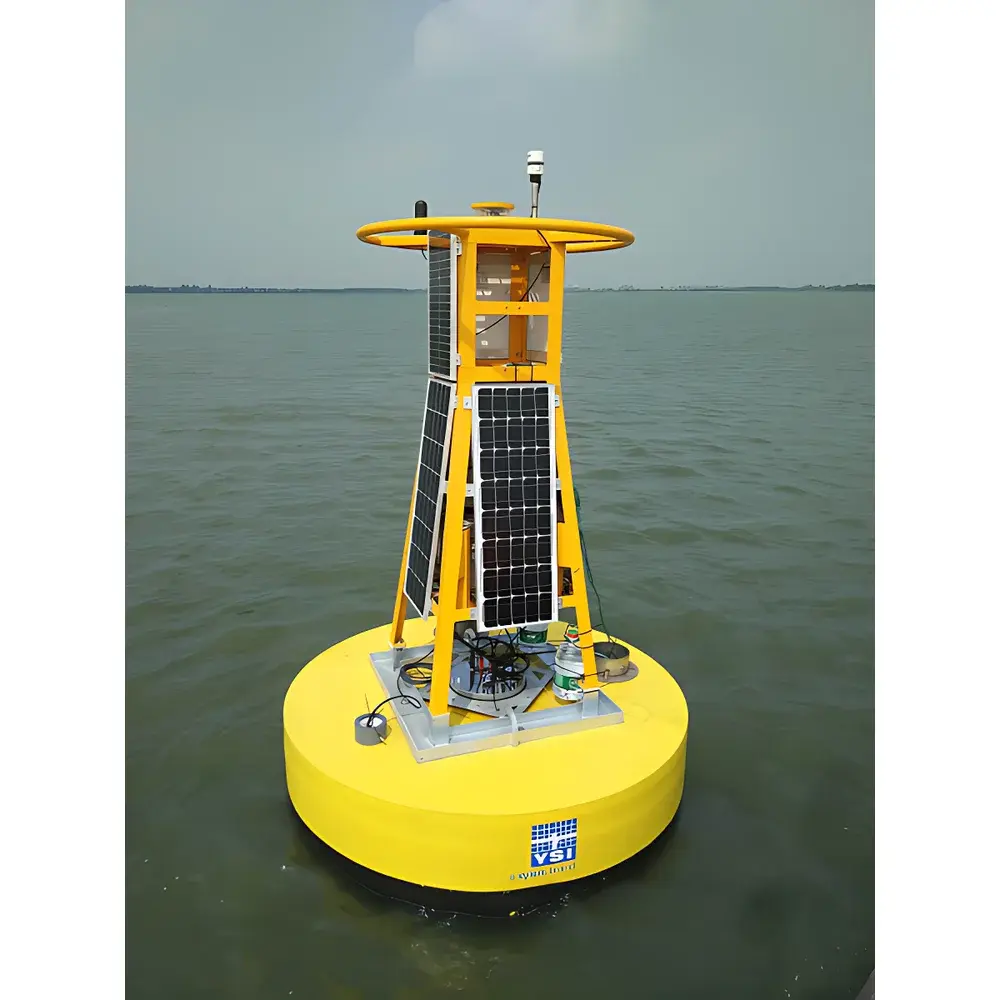
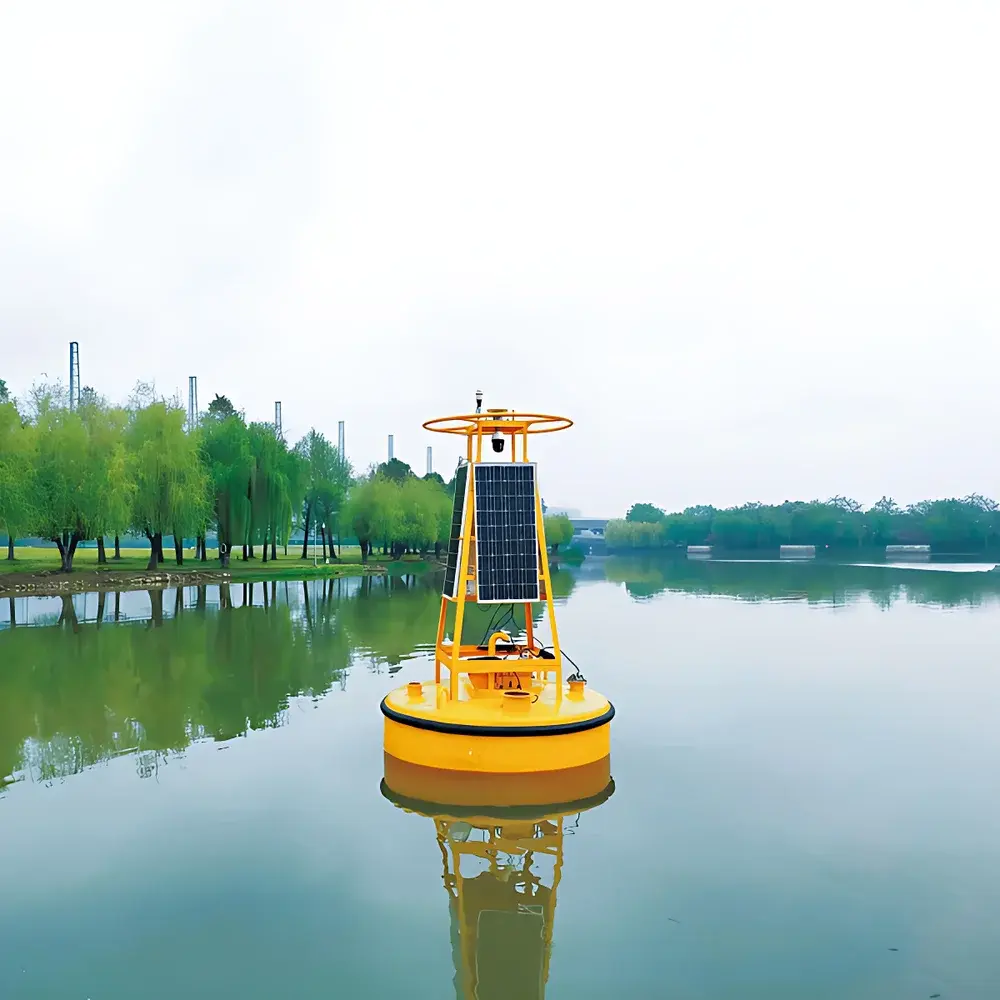
Xylem ECO-Buoy Online Automatic Water Quality Monitoring System
| Brand | Xylem |
|---|---|
| Origin | USA |
| Model | ECO-Buoy |
| Type | Integrated In-Situ Environmental Monitoring Buoy System |
| Power Supply | Solar-rechargeable battery with marine-grade backup |
| Data Transmission | Cellular (4G LTE-M/NB-IoT) and satellite (Iridium Short Burst Data) dual-mode wireless telemetry |
| Environmental Rating | IP68, corrosion-resistant 316 stainless steel & UV-stabilized HDPE hull |
| Operating Temperature | −20 °C to +50 °C |
| Deployment Depth | Surface-floating with optional subsurface sensor mooring up to 30 m |
| Compliance | ASTM D511, D1293, D3370 |
Overview
The Xylem ECO-Buoy is a fully integrated, autonomous in-situ water quality monitoring system engineered for long-term deployment in dynamic aquatic environments—including coastal zones, estuaries, large lakes, reservoirs, and open ocean sites. Based on the principle of continuous multi-parameter sensor fusion and real-time telemetry, the ECO-Buoy operates as a self-contained observatory platform that combines high-fidelity physical, chemical, biological, meteorological, and hydrodynamic sensing with robust power management and secure data transmission. Its modular architecture supports standardized sensor interfaces (e.g., SDI-12, RS-485, analog 4–20 mA), enabling traceable calibration and field-swappable instrumentation without system downtime. Designed for minimal site intervention, the buoy conforms to international maritime navigation safety standards (IALA A-126, IMO Resolution A.678(16)), including AIS-compatible lighting, radar reflectors, and GPS-based position reporting—ensuring regulatory compliance during extended deployments.
Key Features
- Multi-layered environmental sensing: Simultaneous acquisition of 20+ parameters across five measurement domains—physical (temperature, pH, dissolved oxygen, conductivity/salinity, turbidity, chlorophyll-a, phycocyanin), chemical (ammonia-N, nitrate-N, nitrite-N, orthophosphate, total phosphorus, total nitrogen, CODUV), meteorological (wind speed/direction, barometric pressure, air temperature, relative humidity, photosynthetically active radiation, rainfall), hydrodynamic (acoustic Doppler current profiling for velocity/vector, wave height/direction via triaxial accelerometer), and biological proxy metrics.
- Marine-hardened mechanical design: Hull constructed from UV-stabilized high-density polyethylene (HDPE) with integrated 316 stainless steel mounting frames and anti-fouling sensor sleeves compliant with ASTM D3359 adhesion testing.
- Intelligent power architecture: Dual-source energy harvesting—monocrystalline solar panel (≥40 W peak) coupled with deep-cycle lithium iron phosphate (LiFePO4) battery bank (≥1.2 kWh usable capacity)—supports >12 months of continuous operation under 50% cloud cover conditions.
- Redundant communication stack: Primary cellular telemetry (LTE-M/NB-IoT with automatic carrier fallback) supplemented by Iridium SBD for remote or low-coverage regions; all transmissions encrypted via TLS 1.2 and authenticated using X.509 certificates.
- Onboard edge processing: ARM Cortex-A53-based embedded controller executes automated QA/QC routines—including sensor drift detection, outlier filtering per ISO 17025 Annex B, and adaptive sampling interval modulation based on parameter volatility thresholds.
Sample Compatibility & Compliance
The ECO-Buoy is validated for use in natural freshwater, brackish, and marine matrices with salinity ranging from 0 to 45 ppt. All wetted components meet NSF/ANSI Standard 61 for drinking water system components and FDA 21 CFR Part 11 requirements for electronic records and signatures when paired with Xylem’s AquaSuite™ software. Sensor calibrations adhere to traceable NIST-traceable reference standards, and field verification protocols align with ISO/IEC 17025:2017 for testing laboratories. The system supports audit-ready metadata tagging—including operator ID, calibration timestamp, sensor serial number, and environmental context tags—for regulatory reporting under EPA NPDES, EU WFD (2000/60/EC), and China’s HJ 91.2–2022 technical specifications.
Software & Data Management
Data acquisition, visualization, and alerting are managed through AquaSuite Cloud—a secure, browser-based platform compliant with SOC 2 Type II and ISO 27001. Raw sensor outputs undergo time-synchronized alignment, unit normalization, and uncertainty propagation per GUM (JCGM 100:2008). Users configure threshold-based SMS/email alerts, generate automated daily/weekly summary reports (PDF/CSV), and export time-series datasets with full provenance tracking—including instrument configuration history and firmware revision logs. Audit trails retain immutable records of all user actions, data edits, and calibration events for GLP/GMP-aligned operations.
Applications
- Early-warning surveillance of source water intakes for municipal utilities and industrial facilities
- Detection and spatial tracking of harmful algal blooms (HABs), including Microcystis, Prorocentrum, and Alexandrium species via combined chlorophyll-a, phycocyanin, and fluorescence ratio analysis
- Long-term trophic state assessment in eutrophic lakes and reservoirs using integrated TP/TN ratios, Secchi depth correlation, and metabolic balance indicators (GPP/R)
- Coastal zone management supporting NOAA NERR, IMOS, and EMODnet initiatives through synchronized physical-chemical-biological coupling
- Regulatory compliance monitoring for aquaculture licensing (FAO Code of Conduct for Responsible Fisheries) and offshore mariculture impact assessments
- Hydrodynamic boundary condition input for calibrated CE-QUAL-W2 and Delft3D numerical models
FAQ
Can the ECO-Buoy operate in ice-covered or high-wave-height environments?
Yes—the buoy’s freeboard height, ballast distribution, and dynamic stability coefficient (GM ≥ 0.8 m) have been verified per ISO 19901-7 for operational survivability in Sea State 5 (up to 2.5 m significant wave height); optional ice-breaking collar kits extend seasonal deployment capability.
How frequently are sensors calibrated, and is field recalibration supported?
Factory calibration is performed pre-shipment against NIST-traceable standards; field verification is recommended every 30–90 days depending on biofouling risk; all sensors support two-point in-situ calibration via onboard reagent dispensers or dry-capsule reference standards.
Does the system comply with FDA 21 CFR Part 11 for pharmaceutical-grade water monitoring?
When deployed with validated sensor suites (e.g., TOC analyzers, conductivity cells certified to USP ) and configured with AquaSuite Cloud’s Part 11 module (electronic signatures, role-based access control, audit trail retention ≥2 years), full compliance is achievable.
What level of cybersecurity protection does the telemetry layer provide?
All communications use end-to-end encryption (AES-256), certificate-pinned TLS handshakes, and hardware-enforced secure boot; firmware updates require signed cryptographic manifests and dual-approval workflows.
Is third-party sensor integration possible?
Yes—via standardized Modbus RTU/ASCII, SDI-12, or analog 4–20 mA interfaces; Xylem provides integration documentation and validation test scripts for non-OEM devices meeting IEC 61000-6-2/6-4 EMC requirements.







