
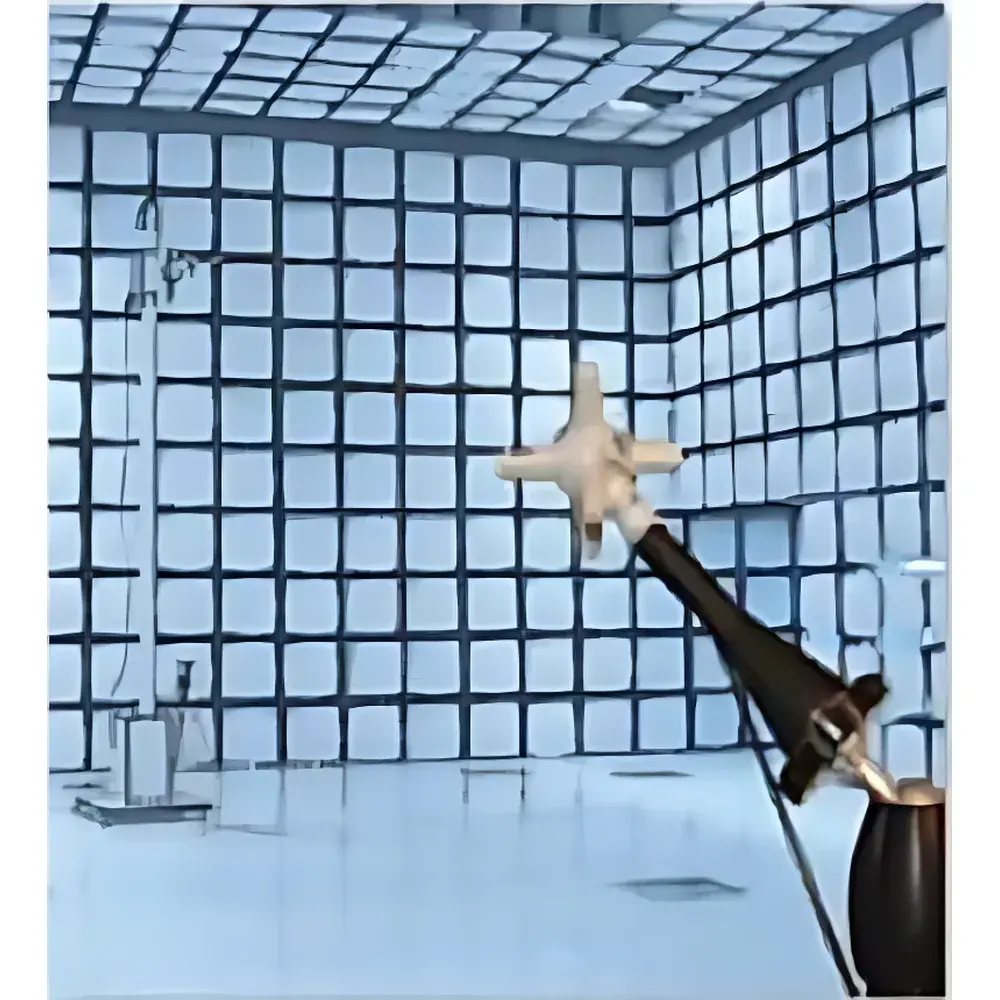
PMM EP-601 Electromagnetic Field Probe
| Brand | PMM |
|---|---|
| Origin | Italy |
| Model | EP 601 |
| Frequency Range | 10 kHz – 9.25 GHz |
| Electric Field Measurement Range | 0.5 – 500 V/m |
| Resolution | 0.01 V/m |
| Overload Protection | > 1000 V/m |
| Dynamic Range | > 60 dB |
| Isotropy | ±0.5 dB |
| Amplitude Flatness | ±0.4 dB |
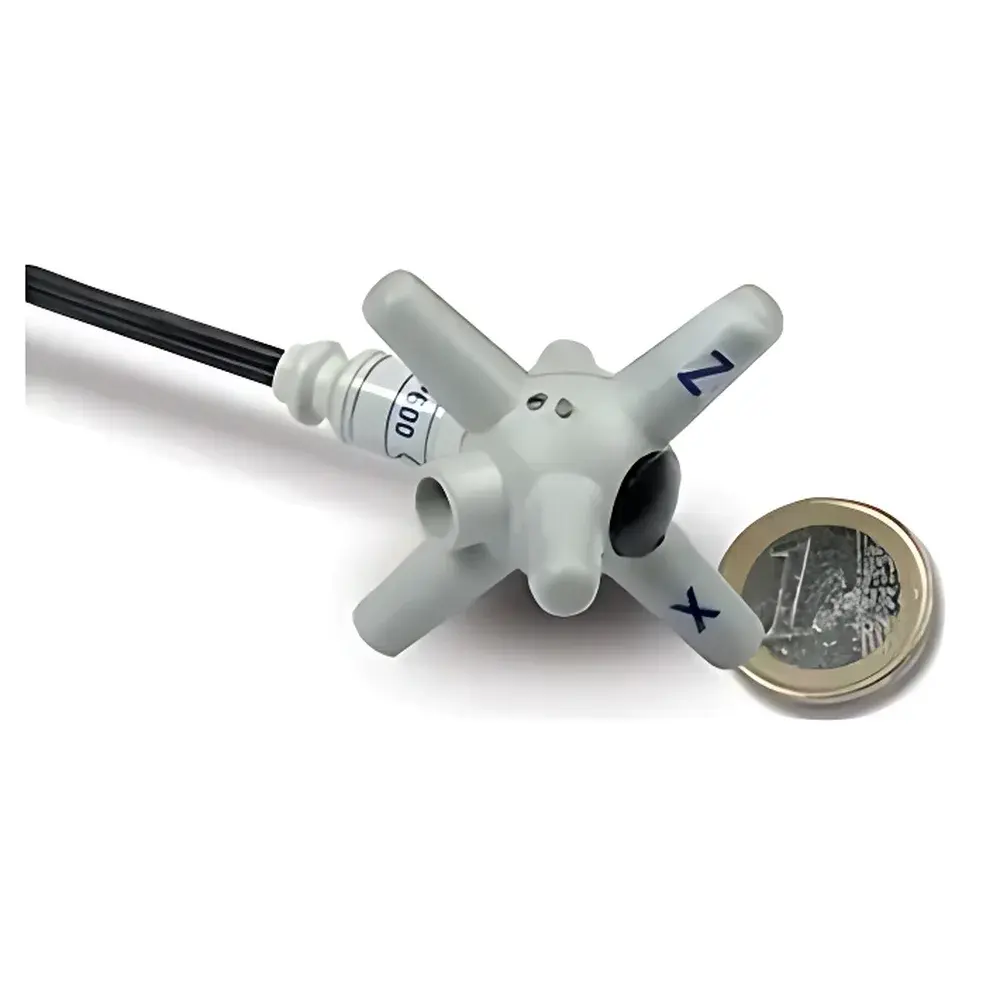
| Sensor Type | Six Monopole Antennas (Triaxial X/Y/Z) |
| Weight | 23 g |
| Dimensions | 21 mm (sphere diameter) × 16 mm (sensor length) × 53 mm (total length) |
| Operating Temperature | –10 °C to +50 °C |
| Power Supply | Rechargeable Li-ion Battery or External DC Input |
| Temperature Compensation | 0.1 °C per °C |
Overview
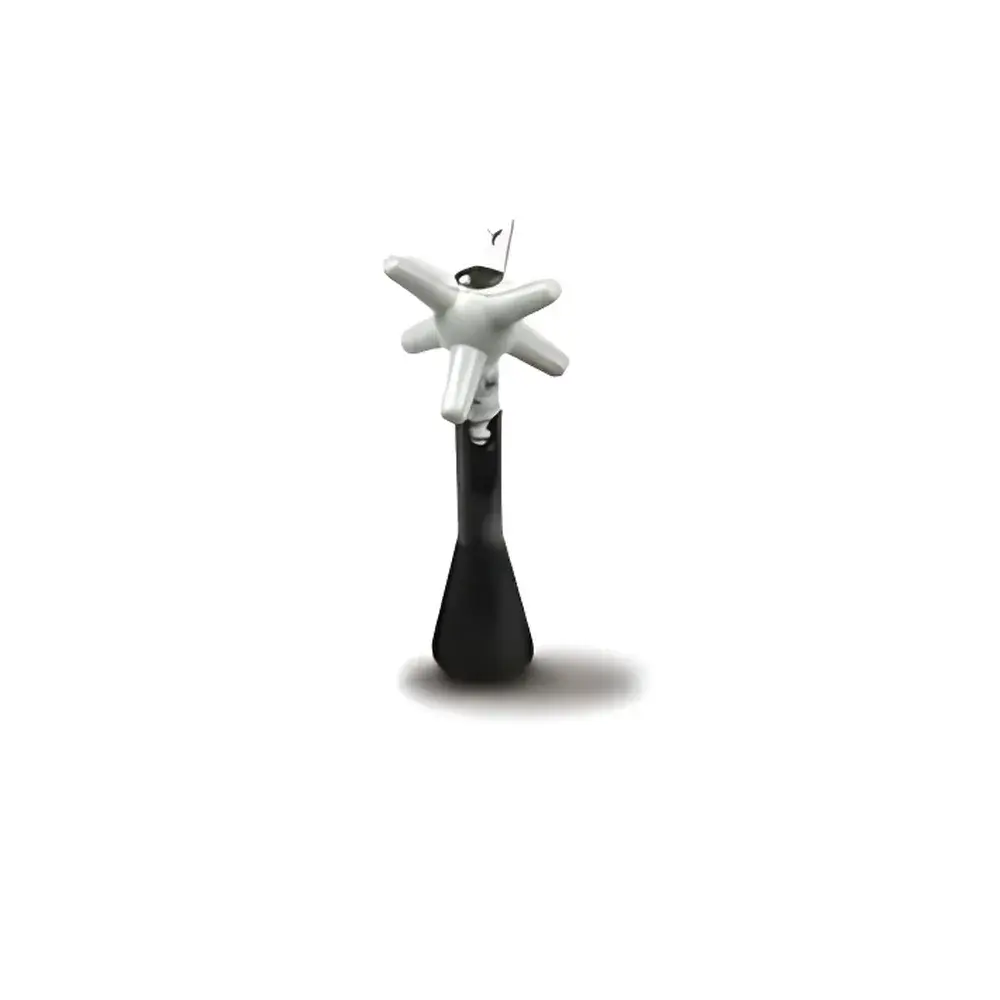
The PMM EP-601 is a high-fidelity, triaxial isotropic electric field probe engineered for precision electromagnetic field (EMF) characterization in compliance-critical electromagnetic compatibility (EMC) and environmental exposure assessment applications. Based on the fundamental principle of electrostatic induction via six orthogonal monopole antennas arranged in a compact spherical geometry, the EP-601 delivers true vector field reconstruction with minimal spatial perturbation. Its design adheres to the physical constraints defined in IEC 61000-4-3 (radiated immunity testing), EN 50492 (EMF exposure assessment), and IEEE Std 1308–2013 (calibration of EMF probes). The probe operates across a continuous frequency band from 10 kHz to 9.25 GHz — spanning low-frequency magnetic coupling regimes through UHF and early microwave bands — making it suitable for both pre-compliance screening and full-standard radiated immunity validation. Its 23 g mass and sub-21 mm spherical sensor head minimize field distortion during near-field scanning and ensure mechanical stability on non-rigid fixtures.
Key Features
- True isotropic response (±0.5 dB) achieved through symmetric six-monopole antenna architecture with calibrated phase-matched signal paths.
- 60 dB dynamic range enables simultaneous resolution of weak ambient fields (≥0.5 V/m) and high-intensity test fields (≤500 V/m), with overload tolerance exceeding 1000 V/m.
- Integrated rechargeable lithium-ion battery eliminates ground-loop artifacts and ensures galvanic isolation — critical for repeatable measurements in ungrounded or floating test setups.
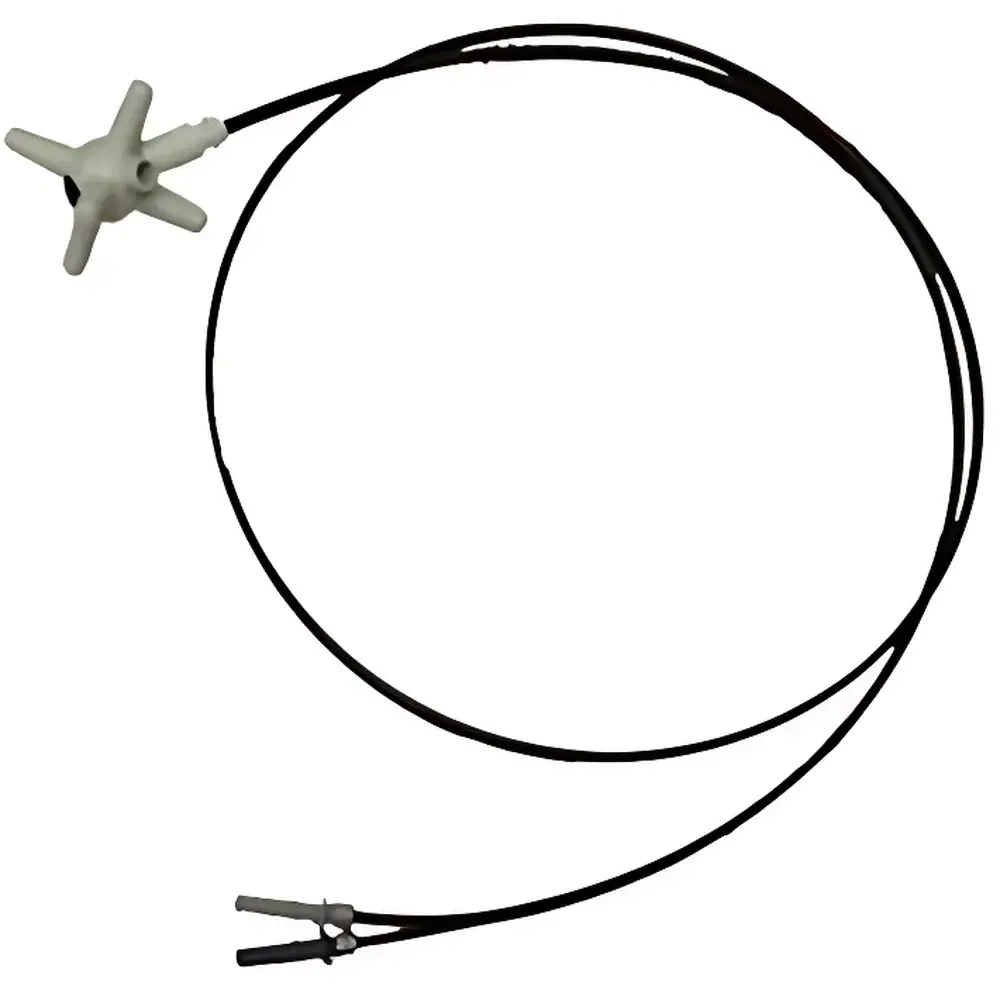
- Fiber-optic interface provides EMI-immune data transmission and protects internal electronics from RF ingress or accidental shorting during probe handling.
- Compact form factor (21 mm sphere, 16 mm sensor length) reduces scattering effects and allows access to confined geometries where conventional probes cannot be positioned.
- Real-time triaxial acquisition supports both instantaneous vector magnitude calculation and individual axis logging — essential for polarization analysis and field orientation mapping.
Sample Compatibility & Compliance
The EP-601 is designed for use with standardized calibration planes per IEC 61000-4-3 Annex B and ANSI C63.4–2022 Section 7.2. It maintains traceable metrological integrity under temperature fluctuations (–10 °C to +50 °C) due to embedded thermal compensation (0.1 °C/°C sensitivity correction). All units are factory-calibrated against PMM’s national-accredited reference standards (accredited to ISO/IEC 17025 by ACCREDIA, Italy) and include full uncertainty budgets per ISO/IEC 17025:2017. The probe meets EN 61010-1:2010 safety requirements for measurement equipment used in electromagnetic environments and conforms to RoHS 2011/65/EU and REACH (EC) No. 1907/2006 material restrictions.
Software & Data Management
The EP-601 interfaces natively with industry-standard EMC test platforms including EMC32 (Rohde & Schwarz), TDK RF-TestSuite, TOYO EMC-Analyzer, and PMM’s own EMField Suite. It supports SCPI-compatible remote control over fiber-optic or USB-C (via optional adapter), enabling seamless integration into automated test sequences compliant with ISO/IEC 17025 audit trails and FDA 21 CFR Part 11 electronic record requirements. Built-in firmware includes programmable averaging modes (RMS, peak, quasi-peak), configurable dwell times, and time-domain transient capture (≥100 ms event duration with 10 Hz sampling rate). Data export formats include CSV, HDF5, and XML for post-processing in MATLAB, Python (SciPy), or LabVIEW.
Applications
- Radiated immunity testing per IEC 61000-4-3, MIL-STD-461G RS103, and DO-160 Section 20.
- Pre-compliance EMF surveys for occupational and public exposure evaluation against ICNIRP 2020 and EU Council Recommendation 1999/519/EC limits.
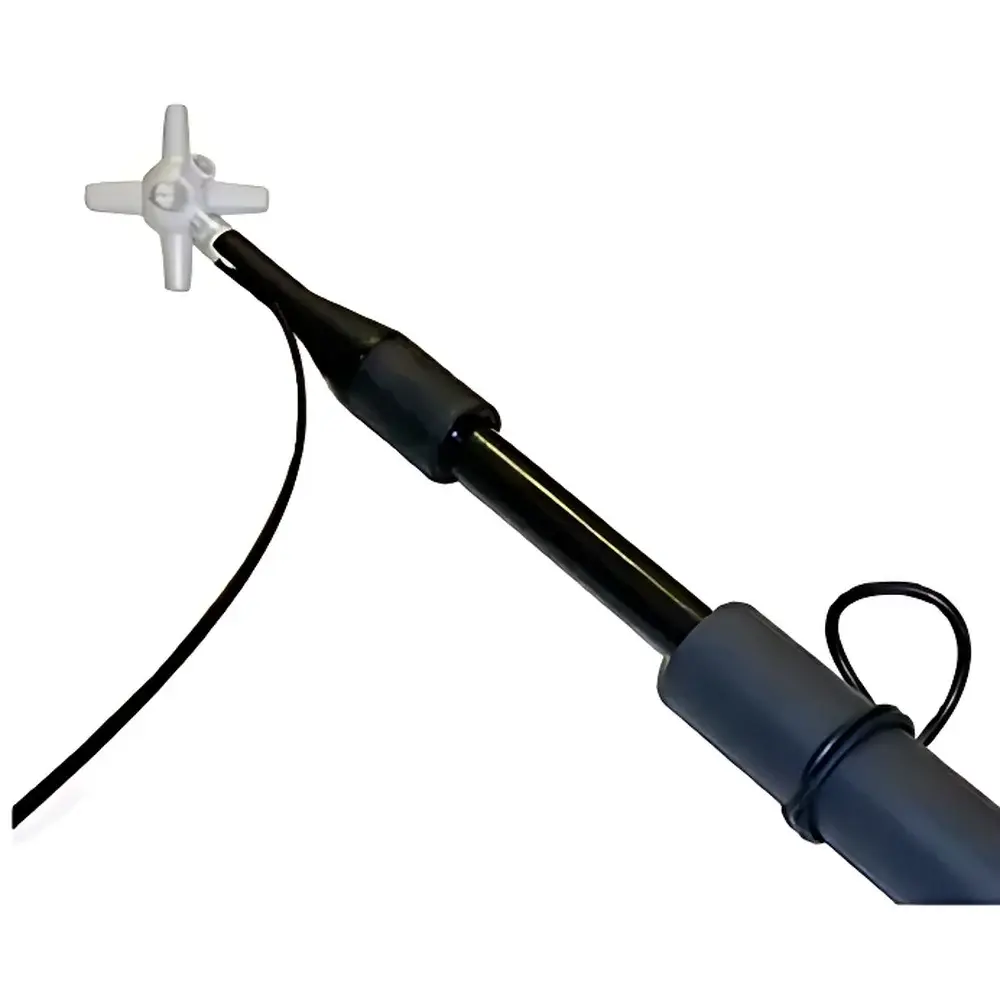
- Antenna pattern verification and near-field scanning of PCBs, enclosures, and wireless modules.
- Multi-probe array deployment (linear, planar, cylindrical, spherical) using optional mechanical switching modules for spatial field mapping.
- Frequency extension up to 50 GHz via compatible front-end modules (e.g., EF5092) or down to 1 Hz using EHP-50F low-frequency extension kits.
FAQ
What calibration standards does the EP-601 comply with?
It is traceably calibrated to PMM’s ISO/IEC 17025-accredited reference system, with uncertainty budgets documented per ISO/IEC 17025:2017 and aligned with NIST SP 823 and EURAMET cg-19 guidelines.
Can the EP-601 be used in conducted immunity testing?
No — it is exclusively designed for radiated electric field measurements; conducted immunity requires current clamps or voltage probes per IEC 61000-4-6.
Is fiber-optic isolation mandatory for operation?
While optional external DC power is supported, fiber-optic coupling is required for full EMI immunity and regulatory-grade repeatability in high-field environments.
How often should recalibration be performed?
Annual recalibration is recommended for GLP/GMP environments; biennial intervals are acceptable for R&D labs operating within controlled conditions and documented usage logs.
Does the EP-601 support real-time spectral analysis?
No — it is a broadband RMS/peak field strength probe; spectral decomposition requires pairing with a compatible spectrum analyzer or FFT-enabled receiver such as the PMM 8053B.







