
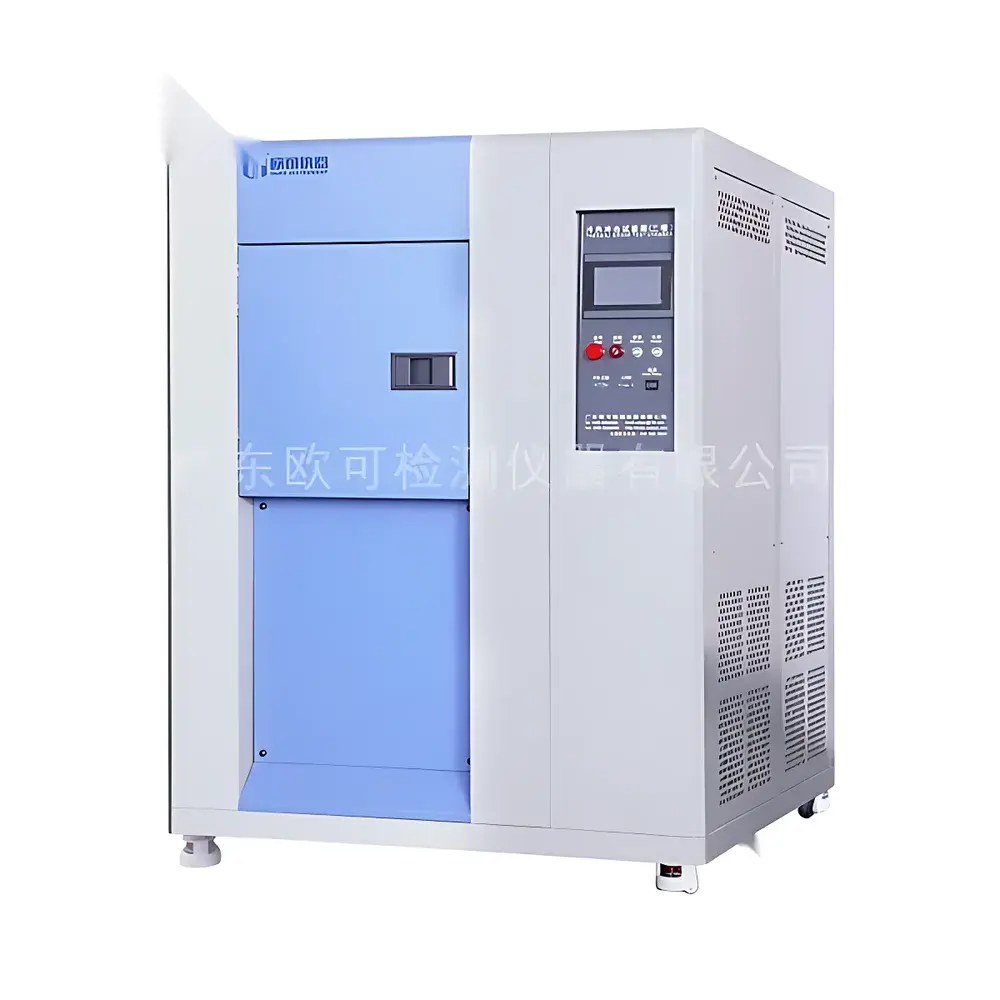
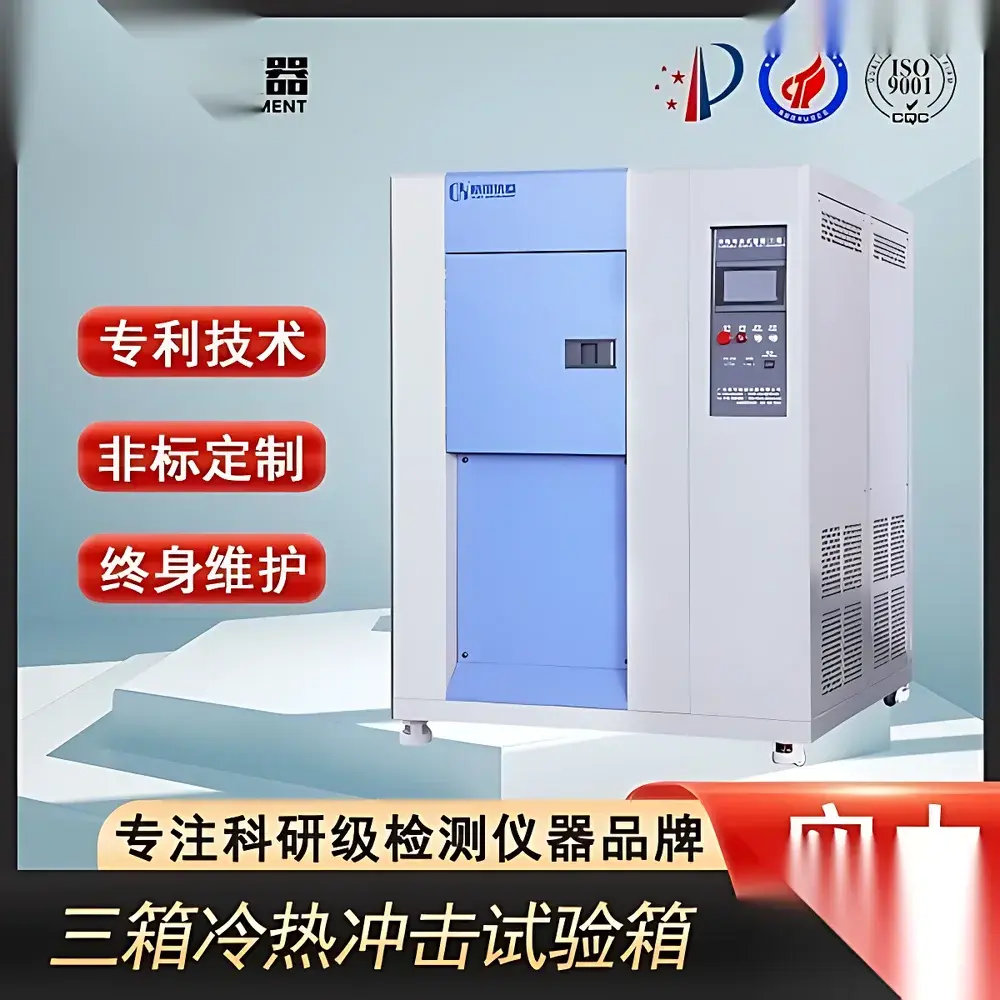
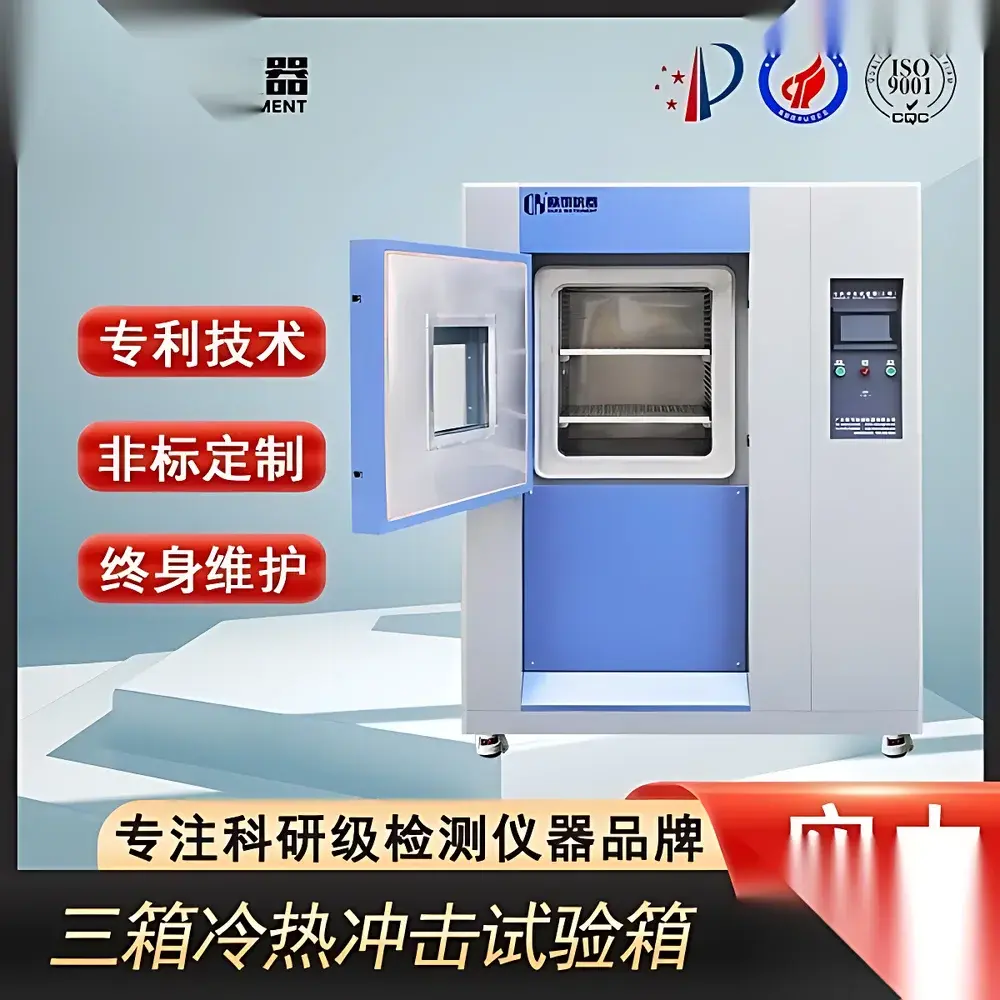
Thermal Shock Test Chamber – Dual-Chamber Rapid Temperature Cycling System
| Brand | Other Brands |
|---|---|
| Origin | Imported |
| Manufacturer Type | Authorized Distributor |
| Cooling System | Twin-Stage Cascade Refrigeration (German Semi-Hermetic Compressors) |
| Compliance | GB/T 2423.1, GB/T 2423.2, GB/T 2423.22, GJB 150.3–150.5, GJB 360.7, GJB 367.2, IEC 60068-2-14, SJ/T 10186–10187, QC/T 17, EIA-364-32 |
| Cooling Water Requirement | 10 m³/h External Cooling Tower (User-Supplied) |
| Temperature Range | −65 °C to +150 °C |
| Transition Time (−65 °C ↔ +150 °C) | ≤15 min (typical, per chamber-to-chamber transfer) |
Overview
The Thermal Shock Test Chamber – Dual-Chamber Rapid Temperature Cycling System is an engineered environmental stress screening platform designed for accelerated reliability validation of electronic components, automotive modules, aerospace assemblies, and high-performance materials. It operates on the principle of rapid thermal transition between two independently controlled temperature zones—typically a low-temperature chamber (−65 °C) and a high-temperature chamber (+150 °C)—using mechanical basket transfer or rotary shuttle mechanisms. This dual-chamber architecture enables precise, repeatable thermal shock profiles without cross-contamination of ambient conditions, ensuring compliance with internationally recognized test standards including IEC 60068-2-14 (Test N), MIL-STD-810G Method 503.5, and GJB 150.5. Unlike single-chamber ramp-based systems, this configuration delivers true step-change thermal stress, critical for detecting latent interfacial failures such as solder joint fatigue, delamination in multilayer PCBs, and coefficient-of-thermal-expansion (CTE) mismatch in encapsulated semiconductors.
Key Features
- Dual independent chambers with independent PID-controlled refrigeration and heating circuits, enabling simultaneous stabilization at extreme setpoints (−65 °C and +150 °C)
- Twin-stage cascade refrigeration system utilizing German-sourced semi-hermetic compressors, optimized for stable sub-zero operation and rapid recovery after thermal load ingress
- Evaporative condenser heat exchange interface between high- and low-stage cycles, facilitating efficient energy transfer and minimizing compressor cycling frequency
- Integrated energy modulation logic that dynamically adjusts refrigerant mass flow and compressor loading to maintain target temperatures while reducing power consumption and mechanical wear
- Stainless steel 304 inner chamber construction with electrostatically applied epoxy-coated outer housing; insulated with 150 mm thick polyurethane foam (thermal conductivity ≤0.022 W/m·K)
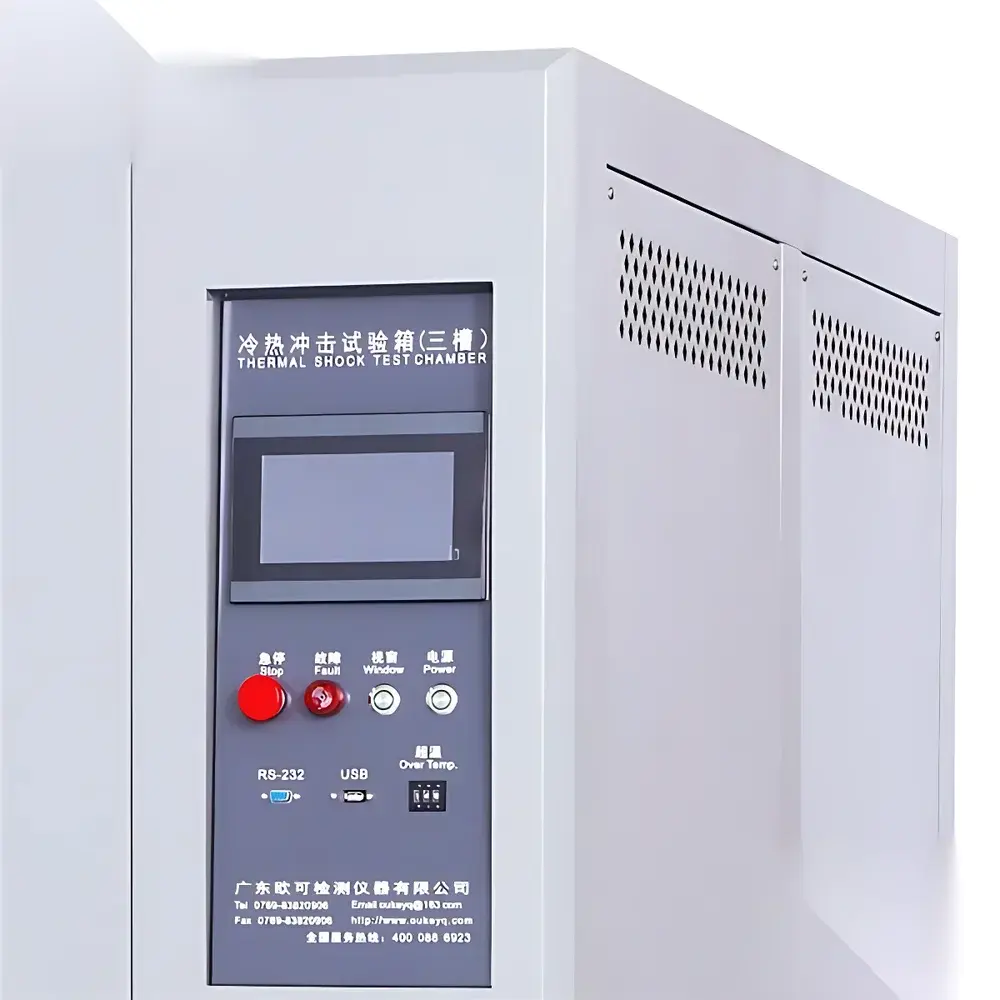
- Programmable controller supporting up to 99 segments per profile, with user-definable dwell time, transition rate, and cycle count; real-time deviation alarm with data logging at 1-second intervals
Sample Compatibility & Compliance
This system accommodates test specimens up to 500 mm × 500 mm × 500 mm (W×D×H) and supports both powered-on and unpowered testing configurations. Fixturing options include non-conductive polymer trays, grounded aluminum racks, and custom thermal mass adapters for simulating real-world mounting conditions. The chamber meets structural and operational requirements for GLP-compliant laboratories and supports audit-ready documentation per ISO/IEC 17025:2017. All thermal profiles are traceable to NIST-certified reference thermocouples (Type T, Class 1), and system validation includes IQ/OQ documentation templates aligned with FDA 21 CFR Part 11 data integrity expectations. Compliance verification reports are provided for each of the following standards: GB/T 2423.22–2002, GJB 150.5–86, IEC 60068-2-14, EIA-364-32, and QC/T 17–92.
Software & Data Management
The embedded control interface runs on a deterministic real-time OS with local 16 GB SSD data storage and optional Ethernet/IP or RS-485 Modbus RTU connectivity. Standard firmware includes built-in profile library with preloaded test sequences for automotive ECUs (SAE J2245), avionics (DO-160 Section 4.3), and consumer electronics (JEDEC JESD22-A104). Optional PC-based software (Windows 10/11 compatible) provides advanced features: multi-chamber synchronization, statistical process control (SPC) charting, automated report generation in PDF/CSV/XLSX formats, and electronic signature support compliant with 21 CFR Part 11 Annex 11 requirements. Audit trails record all parameter changes, user logins, calibration events, and alarm acknowledgments with immutable timestamps.
Applications
- Qualification testing of printed circuit board assemblies (PCBAs) per IPC-9701A for thermal cycling reliability
- Validation of solder joint integrity in lead-free and high-reliability interconnects under repeated thermal stress
- Screening of MEMS sensors, optoelectronic packages, and ceramic capacitors for microcrack initiation and propagation
- Material-level evaluation of thermal interface materials (TIMs), conformal coatings, and underfill epoxies
- Environmental stress screening (ESS) of military-grade connectors, harnesses, and power modules per MIL-STD-202G
- Accelerated aging studies for battery cell housings, EV power electronics, and ADAS sensor enclosures
FAQ
What cooling infrastructure is required for continuous operation?
A dedicated external cooling tower delivering 10 m³/h of recirculated water at ≤32 °C inlet temperature is mandatory. Chilled water supply must be free of particulates (>50 µm filtration recommended) and maintained at pH 6.5–8.5 to prevent corrosion of copper-nickel heat exchanger surfaces.
Is the system suitable for testing powered devices?
Yes. Optional through-wall feedthroughs (up to 12 channels, 30 A max per channel) support live electrical monitoring during thermal transitions. All feedthroughs are rated IP65 and feature low-thermal-conductivity ceramic insulation to minimize heat leakage.
How is temperature uniformity validated across the working volume?
Per IEC 60068-3-5, uniformity is verified using nine calibrated PT100 sensors placed at defined geometric locations. Acceptance criteria require ±2 °C tolerance across the entire usable volume at any stabilized setpoint.
Can the system be integrated into an existing MES or LIMS environment?
Yes. Native OPC UA server implementation enables bidirectional data exchange with manufacturing execution systems. Preconfigured drivers are available for Siemens SIMATIC IT, Rockwell FactoryTalk, and LabVantage LIMS platforms.



