
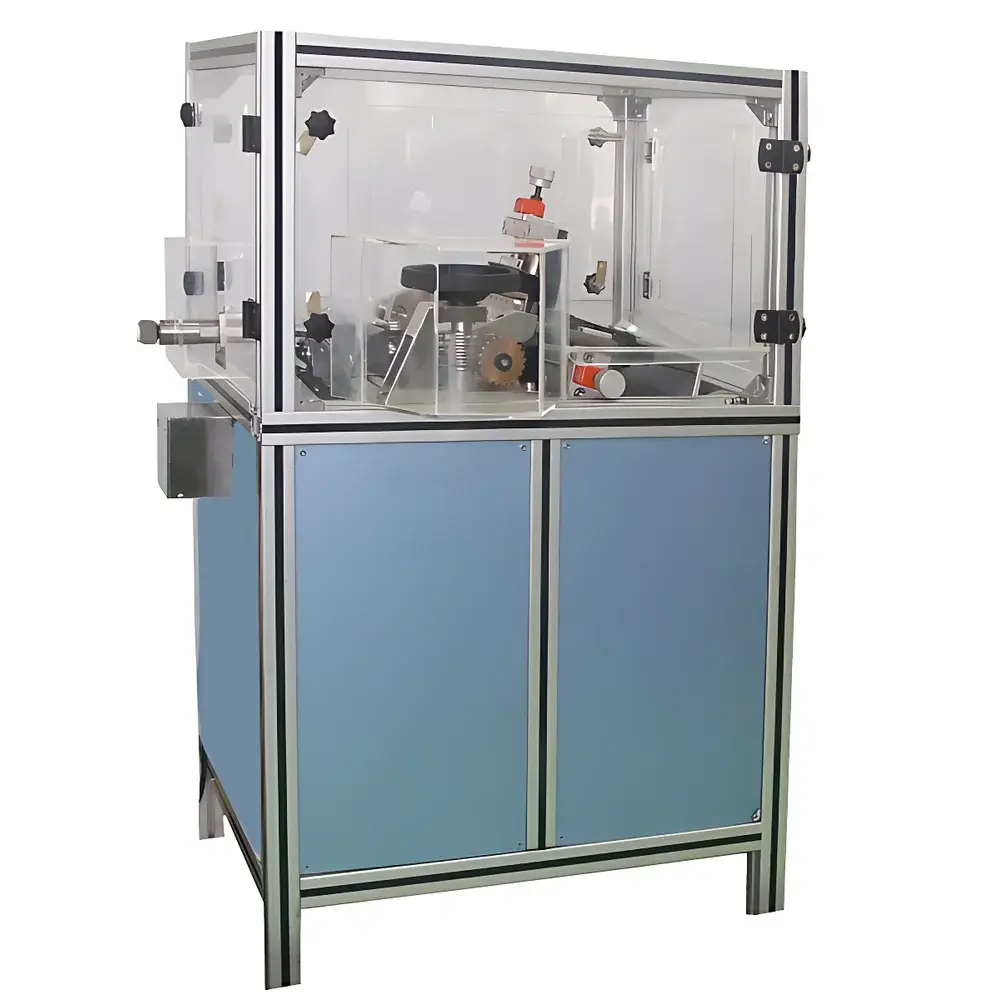
Ducom Water Droplet Erosion Tester WDE-250
| Origin | Netherlands |
|---|---|
| Manufacturer Type | Authorized Distributor |
| Origin Category | Imported |
| Model | WDE-250 |
| Price Range | USD 195,000 – 260,000 (FOB) |
| Instrument Type | Tribological Erosion Tester |
| Maximum Applied Load | 10,000 N |
| Force Resolution | 0.5 N |
| Maximum Test Temperature | 1000 °C |
| Impact Velocity Range | 25–250 m/s |
| Liquid Flow Rate | 8 L/min |
| Jet Pressure | 32 MPa |
| Jet Diameter | 2–4 mm |
| Droplet Size | 2–4 mm |
| Nozzle Orifice Diameters | 0.8, 2.0, 4.0 mm |
| Impact Angle | 15°–90° (adjustable) |
| Droplet Frequency | 5–100 Hz |
| Total Impact Cycles | Up to 5 × 10⁶ |
| Sample Stage Travel (X–Y) | 25 × 25 mm |
Overview
The Ducom Water Droplet Erosion Tester WDE-250 is a precision-engineered tribological test system designed to quantify material degradation under high-velocity liquid impact—specifically simulating rain erosion in aerospace and power generation environments. Unlike conventional solid-particle erosion testers, the WDE-250 replicates the hydrodynamic shock loading mechanism inherent to water droplet impingement: upon impact at velocities up to 250 m/s, transient pressure spikes exceeding several GPa generate tensile stress waves, micro-jetting, and localized plastic deformation at surface asperities. This physics-based simulation enables quantitative assessment of erosion resistance for turbine blades, steam piping alloys, protective coatings, and composite airfoils under controlled, repeatable conditions aligned with ASTM G73-10 “Standard Test Method for Liquid Impingement Erosion Using Rotating Apparatus.” The system operates across ambient to 1000 °C sample temperatures, supporting investigations into thermally activated erosion mechanisms and high-temperature coating stability.
Key Features
- Triple-mode liquid delivery: configurable for single-droplet, pulsed jet, and continuous spray impact testing
- Integrated high-speed imaging port (up to 1 Mfps) synchronized with impact timing for real-time visualization of droplet deformation, splashing dynamics, and early-stage pit nucleation
- Modular nozzle assembly with interchangeable orifices (0.8 mm, 2.0 mm, 4.0 mm) enabling precise control over droplet size distribution and kinetic energy density
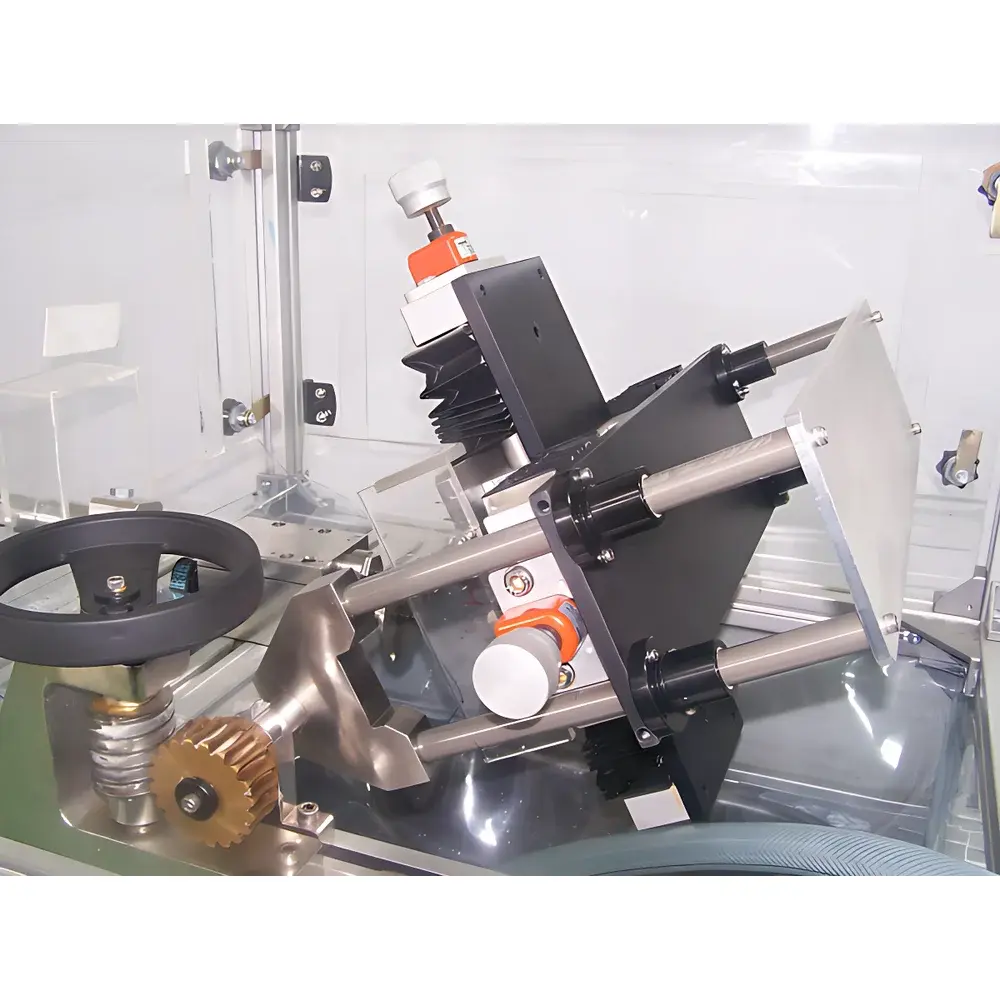
- Motorized angular stage (15°–90°) with digital encoder feedback ensures traceable, reproducible impact angle alignment per ASTM G73-10 Section 7.3
- Robust load frame rated to 10,000 N with sub-0.5 N force resolution supports simultaneous mechanical loading during erosion—critical for studying stress-assisted erosion in rotating components
- Comprehensive safety architecture: polycarbonate splash guard with interlocked access door, dual-channel emergency stop circuit, programmable cycle limit, and real-time pressure/flow monitoring with automatic shutdown
- ISO 17025-aligned calibration traceability for velocity, flow rate, temperature, and force sensors; documentation compliant with GLP audit requirements
Sample Compatibility & Compliance
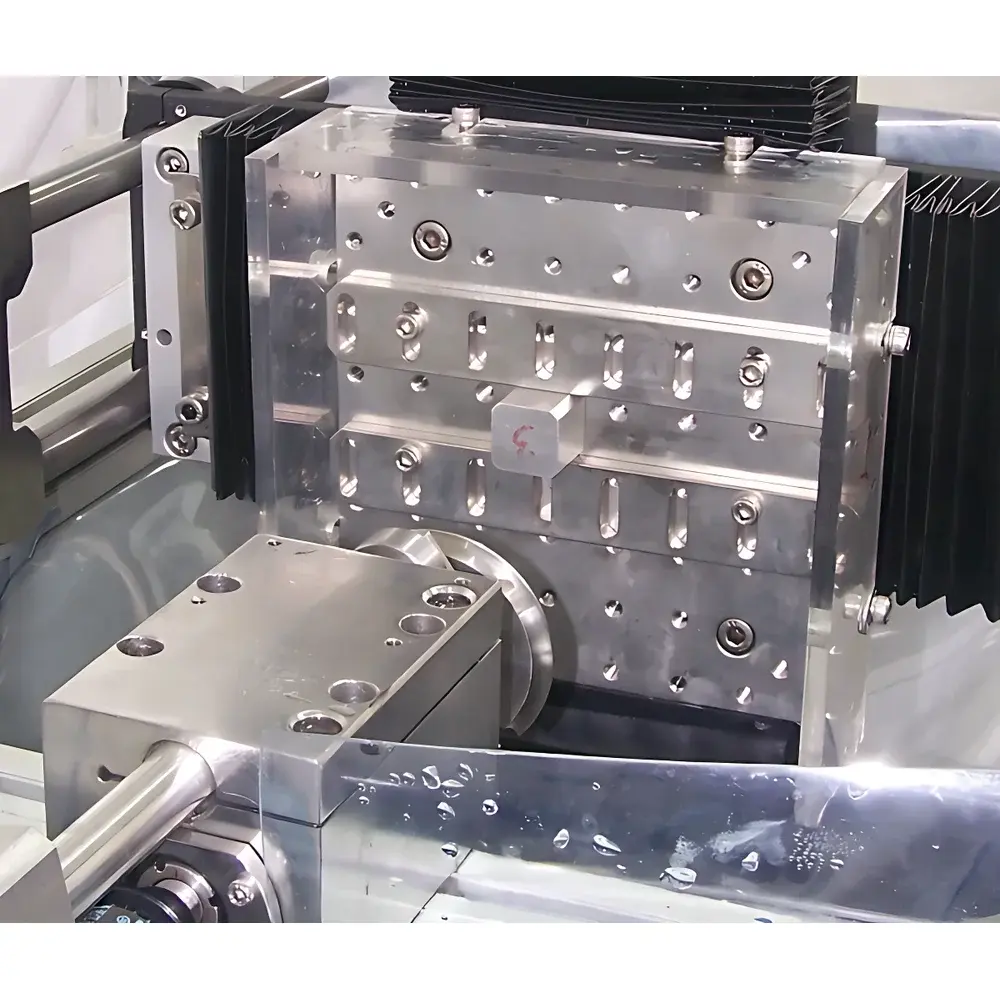
The WDE-250 accommodates flat and curved specimens up to 25 × 25 mm in planar footprint and 50 mm radius of curvature. Sample holders are compatible with metallic substrates (Ti-6Al-4V, Inconel 718, stainless steels), ceramic coatings (YSZ, Cr₃C₂-NiCr), polymer matrix composites, and thermal barrier systems. All test protocols adhere strictly to ASTM G73-10, including mandatory verification of droplet velocity via phase-Doppler anemometry (PDA) prior to qualification runs. For regulated environments, the system supports 21 CFR Part 11-compliant electronic signatures, audit trails for parameter changes, and secure data archiving—meeting FDA and EU GMP requirements for materials qualification in critical infrastructure applications.
Software & Data Management
Ducom ErosionSuite™ v4.2 provides deterministic test sequencing, real-time parameter logging (impact count, cumulative mass loss, temperature, force), and automated post-processing for erosion rate calculation (mg/m²/h or µm/h). Raw high-speed video streams are time-stamped and linked to corresponding sensor data. Export formats include CSV, HDF5, and ASTM E1447-compliant XML for third-party statistical analysis. Data integrity is enforced via SHA-256 hashing, role-based user permissions, and encrypted local storage. Optional integration with LIMS platforms (e.g., LabWare, Thermo Fisher SampleManager) enables end-to-end traceability from sample ID to final erosion map.
Applications
- Aerospace: Quantifying leading-edge erosion resistance of compressor/turbine blades, winglets, and radomes exposed to high-Mach rain ingestion
- Power Generation: Accelerated lifetime prediction of austenitic steel bends and T-joints in supercritical steam circuits subjected to condensate droplet impingement
- Coating Development: Screening of HVOF-sprayed WC-CoCr, laser-clad NiCrBSi, and PVD TiN/TiAlN multilayers for erosion-corrosion synergy under wet-steam conditions
- Renewable Energy: Evaluating erosion durability of wind turbine blade leading-edge protection tapes and hybrid elastomer-ceramic overlays
- Advanced Manufacturing: Validating surface texturing efficacy for cavitation mitigation in hydraulic turbines and fuel injector nozzles
FAQ
What standards does the WDE-250 comply with?
ASTM G73-10 is fully supported; optional validation packages available for ISO 8502-11 (surface cleanliness) and IEC 60584-2 (thermocouple calibration) compliance.
Can the system operate under inert or humidified atmospheres?
Yes—integrated gas purge ports enable operation under N₂, Ar, or controlled RH environments up to 95% at 100 °C.
Is temperature control available during impact testing?
The heated sample stage maintains ±2 °C uniformity from ambient to 1000 °C; thermal gradients across the impact zone are characterized and reported in calibration certificates.
How is erosion depth quantified?
In situ profilometry (optional add-on) or ex situ confocal microscopy (per ISO 25178-2) is used; mass loss is measured via analytical balance (0.01 mg resolution) per ASTM G73-10 Section 10.
Does Ducom provide application support for method development?
Yes—application engineers co-develop test protocols with clients, including DOE-based parameter optimization and uncertainty budgeting per GUM (JCGM 100:2018).



