
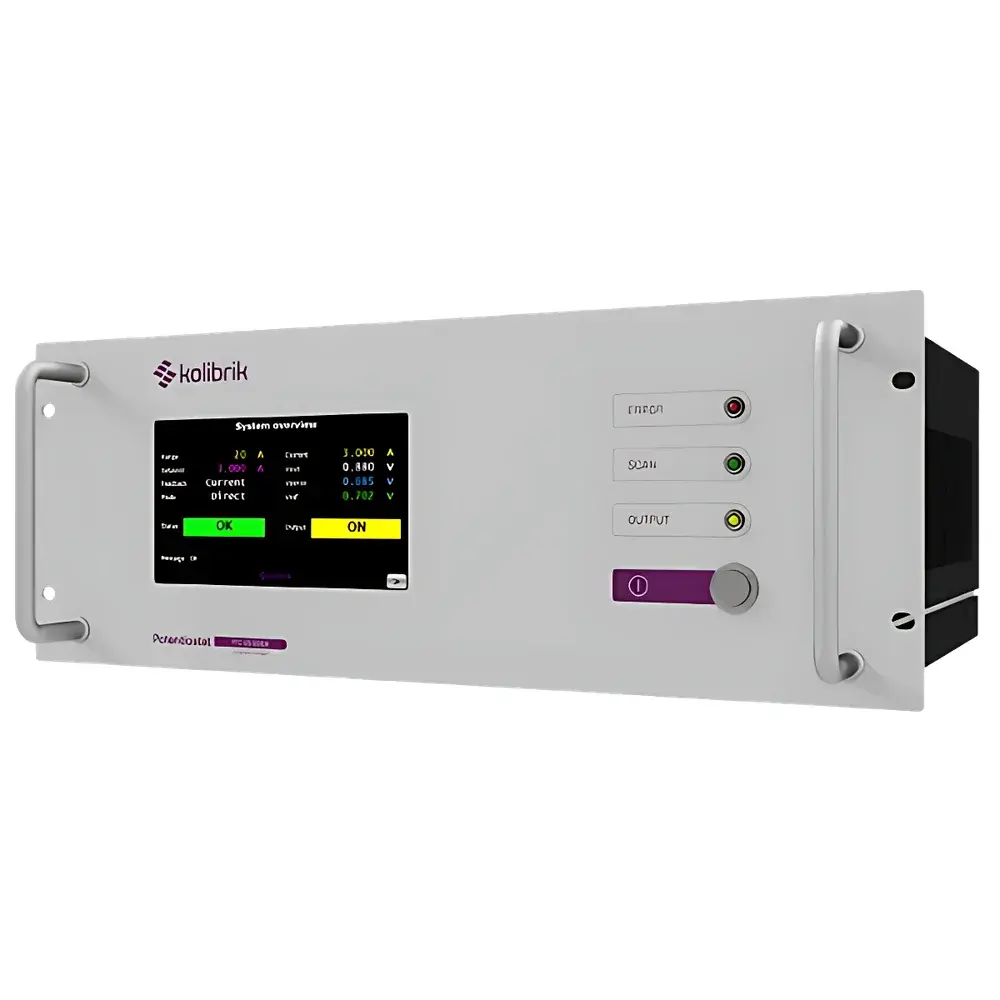
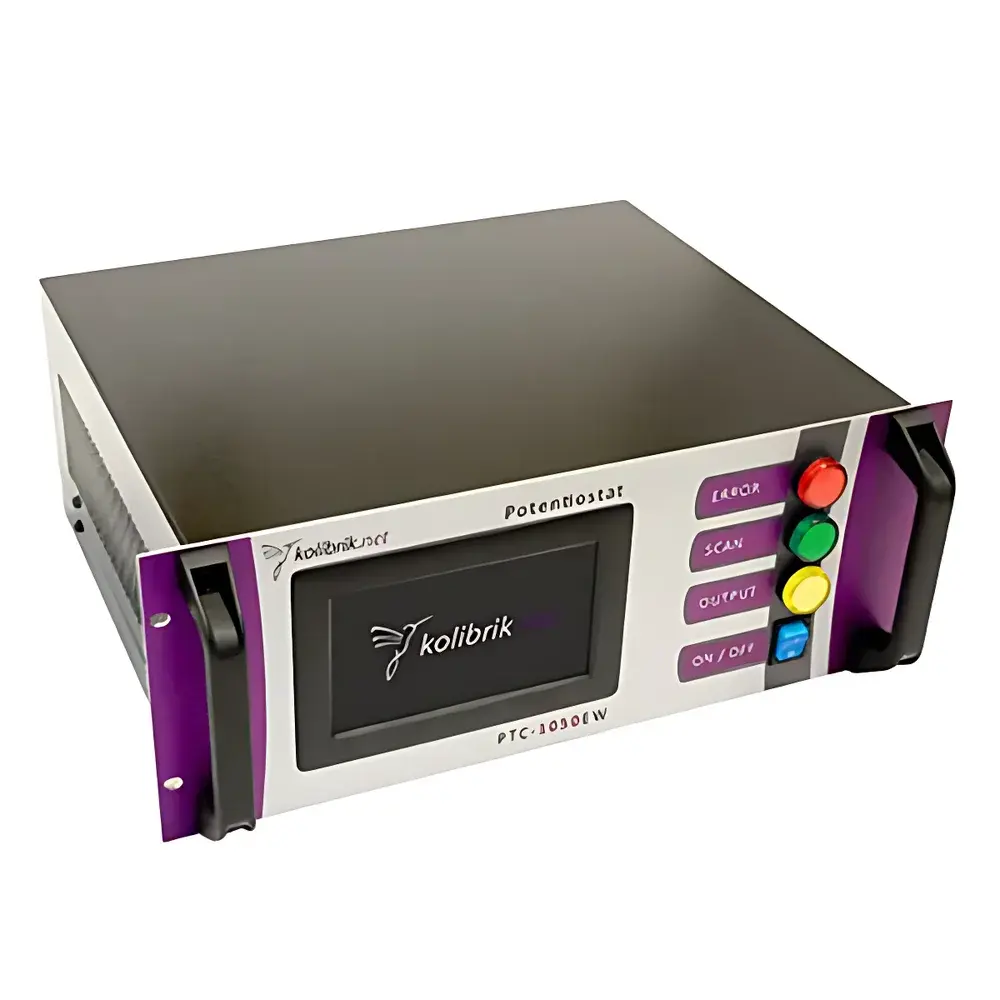
Gamry PTC-1020E High-Current Bipotentiostat/Galvanostat Electrochemical Workstation
| Brand | Gamry |
|---|---|
| Origin | USA |
| Model | PTC-1020E |
| Instrument Type | Electrochemical Workstation |
| Channel Count | Single-Channel |
| Current Range | ±20 A |
| Current Accuracy | ±0.1% of reading |
| Potential Accuracy | ±0.1% of reading |
| Potentiostatic Range | ±10 V |
| EIS Frequency Range | 1 mHz – 100 kHz |
| Maximum Power Output | 500 W |
| Current Ranges | 20 mA / 200 mA / 2 A / 20 A (auto-ranging) |
| EIS Amplitude | 1–1000 mV (up to 10 A peak current below 1 kHz) |
| Cooling Method | Forced-air |
| Interface | USB 2.0 |
| Software Compatibility | Windows OS, TCP/IP server support, NI LabVIEW drivers available on request |
Overview
The Gamry PTC-1020E is a high-power, single-channel bipotentiostat/galvanostat engineered for demanding electrochemical applications requiring robust current delivery and precise potential control. Unlike conventional benchtop potentiostats limited to milliampere-level currents, the PTC-1020E delivers ±20 A continuous output with ±10 V compliance—enabling direct characterization of large-area electrodes, industrial battery cells, fuel cell stacks, corrosion coupons, and electroplating baths under realistic operational loads. Its design adheres to fundamental electrochemical instrumentation principles: four-quadrant operation (anodic/cathodic current sourcing/sinking), galvanostatic and potentiostatic feedback loops with digital PID regulation, and hardware-synchronized timing for transient techniques. The system operates as a true bipotentiostat, supporting two independent working electrode connections when configured with auxiliary potentiostat modules—though the base PTC-1020E functions as a high-current single-channel workstation optimized for power-intensive DC and low-frequency AC measurements.
Key Features
- High-current capability: ±20 A maximum output with 500 W peak power handling, suitable for macro-electrode and full-cell testing
- Precision control: 0.1% accuracy in both current and potential measurement across all ranges
- Four auto-ranging current scales (20 mA, 200 mA, 2 A, 20 A) ensure optimal resolution from microampere to ampere regimes
- Broad EIS coverage: 1 mHz to 100 kHz frequency sweep range with programmable sinusoidal amplitude (1–1000 mV); supports up to 10 A peak current at frequencies below 1 kHz for low-impedance systems
- Forced-air thermal management ensures stable performance during extended high-load experiments (e.g., chronopotentiometry at 15 A for >30 min)
- Full method library: Includes potentiostatic/galvanostatic modes, open-circuit potential (OCP), chronoamperometry/chronopotentiometry, linear sweep voltammetry (LSV), cyclic voltammetry (CV), differential pulse voltammetry (DPV), square-wave voltammetry (SWV), normal pulse voltammetry (NPV), and full EIS with Kramers-Kronig validation
- Hardware-timed sequence execution: All techniques support user-defined multi-step protocols with inter-step delay, conditional branching, and real-time data logging at up to 100 kS/s
Sample Compatibility & Compliance
The PTC-1020E accommodates diverse electrochemical configurations—including three-electrode (working, counter, reference), two-electrode (for symmetric cells or conductivity measurements), and floating-cell setups. It interfaces seamlessly with standard laboratory electrochemical cells (e.g., Swagelok-type, Teflon H-cells), flow-through reactors, rotating disk electrodes (RDEs) with external motor control, and custom-built battery test fixtures. From a regulatory standpoint, the instrument’s architecture supports GLP-compliant workflows: audit-trail-enabled software logs all parameter changes, method executions, and calibration events; raw data files include embedded metadata (timestamp, operator ID, instrument serial number, firmware version). While not FDA 21 CFR Part 11-certified out-of-the-box, its TCP/IP interface and LabVIEW driver enable integration into validated environments where electronic signatures and access controls are implemented at the host system level. The device conforms to IEC 61010-1 for electrical safety and meets CE marking requirements for EMC and low-voltage directives.
Software & Data Management
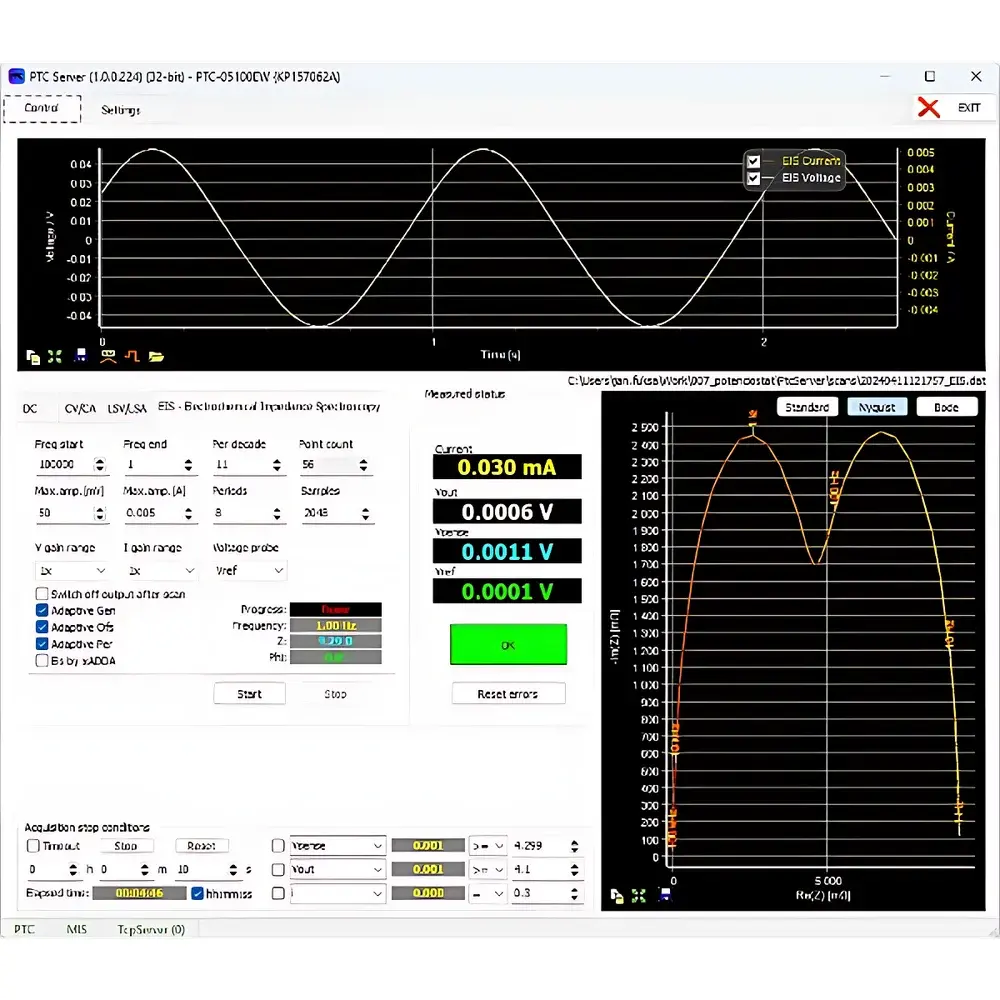
Operation is managed via Gamry’s Framework™ software—a Windows-native application offering intuitive experiment setup, real-time visualization, and post-acquisition analysis tools including equivalent circuit modeling (ECM), distribution of relaxation times (DRT), and derivative-based peak detection. Framework supports full TCP/IP server mode, allowing remote initiation, monitoring, and termination of experiments from third-party platforms (e.g., Python scripts, MATLAB, or SCADA systems). Native LabVIEW drivers are provided upon request, enabling tight synchronization with motion controllers, temperature chambers, or gas flow systems in automated test benches. All data is saved in Gamry’s proprietary .DTA format (ASCII-readable, metadata-rich) and can be exported to CSV, Excel, or HDF5 for long-term archival or cross-platform analysis. Batch processing macros permit automated fitting of hundreds of EIS spectra using predefined ECM topologies.
Applications
- Large-format lithium-ion and solid-state battery cycling and impedance spectroscopy under load
- Electrochemical corrosion studies on steel, aluminum, and coated substrates using zero-resistance ammeter (ZRA) or galvanic coupling configurations
- Electrodeposition process optimization—e.g., copper plating kinetics, nickel alloy bath stability, and additive screening at industrially relevant current densities
- Fuel cell catalyst layer characterization under polarization and dynamic load conditions
- Supercapacitor ESR and capacitance profiling across wide voltage and current ranges
- Electrolyzer stack efficiency mapping and degradation analysis during accelerated stress testing
- Electrochemical synthesis scale-up studies requiring precise current density control over cm²–dm² electrode areas
FAQ
What distinguishes the PTC-1020E from standard potentiostats?
It is specifically designed for high-current, high-power applications—delivering ±20 A with ±10 V compliance and 500 W peak output, far exceeding typical lab-grade instruments limited to ±100 mA.
Can it perform EIS on low-impedance systems like batteries or fuel cells?
Yes—its ability to apply up to 10 A peak current below 1 kHz enables high-SNR impedance measurements on sub-milliohm systems, while maintaining phase accuracy down to 1 mHz.
Is the system compatible with automated test environments?
Fully—via TCP/IP server mode and optional LabVIEW drivers, it integrates into programmable test stands with environmental chambers, load frames, or multi-channel data acquisition systems.
Does it support dual working electrode (bipotentiostat) operation?
The base PTC-1020E is a single-channel workstation; bipotentiostat functionality requires pairing with an auxiliary Gamry potentiostat module (e.g., REF 600+), connected via synchronized trigger bus.
What maintenance is required for sustained high-current operation?
Periodic inspection of air filters and cooling fans is recommended; no routine recalibration is needed—the system employs factory-trimmed, temperature-compensated DACs and ADCs with NIST-traceable calibration certificates supplied at shipment.
Related Products





