
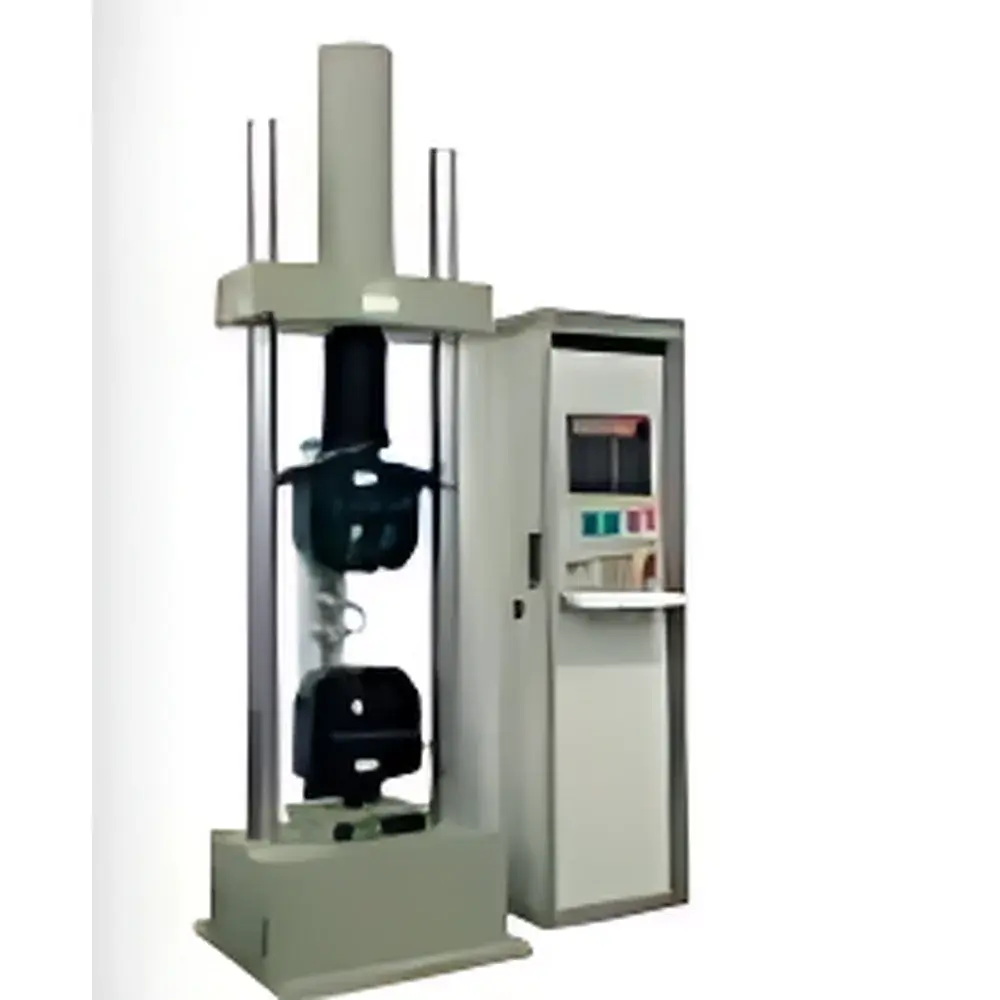
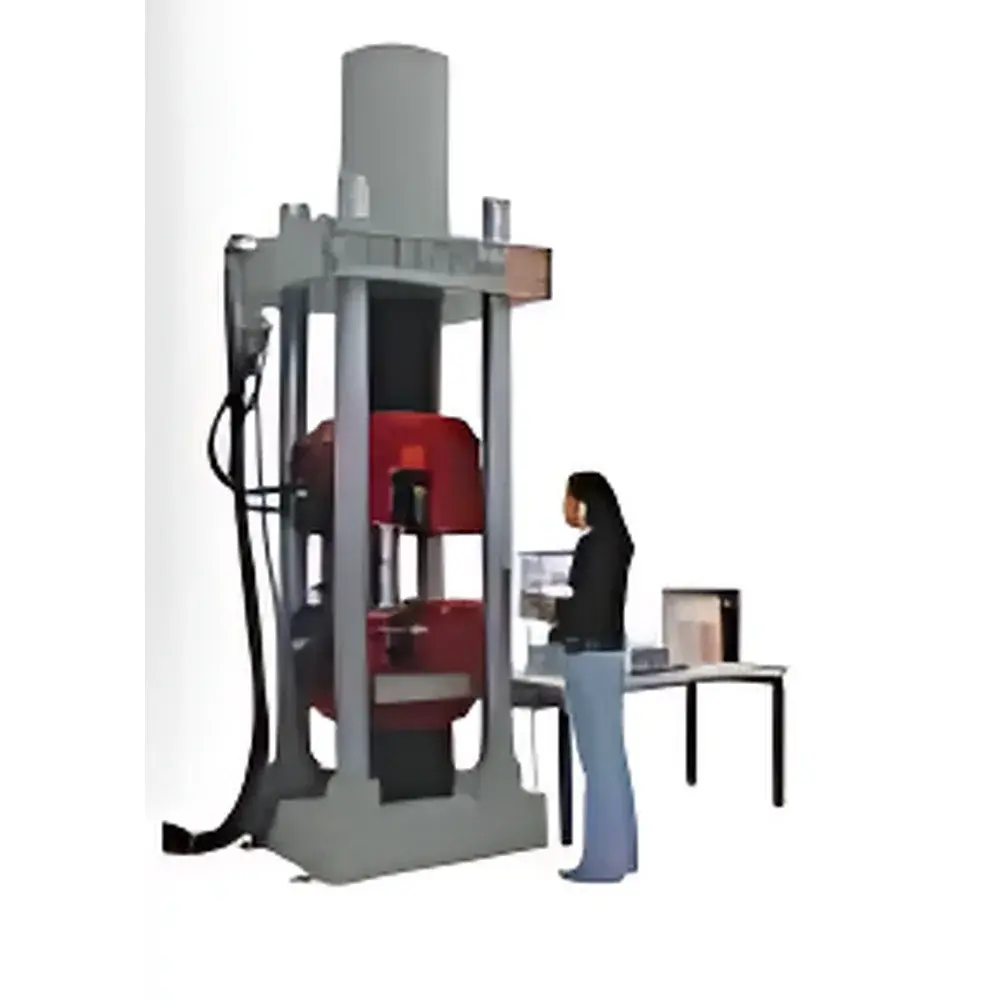
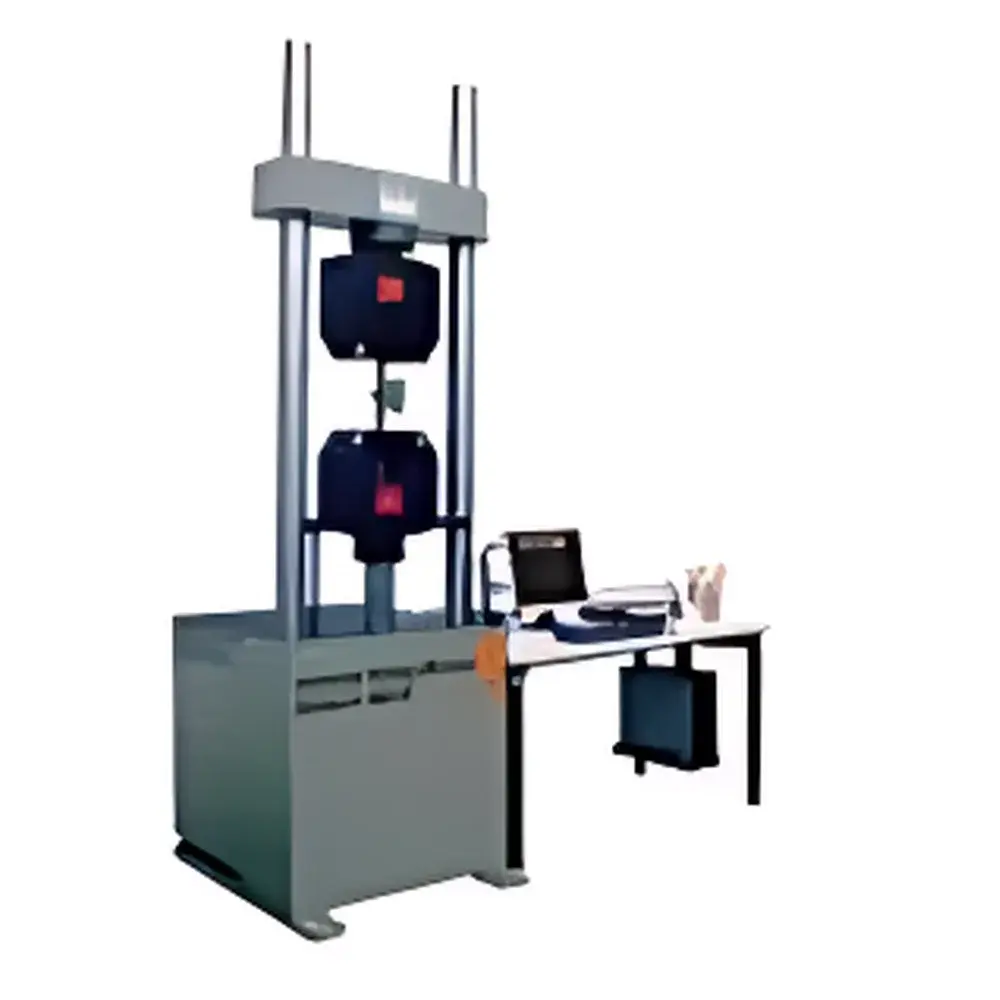
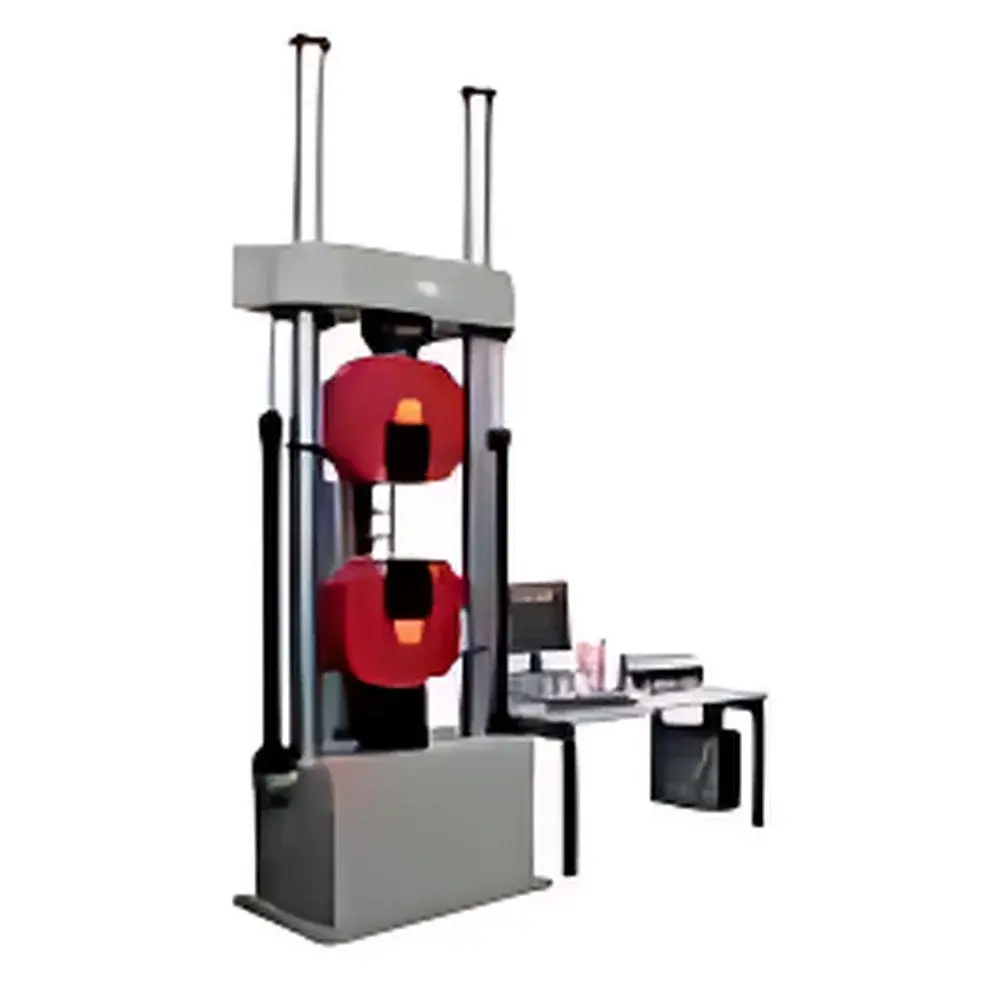
W+B TTM/LF/LFSV Series Electro-Hydraulic Servo Universal Testing Machines
| Brand | W+B |
|---|---|
| Origin | Switzerland |
| Model | TTM/LF/LFSV |
| Load Capacity Range | 50 kN to 3000 kN |
| Type | Electro-Hydraulic Servo-Controlled Universal Testing Machine |
| Structural Configurations | 2-Column (TTM <600 kN), 4-Column (TTM ≥600 kN), Floor-Mounted Actuator (LF & LFSV) |
| Control Architecture | Closed-Loop Servo Hydraulic with Digital Controller or PC-Based Software Package |
| Compliance | Designed for ASTM E4, E8, E9, E21, ISO 6892-1, ISO 7500-1, EN 10002-1, and ISO 15630-1 testing protocols |
Overview
The W+B TTM/LF/LFSV series electro-hydraulic servo universal testing machines are precision-engineered systems for static mechanical characterization of structural materials and components under tension, compression, bending, shear, and cyclic loading conditions. These instruments operate on the principle of closed-loop servo-controlled hydraulic actuation, where high-fidelity pressure control valves modulate oil flow to a precisely guided piston-cylinder assembly, enabling accurate force application and displacement tracking in real time. The series encompasses three distinct platform architectures—TTM (high-rigidity dual- or quad-column frames), LF (floor-mounted actuator with movable crosshead), and LFSV (compact base-integrated actuator with hydraulic crosshead elevation)—each optimized for specific laboratory spatial constraints, throughput requirements, and load-class applications. All models comply with international metrological standards for force measurement accuracy (ISO 7500-1 Class 1 or better), displacement resolution (≤1 µm), and load frame stiffness (≥1.5 MN/mm for TTM 3000 kN configuration), ensuring traceable, repeatable, and auditable test results required in accredited materials laboratories and industrial QA/QC environments.
Key Features
- Modular structural design: TTM variants feature rigid 2-column (250–600 kN) or 4-column (600–3000 kN) load frames with chromium-plated guide columns for low-friction, long-term alignment stability.
- Integrated servo-hydraulic actuation: High-bandwidth proportional valves and pressure-compensated pumps deliver dynamic response up to 100 Hz for quasi-static and low-frequency cyclic tests per ASTM E606 and ISO 1099.
- Load frame versatility: Standard configurations support tensile grips, compression platens, three- and four-point bend fixtures, shear adapters, and folding jigs—all directly mountable to the crosshead or base without auxiliary tooling.
- Crosshead mobility architecture: LF models employ motor-driven vertical adjustment; LFSV variants utilize hydraulic crosshead lifting with passive mechanical locking, minimizing overhead clearance while maximizing usable test height (up to 2200 mm).
- Digital control ecosystem: Optional W+B TestControl software provides full test sequence scripting, real-time PID tuning, multi-channel data acquisition (force, displacement, extensometer, temperature), and automated report generation compliant with GLP/GMP documentation requirements.
Sample Compatibility & Compliance
The TTM/LF/LFSV platforms accommodate specimens ranging from miniature fasteners (M2 threaded rods) to full-scale structural beams (up to 400 mm wide × 600 mm deep). Standardized test geometries include flat sheet coupons (ASTM E8/E8M), round bars (ISO 6892-1), weldment coupons (AWS D1.1), and reinforced concrete prisms (ASTM C39). All systems are supplied with factory calibration certificates traceable to national metrology institutes (e.g., METAS, NIST), and support third-party verification per ISO/IEC 17025. Force transducers meet ISO 376 Class 0.5 accuracy; displacement measurement satisfies ISO 9513 Class 1 requirements when used with clip-on or video extensometers.
Software & Data Management
W+B TestControl v5.x is the native software suite supporting all three model lines. It enables full compliance with FDA 21 CFR Part 11 through electronic signatures, audit trails, role-based access control, and immutable raw data archiving. Test methods can be preconfigured using standardized templates aligned with ASTM, ISO, and EN test standards—including automatic calculation of yield strength (Rp0.2), ultimate tensile strength (Rm), modulus of elasticity (E), and fracture toughness (KIc). Data export supports CSV, XML, and PDF formats; integration with LIMS via OPC UA or REST API is available upon request. Raw waveform data is stored in binary .wbd format with embedded metadata (operator ID, environmental conditions, calibration status).
Applications
These systems serve metallurgical R&D labs validating high-strength alloys (Ti-6Al-4V, Inconel 718), automotive Tier-1 suppliers certifying chassis components per SAE J2334, civil engineering firms qualifying prestressed concrete tendons (EN 10138), and aerospace OEMs performing qualification testing on composite laminates (ASTM D3039). Additional use cases include fatigue life assessment of orthopedic implants (ISO 14801), bolt preload verification (ISO 16047), and geotechnical soil reinforcement testing (ASTM D6992). The LFSV’s compact footprint makes it especially suitable for university teaching labs and contract testing facilities with limited ceiling height.
FAQ
What standards does the W+B TTM/LF/LFSV series comply with for force calibration?
All systems are supplied with ISO 7500-1 Class 1 certified load cells and undergo full-load frame stiffness verification per ISO 7500-2.
Can the LFSV series perform high-temperature tensile testing?
Yes—when equipped with optional furnace modules (up to 1200 °C) and high-temperature extensometry, provided thermal shielding and cooling manifolds are installed per ASTM E21 guidelines.
Is remote diagnostics and firmware update supported?
Yes—via secure SSH tunneling and W+B Remote Service Portal, enabling predictive maintenance alerts and version-controlled firmware deployment without on-site engineer dispatch.
How is operator safety ensured during high-force compression tests?
Integrated safety features include dual-channel emergency stop circuits, light curtain interlocks (IEC 61496-1), overload protection at 110% rated capacity, and acoustic warning signals prior to test initiation.
Does the system support closed-loop strain control using extensometers?
Yes—both analog and digital extensometers (including video-based DIC systems) are natively supported with real-time feedback loops for strain-controlled ramp-hold tests per ASTM E691 and ISO 6892-2.
Related Products



