
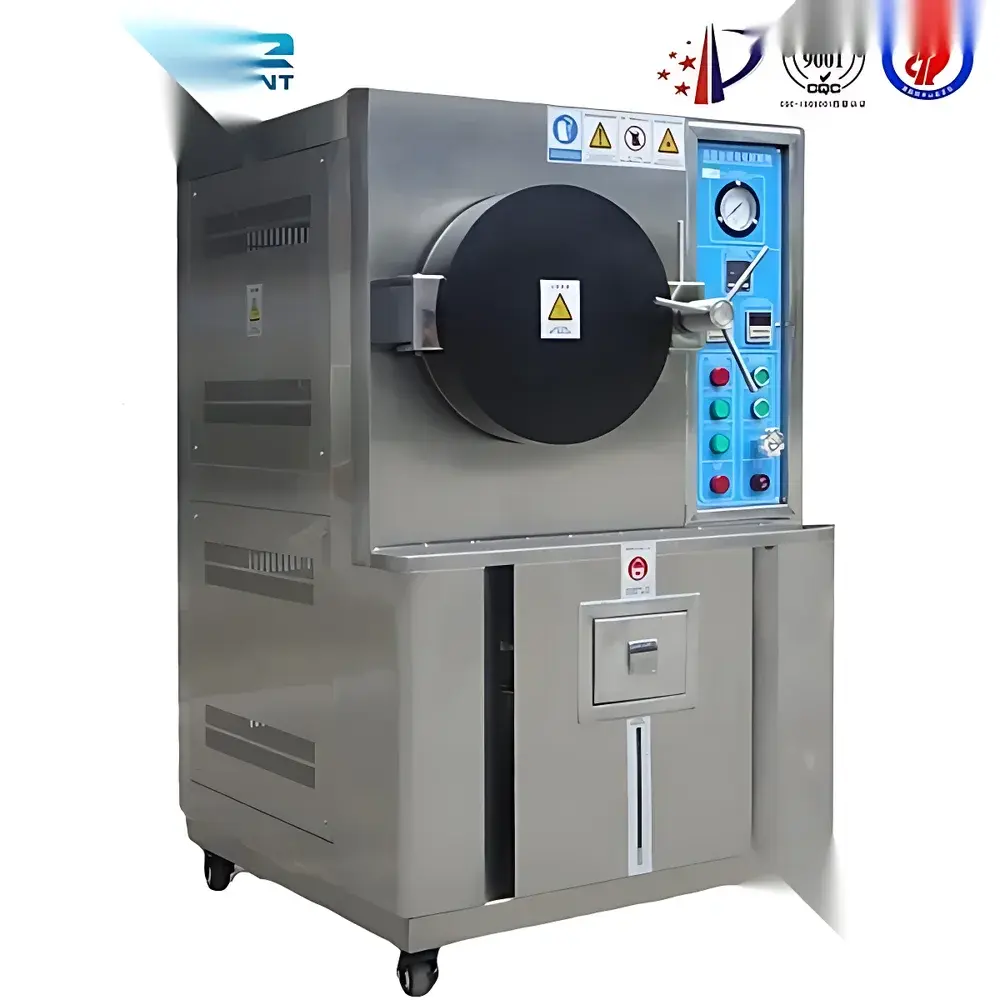
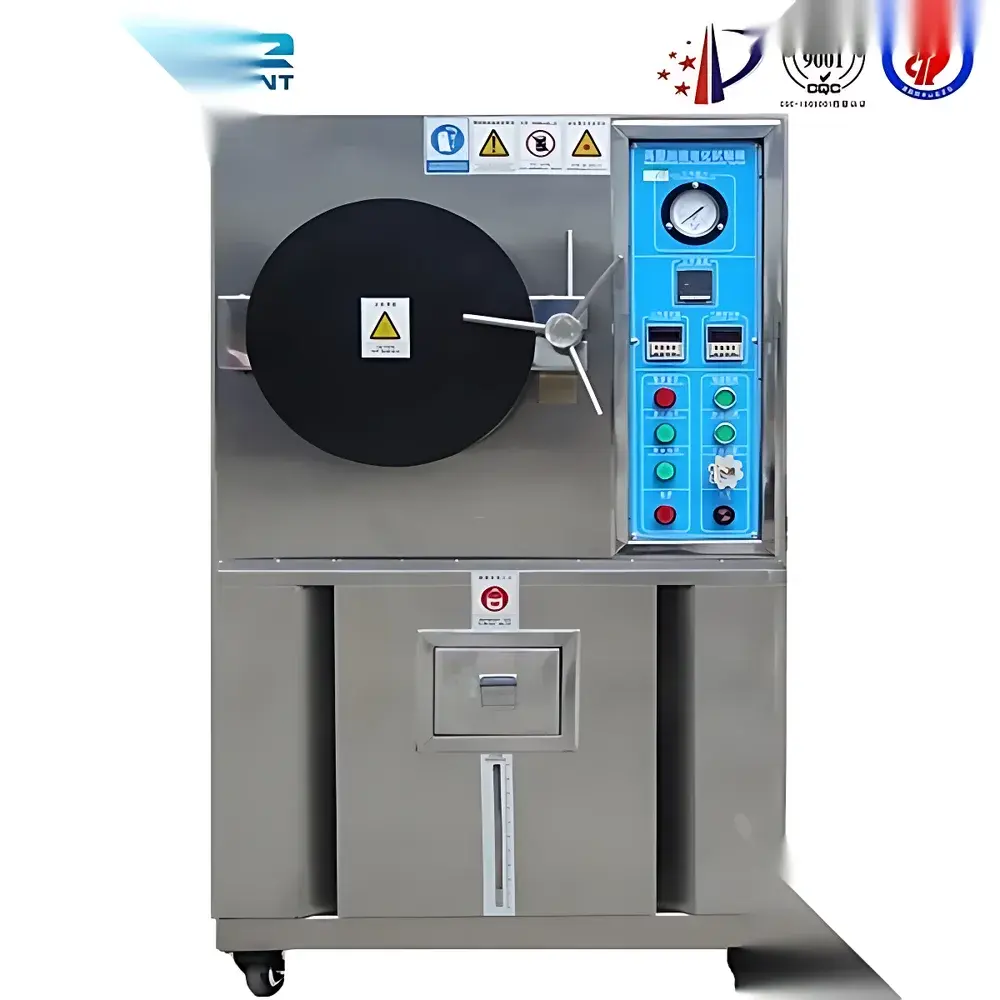
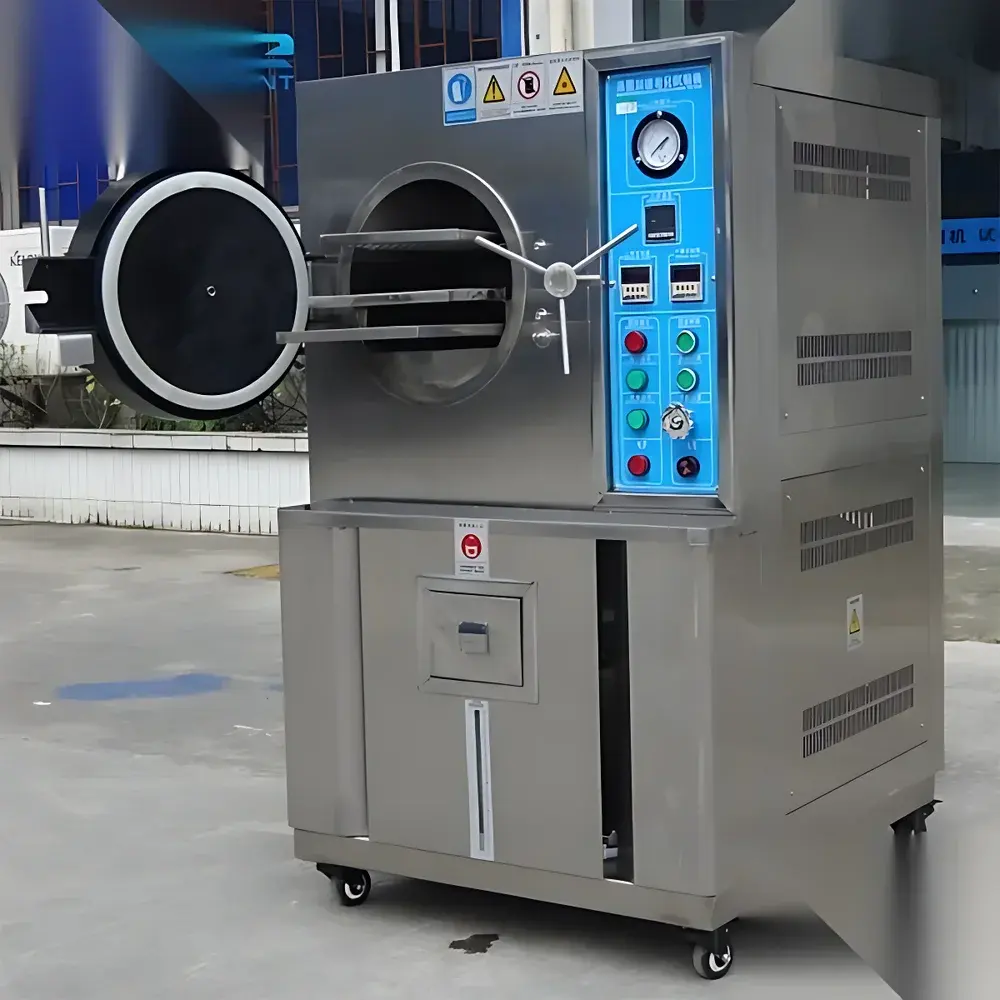
Other Brands OK-PTC-25 / OK-PTC-35 High-Pressure Steam Aging Chamber (PCT Chamber)
| Key | Capacity Options: ∅250×450 mm (OK-PTC-25) |
|---|---|
| Temperature Range | RT+10°C to 132°C |
| Humidity Range | 100% RH (saturated steam) |
| Pressure Range | 0–2.8 bar(g) (max. safety rating: 4.0 bar(g)) |
| Temp. Uniformity | ±1.5°C |
| Temp. Control Accuracy | ±0.5°C |
| Temp. Resolution | 0.1°C |
| Pressurization Time (0→2.0 bar) | ~30 min |
| Inner Chamber Material | SUS304 stainless steel |
| Outer Casing | SECC steel with electrostatic powder coating |
| Compliance | ASTM D2247, IEC 60068-2-66, JIS C 0068, ISO 16750-4, MIL-STD-810H, UL 1598, NACE TM0177, DIN EN 60068-2-66 |
Overview
The OK-PTC-25 and OK-PTC-35 High-Pressure Steam Aging Chambers (commonly referred to as Pressure Cooker Test or PCT chambers) are engineered for accelerated reliability evaluation of electronic components, semiconductor packages, printed circuit boards (PCBs), and encapsulated materials under controlled high-humidity, elevated-temperature, and pressurized saturated steam environments. Based on the fundamental principle of accelerated moisture diffusion under thermodynamic stress, these chambers replicate worst-case field conditions—such as those encountered in tropical climates or sealed automotive/industrial enclosures—where moisture ingress can trigger corrosion, delamination, wire bond degradation, or popcorning failure during reflow soldering. Unlike standard humidity chambers, PCT systems operate above atmospheric boiling point (100°C at 1 atm) by maintaining super-saturated steam at pressures up to 2.8 bar(g), enabling rapid water vapor penetration into microvoids and interfacial layers. This method complies with internationally recognized test protocols for qualification and process validation across automotive (AEC-Q200), aerospace (SAE AS1000D), and industrial electronics sectors.
Key Features
- Two standardized chamber volumes: OK-PTC-25 (∅250 × 450 mm depth) and OK-PTC-35 (∅350 × 500 mm depth), optimized for sample throughput and spatial uniformity.
- Precision temperature control from ambient +10°C to 132°C with ±0.5°C stability and 0.1°C digital resolution, achieved via PID-regulated SUS304-sheathed heating elements and Pt100 RTD sensing.
- Full-range pressure regulation (0–2.8 bar(g)) with calibrated analog pressure gauges and fail-safe mechanical relief valves rated to 4.0 bar(g).
- Horizontally oriented cylindrical inner chamber design minimizes condensate pooling and eliminates direct steam jet exposure to operators during loading/unloading.
- Integrated vacuum-assisted air purge system removes ambient oxygen and particulates prior to steam generation, ensuring consistent test atmosphere purity and reducing oxidation artifacts.
- Automated safety interlock architecture: door remains mechanically locked until internal pressure drops below 0.1 bar(g); simultaneous auto-depressurization, vacuum break, and reservoir refill functions ensure unattended operation for up to 100 hours per water fill cycle.
- Robust construction: interior lined with mirror-finished SUS304 stainless steel for corrosion resistance; exterior fabricated from SECC cold-rolled steel with epoxy-polyester powder coating for long-term durability.
Sample Compatibility & Compliance
The OK-PTC series accommodates a wide range of non-volatile, non-reactive solid specimens—including IC packages (QFP, BGA, CSP), ceramic substrates, conformal-coated assemblies, and polymer-based insulators—without risk of chemical leaching or thermal distortion. Chamber geometry supports standardized test fixtures per JEDEC JESD22-A102 and A110, and its operational envelope satisfies mandatory requirements of IEC 60068-2-66 (Test Td: Damp Heat, Forced Condensation, High Pressure), ASTM D2247 (Standard Practice for Testing Paints Under Continuous Condensation Conditions), and ISO 16750-4 (Road Vehicles – Environmental Conditions and Testing for Electrical and Electronic Equipment – Climatic Loads). The system is also routinely deployed in GLP-compliant laboratories for qualification testing aligned with AEC-Q100 stress categories and MIL-STD-810H Method 507.5 (High Temperature/Humidity, High Pressure).
Software & Data Management
While the base configuration employs a dedicated LED-based microprocessor controller with SSR-driven thermal actuation and real-time analog pressure monitoring, optional RS-485/Modbus RTU interface enables integration with centralized laboratory data acquisition systems (e.g., LabVIEW, SCADA, or LIMS platforms). All operational parameters—including setpoints, actual temperature/pressure profiles, cycle timestamps, and alarm logs—are timestamped and stored locally with non-volatile memory retention. For regulated environments, optional 21 CFR Part 11-compliant software modules provide electronic signatures, audit trails, and user-access level management—supporting full traceability required for FDA-submitted reliability dossiers or ISO 9001/14001 internal audits.
Applications
- Qualification of moisture sensitivity levels (MSL) per JEDEC J-STD-020.
- Evaluation of mold compound adhesion, die attach integrity, and passivation layer robustness in semiconductor packaging.
- Accelerated corrosion testing of solder joints, copper traces, and plated through-holes under combined thermal-hygric stress.
- Validation of conformal coating performance (acrylic, silicone, urethane) against blistering, cracking, or edge lift.
- Reliability screening of automotive ECUs, ADAS sensors, and battery management systems exposed to under-hood conditions.
- Material compatibility studies for medical device housings and implantable electronics subjected to sterilization-grade steam environments.
FAQ
What is the maximum allowable test duration without manual intervention?
Standard configuration supports continuous operation for up to 100 hours per water reservoir fill; optional automated make-up water systems extend this to indefinite runtime under supervision.
Does the chamber support ramp-soak profiles or only static setpoints?
The standard controller maintains fixed temperature/pressure setpoints; programmable multi-step profiles require optional upgrade to a PLC-based HMI system with configurable soak/ramp sequences.
How is condensate managed during depressurization to prevent sample wetting?
The horizontal chamber orientation, combined with gravity-assisted drainage channels and timed vacuum-break sequencing, ensures residual steam condenses externally and is evacuated before door unlocking.
Is calibration documentation provided with shipment?
Each unit ships with factory calibration certificates for temperature (Pt100) and pressure (Bourdon tube gauge), traceable to NIST or equivalent national metrology institutes.
Can the chamber be integrated into an existing environmental test lab network?
Yes—RS-485 Modbus RTU output allows seamless integration with third-party monitoring platforms; Ethernet/IP and OPC UA interfaces are available as custom-engineered options.
Related Products



