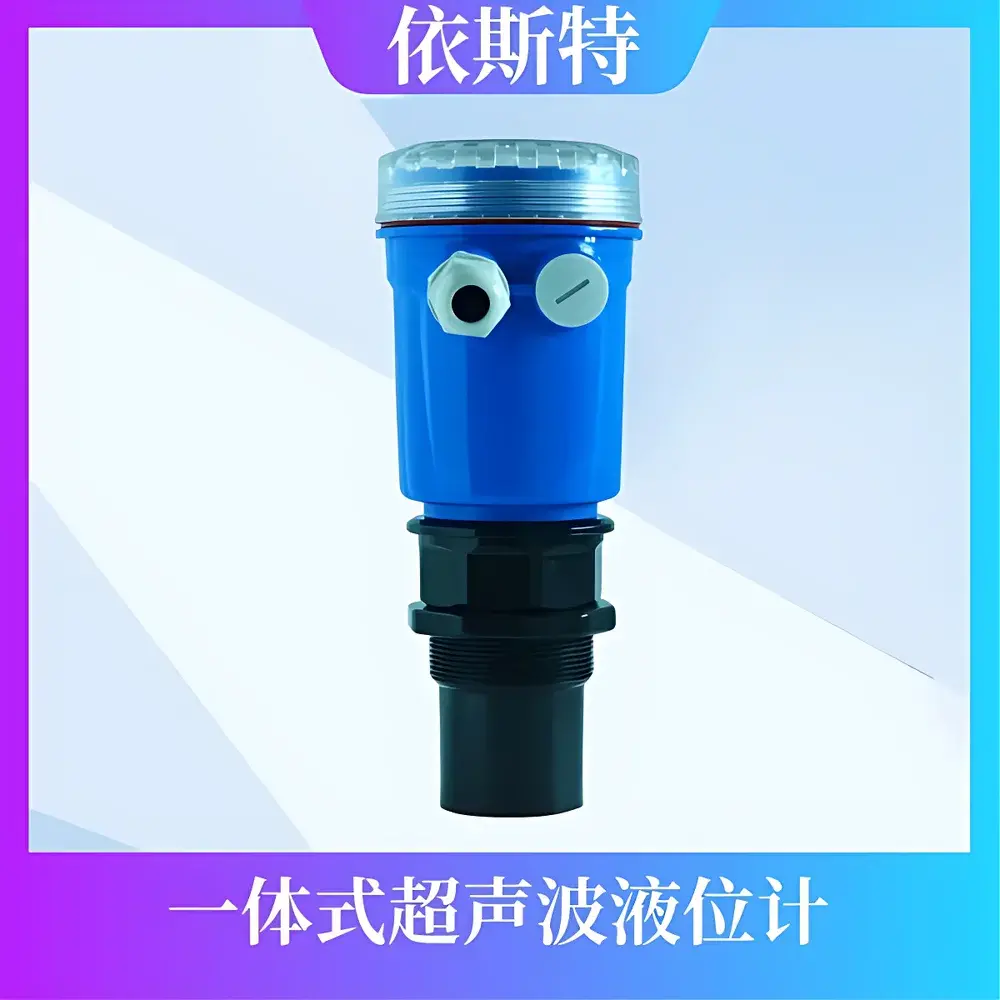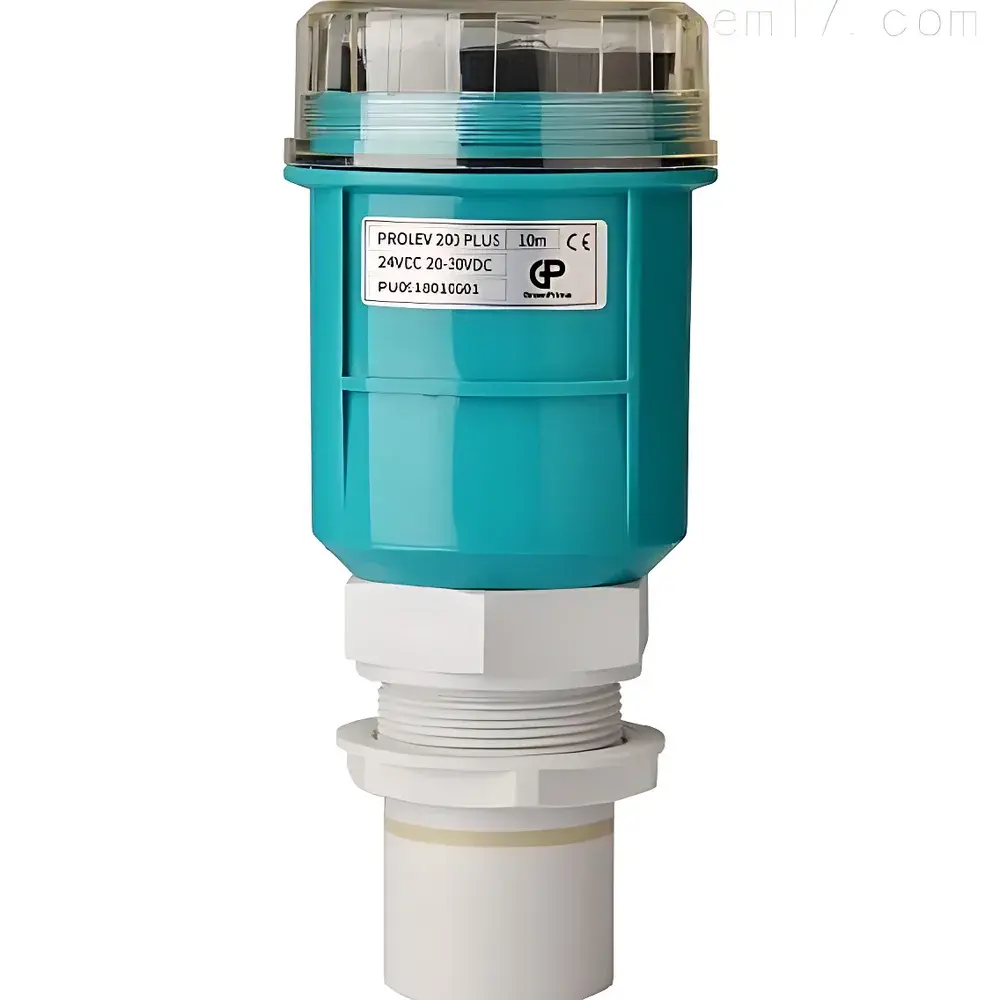
GreenPrima PROL E V200 Ultrasonic Level Transmitter
| Brand | GreenPrima |
|---|---|
| Origin | United Kingdom |
| Manufacturer Type | Original Equipment Manufacturer (OEM) |
| Product Category | Imported |
| Model | PROL E V200 |
| Product Type | Ultrasonic Level Transmitter |
| Measurement Principle | Non-contact ultrasonic time-of-flight (ToF) |
| Output | 2-wire 4–20 mA (max. 750 Ω) |
| Display | LCD with 1 mm resolution |
| Accuracy | ±0.2% FS |
| Measuring Range | 6 m / 10 m (configurable) |
| Blind Zone | 0.25 m / 0.5 m |
| Operating Temperature | –30 to +70 °C |
| Maximum Process Pressure | 1.5 bar |
| Housing Material | PC/PP |
| Sensor Material | ETFE or PVDF |
| Ingress Protection | IP67 |
| Electrical Interface | G2" |
| Media Compatibility | Liquids and bulk solids |
| Environmental Compliance | ATEX II 1/2G Ex ia II C T6 (optional variant) |
Overview
The GreenPrima PROL E V200 is a microprocessor-based, non-contact ultrasonic level transmitter engineered for reliable continuous level measurement in industrial process environments. It operates on the time-of-flight (ToF) principle: a high-frequency ultrasonic pulse (typically 50 kHz) is emitted from the transducer, reflected off the surface of the medium (liquid or solid), and returned to the sensor. The elapsed time between emission and echo reception is precisely measured and converted into distance using the speed of sound in air—compensated in real time for ambient temperature. This physics-based methodology eliminates mechanical wear, avoids process contamination, and ensures stable operation across diverse media—including corrosive, viscous, agitated, or dusty applications—without requiring recalibration for material density or dielectric properties.
Key Features
- Intelligent signal processing with adaptive gain control and automatic power adjustment to maintain optimal echo detection under varying acoustic conditions (e.g., foam, vapor, condensation, or dust).
- Integrated temperature compensation via built-in Pt1000 sensor, ensuring consistent sound velocity calculation across the full operating range (–30 to +70 °C).
- Advanced waveform analysis algorithm enhances signal-to-noise ratio and suppresses false echoes from tank walls, agitators, ladders, or internal structures.
- Dual-material transducer options: ETFE (ethylene tetrafluoroethylene) or PVDF (polyvinylidene fluoride), both offering exceptional chemical resistance and UV stability for harsh process environments.
- Robust polycarbonate/polypropylene (PC/PP) housing rated IP67 for outdoor or washdown installations; optional aluminum/PVDF variants available for higher pressure or extreme corrosion resistance.
- Configurable 2-wire 4–20 mA analog output with HART® protocol support (on PROL E V300-H variants); loop-powered design simplifies integration into legacy DCS/PLC systems without external power supplies.
Sample Compatibility & Compliance
The PROL E V200 is validated for use with liquids (water, wastewater, acids, alkalis, solvents, slurries) and free-flowing or aerated bulk solids (grains, pellets, powders). Its non-invasive measurement method imposes no restrictions related to conductivity, transparency, or viscosity. The device complies with international safety and electromagnetic compatibility standards, including IEC 61000-6-2 (immunity) and IEC 61000-6-4 (emissions). For hazardous areas, certified variants meet ATEX Directive 2014/34/EU (Category II 1/2G, Ex ia II C T6 Ga/Db), enabling safe deployment in Zone 0/1 gas atmospheres. All firmware and configuration data adhere to IEC 62443-3-3 cybersecurity guidelines for industrial automation systems.
Software & Data Management
Configuration and diagnostics are performed via local keypad navigation or remote commissioning using GreenPrima’s proprietary PC-based SmartConfig software (Windows-compatible, USB or RS-485 interface). The embedded firmware supports full audit logging—including parameter changes, calibration events, and alarm history—with timestamped records traceable to operator ID. When integrated with HART-enabled control systems, the transmitter provides access to dynamic variables (level, temperature, signal strength, echo curve), diagnostic status (e.g., “low signal quality”, “temperature out of range”), and predictive maintenance flags. Data export formats include CSV and XML, facilitating alignment with MES and SCADA platforms compliant with ISA-95 and OPC UA frameworks.
Applications
The PROL E V200 serves as a primary level monitoring solution across regulated and non-regulated industrial sectors. In municipal water and wastewater treatment plants, it monitors influent wells, equalization basins, and sludge holding tanks under variable weather and biological loading conditions. In food & beverage production, its hygienic sensor materials and IP67 rating support CIP/SIP cycles in dairy, brewing, and juice processing lines. Chemical and pharmaceutical facilities deploy it for intermediate storage of raw materials and intermediates where contact measurement would risk cross-contamination or require frequent cleaning. It is also widely adopted in open-channel flow measurement (with Parshall or Palmer-Bowlus flumes) and inventory management of silos and hoppers in mining and agricultural supply chains.
FAQ
What is the minimum measurable distance (blind zone) for the PROL E V200?
The blind zone is 0.25 m for standard range (6 m) and 0.5 m for extended range (10 m) configurations.
Can the PROL E V200 measure through foam or heavy vapour layers?
Yes—adaptive gain control and echo filtering algorithms enable reliable detection beneath light to moderate foam; for persistent thick foam, mounting height and beam angle optimization are recommended.
Is temperature compensation automatic and factory-calibrated?
Yes—the integrated Pt1000 sensor continuously measures ambient air temperature near the transducer, and compensation is applied in real time without user intervention.
Does the device support Modbus RTU communication?
Modbus RTU is available on the PROL E V300 series (4-wire models); the PROL E V200 supports only 4–20 mA output, with optional HART digital overlay on V300-H variants.
How is calibration performed in field service?
No physical calibration is required—the instrument uses fixed speed-of-sound constants and geometric tank parameters; zero and span are set digitally via SmartConfig using known reference levels.