
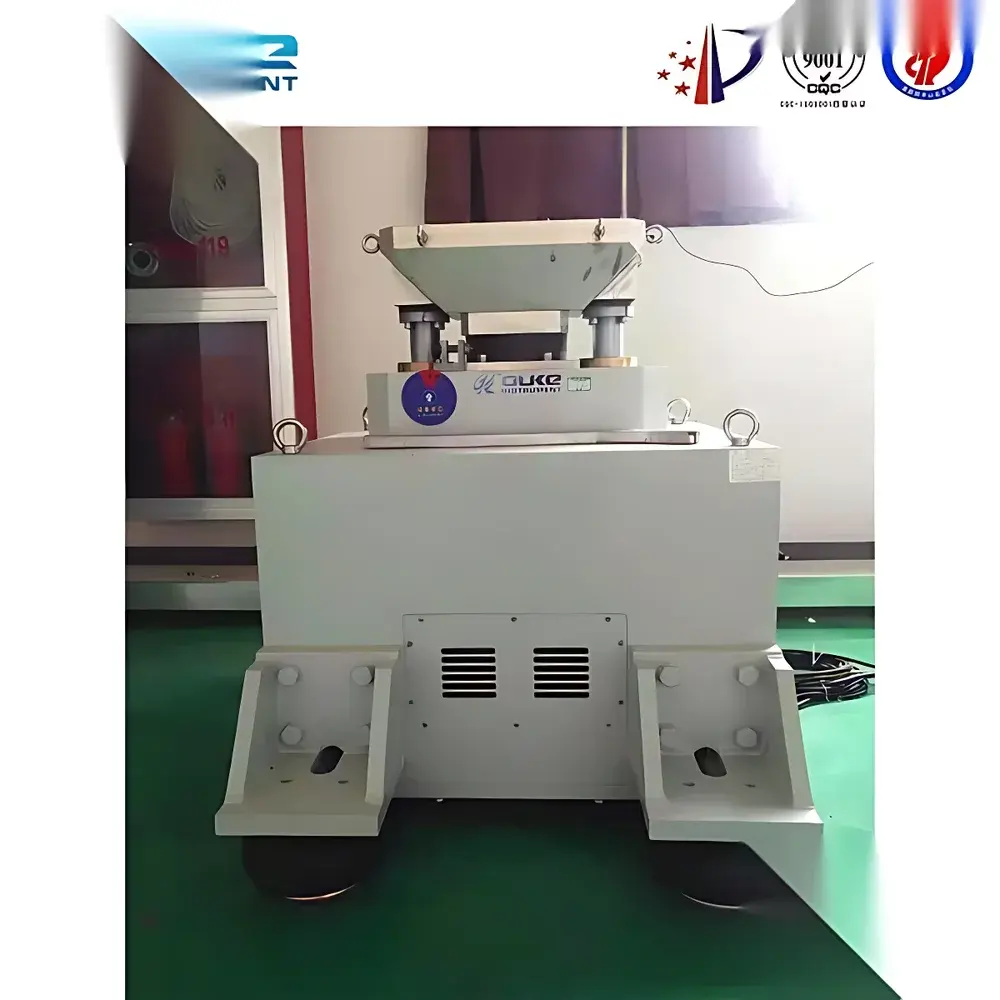
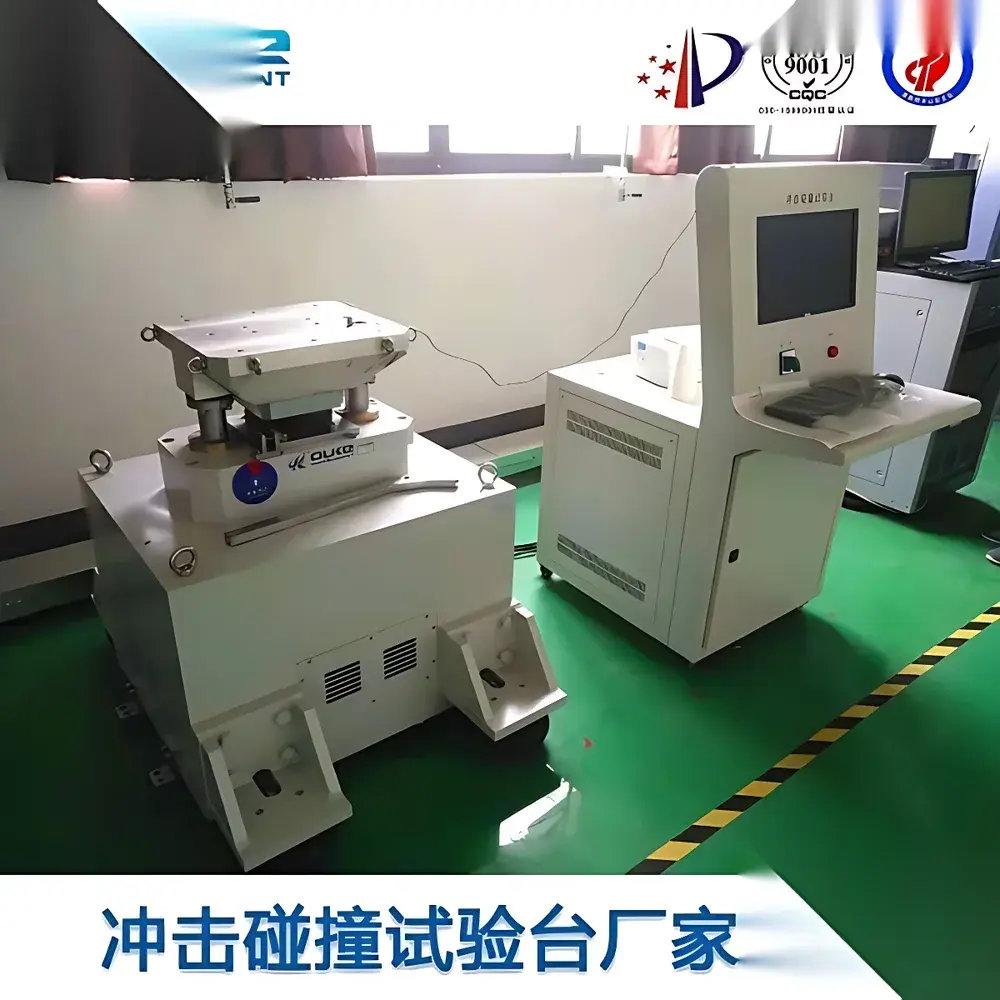
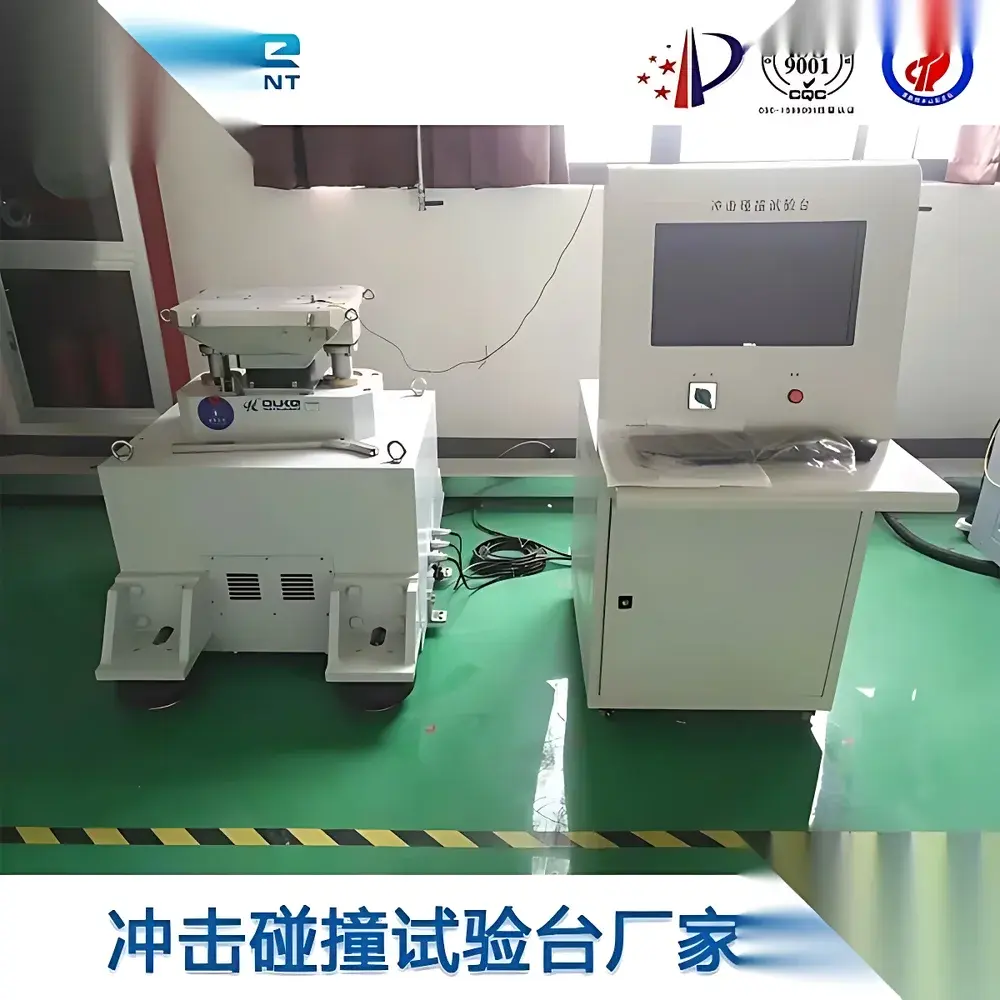
OKPZ-50-50 Electromechanical Shock and Impact Test System
| Brand | OEM / Private Label |
|---|---|
| Origin | Imported |
| Manufacturer Type | Authorized Distributor |
| Max Load Capacity | 50 kg |
| Peak Acceleration Range | 30–1000 m/s² |
| Pulse Duration | 1–20 ms |
| Shock Repetition Rate | 10–60 impacts/min |
| Table Surface Dimensions | 500 × 700 mm |
| Maximum Drop Height | 0–60 mm |
| Continuous Operation Time | 8 h |
| Overall Dimensions (L×W×H) | 700 × 1100 × 800 mm |
| Waveform Options | Half-sine, Post-peak Sawtooth, Trapezoidal |
| Control Mode | Closed-loop Acceleration Feedback via Photoelectric Sensor |
| Structural Rigidity | High-stiffness Platform with Uniform Acceleration Distribution |
Overview
The OKPZ-50-50 Electromechanical Shock and Impact Test System is a precision-engineered laboratory-grade shock test table designed for controlled mechanical shock simulation in compliance with international standards including ISO 13374-2, IEC 60068-2-27, and MIL-STD-810H Method 516.6. It operates on the principle of electromechanically driven free-fall impact: a DC motor coupled with a gear-reduction lifting mechanism elevates the test platform to a programmable height; upon release, the platform falls onto a calibrated elastomeric cushion, generating reproducible half-sine acceleration pulses. Pulse amplitude (30–1000 m/s²) is modulated by drop height and cushion material selection, while pulse width (1–20 ms) is tuned via cushion thickness and viscoelastic properties. The system supports dual operational modes—impact testing (controlled energy delivery via elevation) and collision testing (repetitive inertial shock)—making it suitable for evaluating structural integrity, mounting reliability, and functional survivability of electronic assemblies, automotive ECUs, aerospace components, and personal protective equipment such as motorcycle helmets.
Key Features
- Electromechanical actuation architecture ensures high repeatability and eliminates hydraulic fluid maintenance or pneumatic noise concerns.
- Closed-loop acceleration control using real-time photoelectric feedback enables precise pulse amplitude regulation within ±3% deviation across full range.
- High-rigidity aluminum alloy test platform (500 × 700 mm) guarantees uniform acceleration distribution—critical for multi-point sensor validation and large-area DUTs.
- Configurable waveform generation: standard half-sine output supplemented by optional post-peak sawtooth and trapezoidal pulse profiles via firmware upgrade and cushion reconfiguration.
- Adjustable repetition rate (10–60 impacts/min) supports both single-event qualification and fatigue-level durability assessment under sustained shock loading.
- Integrated safety interlocks, emergency stop circuitry, and overload protection meet EN 60204-1 and CE machinery directive requirements.
Sample Compatibility & Compliance
The OKPZ-50-50 accommodates rigid and semi-rigid samples up to 50 kg, including PCB subassemblies, handheld medical devices, battery packs, and small-scale vehicle modules. Mounting is facilitated via T-slots and M6 threaded inserts on the table surface. All shock profiles comply with test severity definitions in ASTM D999 (shipping vibration), ISO 16750-3 (road vehicle electrical disturbance), and UN ECE R22 (helmet impact certification). The system’s traceable calibration protocol aligns with ISO/IEC 17025-accredited laboratories and supports GLP/GMP documentation workflows, including audit-ready calibration certificates and uncertainty budgets.
Software & Data Management
The system interfaces with Windows-based control software supporting automated test sequencing, real-time acceleration waveform visualization, and digital storage of raw time-acceleration data (CSV and TDMS formats). Software includes built-in compliance reporting templates for ISO 13374-2 Annex A, automatic pass/fail flagging against user-defined thresholds, and export functionality compatible with MATLAB, LabVIEW, and JMP for statistical analysis. Audit trail logging—including operator ID, timestamp, parameter settings, and calibration status—is enabled to satisfy FDA 21 CFR Part 11 requirements for regulated environments.
Applications
- Qualification testing of consumer electronics per IEC 60068-2-27 Ed. 4.0 (Shock).
- Helmet impact certification (e.g., EN 1078, DOT FMVSS 218) using standardized anvil configurations and velocity-controlled drop protocols.
- Functional verification of MEMS accelerometers, gyroscopes, and inertial measurement units (IMUs) under transient shock loads.
- Reliability screening of solder joint integrity in avionics hardware prior to environmental stress screening (ESS) campaigns.
- Development and validation of shock-absorbing packaging systems for logistics and transport simulation.
FAQ
What standards does this system support out-of-the-box?
It natively executes test profiles defined in ISO 13374-2, IEC 60068-2-27, and MIL-STD-810H Method 516.6. Custom waveform libraries can be imported for proprietary or industry-specific protocols.
Is third-party calibration certification included?
Yes—a factory calibration certificate with measurement uncertainty budget and traceability to NIST or PTB is supplied. Optional UKAS/DAkkS-accredited calibration is available upon request.
Can the system be integrated into an existing environmental test chamber network?
It features Ethernet (TCP/IP) and RS-232 communication ports, enabling seamless integration with centralized test management platforms such as TestStand or custom SCADA architectures.
What maintenance is required for long-term operational stability?
Annual preventive maintenance includes linear guide lubrication, motor encoder verification, cushion material aging assessment, and mechanical alignment check—all documented in the provided service logbook.



