
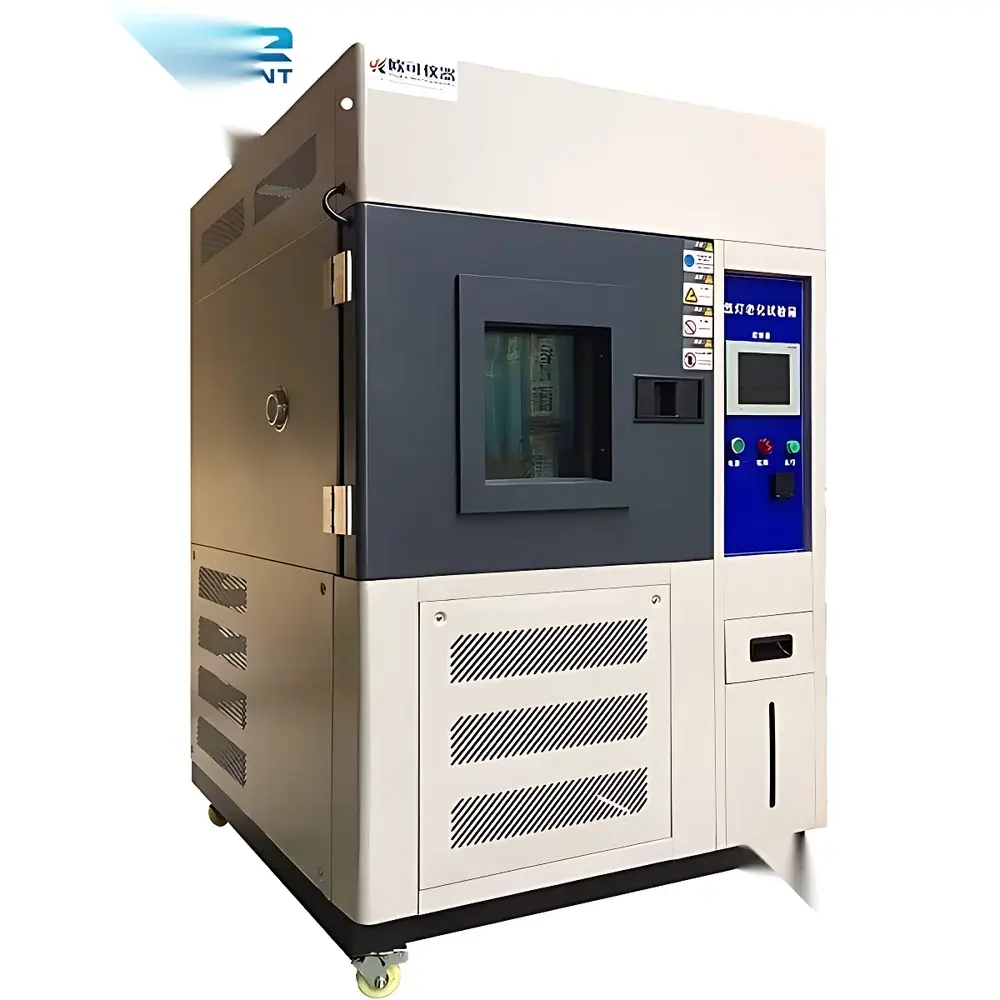
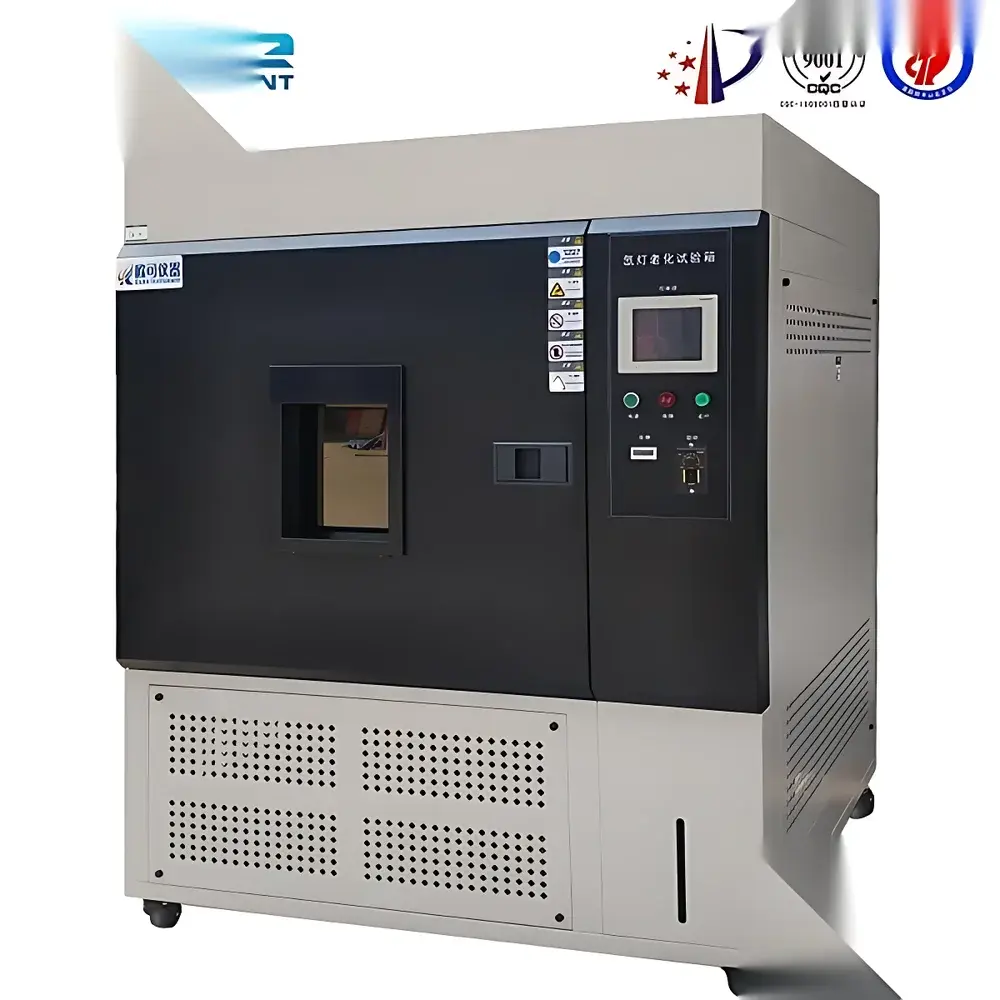
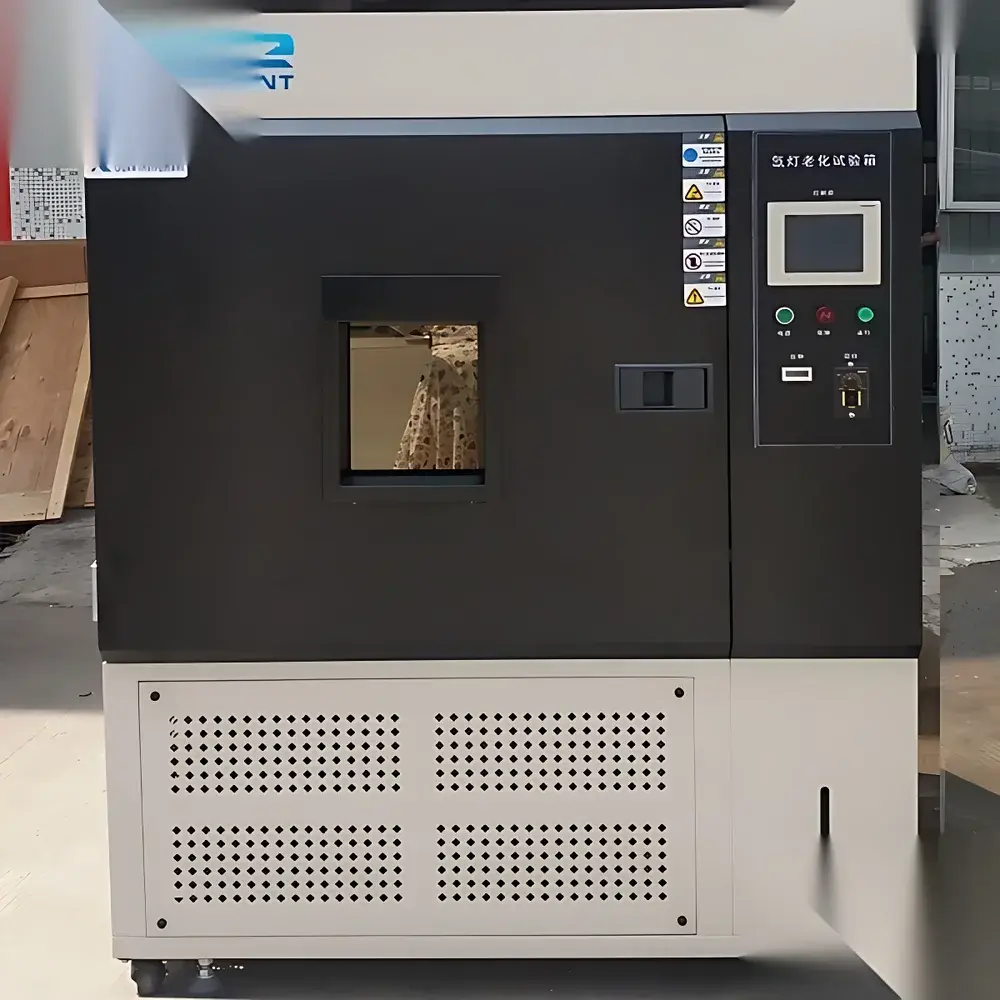
Xenon Arc Weathering Test Chamber OK-XD Series
| Brand | Other Brands |
|---|---|
| Origin | Imported |
| Manufacturer Type | General Distributor |
| Price | USD 5,300 (approx.) |
| Temperature Range | 0–150°C (chamber), 40–85°C (black panel) |
| Humidity Range | 20–75% RH (light cycle), 20–98% RH (dark cycle) |
| Irradiance | 550 W/m² ±10% (300–800 nm), 1000 W/m² ±10% (300–1200 nm) |
| Xenon Lamp Power | 1.8 kW / 2.5 kW / 6 kW |
| Lamp Life | ≈1500 h |
| Spray Duration | 1–999 min (intermittent or continuous) |
| Spray Pressure | 70–127 kPa |
| Sample Mounting | Dual-layer flat mesh rack or 500 mm diameter rotating turntable (0–3 rpm) |
| Construction | Interior – SUS304 stainless steel |
| Compliance | GB/T 8427, GB/T 16422-2, GB/T 8430, ISO 4892-2, ASTM D529, GB/T 14576, GB/T 15102-2006, GB/T 15104-2006 |
Overview
The OK-XD Series Xenon Arc Weathering Test Chamber is an engineered environmental simulation system designed to replicate the photodegradative and thermo-hygrometric stresses of natural outdoor exposure under controlled, accelerated conditions. It employs a high-intensity, full-spectrum xenon arc lamp—spectrally filtered to closely match terrestrial solar irradiance (AM1.5G)—to deliver quantifiable UV, visible, and near-infrared radiation across 290–2500 nm. Unlike UV fluorescent or metal halide sources, xenon arc technology provides the most physiologically and chemically relevant spectral distribution for evaluating polymer photooxidation, pigment fading, coating chalking, and substrate embrittlement. The chamber integrates synchronized irradiance control, black-panel temperature monitoring, programmable humidity cycling (including condensation via cold-wall humidification), and optional water spray to emulate rain, dew, and thermal shock. This multi-stress methodology enables laboratories to generate reproducible, standards-compliant aging data in days—not months—supporting material qualification, formulation optimization, and regulatory submission packages.
Key Features
- Full-spectrum 1.8 kW / 2.5 kW / 6 kW air- or water-cooled xenon arc lamps with calibrated spectral output traceable to NIST-referenced radiometers
- Interchangeable optical filter systems (e.g., Daylight-Q, Window Glass-Q, Extended UV) to simulate specific exposure environments per ISO 4892-2 and ASTM G155
- Precise black-panel temperature control (40–85°C) with dual-sensor feedback and PID regulation, ensuring surface thermal fidelity independent of chamber air temperature (0–150°C)
- Humidity control across two operational modes: light-cycle range (20–75% RH) and dark-cycle range (20–98% RH), achieved via steam injection and refrigerated dehumidification
- Programmable water spray system with adjustable duration (1–999 min), frequency, and pressure (70–127 kPa), supporting cyclic wet/dry protocols per ISO 11341 and SAE J2527
- Rotating sample turntable (Ø500 mm, 0–3 rpm) or static dual-layer stainless-steel mesh racks, both constructed from corrosion-resistant SUS304
- Integrated irradiance monitoring with real-time feedback loop maintaining ±10% stability at user-selected wavelengths (300–800 nm or 300–1200 nm)
Sample Compatibility & Compliance
The OK-XD chamber accommodates diverse specimen geometries—including flat panels (up to 100 × 100 × 100 cm internal volume in XD-1000 model), extruded profiles, and automotive glazing—without compromising irradiance uniformity (±3.0% RH, ±2.0°C spatial deviation). Its mechanical and thermal architecture conforms to international test standard requirements for repeatability and inter-laboratory correlation. Validated operation supports compliance with GB/T 8427 (textiles), GB/T 16422-2 (plastics), ISO 4892-2 (general exposure methods), ASTM D529 (roofing membranes), and automotive specifications such as GMW 14124 and Ford CETP 00.00-L-467. All control algorithms and calibration procedures are documented to support GLP and ISO/IEC 17025 laboratory accreditation. Optional audit-trail logging meets FDA 21 CFR Part 11 requirements when paired with validated software.
Software & Data Management
Equipped with embedded industrial-grade controller featuring touchscreen HMI, the system enables creation and storage of multi-step test profiles—including irradiance ramping, temperature/humidity ramps, spray timing, and dark/light phase sequencing. Real-time data logging records irradiance (W/m²), black-panel temperature (°C), chamber humidity (%RH), and spray status at user-defined intervals (1 s–60 min). Export formats include CSV and PDF reports compatible with LIMS integration. Optional PC-based software extends functionality with remote monitoring, alarm escalation (email/SMS), statistical process control (SPC) charting, and comparative analysis across historical test runs. Calibration certificates for irradiance sensors and temperature/humidity probes are provided with NIST-traceable documentation.
Applications
This instrument serves critical roles across R&D, QC, and regulatory departments in industries where long-term outdoor durability is mission-critical: automotive OEMs validating exterior trim, headlamp lenses, and interior upholstery; paint & coatings manufacturers qualifying UV stabilizers and binder systems; photovoltaic module producers assessing encapsulant yellowing and backsheet delamination; textile labs testing colorfastness per AATCC TM16; and construction material suppliers verifying weatherability of façade cladding, sealants, and roofing membranes. Its ability to decouple and recombine individual stressors—UV dose, thermal load, moisture cycling, and mechanical wetting—enables mechanistic failure analysis beyond pass/fail outcomes.
FAQ
What spectral filters are included standard with the OK-XD chamber?
Standard configuration includes Daylight-Q (CIE No. 1) and Window Glass-Q filters. Extended UV and borosilicate options are available upon request.
Is black-panel temperature measurement mandatory for compliance with ISO 4892-2?
Yes—ISO 4892-2 specifies black-standard or black-panel thermometers as the primary temperature metric for xenon testing; chamber air temperature alone is insufficient for reporting.
Can the chamber operate continuously for extended validation studies?
Yes—designed for unattended 24/7 operation with redundant safety interlocks, lamp overheat protection, and automatic lamp hour tracking with maintenance alerts.
How is irradiance calibrated, and how often is recalibration required?
Calibration uses a traceable reference spectroradiometer before shipment; annual recalibration is recommended, or after lamp replacement or major maintenance.
Does the system support custom test protocols outside published standards?
Yes—the controller permits fully user-defined cycles with up to 99 segments, including variable irradiance setpoints, dynamic humidity ramps, and conditional spray triggers.



