


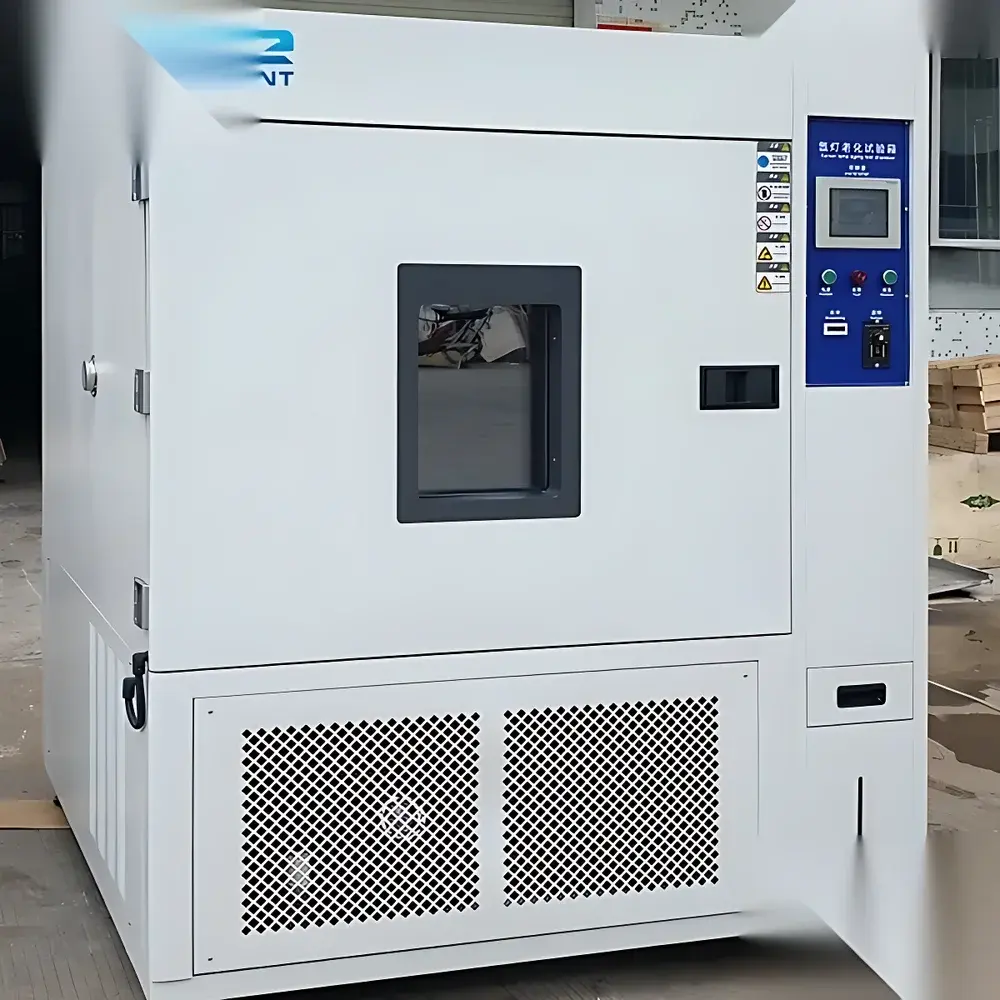
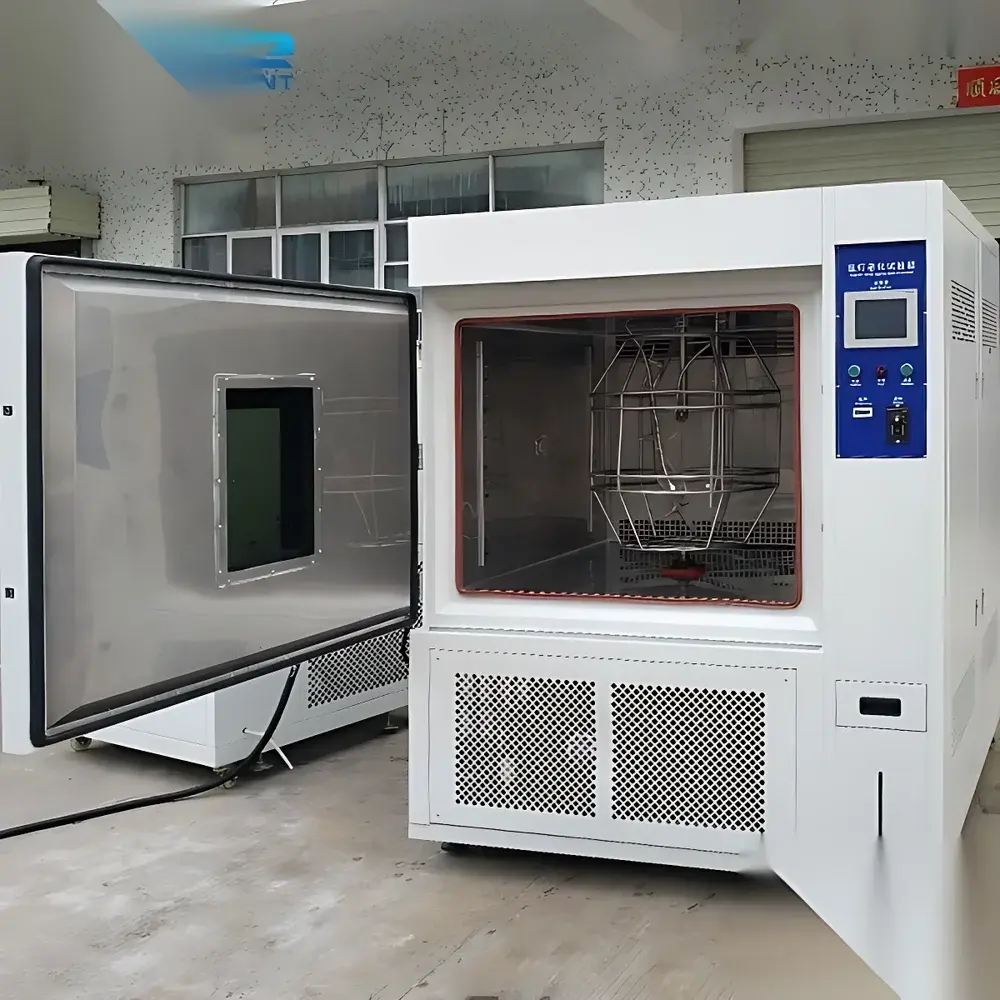
Xenon Arc Weathering Chamber
| Brand | OEM |
|---|---|
| Origin | Imported |
| Manufacturer Type | Authorized Distributor |
| Price | USD 5,300 (FOB) |
| Standards Compliance | ISO 4892-2, ASTM G155, GB/T 16422.2, GB/T 8427, GB/T 14576, AATCC TM16, JIS D 0205 |
| Chamber Volume Options | 100 L, 225 L, 500 L, 1000 L |
| Temperature Range | 0–150°C (chamber), 40–85°C (black panel) |
| Humidity Range | 20–75% RH (light cycle), 20–98% RH (dark cycle) |
| Irradiance Control | 550 W/m² ±10% (300–800 nm), 1000 W/m² ±10% (300–1200 nm) |
| Xenon Lamp Power | 1.8 kW / 2.5 kW / 6 kW (rated life: ≥1500 h) |
| Spray Duration | 1–999 min (programmable intermittent/continuous) |
| Spray Pressure | 70–127 kPa |
| Sample Mounting | Dual-layer wire mesh tray or 500 mm diameter rotating drum (0–3 rpm) |
| Construction | Interior – SUS304 stainless steel |
| Power Supply | AC 380 V ±5%, 50 Hz ±0.5 Hz |
Overview
The Xenon Arc Weathering Chamber is an engineered environmental simulation system designed to replicate full-spectrum solar radiation, thermal cycling, humidity variation, and moisture exposure—critical stressors in real-world outdoor aging. It employs a stabilized high-intensity xenon arc lamp as its primary radiation source, delivering spectral power distribution closely aligned with natural sunlight (CIE No. 85, ISO 4892-2 Annex A). Unlike UV fluorescent or mercury-vapor sources, xenon lamps emit continuous spectra from 290 nm to 2500 nm, enabling accurate simulation of photodegradation mechanisms—including photooxidation, chain scission, and pigment fading—in polymeric, textile, coating, and automotive materials. The chamber integrates precise black-panel temperature control, programmable light/dark cycles, calibrated irradiance monitoring, and synchronized water spray or mist functions to fulfill accelerated weathering protocols per ISO, ASTM, GB, and AATCC standards.
Key Features
- High-fidelity xenon arc irradiation with spectral filtering options (Daylight, Window Glass, Extended UV) to match application-specific exposure conditions
- Real-time irradiance feedback control via calibrated broadband or narrowband (340 nm, 420 nm) sensors, maintaining ±10% stability across the operational spectrum
- Dual-zone climate control: independent regulation of chamber air temperature (0–150°C) and black-panel temperature (40–85°C) with ±0.5°C accuracy
- Dynamic humidity management: programmable RH profiles ranging from 20–75% during irradiation and 20–98% during dark cycles, with ±2.0% RH control precision
- Configurable sample presentation: flat dual-tier stainless-steel trays for static testing or motor-driven 500 mm diameter rotating drums (0–3 rpm) for uniform angular exposure
- Integrated water spray system with adjustable pressure (70–127 kPa) and timer-based operation (1–999 min), supporting both intermittent and continuous modes per ASTM G155 Cycle 1–10
- Rugged construction using interior SUS304 stainless steel (corrosion-resistant, non-outgassing) and exterior options of either full stainless-steel or powder-coated carbon steel
- Compliance-ready architecture: supports audit trails, user access levels, and electronic signature functionality compatible with GLP/GMP documentation requirements
Sample Compatibility & Compliance
This chamber accommodates diverse specimen geometries—from flat fabric swatches and painted panels to molded plastic components and automotive trim parts—within standardized test fixtures. Its modular internal dimensions (100 L to 1000 L) allow customization for oversized samples while preserving uniform irradiance distribution (±3.0% spatial uniformity) and thermal homogeneity (±2.0°C). All configurations meet the physical and metrological requirements of ISO 4892-2:2013, ASTM G155-22, GB/T 16422.2–2014, and AATCC TM16-2023. Optional calibration certificates traceable to NIST or PTB are available for irradiance, temperature, and humidity sensors—ensuring data integrity in regulatory submissions (e.g., FDA premarket notifications for medical device coatings or EPA registration dossiers for exterior paints).
Software & Data Management
Equipped with a Windows-based control interface featuring intuitive touchscreen navigation, the system enables multi-step test profile programming—including ramp/soak sequences, irradiance setpoint modulation, humidity cycling, and spray timing synchronization. All operational parameters are logged at user-defined intervals (minimum 1-second resolution) and stored in CSV-compatible format for post-test analysis. Audit trail functionality records operator actions, parameter changes, alarm events, and calibration history in tamper-evident files compliant with 21 CFR Part 11 requirements. Remote monitoring via Ethernet or optional Wi-Fi allows secure off-site supervision without compromising network isolation in regulated lab environments.
Applications
- Colorfastness evaluation of textiles per ISO 105-B02, AATCC TM16, and GB/T 8427
- Weather resistance validation of architectural coatings, automotive clearcoats, and elastomeric sealants per ASTM D4587 and ISO 11341
- Photostability assessment of polymer composites used in outdoor infrastructure (e.g., solar panel frames, traffic signage)
- Lightfastness qualification of printing inks, packaging films, and decorative laminates per ISO 105-B01 and GB/T 15102–2006
- Accelerated corrosion testing of coated metal substrates under combined UV/humidity/spray conditions (ASTM D5894)
- Material screening for aerospace interior components subject to cabin lighting and solar loading per SAE AMS 3670
FAQ
What spectral filters are included with the standard configuration?
Standard units ship with Daylight (Q/B) and Window Glass (W/B) borosilicate filters. Extended UV (U/B) and IR-rejection options are available as factory-installed accessories.
Is lamp alignment and spectral recalibration required after lamp replacement?
Yes. Each xenon lamp installation must be followed by optical alignment verification and irradiance sensor recalibration using the supplied reference detector—procedures documented in the maintenance manual and supported by optional on-site service.
Can the chamber operate unattended for extended test durations (e.g., 1000+ hours)?
Yes. With scheduled lamp replacement (at ≥1500 h), uninterrupted operation up to 3000 hours is achievable. Optional remote alarm notification (email/SMS) and power-fail recovery mode ensure process continuity.
Does the system support third-party LIMS integration?
Yes. Raw data export via FTP or OPC UA protocol enables direct ingestion into laboratory information management systems without proprietary middleware.
Are calibration certificates provided with shipment?
A factory calibration report covering irradiance, temperature, and humidity sensors is included. ISO/IEC 17025-accredited calibration certificates are available upon request at additional cost.






