
Teledyne Judson InGaAs Photodetector
| Brand | Teledyne Judson |
|---|---|
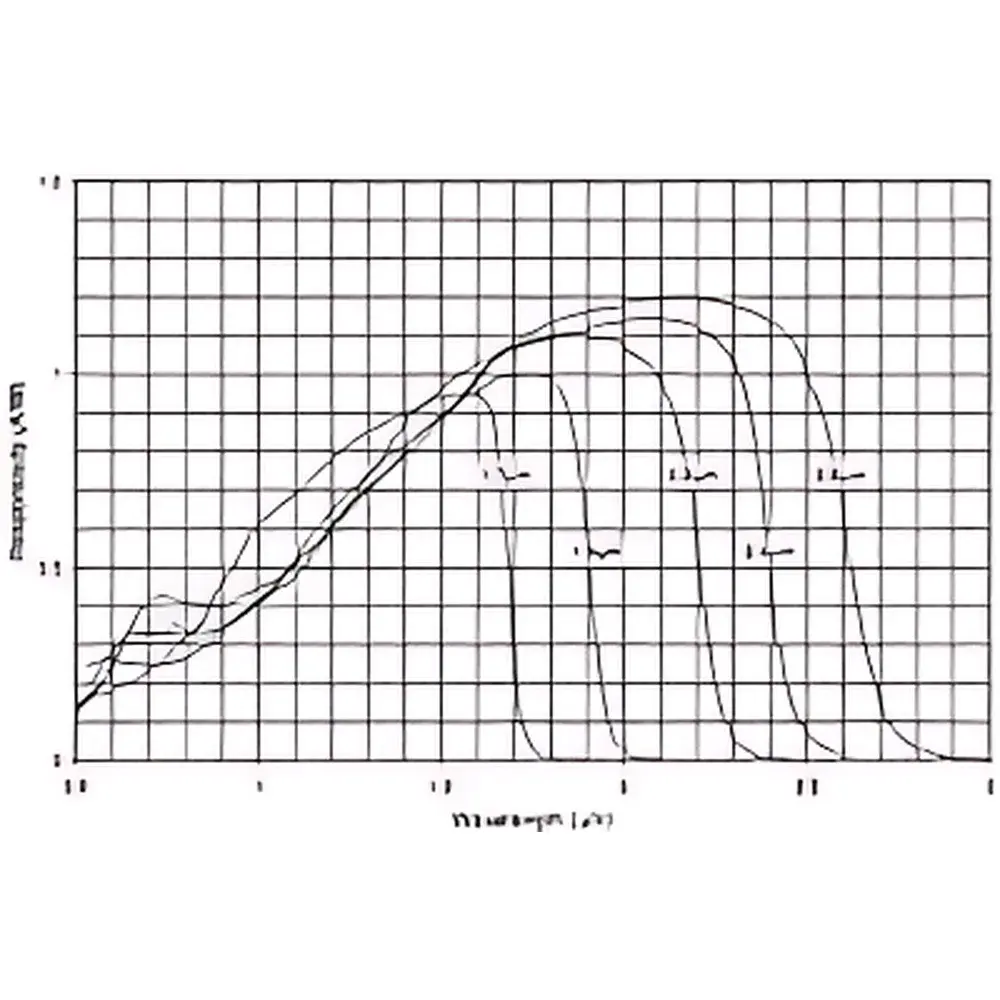
| Wavelength Range | 0.8–2.6 µm |
| Cutoff Wavelength Options | 1.9 µm, 2.2 µm, 2.4 µm, 2.6 µm |
| Cooling Options | Single- to Quad-Stage Thermoelectric (TE) Coolers |
| Detector Type | Extended-InGaAs Photodiode |
| Operating Temperature Range | –40 °C to +60 °C (uncooled) |
| Responsivity | Up to 1.8 A/W @ 1.55 µm (typical, dependent on cutoff) |
| Rise Time | <10 ns (standard TO-8 package, bias-dependent) |
| Active Area Diameter | 0.3 mm to 5.0 mm (model-dependent) |
| Package Types | TO-8, TO-46, 14-pin DIP, and custom hermetic housings |
Overview
The Teledyne Judson InGaAs Photodetector is a high-performance extended-wavelength photodiode engineered for precision detection in the short-wave infrared (SWIR) spectral region. Based on lattice-matched or strain-compensated In0.53Ga0.47As epitaxial layers grown on InP substrates, these detectors operate across a calibrated spectral range of 0.8 µm to 2.6 µm—extending beyond standard silicon-based devices and enabling critical measurements in gas absorption bands, molecular overtone vibrations, and telecom windows. The detector’s operation relies on photon-induced electron-hole pair generation within the intrinsic absorption layer, with charge collection optimized via reverse-biased p-i-n junction architecture. Its design emphasizes low dark current, high quantum efficiency (>70% at 1.55 µm), and excellent linearity over six decades of incident optical power—making it suitable for both analog photometry and pulsed signal recovery in time-resolved spectroscopy.
Key Features
- Four standardized cutoff wavelength variants (1.9 µm, 2.2 µm, 2.4 µm, and 2.6 µm) to match application-specific spectral requirements and minimize out-of-band thermal noise
- Integrated thermoelectric cooling options—from single-stage to quad-stage modules—enabling stable operation at temperatures as low as –80 °C, thereby reducing dark current by up to four orders of magnitude versus uncooled operation
- Hermetically sealed packages (TO-8, TO-46, 14-pin DIP) with AR-coated windows optimized for broadband SWIR transmission (R < 0.5% per surface)
- Low-noise, high-speed configurations with rise times under 10 ns and bandwidths exceeding 35 MHz (dependent on active area and load impedance)
- Factory-calibrated responsivity traceable to NIST standards; optional calibration certificates available per ISO/IEC 17025-accredited procedures
- Robust mechanical and thermal design compliant with MIL-STD-883 environmental stress screening protocols
Sample Compatibility & Compliance
The InGaAs photodetector interfaces seamlessly with FTIR spectrometers (e.g., Bruker VERTEX, Thermo Nicolet iS50), tunable laser sources (OPOs, EC-QCLs), and fiber-coupled optical systems using standard FC/PC or SMA connectors. It supports continuous-wave, modulated, and pulsed illumination schemes—including lock-in-amplified detection and gated-integration modes. From a regulatory standpoint, the device meets RoHS Directive 2011/65/EU and REACH Annex XIV restrictions. When integrated into analytical instrumentation used in pharmaceutical QC labs or clinical diagnostics platforms, its performance stability and repeatability support adherence to USP , ASTM E1421, and ISO 13694 for optical radiation measurement uncertainty management. Traceability documentation satisfies GLP audit requirements for instrument qualification (IQ/OQ/PQ).
Software & Data Management
While the detector itself operates as an analog transducer, Teledyne Judson provides comprehensive driver support for integration into third-party data acquisition ecosystems—including National Instruments LabVIEW, MATLAB Data Acquisition Toolbox, and Python-based PyVISA frameworks. Optional OEM evaluation boards feature onboard transimpedance amplification, programmable gain stages (10⁴–10⁸ V/A), and digital I²C-controlled bias adjustment. All firmware and configuration utilities comply with FDA 21 CFR Part 11 requirements for electronic records and signatures when deployed in regulated environments. Raw output signals maintain full dynamic range integrity for post-processing using Savitzky-Golay smoothing, Fourier deconvolution, or multivariate regression algorithms in chemometric software suites (e.g., GRAMS/AI, Unscrambler X).
Applications
- Gas Analysis: Detection of CH₄, CO, CO₂, NH₃, and H₂O vapor via their characteristic rovibrational absorption lines between 1.6–2.5 µm
- Near-Infrared FTIR Spectroscopy: High-fidelity interferogram acquisition in benchtop and portable Fourier-transform instruments
- NIR Fluorescence Spectroscopy: Time-gated detection of lanthanide-doped nanoparticles and quantum dot emissions in biological imaging workflows
- Clinical Blood Analysis: Non-invasive hemoglobin oxygen saturation (SpO₂) and glucose monitoring using multi-wavelength reflectance spectroscopy
- Optical Communications: Bit-error-rate testing and eye-diagram analysis in 1.25 Gbps to 100 Gbps PON and coherent DWDM systems
- Laser Power & Energy Metrology: Calibration-grade measurement of CW and pulsed SWIR lasers in metrology labs accredited to ISO/IEC 17025
FAQ
What is the typical dark current specification for the 2.6 µm cutoff variant at –40 °C?
Typical dark current is ≤2 nA at –40 °C with 5 V reverse bias; values scale exponentially with temperature and bias voltage.
Can this detector be fiber-pigtailed for OEM integration?
Yes—custom fiber coupling (SMF-28, PM1550, or fluoride fiber) is available with FC/APC or angled physical contact termination.
Is spectral responsivity data provided with each unit?
Yes—each detector ships with a full spectral responsivity curve (300 nm–2700 nm) measured on a NIST-traceable monochromator-based setup.
How does TE cooling affect long-term measurement stability?
Quad-stage cooling reduces thermal drift to <0.5% full-scale change per hour under constant illumination, meeting ASTM E1317 criteria for photometric stability.
Are explosion-proof or intrinsically safe versions available?
ATEX/IECEx-certified housings and current-limited bias circuits are offered for hazardous location deployment (Zone 1/21, Class I Div 1).



